Class III Off-Road Motorcycles in Oregon
It's a common misconception that if you're riding an off-road motorcycle – what most of us just call a dirt bike – you don't need the same "ATV" permit as someone on a quad. But in Oregon, your beloved two-wheeled trail machine falls squarely into a specific category, and it absolutely requires an operating permit to hit those amazing trails. This guide is here to clear up all the confusion about what a Class III off-road motorcycle is in Oregon, why it needs that permit, and how to make sure you're riding legally and safely.
What Exactly is a Class III Off-Road Motorcycle in Oregon?
When the Oregon Parks and Recreation Department (OPRD) talks about off-highway vehicles (OHVs), they use specific classifications to define different types of machines. For many of us who grew up riding dirt bikes, it might seem a bit odd to hear them lumped into the same permit system as four-wheeled ATVs or side-by-sides. But rest assured, your off-road motorcycle has its own designated spot in Oregon's legal framework: Class III.
Defining an Off-Road Motorcycle
So, what exactly makes a machine a "Class III off-road motorcycle"? Oregon Revised Statute (ORS) 801.370 defines it pretty clearly: it's any motorcycle that isn't a "moped" and that is not registered for use on public roads. Think about it this way: if it has two wheels, a motor, and you can't (or don't) get a license plate for it to ride on the highway, it's a Class III. This covers everything from your nimble 85cc two-stroke for the kids to a powerful 450cc four-stroke enduro bike. The key is its intended use – off-road – and its inability to be legally registered for street use in the traditional sense. Class III Off-Road Motorcycles in Oregon are distinct from other classes by their two-wheeled nature and off-highway purpose.
Characteristics That Matter
While many states focus on engine size or weight for their classifications, Oregon's Class III definition for off-road motorcycles is refreshingly straightforward. The primary characteristic is simply having two wheels and not being street-legal. Unlike Class I or Class IV machines, there aren't specific width or dry weight limits that dictate if your dirt bike fits into this category. Whether you're ripping through the singletrack at Tillamook State Forest or exploring the open trails around Millican Valley, if it's a motorcycle designed for off-pavement use, it's a Class III. The lack of a headlight, taillight, turn signals, or a license plate bracket typically signifies its off-road-only status, even if some enduro models might have basic lighting.
Why Your Dirt Bike Needs an Oregon ATV Operating Permit
This is where the rubber meets the trail, and where a lot of riders scratch their heads. "ATV permit? But my bike isn't an ATV!" We hear you, and it's a completely valid reaction to the naming convention. However, in Oregon, the term "ATV Operating Permit" is used broadly to cover all classes of off-highway vehicles, including your Class III off-road motorcycle. It's not just for quads; it's the state's way of ensuring all OHVs are accounted for and contribute to the fund that maintains our riding areas.
The "ATV" in "ATV Permit" Explained
The Oregon Parks and Recreation Department administers the OHV permit program, and their definition of an "All-Terrain Vehicle" (ATV) for permit purposes is much broader than the common understanding. It encompasses not only the traditional four-wheeled ATVs (Class I) and side-by-sides (Class IV) but also off-road motorcycles (Class III) and even some specialized vehicles like dune buggies and sand rails that might fall under Class II. So, when you see "Oregon ATV Operating Permit," just think of it as your universal "Oregon Off-Highway Vehicle Permit." It's the sticker that proves you've paid your dues and are authorized to ride on designated public lands. Without it, you're not just risking a fine; you're also riding on trails that your fellow riders' permit fees help maintain, which isn't very neighborly.
Legal Requirements for Public Land Use
Oregon law is clear: if you're operating your Class III off-road motorcycle on any land open to public riding that isn't specifically exempted (like designated closed courses or private land with owner permission), you must have a current Oregon ATV Operating Permit. This applies whether you're enjoying the sand at the Oregon Dunes National Recreation Area, tackling mud in the Tillamook State Forest, or exploring the high desert trails around Christmas Valley. The permit helps fund trail development, maintenance, law enforcement, and safety education. So, every time you buy one, you're directly contributing to the amazing riding opportunities we have in this state. It's a small fee that goes a long way in keeping our favorite spots accessible and well-cared for. You can find detailed information on [Oregon's ATV Operating Permit].
Getting Your Oregon ATV Operating Permit for a Class III Machine
Securing your permit for your off-road motorcycle is a straightforward process, designed to be as accessible as possible so you can spend less time on paperwork and more time on the trails. It's a two-year permit, which means less frequent renewals and more uninterrupted riding.
Where and How to Purchase Your Permit
Oregon offers several convenient ways to purchase your ATV Operating Permit for your Class III machine. The most common method for many is online through the Oregon Parks and Recreation Department's website. This allows you to purchase from the comfort of your home, and you'll often receive a temporary permit via email that you can print and carry with you immediately while you wait for your physical decal to arrive in the mail. This means you can often [Riding the Day You Buy Online].
Alternatively, if you prefer an in-person transaction or need your decal right away, you can visit one of the many authorized permit agents located throughout the state. These agents include dealerships, sporting goods stores, and even some Oregon State Parks. You can almost certainly find [Oregon Permit Agents You Can Walk Into] on your way to a popular riding destination. When you purchase in person, they'll typically issue you the physical decal on the spot. No matter where you buy it, the price is generally the same for all OHV classes, so your dirt bike permit won't cost more or less than a quad permit. For more on where to buy, check out [Where Oregon Sells ATV Permits].
Decal Placement for Off-Road Motorcycles
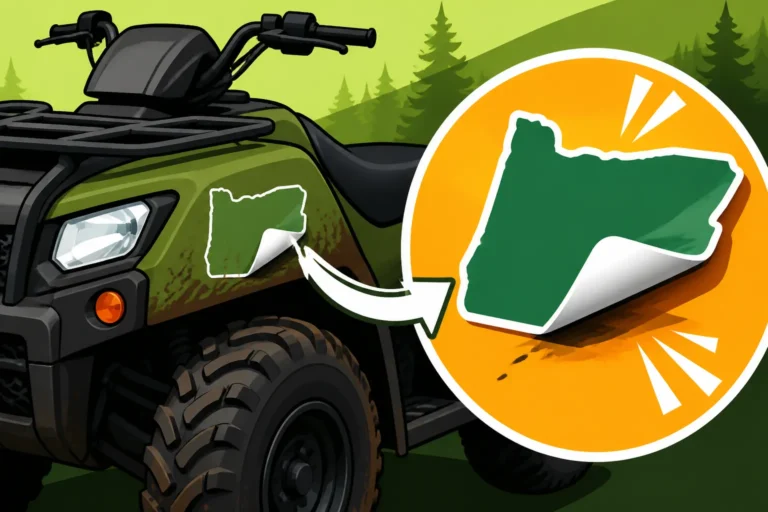
Once you have your permit decal, proper placement is crucial for compliance. For Class III off-road motorcycles, the decal must be affixed to the right side of the machine. The goal is for it to be clearly visible and permanently attached. This usually means on the right fork leg, the right side of the frame, or the right side panel, as long as it's not obscured by mud, equipment, or your leg while riding. You don't want to get pulled over by a ranger at a staging area like Browns Camp or Spinreel and have them struggle to find your permit. Make sure it’s in a location that is easily seen and won't peel off after a few washes or rugged rides. For specific guidance, you can refer to [Decal Placement on an Off-Road Motorcycle].
Important Rules for Riding Your Class III Off-Road Motorcycle in Oregon
Beyond the operating permit, Oregon has several other rules designed to keep everyone safe and preserve our natural resources. These include requirements for safety education, helmets, and making sure your machine isn't excessively loud or starting fires.
The Oregon ATV Safety Education Card
This is another key piece of the puzzle, and it's mandatory for all riders in Oregon, regardless of age, when operating an OHV on public lands. While you might be an experienced rider, the state requires everyone to demonstrate knowledge of safe riding practices and the rules of the trail. The good news is that the Oregon ATV Safety Education Course is often available online and is typically free. It covers everything from environmental stewardship to rider responsibility. If you're an adult (18 or older), once you pass the course, you'll receive your safety education card. For riders under 16, there are additional requirements, including hands-on training components within 180 days of getting an instructional permit. Keep your card with you when you ride, either a physical copy or a digital one on your phone. Find more information on [Oregon's ATV Safety Education Card].
Helmet, Spark Arrestor, and Sound Limits
Safety and environmental protection are paramount when riding in Oregon.
- Helmets: A DOT-approved helmet with the chin strap fastened is required for all riders on public lands, regardless of age or class of machine. No exceptions. This is for your safety, plain and simple.
- Spark Arrestor: Every Class III off-road motorcycle operating on public land in Oregon must be equipped with a U.S. Forest Service-approved spark arrestor. This device prevents hot carbon particles from exiting your exhaust, which can easily start a wildfire, especially in dry conditions. Regular maintenance is key to ensure it functions properly.
- Sound Limits: Oregon also has strict sound limits for OHVs. Currently, machines are generally required to be at or below 99 decibels (dB) when measured under specific conditions. An aftermarket exhaust might sound cool, but if it pushes you over the legal limit, you could face a citation. These rules are in place to reduce noise pollution for other users of public lands and nearby residents.
Always check for any seasonal closures or restrictions related to fire danger, especially during the summer and early fall. Many popular riding areas in central and eastern Oregon, like parts of Millican Valley, have specific fire season rules.
Titling and Ownership for Your Class III Off-Road Motorcycle
Unlike your operating permit, which is mandatory for riding on public land, titling your Class III off-road motorcycle in Oregon is often optional. This can sometimes lead to confusion, especially when buying or selling a used machine.
Oregon's Optional Titling for Off-Road Vehicles
Oregon law states that titling for vehicles used exclusively off-road is generally not required. This includes most Class III off-road motorcycles. The Department of Motor Vehicles (DMV) typically handles titles for street-legal vehicles, and since your dirt bike isn't street-legal, it usually falls outside their mandatory titling purview. However, "optional" doesn't mean "unnecessary." Many riders still choose to title their off-road motorcycles for several good reasons. A title serves as a clear, state-issued document of ownership, which can be invaluable. You can learn more about this by reading [Titling an ATV in Oregon Is Optional].
Proving Ownership Without a Title
If you opt not to title your Class III machine, you'll need other methods to prove ownership, which becomes particularly important when you're buying or selling a used dirt bike. A well-executed bill of sale is your primary tool here. This document should clearly identify the buyer and seller, the machine's make, model, year, and its Vehicle Identification Number (VIN). Both parties should sign and date it, and keeping a copy for your records is essential.
Other forms of proof can include the original purchase receipt from a dealer or previous registration documents from another state if you brought the machine into Oregon. Without a title, these documents are crucial for establishing a chain of ownership, which can prevent future headaches if the machine is ever stolen or if you need to resolve a dispute. Resources like LawDepot offer templates for creating professional bills of sale and other legal documents that can help solidify your ownership, even without a formal title from the state. When buying from a private seller, always [Checking a VIN Before Buying Used] is smart to ensure it's not stolen.
Common Misconceptions About Class III Machines in Oregon
There are a few persistent myths and misunderstandings about riding off-road motorcycles in Oregon that are worth clarifying. Getting these sorted out can save you from an unexpected fine or a missed riding opportunity.
Street Legality for Off-Road Motorcycles
A major point of confusion for many riders is whether an off-road motorcycle can be made street-legal in Oregon. For the vast majority of Class III machines, the short answer is no. Oregon law generally does not allow the registration and plating of two-wheeled vehicles that were originally manufactured for off-road use only, even if you add lights, mirrors, and a horn. While some states have "dual-sport conversion" processes, Oregon's regulations make it very difficult, if not impossible, for a typical dirt bike to get a street-legal license plate. The key distinction is usually whether the manufacturer intended the vehicle for highway use and if it meets specific federal motor vehicle safety standards. So, don't plan on riding your CRF450X to the grocery store. This topic is expanded in [Are ATVs Street Legal in Oregon?].
Riding on Private Land Versus Public Land
Another common question revolves around permit requirements for riding on private property. If you own the land, or have express permission from the landowner, you typically do not need an Oregon ATV Operating Permit to ride your Class III off-road motorcycle on that private property. The permit is specifically for designated public OHV areas and certain publicly accessible lands. However, even on private land, you must still adhere to local noise ordinances and any other applicable laws. If you plan to ride your dirt bike on private timberland or land owned by a company, always seek permission first, as trespass laws are strictly enforced. Sometimes, these landowners might even require their own specific permits, so it's always best to check. If you're building a bill of sale for a machine used exclusively on private land, LawDepot can help you draw up clear transfer documents.
The Myth of a Grace Period
Many states have some sort of grace period for expired registrations or permits, leading some riders to assume Oregon does too. Unfortunately, when it comes to the Oregon ATV Operating Permit, there is no official grace period. If your permit decal has expired, or if you're riding without one, you are technically in violation of state law and could be subject to a citation. The permit is valid for two years from the month of purchase, so it's your responsibility to keep track of its expiration date. You can always check the decal itself, as it clearly displays the month and year of expiration. Don't risk getting a ticket; it's always better to renew or purchase a new permit before hitting the trails. This is why it's wise to plan ahead, especially before a big weekend trip to places like the Oregon Dunes. [Riding on a Permit That Lapsed Last Month] is a risk not worth taking.
| Permit Aspect | Requirement for Class III Off-Road Motorcycles | Details |
|---|---|---|
| Operating Permit | Mandatory for public land use | The "Oregon ATV Operating Permit" covers all OHV classes. Valid for two years. |
| Permit Decal Placement | Right side of the machine | Must be clearly visible and permanently affixed (e.g., fork, frame, side panel). |
| Safety Education Card | Mandatory for all riders | Free online course; required for all ages on public land. |
| Helmet | Mandatory for all riders | DOT-approved helmet with chin strap fastened. |
| Spark Arrestor | Mandatory for all machines | USFS-approved device to prevent wildfires. |
| Sound Limits | Mandatory adherence | Generally 99 dB or less. Check for compliance, especially with aftermarket exhausts. |
| Titling | Optional (for off-road-only use) | Not required by state law for off-road use, but recommended for proof of ownership. |
| Bill of Sale | Highly recommended if no title | Crucial for proving ownership when buying/selling without a title (e.g., using LawDepot templates). |
Disclaimer
This article is for general informational purposes only and does not constitute professional advice. Laws, prices and regulations vary by location and change over time. Consult a qualified professional for guidance on your specific situation.