Oregon ATV Width Limits by Class
Many riders jump into the world of Oregon ATVs and UTVs with visions of open trails and sandy dunes, only to hit a snag when they realize their machine might be too wide for where they want to ride. The rules around off-highway vehicle (OHV) width in Oregon can be surprisingly detailed, and getting it wrong can mean anything from being turned away at a trailhead to facing a frustrating citation. This guide is here to clear up the confusion surrounding Oregon's ATV width limits by class, helping you understand exactly where your machine fits and how to ensure you're always compliant with state regulations and local trail restrictions.
Understanding Oregon's ATV Classification System and Why Width Matters
Oregon's system for classifying off-highway vehicles goes much deeper than just counting wheels. It’s a carefully designed framework meant to manage everything from rider safety and environmental impact to trail access and permit requirements. For a new rider, or even a seasoned veteran bringing in a different type of machine, grasping these classifications is absolutely essential. Overlooking them can lead to significant headaches, including fines or being denied access to your chosen riding spot. These aren't arbitrary rules; they're in place to maintain safe riding conditions and protect the natural beauty of Oregon's diverse landscapes.
Oregon's Four ATV Classes Explained
Before we dive into the specific measurements, it helps to understand the foundational categories. Oregon groups OHVs into four main classes: Class I ATVs, Class II ATVs, Class III Off-Road Motorcycles, and Class IV ATVs (Side-by-Sides). Each of these classes is defined by a unique set of characteristics. This includes details like whether you straddle a seat or sit on a bench, if you use handlebars or a steering wheel, the machine's dry weight, and, most importantly for our discussion, its dimensions, particularly width. You can find a more in-depth explanation in [Oregon's Four ATV Classes Explained]. For most recreational riders, the biggest source of confusion, and where width becomes a critical factor, often lies in distinguishing between traditional Class I quads and the increasingly popular Class IV side-by-sides. Their differing widths directly impact where they are permitted to operate.
The 50-Inch Limit That Defines a Class I
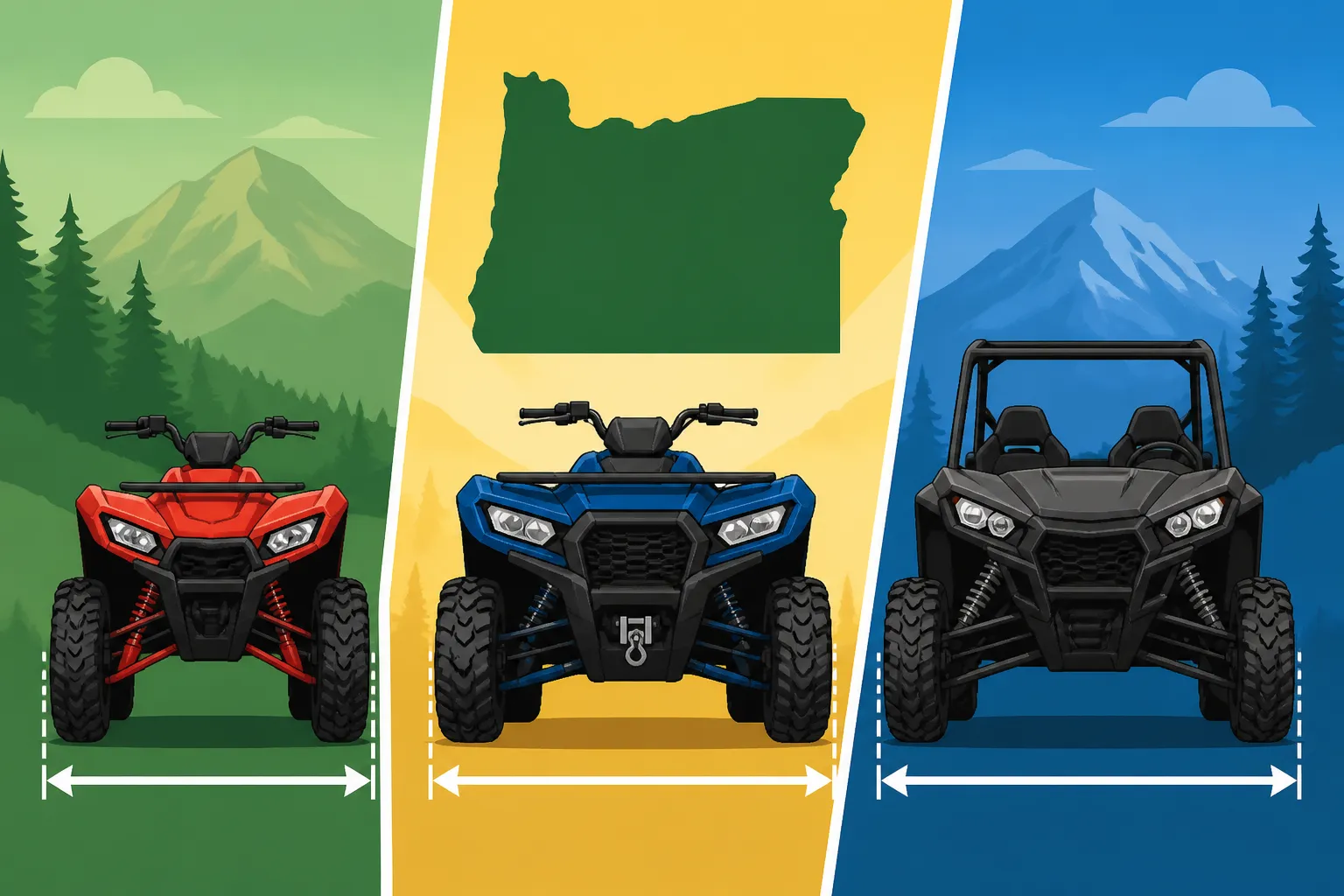
For decades, the concept of a 50-inch width was synonymous with a "quad" or "ATV" for many enthusiasts. This measurement remains a cornerstone of Oregon's classification system, specifically defining a Class I ATV. A traditional quad, which is designed for a single operator to sit astride it, almost universally fits within this 50-inch maximum width. This isn't just a random number; [The 50-Inch Limit That Defines a Class I] is a critical design parameter that allows these machines to navigate the narrower trails, tighter turns, and more confined spaces often found in the state's extensive forest trail networks. If you're scouting for a used quad, especially an older model, you'll almost certainly find its width falls comfortably under 50 inches, which generally means greater access to a wider variety of trails across Oregon. This width has historically dictated the design of many of our most beloved single-track and multi-use trails, making it a key factor for riders prioritizing maneuverability and access.
Detailed Width Limits for Each Oregon ATV Class
Now, let's get down to the specifics that can make or break your riding plans. Oregon's statutes are quite precise when it comes to vehicle dimensions, and understanding these measurements is absolutely crucial, whether you're eyeing a brand-new machine or trying to figure out if your current ride is suitable for a specific area. The width of your machine is typically measured from the widest point, which is almost always across the outer edges of the tires. This detail is often overlooked until riders find themselves at a trailhead, unable to pass through a gate or squeeze onto a designated trail.
A Machine Under 50 Inches Wide
This category is where you'll find the classic, nimble quad that many of us grew up riding. [A Machine Under 50 Inches Wide] almost always fits the criteria for a Class I ATV in Oregon, assuming it also has handlebars and a straddle seat. These machines are the undisputed kings of many of Oregon's tight and technical trail systems because their narrow profile grants them access to trails specifically designed for single-track vehicles or those with strict width restrictions. They are the go-to choice for weaving through dense timber in places like the Tillamook State Forest or tackling the winding routes of Millican Valley. If your riding dreams involve exploring the intricate spiderweb of forest trails across the state, a machine in this width category will generally offer you the most freedom and the least chance of encountering width-based restrictions.
Oregon's Class IV Side-by-Sides Under 75 Inches
The side-by-side (SxS) or utility terrain vehicle (UTV) market has exploded, offering a comfortable, car-like riding experience with bench seating, steering wheels, and often capacity for multiple passengers. In Oregon, the vast majority of these popular machines fall under the Class IV ATV category. The crucial defining characteristic for most modern side-by-sides is that they are [Oregon's Class IV Side-by-Sides Under 75 Inches]. This 75-inch maximum width is designed to accommodate the bulk of consumer side-by-sides currently available. While these wider machines deliver enhanced comfort, greater carrying capacity, and a more social riding experience, their increased width means they often cannot access trails that are specifically designated for narrower Class I ATVs. This is a critical distinction to keep in mind when planning your adventures. Many popular OHV areas, such as sections of the Oregon Dunes National Recreation Area or particular staging zones in Millican Valley, have clearly marked trails or sections that cater specifically to these wider Class IV machines, while others remain off-limits due to their dimensions.
A Machine Over 75 Inches Wide
What about those behemoths of the off-road world? The ultra-wide, often customized, or highly specialized utility vehicles that push past the 75-inch mark? In Oregon, even [A Machine Over 75 Inches Wide] technically might still be classified as a Class IV ATV, provided it meets the other criteria (dry weight of 3,500 pounds or less and a non-straddle seat). However, here's the significant practical caveat: their extreme width will severely limit where they can legally and safely operate on public land. While the state statutes define the maximum width for a standard Class IV, they don't explicitly forbid owning or permitting an even wider one. The real challenge comes with access. Most public OHV riding areas, particularly those with managed trail systems, will feature physical barriers, such as strategically placed bollards or gates, or clear signage that prevents access for vehicles exceeding 75 inches. These wider machines are typically restricted to vast, open areas like specific sections of the Oregon Dunes, designated off-road parks, or private property where such restrictions don't apply. It's absolutely imperative to check the very specific local area rules, as a machine exceeding 75 inches will find its public riding options severely curtailed.
Here’s a quick reference table to help visualize Oregon’s ATV width limits:
| ATV Class | Seating Type | Steering Control | Maximum Width (Approximate) | Typical Machines | Primary Riding Areas |
|---|---|---|---|---|---|
| Class I | Straddle Seat | Handlebars | 50 inches | Traditional Quads, Sport ATVs (e.g., Honda TRX, Yamaha Raptor, Polaris Scrambler) | Forest Trails, Designated Narrow OHV Trails, Some Dune Access |
| Class II | Straddle Seat | Handlebars | N/A (Street Legal) | Street-Legal Motorcycles, Dune Buggies, Sand Rails, Jeeps (specific configurations) | Designated Highway Access Routes (Lakeside, Sumpter), Paved Roads (if registered) |
| Class III | Straddle Seat | Handlebars | N/A (Motorcycles) | Dirt Bikes, Off-Road Motorcycles | Single-Track Trails, Motorcycle-Specific Trails |
| Class IV (Standard) | Non-Straddle Seat | Steering Wheel | 75 inches | Most Side-by-Sides (e.g., Polaris RZR, Can-Am Maverick, Yamaha Wolverine) | Oregon Dunes, Wider OHV Trails, Designated Off-Highway Areas |
| Class IV (Oversize) | Non-Straddle Seat | Steering Wheel | Over 75 inches | Highly Modified UTVs, Specialized Off-Road Vehicles | Limited to Very Open Areas (e.g., specific dune sections), Private Land, Event Fields |
Note: While Class II and Class III don't have explicit width limits for their off-road classification in the same way Class I and IV do, their design inherently dictates their width (motorcycles are narrow, street-legal vehicles follow road vehicle rules).
Why Oregon's ATV Width Limits Are More Than Just Numbers
These width limits aren't just arbitrary figures created by a distant government office; they are deeply rooted in practical concerns for effective trail management, the safety of all riders, and the crucial protection of our natural environment. Understanding the underlying reasons for these numbers can help you appreciate their importance and proactively avoid common missteps when you're planning your next off-road adventure. It's not simply about dodging a fine; it's about being a responsible member of the OHV community and doing your part to ensure the long-term sustainability of our precious riding areas.
What a Ranger Checks at an Oregon Staging Area
When you arrive at a popular staging area, whether it's the bustling scene at Spinreel on the coast or the forested tranquility of Browns Camp, don't be surprised to see park rangers or other authorized personnel conducting visual checks. While they're definitely looking for compliant [Oregon Permit Decals and Where They Go] and making sure everyone has their helmets securely fastened, [What a Ranger Checks at an Oregon Staging Area] also includes a quick but critical assessment of your machine's dimensions and class. If you show up with a wide Class IV side-by-side and attempt to enter a trail clearly marked "Class I Only," you'll almost certainly be stopped and politely, but firmly, redirected. Many staging areas and trailheads even have physical barriers, such as bollards or posts, strategically placed at the 50-inch mark. These aren't there to inconvenience you, but rather to physically prevent wider machines from inadvertently (or intentionally) accessing trails that are too narrow for them. This safeguards both the condition of the trail and the safety of riders on smaller, more nimble machines.
Trail Integrity and Environmental Protection
Oregon's breathtaking landscapes offer an incredible array of riding experiences, from the expansive, undulating sand dunes to the tight, often muddy, and incredibly twisty trails of the Coast Range forests. These varied trails are typically designed, built, and meticulously maintained with specific types of vehicles in mind. For instance, a narrow Class I trail is engineered to accommodate vehicles up to 50 inches wide. Introducing a wider Class IV machine onto such a trail can lead to severe and rapid degradation, causing extensive erosion, widening the trail far beyond its intended design, and potentially damaging sensitive habitats. Furthermore, certain areas are home to incredibly delicate ecological features or designated wildlife habitats, such as the crucial snowy plover nesting grounds along the coast. In these zones, strict vehicle access rules, including precise width restrictions, are rigorously enforced to minimize any disturbance to these vulnerable populations. Adhering to these limits is a direct contribution to preserving these delicate environments, ensuring that these pristine areas remain accessible and healthy for future generations of riders and wildlife alike.
Safety Concerns and Trail Design
Beyond the environmental considerations, width limits play a fundamental role in ensuring rider safety. Trails that are explicitly designed for narrower machines often feature sharp, unforgiving turns, natural obstacles situated very close to the trail's edge, and sometimes steep, precarious side slopes. Attempting to navigate such terrain with a wider side-by-side can significantly increase the risk of serious accidents, including rollovers, collisions with natural features, or getting dangerously stuck in a compromising position. Imagine trying to force a 60-inch wide side-by-side through a section where the trees or rock formations are only 55 inches apart; it’s not only incredibly difficult but also an invitation for disaster. This is precisely why you'll find designated trails for different vehicle classes across Oregon's OHV areas, ensuring that riders are always on terrain that is appropriate and safe for their specific vehicle's capabilities and, crucially, its dimensions.
Navigating Width Challenges and Staying Compliant in Oregon
So, you’ve got a handle on the rules. Now, how do you successfully apply them in the real world of Oregon’s diverse riding areas? It boils down to a combination of careful planning, making informed choices, and always being prepared. Whether you’re a seasoned off-roader with years of experience or just dipping your toes into the sport, these practical strategies will help you remain compliant and maximize your enjoyment of Oregon’s fantastic OHV opportunities.
Choosing the Right Machine for Your Desired Riding Experience
One of the most significant decisions you’ll make regarding width compliance happens long before you even load up your trailer: it’s when you purchase your machine. If your ultimate goal is to explore the vast, intricate network of forested trails that wind through Oregon’s backcountry, then a Class I ATV (under 50 inches wide) will almost always be your most versatile and least restrictive choice. On the other hand, if your priority is carrying passengers comfortably, enjoying a more social experience, and conquering the sprawling terrain of the Oregon Dunes, then a Class IV side-by-side (under 75 inches wide) is an excellent option. However, you must remain acutely aware of the potential trail limitations for wider machines. It's crucial to consider [Oregon Trails for a Wide Side-by-Side] versus those designed for narrower vehicles. If you're in the market for a used machine, never take a seller’s word for its dimensions. Always physically measure the machine yourself, from the widest points, typically the outer edges of the tires. For peace of mind, when buying or selling, documents like a bill of sale can be crucial. Services like LawDepot offer templates that allow you to accurately describe the vehicle, including its precise dimensions, which protects both parties in the transaction.
Checking Area-Specific Regulations Before You Go
Oregon's off-road landscape is wonderfully diverse, but this also means that regulations can vary significantly from one OHV area to another, and sometimes even within different sections of the same area. For example, [Millican Valley Outside Bend, Oregon] offers multiple staging areas and a variety of trails, some of which may have specific width restrictions. The Oregon Dunes National Recreation Area, while generally more accommodating to wider machines, still has very specific designated routes, special closures, and environmental protection zones where vehicle width and type are critical factors. Before every single trip, make it an unbreakable habit to check the Oregon Parks and Recreation Department (OPRD) website, contact the specific National Forest or Bureau of Land Management (BLM) office that manages your chosen riding area, or closely observe all signage at the trailhead. This proactive pre-ride research can save you from a long drive, only to discover that your machine is simply too wide for the trails you had planned to conquer. Many local riding clubs are also excellent resources for up-to-date information on trail conditions and any temporary or permanent restrictions.
How to Measure Your ATV or UTV Accurately
Measuring your machine correctly is absolutely fundamental to ensuring compliance. You need to measure the widest point of the vehicle, which, as mentioned, is almost always the outermost edge of your tires, specifically at the fullest part of the sidewall. Don't forget to account for any aftermarket accessories that might protrude, such as extended fender flares, aggressive beadlock rings, or custom offset wheels that could push your overall width beyond a critical limit. Use a reliable retractable tape measure and, ideally, have a friend help you hold it perfectly straight across the widest points. This might seem like a minor detail, but being even a couple of inches over a designated limit can be the difference between a fantastic day of riding and being unable to access your chosen trails. If you are ever unsure about how to formally document your machine's specifications, especially for a private sale, a service like LawDepot can provide legal forms that enable you to accurately list these crucial details, providing clarity and preventing potential disputes down the line.
Consequences of Non-Compliance: Fines and Trail Closures
Attempting to ride a machine on a trail it’s too wide for can lead to a range of undesirable outcomes. The most immediate and tangible might be a citation for operating your vehicle in an inappropriate area, which can carry penalties similar to, or sometimes even more severe than, [Oregon Fines for Riding Without a Permit]. Rangers and law enforcement officials take these rules very seriously because of the significant potential for both environmental damage and rider safety risks. Beyond personal fines, repeated instances of non-compliance by individuals can, unfortunately, lead to broader trail closures, more stringent regulations, or even reduced access for the entire OHV community. It’s a shared responsibility for all riders to strictly adhere to these guidelines to ensure the continued preservation and accessibility of Oregon’s truly fantastic riding opportunities. For instance, in the event of a private transaction where there might be a dispute over a machine’s stated width versus its actual dimensions, having a meticulously drafted bill of sale from a reputable source like LawDepot can provide clear evidence of the agreed-upon details, helping to resolve any misunderstandings.
What to Do If Your Machine Is Over the Limit
If, after careful measurement, you discover that your side-by-side exceeds the 75-inch limit, or your quad is surprisingly wider than the Class I 50-inch threshold, don't immediately despair! While your options for specific forest trails might be more limited, you still have a plethora of fantastic choices for your adventures. The vast expanses of the Oregon Dunes National Recreation Area are generally more accommodating to wider machines, though it’s crucial to remember that specific closures and designated routes still apply. Riding on private property is always a viable option if you have access and permission. Additionally, some older county roads or forest service roads that are open to full-sized vehicles might also accommodate wider side-by-sides, though you will need to meticulously research [Oregon Rules for Riding a Forest Road] or [Oregon Rules for Riding a County Gravel Road] to confirm legality. The absolute key here is to know your machine's precise dimensions and plan your rides accordingly, rather than simply hoping for the best. In some border-line cases, a simple change of tires or wheels can sometimes bring a slightly over-limit machine back into compliance, so it’s always worth investigating if you’re close to a classification threshold. And crucially, remember that when you're making a purchase, whether new or used, clear and comprehensive documentation is paramount. A legally sound form from LawDepot can ensure that all critical details, including the machine's width, are explicitly laid out in the sales agreement, preventing any misunderstandings or disputes further down the trail.
Oregon’s ATV width limits are a fundamental aspect of responsible off-highway vehicle recreation. By taking the time to understand the state’s classification system, knowing your machine’s exact dimensions, and consistently respecting area-specific rules, you become a vital part of fostering a safer, more environmentally sustainable, and ultimately more enjoyable riding environment for everyone. Always measure twice, research thoroughly, and ride responsibly within the established limits!
Disclaimer
This article is for general informational purposes only and does not constitute professional advice. Laws, prices and regulations vary by location and change over time. Consult a qualified professional for guidance on your specific situation.