Riding the Day You Buy Online
There's nothing quite like the excitement of getting a new ATV or UTV, or even just gearing up for a spontaneous weekend ride on a machine you've owned for ages. The moment you've decided to hit the trails, the last thing you want is a bureaucratic hurdle. Many riders wonder, "If I buy my Oregon ATV permit online right now, can I actually ride today?" This guide will walk you through exactly how Oregon's online permit system works, how to ensure you're compliant the moment you make that purchase, and what else you need to have in order to enjoy your ride legally and safely.
The Immediate Advantage: Hitting the Trails After an Online Permit Purchase
That feeling of impulse, of seeing a clear weekend forecast or a sudden opening in your schedule, and knowing the Oregon dunes or forest trails are calling – it's exhilarating. Thankfully, Oregon's system for ATV operating permits recognizes this need for immediate action, especially when you're keen to get out there. While you might be used to waiting for official documents to arrive in the mail, buying your permit online in Oregon offers a distinct advantage: you can often be ready to ride much sooner than you'd expect. It's designed to minimize the delay between intention and adventure.
Your Temporary Permit: The Digital Lifeline
When you successfully purchase your Oregon ATV operating permit through the official online portal, you're not left in limbo waiting for a physical decal to show up weeks later. Instead, the system immediately generates and emails you a temporary permit. This digital document is your golden ticket to hitting the trails the very same day. Think of it as your proof of purchase and your interim authorization to operate your machine. It contains all the crucial information a ranger or law enforcement officer would need to verify your compliance, from the unique permit number to the effective date and the details of your specific machine. It's vital to ensure the email address you use during the online purchase is accurate, as this temporary permit is your immediate evidence.
The convenience here is immense. Imagine you've just picked up a used side-by-side or a new quad on a Friday afternoon, and you're itching to get it dirty by Saturday morning at the Oregon Dunes. You can complete the permit purchase from your couch, receive the email, print it out, and be confident that you're legal. [Buying an Oregon Permit Online] is truly a game-changer for spontaneous adventurers.
Riding While You Wait: The 30-Day Window
This temporary permit isn't just a fleeting acknowledgment; it serves as valid authorization for a full 30 days from the date of your online purchase. This generous window is specifically designed to bridge the gap between your digital transaction and the physical arrival of your permanent permit decal in the mail. It accounts for processing times, shipping, and any minor delays that can occur with postal services. This means you don't have to put your riding plans on hold, anxiously checking your mailbox every day. You have ample time to receive your physical decal and affix it properly to your machine.
During these 30 days, as long as you have a copy of your temporary permit readily available for inspection, you are in full compliance with Oregon's operating permit requirements. This flexibility is a huge relief for riders who might be planning a multi-day trip or just want to maximize their riding opportunities without unnecessary waiting.
Where to Find Your Online Permit (and What to Do if it's Not There)
Once your online transaction is complete, you should receive an email containing your temporary permit almost instantly. It's a good practice to check your junk or spam folder if it doesn't appear in your main inbox within a few minutes. Make sure the email address provided during the purchase process was correct. This email isn't just a receipt; it's the actual permit document, usually in PDF format, ready for you to download and print.
It’s always a smart move to print at least one physical copy of this temporary permit, especially if you're riding in areas where cell service is spotty, like deep in the Tillamook State Forest or out on the vast Oregon Dunes. You don't want to rely solely on your phone, only to find the battery dead or a signal lost when a ranger asks for proof. If, after checking all your email folders, you still can't locate your temporary permit, don't panic. Most online systems have a way for you to re-access or re-send your permit, often through a customer portal or by contacting the issuing authority directly. This rarely happens, but knowing the steps can save you a lot of stress.
Navigating the Rules: What to Carry and How to Prove It
While the temporary permit grants you immediate riding privileges, you still need to understand the practicalities of proving your compliance to authorities. It’s not enough to just have the permit; you need to be able to present it effectively. Oregon takes its OHV regulations seriously, and being prepared means a smoother experience for everyone involved. This section delves into the specifics of what documentation to carry and how to handle situations where your physical decal hasn't arrived yet.
What to Show a Ranger or Trooper
When an Oregon Parks and Recreation Department (OPRD) ranger, a sheriff's deputy, or an Oregon State Police trooper stops you in a riding area, they'll primarily be checking for three things: your ATV operating permit, your ATV safety education card, and sometimes, proof of ownership for the machine. For the operating permit, your printed temporary permit is perfectly acceptable. Simply present it when asked. It's helpful if it's in a waterproof bag or container, especially if you're riding in the often-damp conditions of the Coast Range or splashing through puddles.
Beyond the permit, be ready to show your safety education card. While the permit proves your machine is legal to operate, the safety card proves you are qualified to operate it. Keep both these documents together, perhaps in a ziplock bag tucked into your toolbox or a dedicated pocket on your riding gear. Being able to quickly produce these documents shows you're a responsible rider and can help make any stop quick and uneventful. For new machine owners, having a bill of sale or other ownership documentation can also be useful, even if not always explicitly requested on the trail.
Displaying Your Permit: The "Until the Decal Arrives" Method
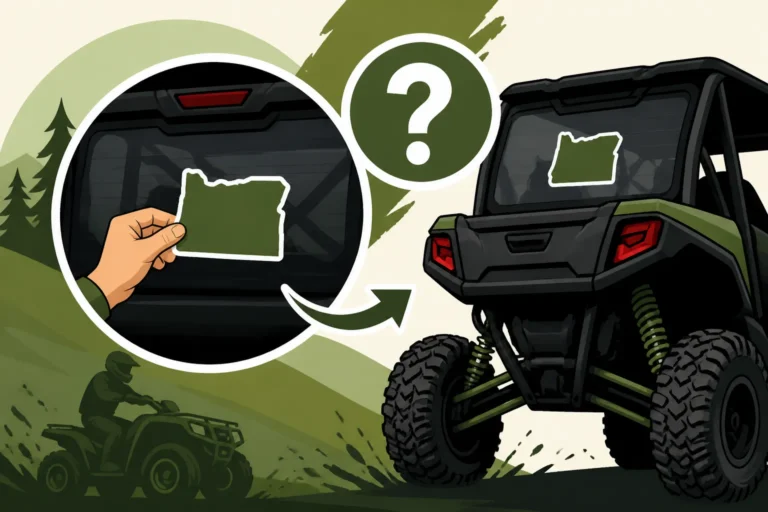
Oregon law requires that the physical permit decal be permanently affixed to the right-hand side of your ATV, UTV, or off-road motorcycle in a clearly visible location. This is crucial for long-term compliance and easy identification. However, during that 30-day window when you're operating on your temporary permit, the physical decal obviously won't be on your machine. This is where your printed temporary permit comes into play. You don't affix the temporary permit to your machine. Instead, you keep it with you, much like you would your driver's license or vehicle registration when driving a car.
While there's no specific instruction to "display" the temporary permit on your machine, having it readily accessible is paramount. Some riders might choose to temporarily tape a laminated copy to a visible part of their machine, like a fender or inside a clear document holder on a roll bar, just for added peace of mind. However, the official requirement is simply to have it available for inspection by an authorized officer. The key is to be able to produce it quickly when asked, confirming that your machine is permitted for [Two Years From the Month You Buy] and that you're within the 30-day grace period for the physical decal. This temporary measure is perfectly legitimate and keeps you legal.
Understanding Oregon Fines for Riding Without a Permit
The consequences of riding without a valid Oregon ATV operating permit can put a real damper on your day. Oregon considers riding without a permit a Class C traffic violation. This isn't just a slap on the wrist; it carries a significant fine and can definitely make you regret not taking a few minutes to get your permit online. The state wants to ensure that all riders contribute to the maintenance of the trails and riding areas, which is where the permit fees largely go.
Riding with just your temporary permit, however, means you are not riding without a permit. You are fully compliant, as long as that temporary permit is valid and you can present it. The fines apply to those who have no permit at all, or whose permit has expired, or who have failed to properly display their permanent decal once it arrives. So, while the thought of a fine can be intimidating, you can rest easy knowing that your online temporary permit provides legitimate protection against these penalties, allowing you to focus on enjoying your ride rather than worrying about legal repercussions. It's a small investment for a lot of peace of mind.
| Permit Type | Validity Window | Display Method | Proof to Carry | Arrival Time | Legal Status for Riding |
|---|---|---|---|---|---|
| Temporary (Online) | 30 days from purchase | With operator, readily accessible for inspection | Printed or digital copy of emailed permit | Instant (email) | Legal |
| Permanent (Decal) | 2 years from month | Affixed to right-hand side of machine (specific placement) | N/A (decal itself is proof) | 1-3 weeks (mail) | Legal |
Beyond the Permit: Essential Gear and Knowledge for Same-Day Riding
Securing your online permit is a fantastic first step, but it’s crucial to remember that it's only one piece of the puzzle for legal and safe riding in Oregon. The state has comprehensive regulations designed to protect riders, other trail users, and the environment. Before you confidently roll out of your driveway and head for the nearest staging area, you need to ensure both you and your machine meet all other requirements. Neglecting these can be just as problematic as not having a permit, leading to fines, safety risks, or even trail closures.
The All-Important Oregon ATV Safety Card Requirements
Just as your machine needs an operating permit, you, as the operator, need proof of safety education. Oregon requires an ATV Safety Education Card for virtually anyone operating an ATV or UTV on public lands or trails. This isn't just for kids; even experienced adult riders need to either take the online course, pass an equivalency exam, or prove a valid out-of-state card recognized by Oregon. It's a fundamental requirement and rangers frequently check for it alongside your operating permit.
The good news is that like the operating permit, the safety card can often be obtained relatively quickly online. Many people complete the required course and print their temporary card the same day. This means that with a little planning, you can tackle both the machine permit and your personal safety certification simultaneously, getting you fully ready for your adventure. Without this card, even with a valid operating permit, you could still face a fine and be told to cease riding. [Oregon ATV Safety Card Requirements] are non-negotiable for nearly every rider.
Machine Readiness: Oregon Spark Arrester Requirement and Sound
Beyond paperwork, your actual machine needs to meet certain standards. One of the most critical is the [Oregon Spark Arrester Requirement]. All ATVs, UTVs, and off-road motorcycles operating on public land in Oregon must be equipped with a U.S. Forest Service-approved spark arrester that is in good working order. This device is essential for preventing wildfires, especially in the dry summer months. A ranger will often check for this during a stop, and if your machine isn't equipped or the arrester is damaged, you could receive a citation. Always ensure your exhaust system is factory stock or that any aftermarket exhaust has a certified spark arrester.
In addition to spark arresters, Oregon also has sound limits for off-highway vehicles. Excessively loud machines can disturb wildlife, residents, and other trail users, leading to complaints and potential restrictions on riding areas. While a sound meter check might not be as common as a permit or spark arrester check, it's something to be aware of. Keeping your machine properly maintained and ensuring your exhaust system is compliant contributes to a positive image for the OHV community and helps keep trails open.
Personal Safety: Helmets and Passenger Rules
Your safety is paramount, and Oregon has strict regulations to ensure it. [Oregon Helmet Law for ATV Riders] mandates that all ATV operators and passengers must wear a U.S. DOT (Department of Transportation) approved helmet, properly fastened, regardless of age. This rule applies uniformly across all types of ATVs and UTVs (unless the UTV has a roof and seatbelts, which offers some exceptions for adults, though helmets are still highly recommended). This isn't a suggestion; it's a law, enforced vigorously. Don't even think about riding without one.
Furthermore, pay close attention to passenger rules. Many ATVs are designed for a single rider only, and carrying a passenger on a machine not specifically built for two can lead to instability and accidents, not to mention a ticket. Side-by-sides (Class IV machines) are generally designed to carry passengers, but ensure everyone has a designated seat, is buckled in, and can keep their feet within the machine's frame. These rules are in place because injuries on ATVs can be severe, and taking preventable steps like wearing a helmet and adhering to passenger limits can literally be life-saving.
Permit Specifics: What You're Actually Buying and Why It Matters
Understanding the fine print of your Oregon ATV operating permit can prevent misunderstandings and ensure you make the most of your riding time. It's not just a generic sticker; it represents a commitment to the OHV community and the ongoing maintenance of the fantastic riding opportunities Oregon provides. Knowing what the permit covers, how long it lasts, and which machines it applies to empowers you to ride responsibly and confidently.
What Oregon's $10 ATV Operating Permit Covers
The [What Oregon's $10 ATV Operating Permit Covers] is far more than just permission to ride. The revenue generated from these permits directly supports the acquisition, development, maintenance, and management of OHV riding areas and trails across the state. This means that every time you purchase a permit, you're directly investing in the trails you love to ride. This funding is crucial for things like improving staging areas, building and maintaining bridges over streams, clearing downed trees, and ensuring the sustainability of popular spots like the Oregon Dunes National Recreation Area or the Tillamook State Forest trails.
It also supports law enforcement and education programs aimed at promoting safe and responsible riding. So, while it's a mandatory fee, it's also a direct contribution to keeping Oregon's OHV opportunities vibrant and accessible for years to come. It’s an investment in your passion, ensuring there are places to ride and that those places are well-maintained.
Two Years From the Month You Buy: Understanding the Validity
A key detail that sometimes confuses riders is the permit's validity period. An Oregon ATV operating permit is valid for two years, beginning from the month you purchase it, not the exact day. So, if you buy your permit on May 15th, it's valid until May of two years later. This system simplifies renewals and provides a clear, consistent expiration cycle. This generous [Two Years From the Month You Buy] window means you don't have to worry about annual renewals, giving you more time on the trails and less time filling out paperwork.
Knowing this upfront allows you to plan your riding seasons and renewals accordingly. It’s a good idea to mark your calendar or set a reminder for when your permit is due to expire, so you can purchase a new one before you get caught out on a ride with an expired decal. Staying proactive ensures continuous compliance and avoids any interruptions to your riding plans.
How It Applies to Oregon's Four ATV Classes Explained
Oregon's permit system is quite inclusive. It applies to all types of off-highway vehicles that fall under the state's definitions of ATVs. This includes [Oregon's Class I Under ORS 801.190] (the traditional quads with handlebars and straddle seats), [Class III Off-Road Motorcycles in Oregon] (dirt bikes), and [Oregon's Class IV Side-by-Sides Under 75 Inches] (UTVs or side-by-sides, which have a steering wheel and bucket seats or bench seats). Even some vehicles that might be thought of as "buggies" or "sand rails" can fall into these categories depending on their specifications.
The beauty of the Oregon permit system is that there is one universal permit that covers all these classes. You don't need a different permit for your quad versus your dirt bike versus your side-by-side; they all use the same permit, and the fee is the same regardless of the class of machine. This simplifies things immensely for households with multiple types of machines or for riders who switch between different vehicles. The primary difference comes in where the physical decal is ultimately placed on each specific type of machine once it arrives in the mail, but the underlying permit itself is universal.
Disclaimer
This article is for general informational purposes only and does not constitute professional advice. Laws, prices and regulations vary by location and change over time. Consult a qualified professional for guidance on your specific situation.