South Jetty and Oregon’s Northern Dunes
South Jetty is a convenient starting point for exploring the northern Oregon Dunes, but a short ride from Florence can lead into changing sand, busy routes, fog, and areas with seasonal restrictions. This guide explains how to plan a safer ride, understand the terrain, choose useful maps, and avoid the common mistake of assuming every visible track is open.
Getting oriented at South Jetty
Where South Jetty fits into the Oregon Dunes
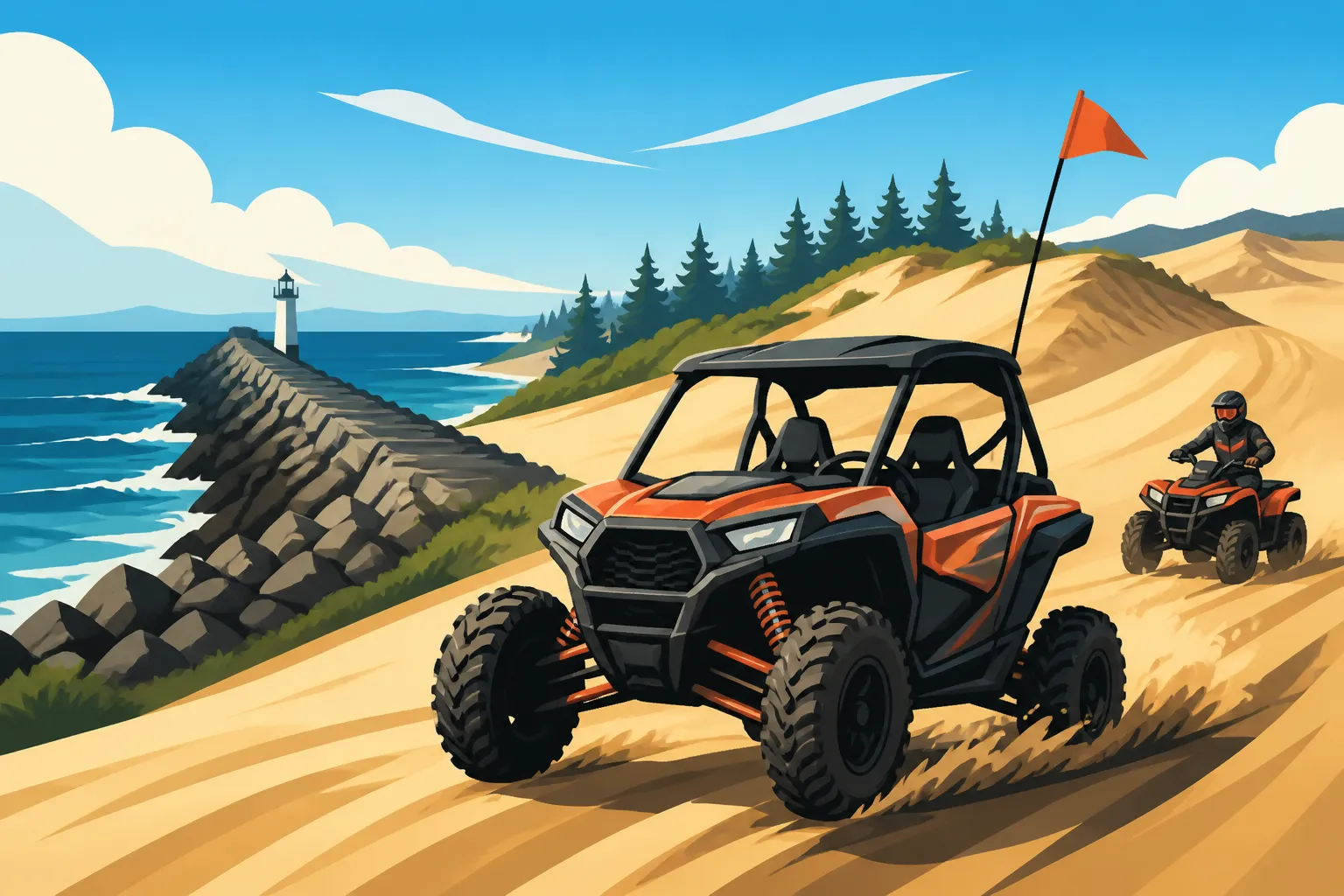
South Jetty sits near Florence, on the northern end of the Oregon Dunes National Recreation Area. Its location makes it an appealing place to begin a ride if you are staying in Florence, arriving along Highway 101, or camping nearby. From the staging area, riders can reach broad sand and dune terrain, but that does not mean every direction leads to an open or suitable riding route.
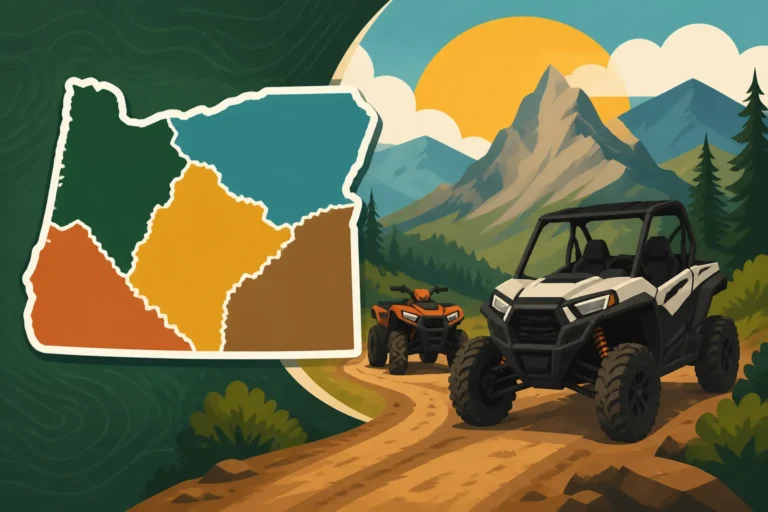
The dunes are part of a larger coastal landscape shaped by wind, vegetation, water, recreation, and wildlife protections. Conditions and access can differ from one section to another, and boundaries may not be obvious once you are out on the sand. A route that looks like an inviting shortcut could approach a closed area, a habitat protection zone, or terrain that is not a good fit for your machine or experience.
For a bigger picture of the riding region, read [Oregon Dunes National Recreation Area]. It helps to think of South Jetty as one access point within a broader recreation area—not as a self-contained playground with one simple loop. That distinction matters when you are planning how long to ride, where to stop, and how to return to your trailer.
What to expect from the riding terrain
The surface at South Jetty can change quickly. Wind reshapes sand, moisture affects traction, and traffic can leave ruts or churn up soft stretches. A firm-looking line in the morning may feel different later, and a broad open slope can hide a steep drop or a sharp change in elevation. Even experienced riders can be caught off guard when visibility or surface conditions shift.
Expect to make decisions as you go rather than relying on one fixed route. If you are riding with a group, agree on a conservative pace and a clear plan for regrouping before heading out. New riders may feel more comfortable starting on flatter, more open terrain where they can practice turning, braking, and reading the sand without having to negotiate a steep face or a crowded crossing.
Comparisons with other coastal riding areas can help you decide what kind of outing suits your group. [Oregon Dune Riding Areas Compared] is useful when you are choosing between South Jetty and other places on the coast. For access points and their relative locations, [Oregon Dunes Staging Areas From North to South] can help you make sense of the region before you arrive.
| Planning question | What to consider at South Jetty |
|---|---|
| Is it a good first stop? | It can be a convenient starting point near Florence, but check access conditions and restrictions before setting out. |
| What will the terrain feel like? | Sand firmness, ruts, slopes, and visibility can vary across the riding area and over the day. |
| Is every visible track open? | No. Use current official maps and posted signs, and respect closures and boundaries. |
| What should I bring? | Required riding documents, water, navigation, communication, recovery basics, and protective gear suited to your machine. |
| What if conditions become difficult? | Slow down, regroup, and turn back rather than pushing into terrain or visibility you cannot manage. |
Planning your route and reading the dunes
Use maps as a planning tool, not a guarantee
A map is especially useful at a coastal riding area because tracks, dunes, and landmarks can look surprisingly similar once you are away from the staging area. Before unloading, orient yourself to the access point, identify a reasonable turnaround plan, and make sure everyone in the group understands how to get back. If cell coverage is limited or unreliable where you ride, download or carry information that will still be available offline.
Digital mapping tools, including onX Offroad, can help riders review routes and organize a trip. Still, an app should be treated as one planning aid rather than permission to ride a particular line. Map layers may not reflect a recent closure, a newly posted restriction, a changed access route, or a boundary that is easier to understand on the ground. Check the land manager’s current information and signs at the site, then use your map to support—not replace—those sources.
It is also wise to carry a backup. A phone can lose power, overheat, or become difficult to use in blowing sand. A downloaded map, a charged power bank, and a simple shared route plan can make a real difference if someone in the group becomes separated. [Oregon Trail Maps Worth Carrying] covers the practical reasons to have more than one way to stay oriented.
Read the land and watch your visibility
On dunes, the terrain itself is part of the navigation challenge. A ridge can block sightlines, and a route may disappear behind a slope before you can see what lies beyond it. Approach unfamiliar crests cautiously and avoid charging over a dune when you cannot see the landing area or the traffic on the other side. Give other riders room, especially where tracks converge or the terrain funnels everyone toward the same opening.
Fog can be just as important as sand conditions near the coast. It may reduce the distance at which you can see another machine, a steep face, a marker, or a person on foot. If visibility drops, reduce speed, increase following distance, and consider stopping somewhere safe to regroup. Do not assume that a bright whip or headlight makes a fast approach safe when the surrounding view is obscured.
A tall, visible flag is an important part of dune-riding preparation, but it does not replace careful riding or attention to posted requirements. Confirm that your machine and equipment meet the rules for the area, and make sure a flag is securely mounted and visible from different angles. For practical preparation, [Oregon Dune Flags and Whips] and [Fog and Visibility on the Dunes] can help you think through visibility before you leave the staging area.
Choosing the right ride for your group
Match the route to experience and equipment
A large, capable machine does not automatically make every route appropriate. Riders should consider their experience, the vehicle’s handling, the number of people aboard, and how comfortable they are on soft sand. A side-by-side carrying passengers may need more room to turn and stop than a smaller machine. A new rider may be better off practicing on lower, less intimidating terrain before attempting steep or crowded sections.
Talk about limits before anyone starts riding. A person who is comfortable on a familiar trail may feel very different on open dunes, where the terrain keeps changing and there may be no nearby trees or fixed landmarks. Set expectations about regrouping, maximum distance from the group, and what to do if someone wants to turn around. A ride is more enjoyable when nobody feels pressured to keep up or attempt an obstacle they do not trust.
Group size and mixed experience also affect how you should travel. If the group includes beginners, keep the pace comfortable and avoid scattering across distant sections of sand. An experienced rider can help choose conservative lines and explain how the surface behaves, but should not pull less experienced riders into terrain they are not ready for. If anyone is unsure, shorten the loop and leave room to build confidence gradually.
Prepare for sand, weather, and small setbacks
Soft sand can make a machine work harder than expected. A rider who has only used a vehicle on firm roads may find steering and momentum feel unfamiliar, particularly when the surface is loose or churned. Make deliberate, smooth inputs and avoid sudden manoeuvres. If a vehicle begins to bog down, stop and assess the situation rather than repeatedly spinning the wheels and digging it in farther.
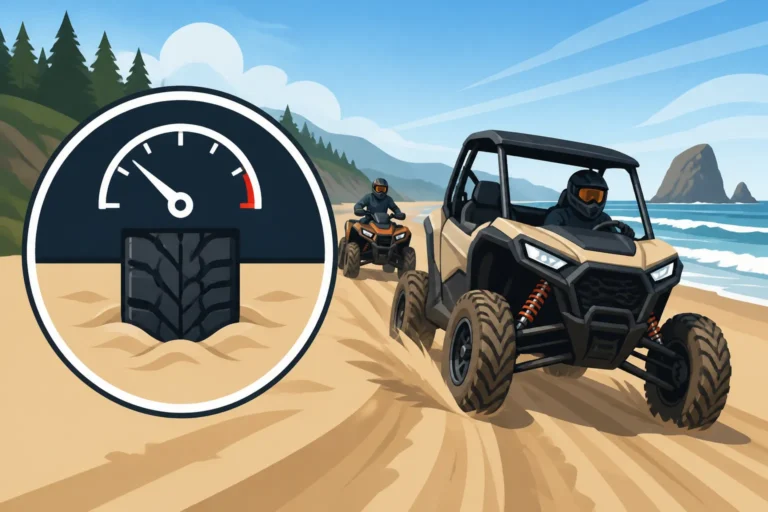
Tire pressure is one of the factors riders often discuss when preparing for dunes, but there is no universal setting that is right for every machine, tire, load, and condition. Follow the vehicle and tire manufacturers’ guidance, and make adjustments only if you understand the consequences. Carry the tools and recovery equipment that suit your machine, and know how to use them before you need them. [Soft Sand and Tire Pressure on the Coast] offers more background on why sand changes the way a machine behaves.
Bring water, weather-appropriate clothing, eye protection, and a way to communicate. Coastal weather can feel comfortable at the parking area and less pleasant once you are exposed to wind and spray. Sand can also make phones, zippers, and exposed equipment frustrating to use. Pack items in secure containers, keep essential documents protected, and avoid bringing loose gear that could fall off or distract the driver.
Closures, permits, and responsible riding
Check what is open before you unload
Coastal access is not static. Wildlife protections, land-management decisions, maintenance, weather, and safety concerns can affect where riding is allowed. Seasonal closures are especially important on Oregon beaches and dunes, where protected nesting areas and other sensitive habitat may have signs, fencing, or marked boundaries. Do not cross a closure line because the sand beyond it looks like an easy route or because other tracks appear to continue past it.
Before the trip, review official information for the riding area and look for notices posted at the entrance or staging area. Once there, follow signs even if they differ from an old screenshot, saved route, or printed map. If you are uncertain about a boundary, stop and confirm rather than riding ahead and hoping the line is permitted. [Snowy Plover Season on the Oregon Coast] explains why some coastal areas have seasonal protections that riders need to take seriously.
Respecting a closure is part of being a good neighbour to other recreation users and the landscape. Keep machines on permitted riding areas, avoid disturbing fenced or marked habitat, and do not assume that the beach, dunes, and nearby roads all share the same access rules. The safest approach is to understand the specific rules for the place you are using, rather than relying on what was allowed at another staging area or on a previous visit.
Sort out permits, fees, and riding requirements
A trip plan should include required operating documents as well as maps and equipment. Oregon’s OHV requirements depend on the machine, the rider, and where the vehicle is operated. Visitors may also need to consider whether their out-of-state documentation is accepted for their circumstances. Check the applicable rules before travelling, and make sure the permit or recognized alternative is in place before riding.
Operating permission and site access costs are not always the same thing. A vehicle permit does not necessarily cover a parking or day-use fee at a recreation site. Those requirements may depend on the access point and the managing agency, so check what applies to South Jetty before you go. This prevents the aggravating surprise of arriving with the machine ready to unload and discovering you still need to sort out a separate pass or payment.
Riders should also review safety education requirements and any rules that apply to passengers or younger operators. A family may have different requirements for different riders or machines, so do not assume one person’s paperwork covers everyone. Keep important documents available during the ride, either in a secure place on the machine or in another protected location that is accessible if asked.
A practical South Jetty day plan
Before leaving Florence
Start with a quick check of the current access information, riding restrictions, weather, and any site fees. If you are using a digital tool such as onX Offroad, review your planned area ahead of time and download what you need while you have a reliable connection. Then compare that information with official notices and the signs you see when you arrive. A map can help you plan, but it should never overrule an on-site closure.
Next, check the machine and the gear you are relying on. Look over tires, steering, brakes, fuel, and any required safety equipment. Secure loose items so they cannot shift or fall off in the sand. Make sure each rider knows where the group will regroup, how to signal a problem, and what to do if they lose sight of the others.
Finally, decide on a manageable first ride rather than setting out with an ambitious all-day route. Allow time to get comfortable with the terrain and to return before fatigue or changing conditions become a problem. If you are travelling with children or first-time riders, build in breaks and make sure nobody is being rushed into riding beyond their comfort level.
While riding and when it is time to leave
Ride with enough space to react to other machines, people, and changing terrain. Slow down around ridges, intersections, and areas with limited sightlines. If a route is crowded, wait for a clear opening rather than squeezing through. If visibility or conditions deteriorate, pause in a safe place, regroup, and consider ending the ride early. Turning back is good judgement, not a failed outing.
Keep track of time and fuel, and do not let the group drift so far apart that a simple mechanical issue becomes a search. When someone stops, make sure the rest of the riders know. If a machine becomes stuck, take a moment to assess the safest recovery plan and keep people clear of tensioned straps or moving vehicles. [Getting Stuck in Wet Sand] has useful considerations for handling one of the most frustrating dune setbacks.
Before leaving, secure and inspect your equipment, and take a moment to make sure no trash or loose gear has been left behind. Sand and salt can be hard on vehicles, so a thorough rinse and appropriate post-ride care are worthwhile after a coastal outing. If South Jetty is part of a longer trip, use your experience that day to adjust the next plan: choose an easier route if the group was stretched, or allow more time if changing conditions made navigation slower than expected.
Disclaimer
This article is for general informational purposes only and does not constitute professional advice. Laws, prices and regulations vary by location and change over time. Consult a qualified professional for guidance on your specific situation.