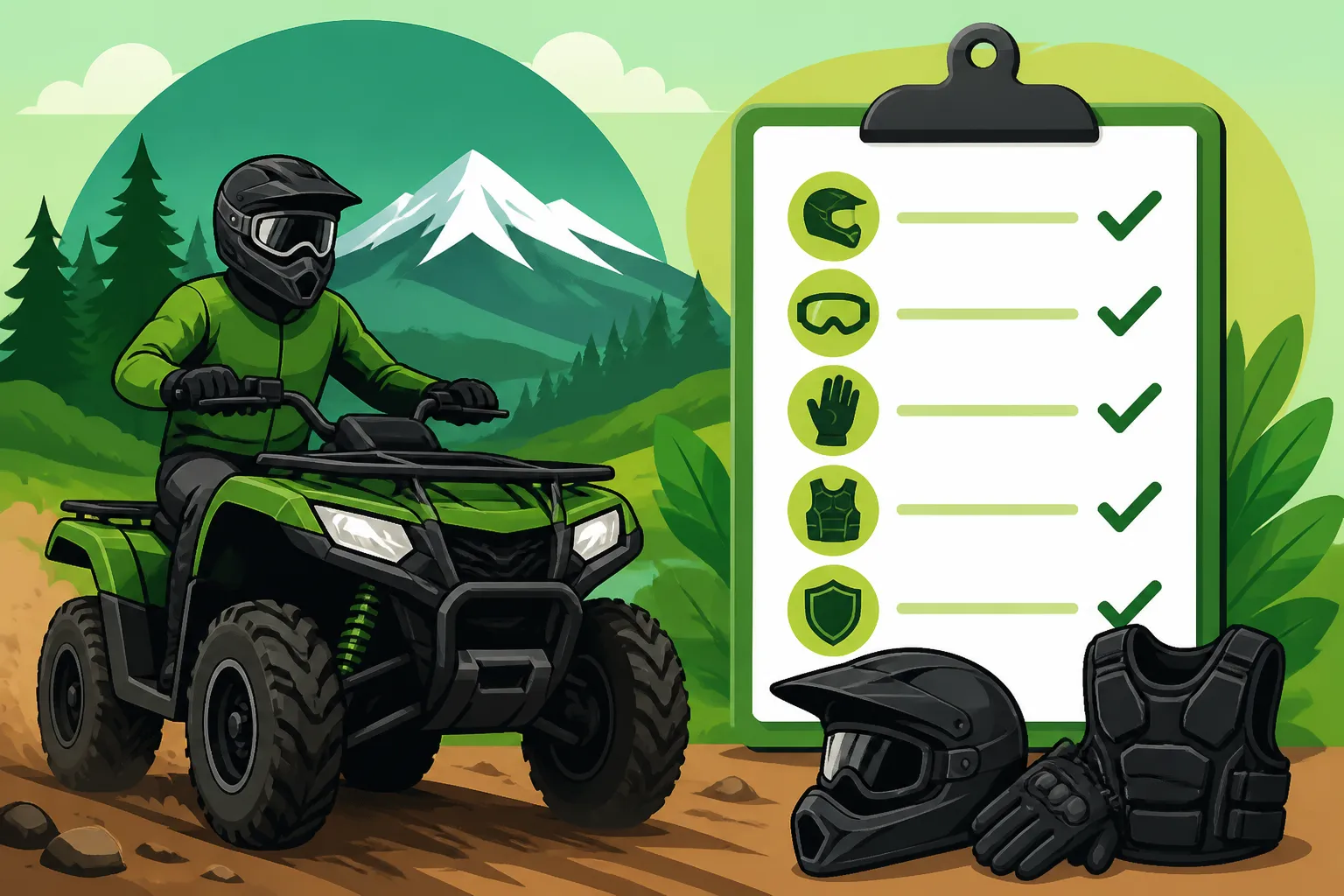
What Oregon’s ATV Rental Safety Checklist Covers
Renting an ATV or UTV in Oregon can make it easy to get straight to the riding, but the safety checklist deserves more than a quick signature. It helps you understand the machine, the riding rules and what to do if something goes wrong. Here’s what to look for, what the checklist does not replace, and what to ask before you leave the rental counter.
What the safety checklist is—and what it is not
An Oregon ATV rental safety checklist is part of the rental shop’s safety briefing. It is meant to help you understand the machine you are taking out and the conditions attached to the rental. Depending on the provider, you may review the points with an employee, confirm that you understand them, and sign or initial a form.
The form itself can vary from one rental business to another. It may be a printed sheet, a digital acknowledgement, or part of a larger rental agreement. Its purpose is practical: make sure the renter has received key instructions before riding and create a record that those instructions were covered. A signature should mean you have had a chance to understand the information, not just that someone handed you a page.
The checklist is not the same thing as an Oregon ATV operating permit. A permit relates to whether a machine is authorized for off-highway use in Oregon; a rental safety briefing is about using the machine safely and following rental conditions. Ask the rental provider how the machine’s permit is handled and check the relevant rules in Oregon Rules for a Rented Machine and Oregon ATV Permit for a Rented Machine.
The checklist is also not a substitute for every rider’s safety-card requirement. Oregon has ATV safety education rules that depend on the machine class and the rider. A rental business may explain what applies to your rental and whether it provides a temporary safety card, but do not assume that signing the checklist automatically satisfies every requirement. See Oregon ATV Safety Card Requirements and Oregon’s 30-Day Rental Safety Card Explained for the distinction.
Finally, it is not the same as the rental contract or liability waiver. Those documents may cover payment, damage, late returns, permitted riding areas and other terms. Read them separately. A safety briefing can explain how to operate the machine, but it does not erase the need to understand what you are agreeing to pay for or where you are allowed to ride.
What a checklist should help you understand
The exact form differs, but the briefing should leave you able to answer basic questions about the machine, protective equipment, riding restrictions and what to do if there is trouble. If you cannot explain a point in your own words, ask for another explanation before you ride.
| Checklist topic | What to understand before departure |
|---|---|
| Controls | How to start, stop, steer, shift if applicable, and use the brakes |
| Machine fit | Which rider may operate it and who may ride as a passenger |
| Protective gear | What equipment is supplied, required, or recommended |
| Riding area | Where the rental may be ridden and which routes or zones are off limits |
| Riding technique | How to manage slopes, soft sand, turns, speed and spacing |
| Emergencies | Whom to call, what to do after a breakdown, and how to report an injury |
| Rental terms | Return time, fuel expectations, damage reporting and recovery procedures |
Controls and machine-specific operation
A useful briefing covers the controls on the particular ATV or UTV you are renting. Do not assume every model works the same way. Ask the employee to show you how to start and stop it, use the brakes, steer, change gears if applicable, engage any drive settings, and use the parking brake or other safety features.
If the machine has a steering wheel, seat belts, a roof, doors or a roll cage, ask how those features work and whether they must be used while riding. A side-by-side may feel familiar to someone who drives a car, but it handles differently, and a quad has its own balance and control demands. For a first-time operator, a demonstration while parked is more useful than a quick verbal explanation at the counter.
Make sure you know what to do if the machine will not start, stalls, overheats or gets stuck. Some controls may be unfamiliar even to an experienced rider, particularly if the rental model differs from the one you own. If the controls are not clearly labeled or the explanation is rushed, pause and ask before heading out.
Protective equipment and rider fit
The briefing should clarify what protective equipment the rental includes and what you need to bring or wear yourself. Depending on the provider and machine, this may include a helmet, goggles, gloves or other gear. Ask about helmet sizing and fit rather than assuming a helmet that is available will fit correctly. A loose helmet or poor visibility through goggles can make riding less safe.
For a UTV, ask how seat belts or other occupant restraints work and whether every rider must use them. For an ATV, ask what the rental provider permits regarding passengers. Never assume that a passenger is allowed simply because another person can physically sit on the machine. The model’s design and applicable rules matter. You can check Oregon Rules for Passengers on a Quad or Oregon Passenger Rules in a Side-by-Side if passenger use is part of your plan.
A checklist should also make clear who is allowed to operate the rental. Rental companies may set their own age and license conditions, while Oregon’s rules can vary by machine class and rider. If a teenager or child will be involved, confirm the requirements with the shop before booking, not after arriving.
Riding limits and prohibited areas
A rental briefing should identify where the machine may be used and any areas the rental provider excludes. This can be especially important at a large riding area where terrain, access points and closures may change. Ask for a map or a clear explanation of the permitted route. If a rental is restricted to certain trails, sand areas or a guided route, make sure every driver in your group understands that boundary.
Ask what signs or markers mean, how to recognize a closed route, and whether you may ride on roads, beaches or public land. Do not infer permission from the fact that a route is physically accessible. Public access, land ownership, local restrictions and rental-company rules are separate questions. A provider’s checklist may set stricter limits than the general rules for the area.
If you are renting near coastal dunes, ask where you may ride, where vehicles are prohibited, and how to avoid marked habitat or other closures. In a forest riding area, ask about trail designations, gates and any active work or temporary restrictions. When the allowed area is unclear, ask the rental provider to point it out on a map before you leave.
How to complete the checklist without rushing
A form is useful only if you understand the instructions behind it. Take the time to review each item, especially if you are new to off-highway riding or unfamiliar with the machine. If several people will operate the rental, make sure each driver receives the necessary explanation. One person’s understanding does not guarantee that everyone in the group knows the rules.
Before signing, use a simple sequence:
- Identify the exact machine. Confirm the make or model, machine type and seating arrangement match the briefing you are receiving.
- Ask for a control demonstration. Have an employee show you the important controls while the machine is stationary.
- Confirm who may drive and ride. Check the provider’s age, license and passenger conditions for each person in your party.
- Clarify the riding area. Ask which routes or zones are allowed, where closures may apply, and whether the rental has location restrictions.
- Review emergency instructions. Get a working contact method and find out what to do after a crash, breakdown or recovery situation.
- Read the rental terms separately. Check return time, fuel expectations, damage reporting and any recovery or cleaning rules.
- Ask about cards and permits. Confirm what paperwork applies to the rider and whether the rental machine has the required permit.
- Sign only after questions are answered. If a statement is unclear or does not match what the employee told you, ask for clarification before acknowledging it.
A good shop should be willing to answer reasonable questions. If the employee tells you to sign without explaining a point, or the form says you received instructions you did not receive, speak up. Ask for the missing briefing and a corrected or clarified form if needed.
Keep a copy or photo of the rental documents if the provider allows it, and know where to find the rental shop’s contact details while riding. A checklist is not much help if you cannot remember the emergency number or cannot identify what to do when the machine has a problem.
Safety cards, permits and rental paperwork
The paperwork at a rental counter can be confusing because several documents may be involved. A safety checklist, a safety education card, an ATV operating permit, and a rental contract serve different purposes. Treat them as separate items and ask what each one does.
Oregon’s safety education requirements can depend on whether the machine is Class I, II, III or IV and on the rider’s age. Rental customers should not guess that the checklist is a substitute for an ATV safety education card. Ask the provider what card or other proof is required for your machine and rider, and whether the rental business can supply a temporary option for the rental period. The rules for a temporary rental card are not the same as a blanket exemption from safety requirements.
A rental business may provide paperwork or instructions intended to address the applicable safety-card process. Confirm the details directly with the provider, including who needs the card, whether it applies to each driver, and how long it remains valid. The explanation in Does Your Rental Come With a Safety Card? can help you prepare questions before you arrive.
The machine’s operating permit is another separate issue. Ask whether the rental machine carries the permit or decal required for the riding area, and whether the provider has any additional requirements for that location. The renter should not assume that a safety checklist proves that the machine is permitted, and the permit should not be treated as proof that every rider has met the education requirements.
The checklist also does not replace the rental agreement. Read the agreement for terms such as approved riding areas, return conditions, damage procedures, fuel expectations and what happens if the machine needs recovery. The provider should explain any important responsibilities, but written terms are worth reviewing yourself. If the rental includes a guided ride or has restrictions on where you can go, make sure those limits are clear before accepting the keys.
For a fuller explanation of a rental provider’s obligations and the information you should receive, see What an Oregon Rental Agency Must Do and What a Rental Agency Must Hand You. Those details may help you distinguish a safety briefing from the rest of the rental paperwork.
Red flags, follow-up questions and what to do next
A rushed handoff is not automatically proof that a rental is unsafe, but it is a reason to slow down and ask questions. Pay attention if the employee cannot demonstrate the controls, gives different answers about permitted areas, or asks you to sign a statement that does not reflect what happened. You are entitled to understand the machine and the rental limits before you set out.
Use direct questions rather than relying on broad assurances:
- “Can you show me the brake and shutoff?”
- “Which person in my group is allowed to drive this machine?”
- “Where exactly may we ride, and what areas are off limits?”
- “What should we do if we get stuck or have a mechanical problem?”
- “Does this rental include a safety card, or do we need to provide one?”
- “What permit or decal should be on the machine?”
- “Who do we call if a trail is closed or we cannot find the return route?”
- “What damage or recovery charges should we understand before leaving?”
Check the machine before you depart. Look for obvious damage, low or unusual tire pressure, loose equipment, warning lights or missing items the employee said were included. Photographing the machine at pickup can help document its condition, particularly if you see a scrape or defect. Tell the employee about it and ask that the condition be recorded before you leave.
Do not ride away if a safety-critical issue remains unresolved. Examples include uncertainty about how to stop the machine, a poorly fitting helmet, a passenger arrangement the provider has not approved, or an unclear emergency plan. A short delay at the counter is preferable to discovering the problem on a remote trail or in soft sand.
Once riding, follow the briefing even if you see other riders doing something different. Other people’s behavior does not change your rental restrictions or the rules of the area. If signs, a map and verbal instructions conflict, do not choose the most permissive interpretation. Contact the rental provider or the relevant site staff and stay clear of any route that may be closed.
When you return, report damage, a mechanical problem or an incident promptly. Do not wait until the rental shop notices it. If the machine was stuck or needed assistance, follow the provider’s instructions and keep any relevant details about when and where it happened. Clear, timely communication can help resolve the issue and supports the next renter’s safety.
A checklist should make the experience more understandable, not more mysterious. It is a starting point for a clear briefing; it cannot answer questions the provider has not addressed or replace permits, safety-card requirements, local rules and contract terms. Take the time to clarify each piece before the ride.
Frequently Asked Questions
Does signing the checklist mean I have an Oregon ATV safety card?
Not by itself. The checklist and a safety education card serve different purposes. Ask the rental provider whether a temporary card or other safety-card process applies to your machine and rider.
Does the rental safety checklist prove that the machine has an Oregon permit?
No. A checklist records safety instructions or acknowledgements; it is not an operating permit. Ask the rental provider how the machine’s permit is handled and check the decal or paperwork as appropriate.
Does every rental business use the same checklist?
The form and presentation can differ between providers. The important point is that you understand the controls, riding limits, protective equipment and emergency steps before you leave.
What should I do if I do not understand a checklist item?
Ask the employee to explain it and, where useful, demonstrate it. Do not sign to confirm instructions you have not received or understood. If the issue remains unresolved, pause the rental rather than setting out uncertain.
Disclaimer
This article is for general informational purposes only and does not constitute professional advice. Laws, prices and regulations vary by location and change over time. Consult a qualified professional for guidance on your specific situation.