Oregon Rules for Riding Near Nesting Birds
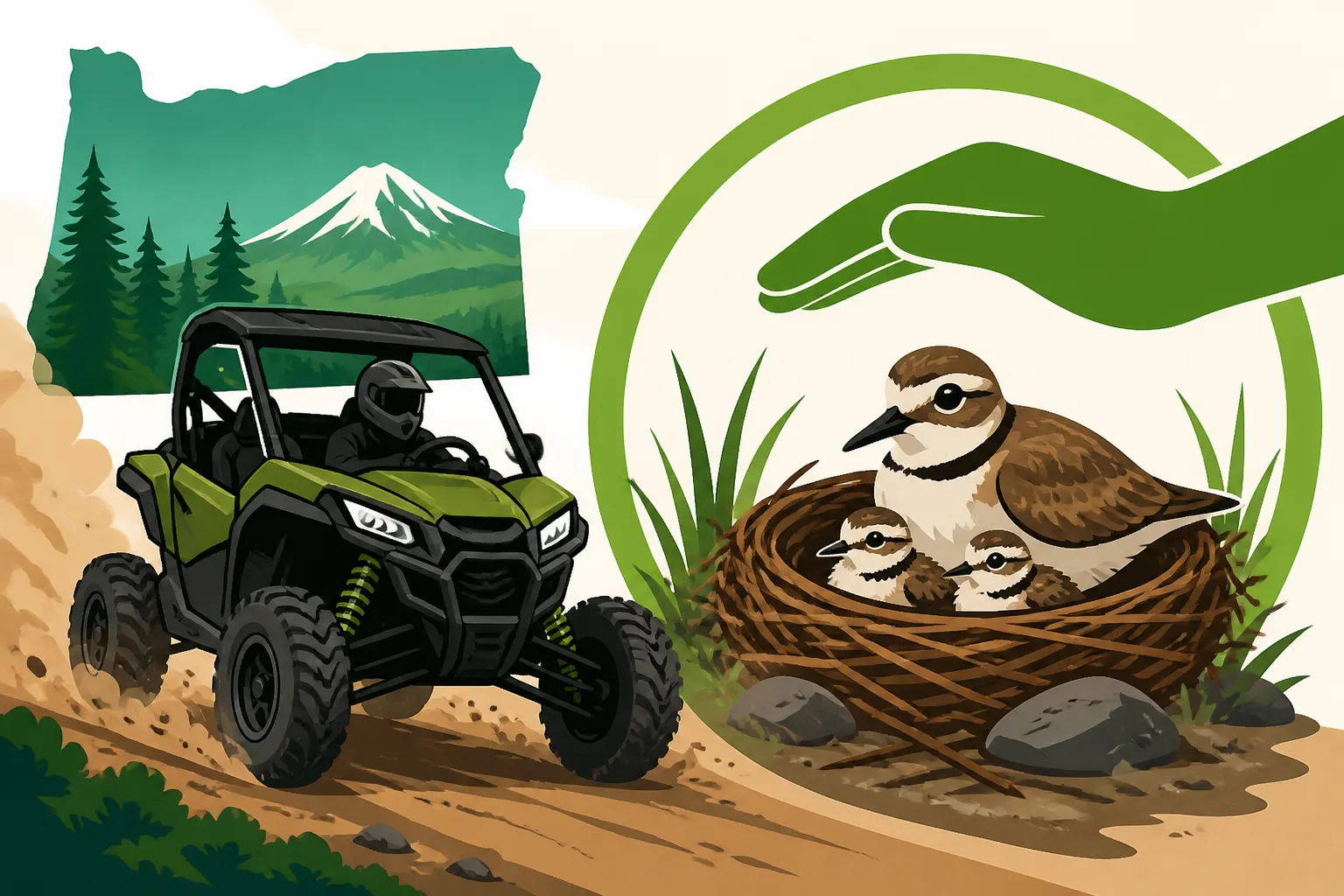
Oregon’s coastal riding areas can include seasonal protections for nesting shorebirds, especially western snowy plovers. A trail or stretch of beach that was open on a previous visit may be restricted when birds are nesting. Know how to check current closures, read the markers, and choose a route that keeps your ride away from protected habitat.
Where nesting-bird restrictions apply
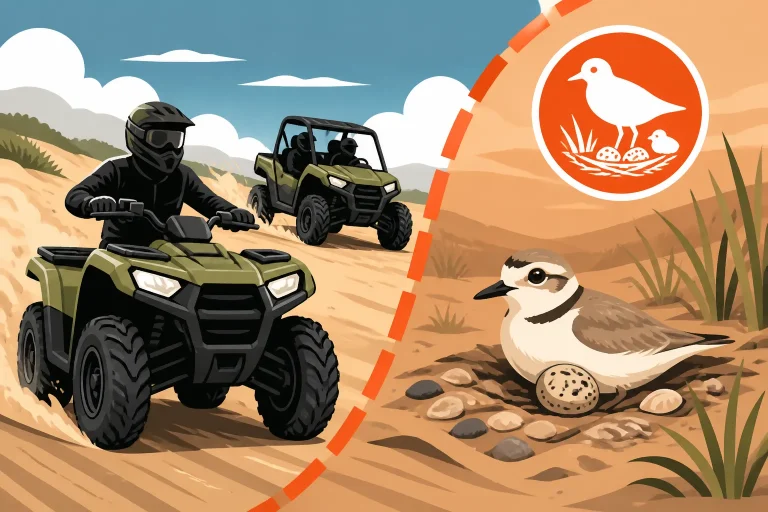
Nesting protections are most likely to affect riding on Oregon’s coast, where shorebirds use beaches and nearby dune habitat. The western snowy plover is a particularly important example: it nests on open sand, where eggs and chicks can be difficult to see. A marked area may look like ordinary beach or dune, but it can be closed to people and vehicles to protect birds during a sensitive period.
Restrictions are not necessarily the same along the whole coast. The rules may differ between riding areas, and a boundary can change with the site, season, or current wildlife management needs. A route that is open at one staging area does not mean that nearby shoreline or dunes are open too. Even within one riding area, some sections may be available while others are closed.
There is no single distance from every nest that riders can use as a reliable rule of thumb. Follow the boundaries set for the location rather than estimating a buffer yourself. Fencing, signs, posts, or mapped closures may mark areas to avoid. If a boundary is unclear, choose another route until you can confirm where riding is allowed.
This is particularly important on the Oregon Dunes, where open riding areas sit alongside protected habitat and other closures. Before heading out, review current site information and pay attention to signs at the staging area and along the route. Snowy Plover Season on the Oregon Coast provides more context on seasonal protections, while [Oregon Rules for Riding a Beach] covers the broader limits on beach riding.
How to recognize and respect a protected area
A nesting closure may be marked with signs, fencing, symbolic markers, or a combination of these. Markers can be easy to miss from a moving machine, especially in fog, blowing sand, or busy riding conditions. Slow down near signs and boundaries, and do not assume a marker is old or irrelevant just because there are no birds in sight.
In some locations, protective fencing helps keep vehicles and pedestrians out of nesting habitat. Do not drive around an end of the fence, cross it, or treat it as a suggestion. Keep the machine on the open side and use a different route if the barrier blocks your path. Snowy Plover Fencing on the Beach explains why these barriers matter, and Marked Habitat on the Sand offers more detail on interpreting protected areas.
| What you encounter | Safer response |
|---|---|
| A sign or fence marking a closure | Stop before the boundary and take another open route |
| A boundary that is difficult to see | Slow down, stay on the established open route, and check site information |
| A bird or chick on the sand | Give it space; do not approach, follow, or try to move it |
| A route that appears open but conflicts with a posted notice | Follow the notice and confirm the current route status |
| A closure that divides a familiar riding area | Treat the closed section as off-limits, even if it was open on a past trip |
The best approach is to avoid entering habitat in the first place rather than trying to decide whether a bird is nesting. Eggs and chicks can blend into the sand, and adult birds may move away from a nest when people or vehicles approach. Seeing no bird does not prove that an area is unoccupied or safe to cross.
Do not ride toward birds for a closer look, circle them, or stop beside a nest area to take photos. Keep your machine pointed away from protected habitat and continue on a route that is clearly open. If you are traveling with a group, make sure the riders behind you understand the boundary before anyone turns or stops.
Dogs and other visitors can also disturb wildlife. Keep pets under control and follow the site’s rules for animals, particularly near posted closures. A bird may be affected by repeated approaches even when no one touches it or damages a visible nest.
Check closures before and during your ride
A permit, registration, or pass does not give permission to enter every part of a riding area. Wildlife closures are separate from vehicle-permit requirements, and an area can be closed even when the rest of the site is open. For background on the riding permit itself, see [Oregon ATV Permits Explained]. For coastal access and site fees, see Oregon Day Use Fees Explained.
Use the land manager’s current information before you travel, then check signs when you arrive. A general trail map can help with planning, but it may not show a temporary or recently changed wildlife boundary. When the map and a posted closure appear to disagree, do not ride into the questionable area. Confirm the current status with the site manager or choose a route that is plainly open.
A practical pre-ride check looks like this:
- Identify the specific riding area and the agency or land manager responsible for it.
- Check current closure notices and maps for nesting-bird restrictions.
- Read signs at the staging area before unloading or riding.
- Look for boundary markers along the route, particularly where open sand meets fenced or signed habitat.
- Keep a backup route in mind in case a familiar section is closed.
- Recheck notices during a longer visit, especially if you move to another staging area.
Conditions and access rules can change during a trip. A closure might be put in place after you have planned your route, or a route could be restricted while you are at the site. Do not rely only on a map saved from a previous season, a social media post, or what another rider remembers. If you are unsure, ask the land manager rather than crossing a boundary to investigate.
Fog and dune terrain make it harder to see signs and wildlife from a distance. Reduce speed where visibility is limited, avoid cutting across unmarked sand, and stay on routes that are clearly open. If you cannot tell which side of a boundary you are on, stop in a safe place away from the marked habitat and work out the route before continuing.
What to do if you see birds or cross a boundary by mistake
If you spot a bird near your route, do not approach to identify it or check for a nest. Give it room, avoid sudden turns toward it, and continue away from the area if there is a clear open route. If the bird is in the path ahead, stop at a safe distance rather than driving close to make it move. Choose another direction when possible.
If you realize that you have crossed into a posted closure, leave by the safest direct route without driving farther into habitat. Do not stop inside the area for photos, and do not make repeated turns that widen your tracks. Once outside, review the signs or map so you can avoid the boundary for the rest of the ride. If the closure markers are damaged or confusing, contact the site manager when practical.
Avoid handling eggs, chicks, or birds, and do not try to relocate them. Wildlife response should be left to the appropriate professionals. Report an injured animal or a damaged barrier to the land manager, using the site’s posted contact information where available.
For riders, the simplest rule is also the most useful: follow the marked open route, treat wildlife boundaries as real closures, and confirm current conditions before entering an unfamiliar area. That protects nesting birds and helps keep riding areas available without turning a recreation trip into an avoidable wildlife disturbance. Other seasonal protections may also affect access; Oregon Trail Closures to Check First is useful when planning around changing site conditions.
Disclaimer
This article is for general informational purposes only and does not constitute professional advice. Laws, prices and regulations vary by location and change over time. Consult a qualified professional for guidance on your specific situation.