Oregon ATV Permit for a Jeep
It's incredibly common for folks to scratch their heads when it comes to off-road permits for vehicles like a Jeep in Oregon. You own a perfectly street-legal vehicle, right? So why would it need something typically associated with quads and dirt bikes? This guide is going to clear up that confusion, explaining exactly why your Jeep needs an Oregon ATV Operating Permit if you plan to hit the trails on public land, and how to make sure you're riding legally and safely.
Understanding Oregon's ATV Classification System
Oregon has a unique way of classifying off-highway vehicles (OHVs), and it’s not always intuitive, especially for vehicles that can also be driven on paved roads. Many people assume "ATV permit" means it's only for a four-wheeler, but the system is much broader than that. To figure out where your Jeep fits, we first need to understand the basic categories the state has laid out. It's less about the specific brand or model of your rig, and more about its general characteristics and, crucially, how you plan to use it.
Why Your Jeep Isn't a Class I, III, or IV
When most people think of an ATV, they picture a Class I machine. These are typically what we call quads or four-wheelers, characterized by handlebars, a straddle seat, and often a width limit of 50 inches or less. These are purpose-built for off-road recreation, and they’re what most folks immediately associate with an "ATV permit." If you're riding a nimble, single-rider machine through the tight woods, chances are it's a Class I. You can learn more about [Oregon's Class I Under ORS 801.190].
Then you have Class III machines, which are essentially off-road motorcycles or dirt bikes. These also have handlebars and a straddle seat but are two-wheeled. Again, clearly not a Jeep. And finally, Class IV machines are what we commonly refer to as side-by-sides or UTVs. These often have bench or bucket seats, a steering wheel, and can accommodate multiple passengers. While they might look a bit like a stripped-down car, they typically have a width limit of 75 inches. Check out [Oregon's Class IV Side-by-Sides Under 75 Inches] for more details. Your Jeep, with its full body, doors, and standard automotive controls, clearly doesn't fit into any of these categories, which is where the confusion often begins.
The key distinction for these first three classes is that they are all specifically designed as off-highway vehicles from the ground up. They aren't generally made with the intent of being street-legal right off the showroom floor (though some Class IIs can be converted). A Jeep, on the other hand, is born street-legal, and its off-road capability is an added bonus, not its sole design purpose. This fundamental difference is why it can be hard to mentally place a Jeep into the same bucket as a quad or a dirt bike, but Oregon's regulations account for this.
Where a Jeep Actually Fits: Oregon's Class II
So, if a Jeep isn't a Class I, III, or IV, where does it land in Oregon's OHV system? This is where Class II comes into play, and it's the catch-all category for a wide range of vehicles. Oregon defines a Class II all-terrain vehicle as "any motor vehicle operated on public lands for off-highway recreation that is not a Class I, III, or IV ATV." This is the critical piece of information for Jeep owners. It doesn't matter if your vehicle can also drive on the highway; if you take it off-pavement on public land for recreation, and it doesn't fit the other three definitions, it's a Class II.
This classification is intentionally broad to encompass a variety of vehicles that might be used for off-roading. Think about other types of rigs you see out on the trails: custom-built sand rails, dune buggies, older pickup trucks converted for rock crawling, or even other SUV brands like older Broncos or Land Rovers. All of these, when used for off-highway recreation on public lands in Oregon, fall under the Class II umbrella. You can dive deeper into [Oregon's Class II Under ORS 801.193] if you're interested in the specifics. The important takeaway is that your Jeep, despite its street-legal status, is very much a Class II ATV in the eyes of Oregon state law when it’s playing in the dirt.
Because Class II is so inclusive, it often generates the most questions. People often think "ATV" means exclusively a purpose-built off-road machine. But Oregon's legislature recognized that many vehicles, like Jeeps, have dual capabilities. They wanted to ensure that any motor vehicle enjoying the state's incredible public lands for off-highway recreation contributes to the maintenance and management of those areas, regardless of whether it also has license plates. So, while your Jeep may seem out of place alongside a fleet of quads, it's firmly in its designated category when you're hitting the trails.
Navigating the Oregon ATV Permit for Your Jeep
Now that we've established your Jeep is a Class II ATV when used off-road on public land, the next logical step is understanding the permit itself. This isn't just a suggestion; it's a mandatory requirement. Ignoring it can lead to fines and a less-than-enjoyable day out. The process for obtaining the permit is straightforward, but knowing where to get it and what to do with it is crucial for a smooth experience.
Yes, Your Jeep Needs an Oregon ATV Permit for Off-Road Use
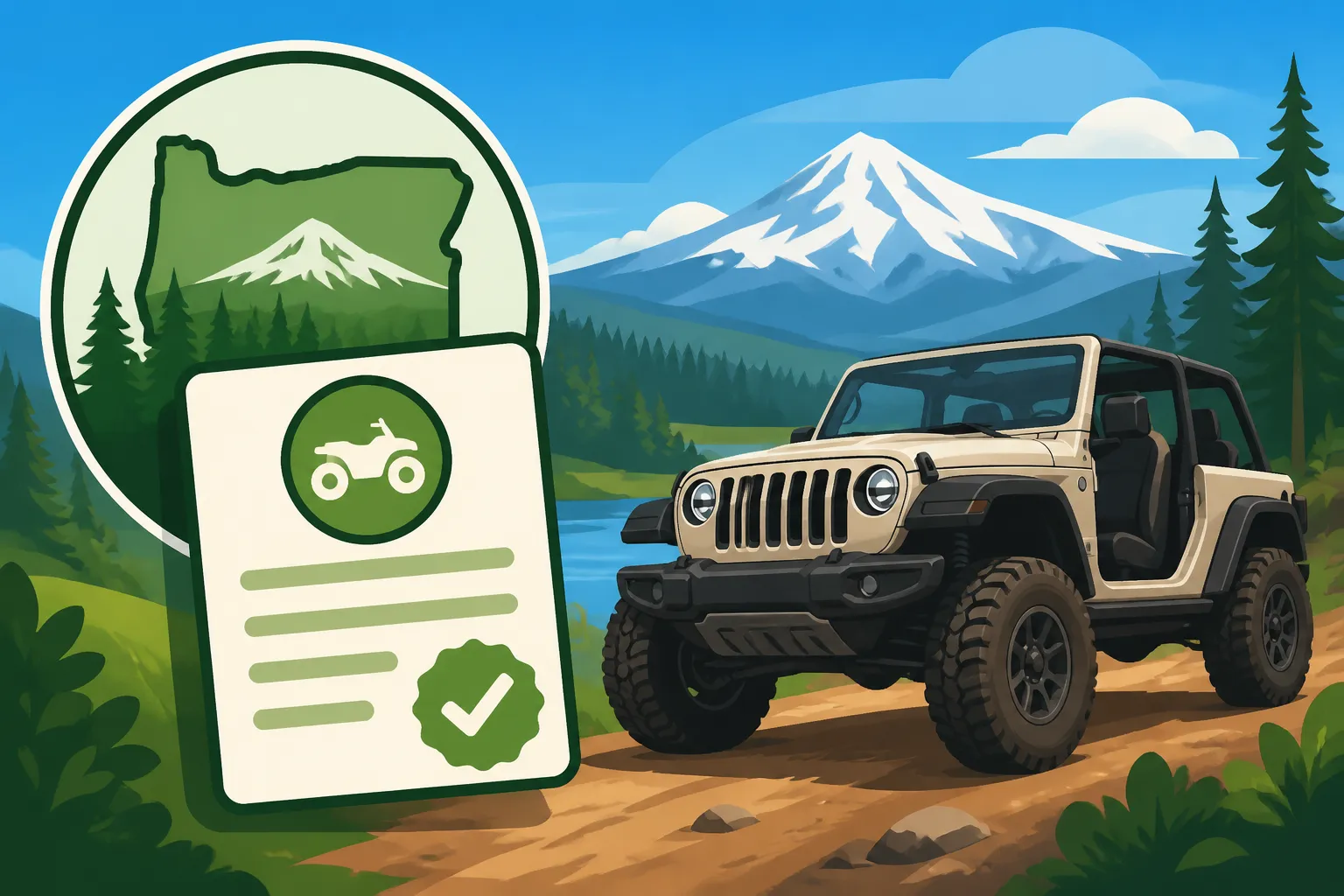
Let's be absolutely clear: if you intend to drive your Jeep on any public land in Oregon for off-highway recreation, you must have an Oregon ATV Operating Permit. This includes popular destinations like the Oregon Dunes, the Tillamook State Forest trails, Millican Valley, or any designated OHV area. The permit is tied to the machine itself, not the driver, and it signifies that you've contributed to the fund that helps maintain these fantastic riding areas. It's a small fee that goes a long way to keeping our trails open and in good shape.
The permit is valid for two years from the month of purchase, which means you're covered for a good chunk of time once you get it. You can purchase these permits in several convenient ways. Many folks opt to buy them online through the Oregon Parks and Recreation Department website, which is quick and easy. Alternatively, you can visit one of the many authorized permit agents scattered across the state, which often include dealerships, sporting goods stores, or even small convenience stores in rural areas near popular riding spots. You might even find them available at some Oregon State Parks offices. For details on where to find one, you can check out [Where Oregon Sells ATV Permits] or even [Buying an Oregon Permit Online].
Imagine planning a long weekend trip to the coast, eager to explore the dunes, only to arrive at the staging area and realize you overlooked this crucial step. It's a common frustration, but it's easily avoided with a little planning. The permit isn't about registering your Jeep in the traditional sense like a street vehicle; it's an operating permit specifically for its off-highway recreational use. This distinction is vital for Jeep owners to grasp, as it separates your road-legal registration from your off-road access permissions.
Decal Placement and What to Expect
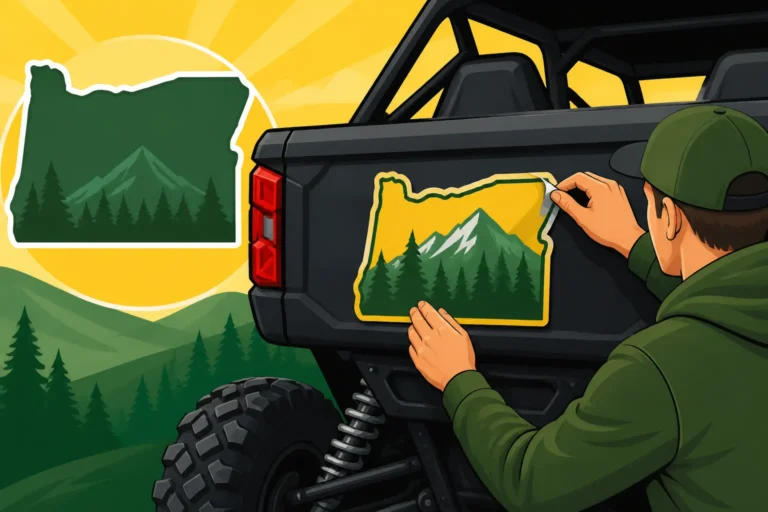
Once you've secured your Oregon ATV Operating Permit, you'll receive a decal that needs to be prominently displayed on your Jeep. For Class I, III, and IV machines, there are very specific placement rules, often involving a particular side of the machine or a visible fender. For a Class II vehicle like a Jeep, the rule is a bit more flexible but still clear: the decal needs to be "affixed in a clearly visible location on the exterior of the vehicle." This generally means on a window, a body panel, or somewhere easily seen by a ranger without having to search for it. You can get a general idea by looking at [Decal Placement on a Sand Rail], as sand rails are also Class II.
When you're out on public lands, especially at popular staging areas or during routine patrols, park rangers or law enforcement officers may check for your permit. They’re looking to ensure you’re compliant with all the state’s OHV rules. In addition to the permit decal, they might also check for a valid Oregon ATV Safety Education Card (which we'll discuss next), and other essentials like a U.S. Forest Service-approved spark arrester on your exhaust system, and that your machine meets sound limits. The good news is that the permit fee is the same regardless of your vehicle's class; there's [One Oregon Permit Price for Every Class] that covers everything from a small youth quad to your full-size Jeep.
It's always a good practice to keep your permit card (the physical card that comes with the decal) with you, perhaps in your glove box or a waterproof bag. While the decal is the primary visual, having the card can be helpful, especially if there's any confusion or if your decal becomes obscured by mud on a particularly adventurous ride. Remember, the intent is to ensure all users contribute to the upkeep of the land, so making it easy for officials to verify your compliance benefits everyone and keeps our trails open for years to come.
Safety Cards and Other Considerations for Jeep Owners
Beyond just getting the permit for your Jeep, there are other important aspects to consider for a safe and legal off-road experience in Oregon. Two of the most common questions revolve around the ATV Safety Education Card and specific insurance requirements. These details can vary depending on the operator's age and the vehicle's inherent design, so it’s important to understand the nuances for your Class II Jeep.
Does a Jeep Driver Need an Oregon ATV Safety Card?
This is a really common point of confusion, and the answer can be a bit nuanced for Jeep owners. In Oregon, generally, anyone operating a Class I, III, or IV ATV on public land for recreational purposes needs to carry an Oregon ATV Safety Education Card. This card demonstrates that the rider has completed an approved safety course, ensuring they understand safe riding practices and environmental responsibility. However, for Class II machines like your Jeep, there's a significant exception that usually applies to adult drivers.
If you are 16 years of age or older and possess a valid driver’s license, you are typically exempt from needing a separate Oregon ATV Safety Education Card to operate a Class II machine on public land. This is because your driver's license already implies a certain level of driving competence and knowledge of traffic laws. You can find detailed information on [Oregon ATV Safety Card Requirements]. However, if you are under 16, even in a Jeep, you would generally still need to complete the safety course and carry the card, and you'd also need to be supervised by an adult. The intent of the card is to ensure all riders, especially younger ones, have fundamental safety knowledge before hitting the trails. This means that while many adult Jeep drivers won't need the card, it's always wise to confirm the latest regulations, especially if you have younger drivers in your household.
Insurance and Road Use for Your Class II Jeep
When it comes to insurance, your Class II Jeep presents another unique situation compared to other ATVs. Because your Jeep is already a street-legal vehicle, it likely carries standard automotive insurance that covers it for road use. The Oregon ATV Operating Permit is specifically for off-road use on public lands and doesn't replace your standard vehicle insurance. However, Oregon does have a mandatory liability insurance requirement for Class II machines that are also street-legal and intend to use designated highway access routes.
This is where things can get a little specific. Oregon has very few designated [Oregon's ATV Highway Access Routes], such as those in Lakeside and Sumpter, where certain Class II vehicles are permitted to legally operate on public roads. If your Jeep is registered for street use and you intend to use one of these specific routes, your existing vehicle liability insurance typically fulfills this requirement. The key here is "street-legal" and "designated route." Most Class I, III, and IV ATVs cannot be plated for the street in Oregon, which is why [Oregon's Class II Street-Legal Exception] is so important for vehicles like Jeeps. Always check with your insurance provider to confirm your policy covers off-road incidents, as standard auto policies sometimes exclude damage or liability sustained during recreational off-road use. It's better to be safe than sorry, and a quick call to your agent can clarify any concerns.
Many drivers of street-legal Jeeps that are also used off-road might assume their existing insurance is sufficient for all scenarios. And for many situations, it is. But when you're engaging in recreational off-highway driving, particularly in designated OHV areas, it's worth reviewing your policy to ensure you have adequate coverage for potential vehicle damage or liability that might arise from an off-road incident. While the state permit primarily covers your access rights, your personal insurance policy covers the unforeseen circumstances that can sometimes arise on an adventurous outing.
Common Misconceptions and Legalities
Despite the clear regulations, there are still some lingering misconceptions about Jeeps and ATV permits in Oregon. These often stem from the dual nature of these vehicles—being both road-worthy and off-road capable. Understanding these legal nuances is crucial to avoiding frustrating encounters with enforcement and ensuring a smooth, enjoyable ride on Oregon's public lands.
The "Street Legal" Myth for ATV Permits
Perhaps the biggest myth surrounding Jeeps and similar vehicles is the idea that because your rig has a license plate and is perfectly street-legal, it somehow doesn't need an off-road permit. This simply isn't true in Oregon when it comes to public lands. The Oregon ATV Operating Permit isn't about whether your vehicle can drive on a paved highway; it's about its activity when it leaves that highway. If you're using your Jeep for recreational purposes off-pavement on public land, regardless of how short the distance, it needs that permit.
Think of it this way: your fishing license doesn't care what kind of boat you have, just that you're fishing. Similarly, the ATV permit is about enabling your recreational activity (off-roading) on specific public lands, not about the primary legal status of your vehicle. Whether you're airing down your tires at the sand dunes, traversing a rocky forest road, or navigating a muddy trail in the mountains, if it's public land and you're doing it for fun, your Jeep is operating as a Class II ATV, and the permit is required. Even if you're just crossing a short stretch of gravel county road to get from one section of trail to another, the moment your tires touch the designated off-highway routes or staging areas, the permit needs to be in force. For more clarity on when a permit is not needed, consider [Oregon ATV Permit for a Machine on Private Land]. If you're on your own land or land you have explicit permission to ride on, the permit isn't necessary.
This misconception often leads to avoidable fines. Many Jeep owners might drive past a ranger at a staging area, confidently assuming their license plates are enough, only to be stopped and informed otherwise. It’s a moment of frustration that’s easily prevented by understanding this fundamental rule. The state wants to ensure that all vehicles enjoying the public off-road spaces contribute to their maintenance and environmental stewardship, and the permit system is the mechanism for that.
Avoiding Fines: What Happens Without a Permit
Riding your Jeep on public land in Oregon for off-highway recreation without a valid ATV Operating Permit can lead to a Class C traffic violation. While specific fines can vary, these citations are certainly not a pleasant way to end a day of trail riding. Beyond the financial penalty, being cited can be a major inconvenience, interrupting your trip and potentially requiring a court appearance depending on the jurisdiction and the circumstances. You can find more details about [Oregon Fines for Riding Without a Permit].
Enforcement of OHV laws in Oregon is conducted by a variety of agencies, including Oregon State Police, county sheriffs, and park rangers from the Oregon Parks and Recreation Department and various federal land management agencies (like the Forest Service or BLM). They are regularly present at popular OHV staging areas and patrol the trails, especially on busy weekends. Their goal isn't just to issue tickets, but to ensure safety, minimize environmental impact, and confirm that everyone is following the rules that keep these precious riding areas open for all of us. Getting stopped without a permit might seem like a minor infraction, but it underscores a lack of compliance with the regulations designed to protect both riders and the environment.
To make sure you're always compliant, it's good practice to not only display your decal but also keep the physical permit card somewhere secure in your Jeep. While not directly related to permits, general legal preparedness for vehicle ownership, like ensuring you have a proper bill of sale or other ownership documents (perhaps leveraging resources like LawDepot for templates if buying or selling a vehicle), ensures you're ready for any situation, on or off-road. Ultimately, acquiring the permit for your Jeep is a small, inexpensive step that protects you from fines and helps maintain the incredible off-road opportunities Oregon has to offer. Don't let a simple oversight turn a great day into a costly hassle.
| Oregon ATV Class | Vehicle Types | Key Characteristics | Permit Required? (Public Land) | Jeep Fit? |
|---|---|---|---|---|
| Class I | Quads, 4-wheelers | Handlebars, straddle seat, ≤ 50" wide | Yes | No |
| Class II | Jeeps, SUVs, Sand Rails, Dune Buggies, Converted Trucks | Not Class I, III, or IV; for off-highway recreation | Yes | Yes |
| Class III | Off-road Motorcycles, Dirt Bikes | Handlebars, straddle seat, 2 wheels | Yes | No |
| Class IV | Side-by-sides, UTVs | Steering wheel, bench/bucket seats, ≤ 75" wide | Yes | No |
Disclaimer
This article is for general informational purposes only and does not constitute professional advice. Laws, prices and regulations vary by location and change over time. Consult a qualified professional for guidance on your specific situation.