Oregon Title for a Used Quad
Buying a used quad in Oregon can feel like a bit of a Wild West experience, especially when it comes to understanding all the paperwork. You're probably looking at a fantastic deal on a machine that just needs a little love, but then you start wondering about titles and ownership, and suddenly it feels like you need a law degree just to make a purchase. This guide is here to untangle the confusion around getting an Oregon title for a used ATV, helping you navigate the process with confidence and avoid potential headaches down the trail.
Understanding Oregon's Approach to ATV Titles
Oregon does things a little differently when it comes to off-highway vehicles (OHVs), and that often leads to a lot of head-scratching, particularly for folks used to traditional vehicle ownership. Unlike your car or truck, which absolutely must have a title, ATVs in Oregon live in a somewhat unique space.
Why an Oregon Title Matters (Even if Optional)
It's true: [Titling an ATV in Oregon Is Optional]. That single fact causes more confusion than almost anything else we discuss about OHV ownership in the state. For many, the idea of owning something as significant as a quad without a formal title feels downright strange, maybe even risky. And honestly, it can be risky if you don't approach it with care, especially when you're buying a used machine.
While the state doesn't force you to get a title for your ATV, having one is a massive benefit. Think of it as your ultimate proof of ownership. If your quad ever gets stolen (a terrible thought, I know), that title is a critical document for law enforcement to track it down and for you to prove it's yours. If you ever decide to sell the machine down the road, a clear title makes the transaction infinitely smoother for both you and the buyer. It eliminates doubt, builds trust, and generally makes the entire process less stressful. Without a title, you're relying heavily on other forms of documentation, like a bill of sale, which can be sufficient, but a title is the gold standard. It provides an official, state-recorded link between you and your machine, offering a layer of legal protection and clarity that can be incredibly reassuring. This is particularly true for [Oregon Title for a Machine Used Only Off-Road]; while it doesn't leave pavement, proving ownership can still be vital.
The Difference Between Titling and Permitting in Oregon
This is another huge point of confusion for many riders. It's easy to assume that if you have a permit, you're good to go, and maybe that permit even is the title. Nope! In Oregon, titling and permitting are two completely separate functions, managed by different state agencies.
The title, if you choose to get one, is handled by the Department of Motor Vehicles (DMV). It's an official document that legally establishes who owns the vehicle. It's about property ownership and nothing more. It doesn't give you permission to ride anywhere, nor does it guarantee your machine is safe or legal for specific trails.
The operating permit, on the other hand, is issued by the Oregon Parks and Recreation Department (OPRD). This is the sticker you place on your machine, proving you've paid your dues to access designated OHV riding areas. The permit is all about trail access and funding the OHV program, which maintains our fantastic riding areas. Even if you have a title, you still need an [Oregon's ATV Operating Permit] to ride on public lands. Conversely, you can absolutely get an operating permit for a machine that doesn't have an Oregon title, as long as you can prove you legitimately own it (like with a solid bill of sale). Don't mix these up! You need both—or at least a permit, if you're riding—but they serve entirely different purposes.
Steps to Title a Used Quad in Oregon
So, you've found that perfect used quad, kicked the tires, maybe even taken it for a spin. Now, it's time to make it officially yours. Even though titling is optional, taking the extra step can save you a world of trouble. Here's how to navigate the process for a used machine.
Essential Paperwork for a Used ATV Purchase
The key to a smooth titling process starts with gathering the right documents at the point of sale. This is where you, as the buyer, need to be diligent.
First and foremost, you absolutely need a Bill of Sale. This isn't just a friendly handshake agreement; it's a legal document detailing the transaction. A good bill of sale should include:
- The full names and addresses of both the buyer and the seller.
- The make, model, year, and crucially, the Vehicle Identification Number (VIN) of the ATV.
- The purchase price and the date of sale.
- A clear statement that the seller is transferring all ownership rights to the buyer.
- Signatures from both parties.
- Ideally, notarized signatures, though this isn't always required, it adds an extra layer of authenticity.
You can find templates for a bill of sale online, and reputable services like LawDepot offer customizable forms that help ensure all necessary legal details are covered. This is particularly useful for [Oregon Bill of Sale for an ATV] as it standardizes the process.
Next, you'll want the previous title, if one exists. If the seller has an Oregon title, they'll sign it over to you, usually on the back. Check for any liens listed on the title; if there are, you'll need a lien release from the lender proving the ATV is paid off. If the quad was titled in another state, you'll need that out-of-state title. Make sure the VIN on the title matches the VIN on the machine perfectly. Any discrepancies here are major red flags. This paperwork is vital for anyone considering [Buying a Used Quad in Oregon].
The Titling Process for a Used Machine
Once you have all your ducks in a row with the paperwork, you're ready to head to the Oregon Department of Motor Vehicles (DMV), not the Oregon Parks and Recreation Department. Remember, the DMV handles titles.
Here's a general overview of the steps:
- Complete an Application for Title: You'll need to fill out the Oregon DMV's "Application for Title and Registration" form. Even though registration might not apply to your ATV (unless it's a street-legal Class II machine), you'll still use this form for the title portion. Make sure all information is accurate and matches your bill of sale and any previous title.
- Submit Your Paperwork: Bring your completed application, the signed-over title (if applicable), your bill of sale, and any lien releases to the DMV. They will review everything to ensure it's complete and correct.
- Pay the Titling Fees: There will be a fee to process the title. The exact cost can vary, so it's always a good idea to check the current fee schedule on the Oregon DMV website or call ahead. Don't expect specific price figures in this guide, as those can change.
- Wait for Your New Title: Once everything is processed, the DMV will mail you your new Oregon ATV title. This typically takes a few weeks. Keep your temporary receipts and copies of all submitted documents until your official title arrives.
What if the seller doesn't have a title? This is where things can get a bit more complicated. Oregon does have processes for obtaining a title for an ATV without a previous one, but it often involves a "bonded title" or, in some cases, an abandoned vehicle process if the ownership history is really murky. These procedures are more involved and might require additional paperwork, inspections, and potentially a surety bond. For many, this complexity reinforces [Why an Oregon Title Is Worth Having Anyway] in the first place, if only to prevent this headache for the next owner.
Navigating Common Scenarios with Used Quad Titles
Buying a used ATV isn't always a straightforward transaction. Sometimes, you encounter situations that throw a wrench in the typical titling process. Understanding these common scenarios can help you make informed decisions and protect your investment.
Buying a Used Quad Without a Title
This is perhaps the most common and often most nerve-wracking situation for buyers. You've found a great deal, the machine runs well, but the seller just doesn't have a title. Maybe it's an older quad, or it's always been used on private land, or the previous owner simply never bothered to get one because it was optional. The risks here are significant: primarily, you could be buying a stolen machine, or one with outstanding liens you don't know about.
If you decide to proceed without a title, your bill of sale becomes absolutely paramount. It needs to be incredibly detailed and accurate. Make sure it includes:
- A clear statement that the seller claims to be the rightful owner and has the right to sell the ATV.
- A warranty (if possible) that the machine is free of liens and encumbrances.
- A space for the VIN and confirmation that it matches the machine.
Even with a strong bill of sale, you might face challenges proving ownership later, such as if you ever need to report it stolen, or try to sell it yourself. To mitigate risk, consider asking for additional proof of ownership from the seller, like old registration documents, maintenance records, or even photos of them with the quad over time. For situations where a title is truly unavailable, obtaining a bonded title through the DMV is an option, but it involves extra steps and costs, including purchasing a surety bond to cover potential claims against ownership. This process is essentially a way for the state to issue you a title when the ownership chain is broken or unclear, providing protection to both you and any potential former owners. A resource like LawDepot can assist with creating a comprehensive bill of sale that might suffice in lieu of a title for basic ownership proof.
Buying from an Out-of-State Seller
Bringing an ATV from another state into Oregon can introduce a new layer of complexity, as titling laws vary dramatically from state to state. What's perfectly legal and standard in Idaho or Washington might not directly translate to Oregon's system.
When buying from an out-of-state seller, your primary goal is to ensure they can provide a clear title from their home state. This means a title free of liens and properly signed over to you. If their state doesn't title ATVs, then you'll need the equivalent, most solid proof of ownership available in that state, which will almost certainly be a comprehensive bill of sale, perhaps accompanied by an old registration.
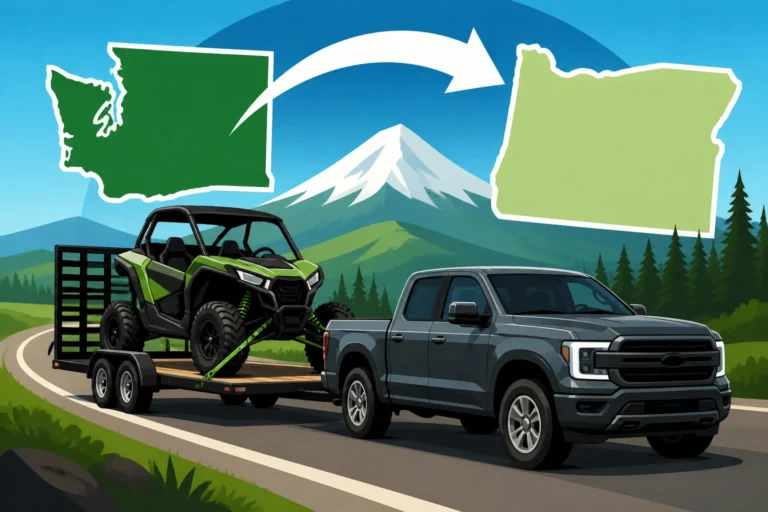
Once you have the out-of-state documentation, the process for getting an Oregon title will generally follow the same steps as described above for a used machine. You'll bring your application, the out-of-state title (if applicable), and your bill of sale to the Oregon DMV. They'll verify the VIN and the ownership documents. Be prepared for potential delays if the out-of-state paperwork isn't immediately recognized or if there are any questions about its validity. It's always a good idea to proactively check Oregon DMV's requirements for [Oregon Paperwork for a Machine Bought Out of State] before you make the trip, just to be sure you have everything in order.
Proving Ownership Without a Title in Oregon
Let's say you've bought a quad years ago, or inherited one, and there's simply no title to be found. What then? While the DMV won't issue a title without sufficient documentation, you can still prove ownership for many practical purposes using alternative methods.
A meticulously detailed bill of sale is your best friend. This should document the transaction as thoroughly as possible, even if it's an informal sale between friends or family. For older machines, you might also have maintenance records, insurance policies, or even old registration cards from previous owners that can help establish a history of ownership. Photos of you with the machine, especially if dated, can also be useful in a pinch, though they aren't official documents.
However, relying solely on these methods presents challenges. For instance, if you want to sell the ATV, many potential buyers will be hesitant if there's no official title, making your machine harder to move. If the ATV is ever stolen or involved in an accident, proving ownership to law enforcement or an insurance company without a title can be an uphill battle, often requiring sworn affidavits or more extensive investigations. This is why, even if optional, most experienced riders will tell you that a title is incredibly valuable for your peace of mind and future flexibility. It provides clear, undeniable evidence of your claim to the machine. This is one of the scenarios that makes [Proving Ownership Without a Title] so tricky.
Protecting Your Investment: Best Practices for Buying a Used Quad
Buying a used ATV can be an exciting venture, but it also comes with potential pitfalls. Beyond the title, there are several crucial steps you can take to ensure you're making a smart purchase and protecting your hard-earned money.
Verifying the Vehicle Identification Number (VIN)
The Vehicle Identification Number (VIN) is the unique fingerprint of your ATV. It's a 17-character code that identifies the manufacturer, make, model, and specific unit. Verifying the VIN is perhaps one of the most critical steps in buying a used quad.
First, locate the VIN on the machine itself. It's usually stamped on the frame, often near the steering head, on a frame rail, or in another easily accessible spot. Once you've found it, compare it character for character with the VIN listed on the seller's title, bill of sale, or any other ownership documents they provide. If there's any discrepancy, even a single digit, walk away immediately. This is a huge red flag indicating potential fraud or a stolen machine.
Beyond matching the VINs, you should also run a VIN check. There are various online services that allow you to input a VIN and get a report on the vehicle's history. These reports can reveal if the ATV has been reported stolen, was involved in major accidents, has salvage titles, or has outstanding liens. While these services typically come with a fee, it's a small price to pay for peace of mind. Catching a problem here can save you thousands of dollars and countless legal headaches down the road. Remember to always do your due diligence and be proactive about [Checking a VIN Before Buying Used].
The Importance of a Solid Bill of Sale
We've mentioned it a few times, but it bears repeating: a solid bill of sale is your legal safety net, especially when a title isn't readily available or if you're dealing with an older machine. A casual handwritten note or a simple receipt just won't cut it when you need to formally prove ownership or clarify the terms of a sale.
A robust bill of sale should include:
- Detailed Identification: Full legal names, addresses, and contact information for both buyer and seller.
- Comprehensive Vehicle Description: Make, model, year, color, and, critically, the full 17-character VIN. Any unique identifiers or modifications can also be noted.
- Purchase Price: The exact amount exchanged for the ATV.
- Date of Sale: The precise day the transaction occurred.
- Transfer of Ownership Statement: Explicit language stating that the seller is transferring all rights, title, and interest in the ATV to the buyer.
- "As-Is" Clause: Most private sales are "as-is," meaning the buyer accepts the vehicle in its current condition without warranties. This should be clearly stated to protect the seller, and the buyer should understand it.
- Lien Statement: A declaration from the seller that the ATV is free of all liens and encumbrances.
- Signatures and Notarization: Both buyer and seller should sign, and getting it notarized adds a layer of legal verification.
Using a professional, legally sound template, such as those offered by LawDepot, can make this process much easier. These templates ensure that all necessary information is included, minimizing ambiguities and providing a strong legal document should any disputes arise. It's a small step that offers immense protection for both parties and is particularly valuable for [Oregon ATV Title Requirements] when a formal title might not be transferred.
When to Walk Away from a Used Quad Deal
Sometimes, the best deal is the one you don't make. While the temptation of a low price can be strong, it's crucial to recognize when a used quad deal is simply too risky to pursue.
Here are some major red flags that should make you seriously consider walking away:
- Missing or Mismatched VIN: As discussed, if the VIN on the machine doesn't match the paperwork, or if it appears altered, this is a deal-breaker.
- No Paperwork Whatsoever: A seller who can offer no title, no bill of sale, no old registration, and no other credible proof of ownership is a giant flashing warning light.
- Reluctance or Evasiveness: If the seller is hesitant to provide information, won't let you inspect the machine thoroughly, or gives vague answers to direct questions, trust your gut feeling and be cautious.
- Prices That Are Too Good to Be True: While everyone loves a bargain, prices significantly below market value often indicate underlying problems, whether mechanical or legal.
- Pressure Tactics: A seller who pressures you to buy immediately, pay in cash without documentation, or skip proper inspection is likely trying to hide something.
- Inconsistent Stories: If the seller's account of the ATV's history changes, or if details don't add up, it's a sign to proceed with extreme caution.
The financial and legal headaches of purchasing a stolen or problematic ATV can far outweigh any initial savings. You could lose the machine without compensation, face legal action, or be stuck with a vehicle you can't legally prove you own or sell. It's far better to be patient and wait for a legitimate, transparent transaction than to jump into a potentially costly mess. Your peace of mind is worth more than a questionable bargain.
| Feature | Buying a Used Quad With a Title | Buying a Used Quad Without a Title |
|---|---|---|
| Proof of Ownership | Clear, state-issued document (DMV). | Relies on a detailed Bill of Sale, maintenance records, previous owner info. |
| Verification | VIN on title matches machine, easy lien check. | Requires thorough VIN check, seller assurances, and detailed Bill of Sale. |
| Resale Value | Generally higher, easier to sell, more buyer confidence. | Potentially lower, harder to sell, fewer interested buyers. |
| Theft Risk | Title helps law enforcement recover and prove ownership. | More difficult to prove ownership, potentially harder to recover. |
| Lien Risk | Clear title indicates no outstanding loans. | Higher risk of undisclosed liens; buyer takes on seller's debt. |
| DMV Process | Straightforward title transfer with minimal issues. | May require a bonded title process, additional forms, and fees. |
| Recommendation | Always preferred for peace of mind and legal security. | Proceed with extreme caution; prioritize robust Bill of Sale and VIN check. |
Disclaimer
This article is for general informational purposes only and does not constitute professional advice. Laws, prices and regulations vary by location and change over time. Consult a qualified professional for guidance on your specific situation.