Getting Stopped Without a Decal
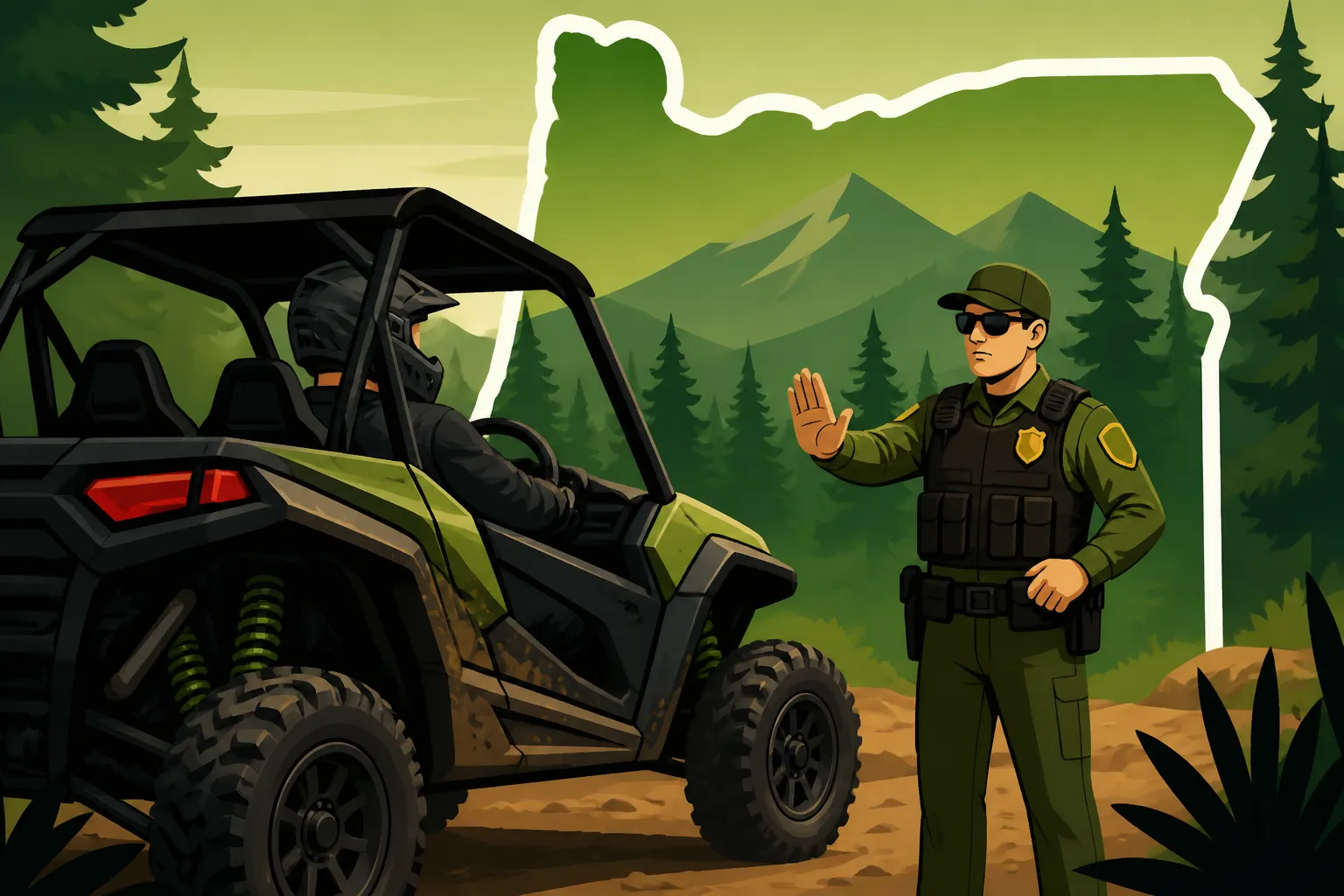
It's that sinking feeling we all dread: seeing flashing lights in your rearview mirror or a ranger waving you down at the staging area. You're out there, enjoying the incredible trails and dunes Oregon has to offer, and suddenly, you're faced with a formal stop. Often, one of the first things law enforcement looks for is that little decal on your machine. This guide is here to walk you through exactly what happens if you're stopped without a valid Oregon ATV operating permit decal, what the consequences might be, and most importantly, how to ensure you're always riding legally and confidently.
The Core Requirement: Oregon's ATV Operating Permit
Riding an ATV or UTV in Oregon means being part of a vibrant community, and like any community, there are rules to ensure everyone's safety and the preservation of our amazing riding areas. At the heart of these rules is the Oregon ATV Operating Permit.
What is the Oregon ATV Operating Permit?
Think of the Oregon ATV Operating Permit as your ticket to ride on public lands and designated OHV areas throughout the state. It's not about registering your machine like you would a street-legal car or even a boat; instead, it's an operating permit specifically for off-highway vehicles. This permit is absolutely crucial because the fees collected from it go directly back into the OHV program. We're talking about funding for trail maintenance, land acquisition for new riding opportunities, safety education, and even enforcement to keep our trails safe. Without these funds, our beloved riding areas simply wouldn't be as well-maintained or accessible. It's a small fee that has a huge impact on the future of our sport here in Oregon. It’s important to understand that this is distinct from [Registering an ATV in Oregon], which refers to a different process entirely.
The Decal: Proof You've Complied
Once you purchase your Oregon ATV Operating Permit, you'll receive a physical decal. This isn't just a sticker; it's your visible proof that you've paid your dues and are compliant with Oregon's OHV laws. It's designed to be easily seen by law enforcement and park rangers, allowing them to quickly verify that your machine is permitted. The decal itself is usually reflective or brightly colored, with an expiration date clearly visible. It’s also specifically designed to adhere to your machine, often with a unique serial number tied to your permit. Without this decal properly displayed, it's impossible for an officer to know at a glance that you're riding legally, which is why it becomes a point of concern during a stop. Knowing [Oregon Permit Decals and Where They Go] is half the battle; ensuring it stays there and remains visible is the other half.
What Happens When You're Stopped Without a Decal?
The reality of being stopped without that little sticker on your machine can be a bit nerve-wracking. It’s important to understand the process and potential ramifications.
The Initial Stop: What to Expect from Law Enforcement
Whether you're tearing up the sand at [Decal Checks at Spinreel] or cruising through the timber trails near [Decal Checks at Browns Camp], law enforcement can and will check for permits. When a ranger or state trooper initiates a stop, they'll typically approach you, explain why they pulled you over, and ask for your permit and potentially your identification. This is not the time for arguments or evasiveness. It's always in your best interest to be courteous, cooperative, and honest. They're doing their job, which includes ensuring that all riders are contributing to the OHV fund and adhering to safety standards. If you don't have a decal, they'll certainly notice. They'll likely ask you why it's missing or why you don't have one, and your answers will determine the next steps.
The Consequences: Fines and Violations
Being caught without a current, properly displayed Oregon ATV Operating Permit decal is not just a minor inconvenience; it's a specific legal infraction. In Oregon, riding an ATV without the required permit decal constitutes a [Oregon's Class C Traffic Violation for No Permit]. This means you're looking at a penalty, often in the form of a fine. The exact amount can vary, but it's important to understand that there is no "grace period" for having a lapsed or missing decal. If your permit expired last month, or if you simply haven't gotten around to buying one, you're technically in violation. The [Oregon's Penalty for an Unpermitted ATV] is designed to encourage compliance and fund the very trails we all love. While it’s rare for a machine to be immediately impounded for just a missing decal, repeated offenses or a combination of other violations could escalate the situation.
Why No Decal Is a Big Deal to Law Enforcement
From a law enforcement perspective, a missing decal isn't just a forgotten sticker. It raises several red flags. First, it directly impacts funding for the OHV program. Every missing decal represents a lost contribution that helps maintain trails, operate staging areas, and ensure a safe riding experience for everyone. Second, it can be an indicator of other non-compliance. An officer might wonder if the rider also lacks a valid [Oregon's ATV Safety Education Card], is on an inappropriate machine for the area, or is otherwise disregarding regulations. Third, it complicates enforcement. Without a visible decal, every machine requires a manual check, which is time-consuming and pulls resources away from other important tasks. Law enforcement officers are keen to see compliance because it makes their job easier and ensures the longevity and safety of our public lands.
Avoiding the Headache: Ensuring You're Covered
Nobody wants the hassle of being stopped and cited. The good news is that avoiding this situation is straightforward and completely within your control.
How to Get Your Oregon ATV Operating Permit
Getting your Oregon ATV Operating Permit is a relatively simple process designed to be convenient for riders. The easiest way for many is to purchase it online directly from the Oregon Parks and Recreation Department. This often provides you with a temporary permit you can print immediately, allowing you to ride while you wait for your physical decal to arrive in the mail. Alternatively, there are numerous authorized [Where Oregon Sells ATV Permits] across the state, including many ATV dealerships and outdoor recreation retailers. You can also sometimes pick one up directly from a kiosk or visitor center at certain [Buying a Permit at an Oregon State Park] locations. For those who prefer a face-to-face transaction, finding one of the [Oregon Permit Agents You Can Walk Into] is a great option. The [Oregon ATV Permit Cost] is uniform across all machine classes, and once purchased, [How Long an Oregon ATV Permit Lasts] is typically two years from the month of purchase. Just make sure to initiate the purchase before you head out to ride!
Proper Decal Placement and Maintenance
Once you have your permit decal, proper placement is key. The general rule is that the decal must be clearly visible and permanently affixed to the right-hand side of your machine. This can mean different things for different vehicle types. For a quad or ATV, it typically goes on the right-hand side, often on the plastic bodywork near the front fender. If you have a side-by-side or UTV, it goes on the right-hand side as well, perhaps on the cage or fender. For an off-road motorcycle or dirt bike, it's usually on the right fork tube or the side of the number plate. Understanding [Decal Placement on a Quad's Right Side], [Decal Placement on a Class IV Machine], and [Decal Placement on an Off-Road Motorcycle] is crucial. Beyond initial placement, you need to ensure the decal remains readable throughout its two-year lifespan. This means keeping it clean and making sure it doesn't get obscured by mud, dirt, or accessories. If your decal gets damaged, fades significantly, or even falls off (which can happen with rough riding!), you'll need to look into [Replacing a Lost Oregon ATV Permit] to avoid issues during a stop. A little preparation now can save a lot of grief later when you're out enjoying the trails and want to keep [Keeping a Decal Readable After a Season].
What If You Just Bought the Machine?
It's a common scenario: you just picked up a new-to-you quad or side-by-side, and you're itching to hit the trails. But what about the permit? If you've just bought a used machine, especially through a private sale or if you're bringing a machine from out of state, it’s highly unlikely it will come with a current Oregon permit. While there might be options like [Oregon's Thirty-Day Temporary Permit] when purchasing online, the safest bet is always to secure your permit before you head out for your first ride.
If you're buying a used ATV in Oregon, ensure you get a proper bill of sale. Tools like those from LawDepot can help you generate a professional document, clearly stating the sale terms and proving your ownership. This is critical for future permitting and to protect yourself. Similarly, if you're dealing with [Oregon Paperwork for a Machine Bought Out of State], make sure all your ducks are in a row. Don't assume an out-of-state registration or sticker will exempt you for long; visitors generally need an Oregon permit after a certain period. Always prioritize getting that Oregon decal before you load up the trailer and head to your favorite riding spot.
Beyond the Decal: Other Things Law Enforcement Checks
While the missing decal is the primary focus here, it's worth remembering that law enforcement officers look at the big picture during a stop. Compliance with other regulations is just as important.
Your ATV Safety Education Card
Beyond the permit decal, one of the first things a ranger will likely ask for is your ATV Safety Education Card. This card signifies that you've completed the required safety course and understand responsible riding practices. [Oregon's ATV Safety Education Card] is mandatory for most riders, and there are specific rules about who needs one and at what age, particularly concerning [Oregon Rules for Riders Under 16]. Even if your decal is present, a missing safety card can lead to a separate citation, so always make sure you have it on you, whether it's the physical card or accessible on your phone.
Machine-Specific Requirements
Law enforcement officers are also checking to make sure your machine itself meets state requirements. This includes ensuring you have a U.S. Forest Service-approved [Oregon Spark Arrester Requirement] on your exhaust, which is crucial for preventing wildfires. They might also listen for [Oregon Sound Limits for ATVs] to ensure your aftermarket exhaust isn't excessively loud. In certain areas, there might be specific [Oregon ATV Width Limits by Class] or [Oregon ATV Weight Limits by Class] that your machine must adhere to. They'll be looking at things like proper lighting if you're riding at night, and they'll confirm that your vehicle falls into one of [Oregon's Four ATV Classes Explained] correctly. All these elements contribute to safe and responsible riding on public lands.
Proper Documentation Even If Titling Is Optional
While [Titling an ATV in Oregon Is Optional] for machines used exclusively off-road, having proof of ownership is always a smart move. During a stop, if there are any questions about the ownership of your machine—perhaps it looks brand new but you're a young rider, or the VIN seems obscured—a bill of sale or even an optional title can quickly clarify things. If you're buying or selling a machine, using a clear, legally sound bill of sale, perhaps generated using a service like LawDepot, can be invaluable for [Proving Ownership Without a Title]. This helps prevent misunderstandings and establishes a clear chain of custody for your machine, which can be critical in situations like theft or legal disputes.
Common Reasons for an ATV Stop and What to Check
Here's a quick reference for common reasons law enforcement might stop you and what to proactively check before every ride to ensure full compliance.
| Reason for Stop | What Law Enforcement Is Looking For | What You Should Check Before Riding |
|---|---|---|
| Missing/Expired Decal | Current Oregon ATV Operating Permit Decal, properly affixed. | Is your permit current? Is the decal clean, visible, and securely attached to the right side of your machine? |
| No Safety Card | Valid Oregon ATV Safety Education Card or recognized equivalent. | Do you (and all riders) have a current safety card? Is it easily accessible? |
| Excessive Noise | Aftermarket exhaust exceeding [Oregon Sound Limits for ATVs]. | Does your exhaust have a U.S. Forest Service-approved spark arrester? Is it excessively loud? |
| No Spark Arrester | Presence of a U.S. Forest Service-approved spark arrester. | Check your exhaust for a spark arrester; it's mandatory. |
| Improper Riding Area/Time | Riding in closed areas, off-trail, or during restricted hours. | Check local area rules, maps, and signage for open trails, hours, and seasonal closures before you head out. |
| Unsafe Operation | Reckless driving, excessive speed, endangering others. | Always ride within your skill level, follow posted speed limits, and be aware of other riders and potential hazards. |
| Passenger Violations | Too many passengers, improper seating, underage passengers. | Are all passengers seated properly with footrests? Do they meet age requirements? |
| Equipment Malfunction | Obvious safety issues like broken lights, brakes, or steering. | Perform a pre-ride inspection of your machine's critical safety components. |
Getting stopped while enjoying Oregon's incredible OHV trails can certainly put a damper on your day. But by understanding the requirements, ensuring your Oregon ATV Operating Permit decal is always current and visible, and taking care of the other simple compliance checks, you can ride with peace of mind. Let's all do our part to keep our riding areas safe, funded, and open for years to come.
Disclaimer
This article is for general informational purposes only and does not constitute professional advice. Laws, prices and regulations vary by location and change over time. Consult a qualified professional for guidance on your specific situation.