Buying a Permit Before a Dunes Weekend
Heading out for a fantastic dunes weekend at Spinreel or Sand Lake, only to realize your ATV permit is expired or non-existent, can quickly deflate your excitement. We've all been there, standing at the staging area, watching others unload, and suddenly remembering that crucial little decal. This guide is here to walk you through exactly how to secure your Oregon ATV operating permit, even if you're making a last-minute dash, ensuring your off-road adventures are smooth, legal, and stress-free.
The Non-Negotiable Necessity of an Oregon ATV Permit for Your Dunes Trip
Picture this: you've loaded up the side-by-side, the cooler is packed, and the kids are buzzing with anticipation for a weekend tearing up the sand at the Oregon Dunes. You pull into the staging area, find a great spot, and start unloading. Then, it hits you – that nagging feeling you forgot something. A quick glance at your machine's fender confirms your fear: no current Oregon ATV permit decal. This isn't just an oversight; it's a potential trip-ender, and frankly, a pretty common pitfall for even seasoned riders. Oregon takes its OHV regulations seriously, and an operating permit is at the very core of responsible riding on public lands.
The Immediate Consequence of Hitting the Sand Without a Permit
The thought of an Oregon State Police trooper or a Forest Service ranger stopping you mid-ride is enough to make anyone's stomach drop. Riding without a valid permit isn't just a minor inconvenience; it's a [Oregon's Class C Traffic Violation for No Permit]. This means you could be facing a hefty fine that will certainly cost more than the permit itself. Worse still, your exciting dunes weekend could be cut short, forcing you to pack up and head home before you've even had a chance to enjoy the ride. It’s not just about the monetary penalty; it’s about the lost time, the wasted fuel, and the sheer disappointment of a ruined trip. Trust me, the small effort to get your permit upfront is absolutely worth avoiding this kind of headache.
Beyond the immediate legal trouble, riding unpermitted also signals a disregard for the system that maintains the very trails and dunes we all love. The funds generated from these permits directly support the creation and upkeep of riding areas, educational programs, and enforcement efforts. So, while it feels like a hurdle, it's actually an investment in the future of Oregon's fantastic off-road opportunities. Knowing your permit helps keep these areas open and safe adds another layer of importance to compliance.
Understanding Oregon's ATV Operating Permit System
Oregon's system for ATV and UTV permits is relatively straightforward, but it's crucial to understand a few key elements. First, nearly all off-highway vehicles that operate on public lands in Oregon need a permit. This includes everything from your typical Class I quad to a large Class IV side-by-side, and even dirt bikes (Class III off-road motorcycles). There isn't a separate permit for each type; it's a single [Oregon ATV Permit Cost] that covers all classes, making it simple. [Oregon's Four ATV Classes Explained] can help you determine which category your machine falls into, though the permit requirement remains consistent across the board for public land use.
The permit itself is essentially a decal that you affix to your machine. This decal serves as visible proof that you've paid your dues and are legally allowed to ride. It's valid for two years, running from the month you purchase it, and needs to be prominently displayed. Understanding [How Long an Oregon ATV Permit Lasts] can save you from accidentally showing up with an expired one. Unlike vehicle registration for street-legal machines, which goes through the DMV, [Why Oregon's DMV Does Not Register ATVs] explains that these OHV permits are handled by the Oregon Parks and Recreation Department (OPRD), which oversees the state's extensive OHV program.
Last-Minute Permit Solutions: Online vs. In-Person Options
When you realize you need a permit and your dunes trip is just around the corner, time is of the essence. Thankfully, Oregon offers a couple of convenient ways to get your permit, catering to both the planner and the procrastinator. Each method has its own advantages, especially when you're up against the clock. Knowing your options beforehand can make all the difference between a smooth departure and a scramble that cuts into your precious riding time.
The Instant Gratification of Buying an Oregon ATV Permit Online
For many riders, especially those who find themselves needing a permit just before a big weekend, buying online is the absolute fastest and easiest solution. You can purchase your [Oregon ATV Permit Cost] right from your computer or even your phone. The biggest advantage here is the immediate gratification: once your purchase is complete, you'll receive a temporary operating permit via email almost instantly. This [Oregon's 30-Day Temporary Permit Emailed at Purchase] is valid for 30 days, giving you legal coverage to hit the trails or dunes immediately while you wait for the physical decal to arrive in the mail.
This online option is a lifesaver for those spur-of-the-moment trips or when you suddenly remember your permit expired. Imagine driving to a remote permit agent, only to find them closed or out of stock. With the online system, as long as you have internet access, you can get that temporary permit and be on your way. Just make sure to print out that temporary permit or have it readily accessible on your phone, as rangers will be looking for proof. Remember, even with the temporary permit, the full decal will eventually need to be affixed to your machine.
Visiting an Approved Oregon ATV Permit Agent
If you prefer a face-to-face transaction, or if you're already on the road and internet access is spotty, you can always visit one of the many authorized permit agents across the state. These agents include dealerships, sporting goods stores, and even some state park offices. Finding [Oregon Permit Agents You Can Walk Into] is usually pretty easy, especially in areas near popular riding destinations. This method offers the benefit of walking out with your physical decal in hand, ready to apply it to your machine right away.
The downside, of course, is that you have to physically go there. This means factoring in travel time, operating hours, and the potential for a line. However, for some, the peace of mind of having the actual decal immediately is worth the extra effort. If you're buying a new machine from a dealer, they often sell permits right there, making it a convenient one-stop shop. It's a good idea to call ahead to confirm their hours and that they have permits in stock, especially if you're traveling a long distance.
| Feature | Buying Online | Buying In-Person (Permit Agent) |
|---|---|---|
| Speed | Instant temporary permit emailed | Physical decal in hand immediately (if in stock) |
| Convenience | From anywhere with internet access, 24/7 | Requires travel to a physical location, limited hours |
| Proof of Permit | Digital temporary permit (print or show on phone) | Physical decal applied directly to machine |
| Physical Decal | Mailed to you within a few days/weeks | Received immediately after purchase |
| Last-Minute | Ideal for same-day riding | Possible if agent is open and accessible |
| Documentation | Basic personal info, credit card | Basic personal info, cash/card, potentially machine info |
What to Have Ready for Your Permit Purchase
Whether you're buying online or in-person, having a few pieces of information ready will make the process smoother. You'll typically need your basic personal information, such as your name, address, and contact details. When purchasing online, you'll need a credit or debit card for payment. For in-person purchases, cash or card is usually accepted.
While the permit application itself is generally quite simple, it's always a good idea to have some basic details about your ATV or UTV handy, especially its Vehicle Identification Number (VIN) and year/make/model. Although often not explicitly required for just the operating permit, having these details on hand can sometimes expedite the process or be useful for other aspects of ATV ownership. For instance, if you've recently purchased a used machine, having a solid bill of sale, perhaps one you generated with a service like LawDepot, can be incredibly helpful for proving ownership down the line, even if it's not checked for the permit itself. It's about being prepared for any scenario. This ensures that you have all your ducks in a row for any official inquiry, whether it's related to the permit, an incident, or future resale.
What to Do Once You Have Your Permit Decal
Congratulations! You've successfully secured your Oregon ATV permit. But the job isn't quite done. That little decal isn't just a souvenir; it needs to be properly affixed to your machine in a visible location. Correct placement isn't just a suggestion; it's a requirement to ensure compliance and avoid any misunderstandings with enforcement officers. Plus, understanding how long your permit is valid will help you plan for future adventures and ensure you're never caught off guard again.
Proper Placement of Your Oregon Permit Decal for Visibility
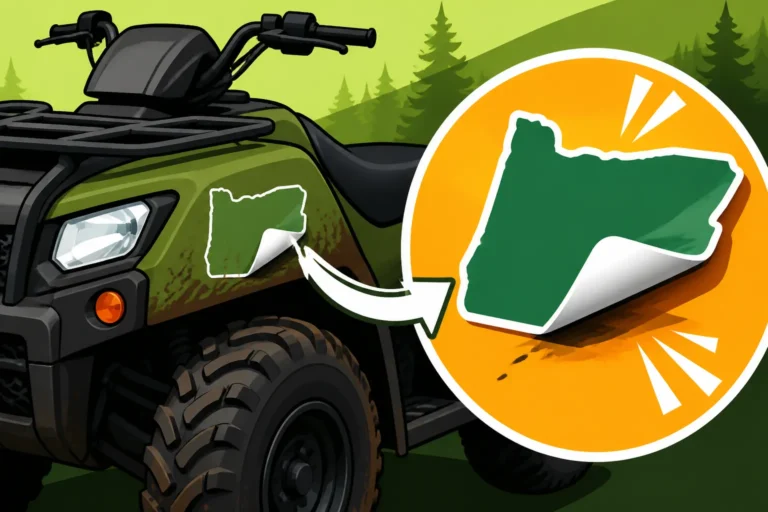
Once you have that physical decal in your hand (whether from an agent or through the mail), the next crucial step is placing it correctly. The Oregon Parks and Recreation Department has specific guidelines for where these decals should go to ensure they are easily visible. For Class I ATVs (quads), the decal should be placed on the right-hand side of the machine. For Class III off-road motorcycles, it typically goes on the right fork tube or fender. For Class IV side-by-sides, it generally needs to be on the right rear of the vehicle. You can find detailed instructions on [Oregon Permit Decals and Where They Go], including illustrations that show exactly where to stick it for different types of machines.
Proper placement is key because it allows enforcement officers to quickly verify your compliance without having to stop you. A poorly placed or obscured decal can lead to unnecessary stops and questions, even if you are legitimately permitted. Make sure the surface is clean and dry before applying the decal for maximum adhesion. A decal that falls off or becomes unreadable might as well not be there at all, potentially leading to the same fines as having no permit. Take a few minutes to do this right, and you’ll save yourself a lot of potential hassle down the trail.
Knowing Your Permit's Lifespan and Renewal
As mentioned, your Oregon ATV operating permit is valid for two years. This is a great perk, giving you a good run before you need to think about renewal. The permit is good for two years from the month of purchase, not necessarily the exact date. So, if you buy it in July 2024, it will be valid until July 2026. Keep this in mind when you’re planning your riding seasons. It’s a good idea to make a note of the expiration date somewhere accessible, perhaps in your phone's calendar or on a physical calendar in your garage, so you don't forget.
When your permit is nearing expiration, the renewal process is just as simple as the initial purchase. You can renew online or visit an authorized permit agent. There's no complex re-application; it's essentially just buying a new two-year permit. Staying on top of your permit's expiration means you'll avoid that last-minute scramble we talked about earlier. Planning ahead allows you to focus on the fun parts of your ride, not the bureaucratic ones.
Beyond the Permit: Prepping for a Safe and Enjoyable Dunes Weekend
While securing your Oregon ATV permit is a critical step, it's just one piece of the puzzle for a fantastic and safe dunes weekend. The Oregon Dunes National Recreation Area, with its unique terrain and dynamic environment, demands respect and thorough preparation. Beyond the legalities, there are practical steps you can take to ensure every ride is memorable for all the right reasons. Thinking about safety, proper gear, and how to navigate the specific challenges of dune riding will elevate your experience from good to absolutely epic.
Essential Gear and Safety Regulations for Oregon's OHV Areas
Safety should always be your top priority when riding an ATV or UTV, especially in challenging environments like the dunes. First and foremost, [Helmet Rules for Oregon Riders] are strictly enforced. All riders, regardless of age, must wear a DOT-approved helmet. This isn't just a rule; it's a non-negotiable layer of protection that could save your life. Beyond helmets, consider eye protection (goggles are a must in dusty or sandy conditions), gloves, long pants, and sturdy over-the-ankle boots. The terrain can be unpredictable, and proper gear significantly reduces the risk of injury.
Beyond personal protective equipment, your machine also needs to meet certain requirements. A spark arrester, for instance, is mandatory on all OHVs to prevent wildfires, especially crucial in dry conditions. Many areas, particularly the dunes, also require a flag on a whip antenna that extends at least nine feet from the ground. This highly visible flag ensures other riders can see you over the crests of dunes, drastically reducing the risk of blind collisions. Checking [Oregon Spark Arrester Requirement] and [Oregon Dune Flags and Whips] will ensure your machine is compliant before you even leave home.
Resourcefulness and Documentation on the Trail
Even with all the preparation in the world, things can occasionally go sideways. That's why being resourceful and having key documentation on hand is so important. Always carry your temporary permit (if applicable) or a copy of your full permit, along with your ATV safety education card. [Oregon's ATV Safety Education Card] is required for most riders, and carrying it with you is essential for compliance. A small dry bag or a waterproof compartment on your machine is a great place to store these documents, protecting them from the elements typical of a coastal dunes environment.
Furthermore, consider carrying a basic toolkit, a first-aid kit, and enough water and snacks for your group. A charged cell phone is always a good idea, though service can be spotty in some remote areas of the [Oregon Dunes National Recreation Area]. Knowing the local emergency numbers and having a physical map (even if you have GPS) are smart precautions. In the spirit of preparedness, having digital or physical copies of any critical machine ownership documents, like a bill of sale or previous registration, is a good habit. While not usually needed roadside, having easy access to comprehensive records, perhaps created using resources like LawDepot for standard forms, can be invaluable if you ever face a more complex issue, such as needing to verify ownership after an incident or proving a purchase if you're questioned about your machine. It’s all about being ready for anything the trail—or the dunes—might throw your way.
Disclaimer
This article is for general informational purposes only and does not constitute professional advice. Laws, prices and regulations vary by location and change over time. Consult a qualified professional for guidance on your specific situation.