Documents in a Dry Bag on the Coast
You’ve packed your rig, topped off the fuel, and double-checked the tire pressure. You’re ready to hit the Oregon Coast dunes for an epic day of riding. But wait – where are your vital documents? Far too many riders have found themselves scrambling for a soggy permit or a mud-splattered safety card after an unexpected splash or an hour in the relentless coastal mist. This guide is all about why a dry bag is your best friend on the Oregon dunes and exactly how to keep your essential paperwork safe, dry, and readable, no matter what the Pacific Northwest weather throws at you.
Why a Dry Bag Is Non-Negotiable on the Oregon Coast
Riding the Oregon Coast offers some of the most exhilarating ATV and UTV experiences imaginable, from the vast open sands of the Oregon Dunes National Recreation Area near Florence and Winchester Bay, to the forested trails of Sand Lake. But this incredible environment comes with its own unique challenges, particularly when it comes to keeping your important papers intact. The coast is famously unpredictable; a sunny morning can quickly give way to a misty afternoon, a rogue wave can swamp your machine at the water's edge, or an unexpected puddle on a forest trail can drench everything in its path.
Beyond the obvious discomfort of wet papers, the real issue lies in the fact that many of these documents are legally required for you to ride. A soaked, illegible permit or safety card can cause significant headaches, turning a fun day into a frustrating encounter with law enforcement or a park ranger.
The Unpredictable Oregon Coast Climate
Let's face it, the Oregon Coast isn't exactly known for its arid, desert climate. While you might get some glorious, dry days, it's far more common to encounter mist, drizzle, and outright rain. Even on a clear day, the air carries a surprising amount of moisture, especially if you're riding near the ocean spray. Think about it: kicking up sand, crossing small streams, riding through the surf at Horsfall Beach during open season, or even just leaving your gear sitting out while you take a break can expose your documents to moisture.
Then there's the mud. If you venture off the main dunes onto some of the connecting forest trails, especially at places like Sand Lake Recreation Area, you’re almost guaranteed to encounter mud puddles. A careless splash, a tip-over, or even just heavy vibration can shift items in an open compartment, leading to a soggy mess. Your wallet, your phone, and most importantly, your paper documents, are all at risk. A quality dry bag creates a waterproof barrier, protecting against everything from a light mist to an accidental dunk. It's truly a small investment for massive peace of mind.
Legal Repercussions of Damaged Documents
Imagine this: you're having a blast at Spinreel or Hauser, and a park ranger approaches for a routine check. They ask for your [Oregon's ATV Operating Permit] and your [Oregon ATV Safety Card]. You reach into your cargo box, pull out what used to be your permit, and now it's a pulpy, faded mess from last week's unexpected downpour. This isn't just an inconvenience; it can lead to real problems.
If your documents are unreadable, a ranger might consider them effectively "not present." This could result in a citation for riding without a proper permit or safety card, which is a Class C traffic violation in Oregon. While specific fines can vary, nobody wants to end their ride with a ticket. The purpose of these documents is to prove your compliance with state regulations. If the information—like your name, the machine's VIN, or the expiration date—is obscured or washed away, it fails that purpose. A clear, dry document ensures a quick, hassle-free interaction, allowing you to get back to enjoying your ride.
What Documents You Really Need to Carry
Understanding which documents are essential for riding your ATV or UTV in Oregon is crucial. It’s not just about having a document; it’s about having the right documents, and having them in an accessible, protected state. When you're out on the trails or dunes, you want to be prepared for any situation, whether it's a routine check by a park ranger, an emergency, or even a vehicle breakdown.
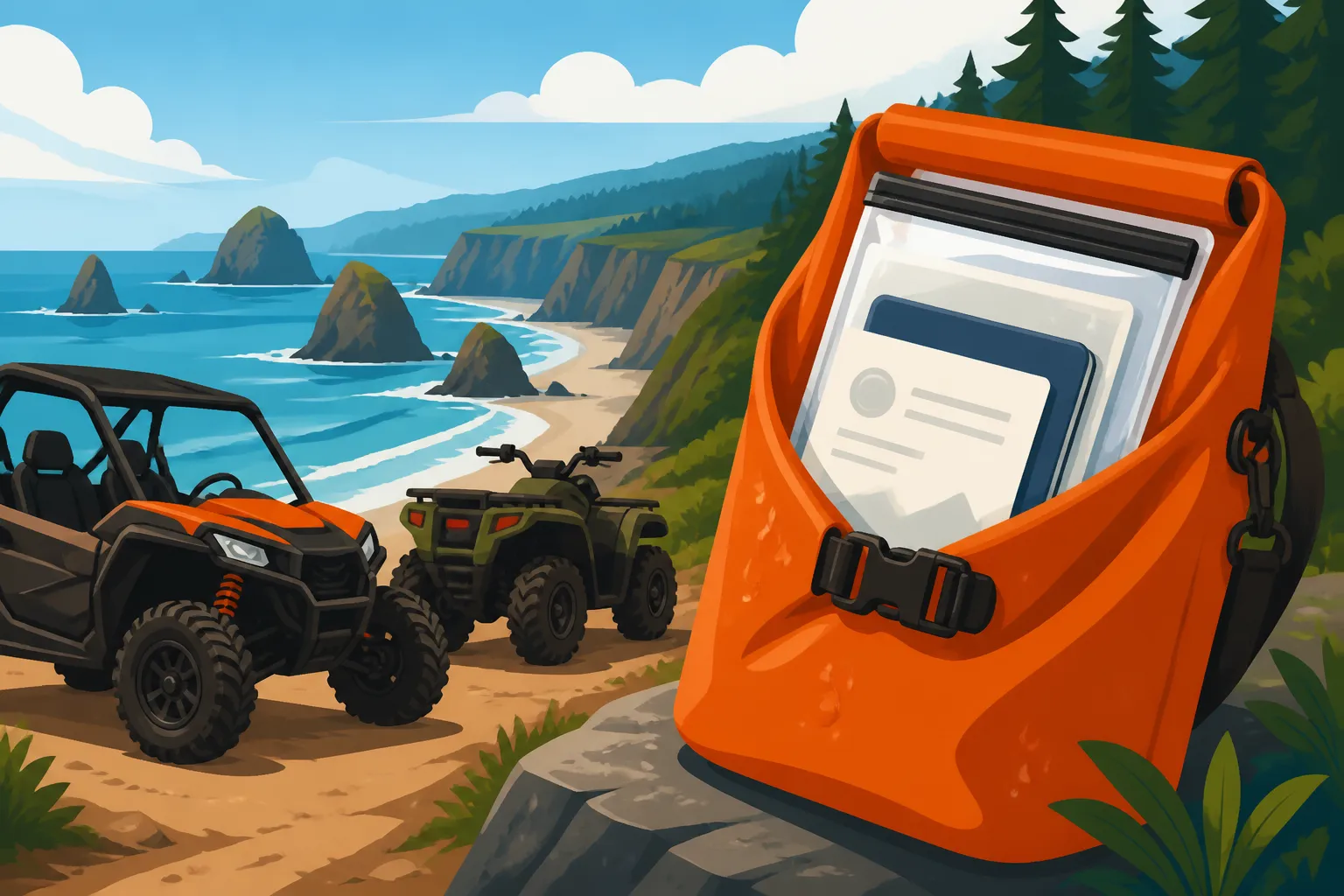
Keeping these items neatly organized and bone-dry in a dedicated spot in your dry bag will save you a lot of stress. Think of your dry bag as your mobile command center for official paperwork—everything you need, right where you need it, and always pristine.
Your Core Riding Essentials
Let's break down the absolute must-haves for your dry bag:
- Oregon ATV Operating Permit Decal/Card: This is non-negotiable. While the decal should be affixed to your machine, it's wise to carry the physical card or a clear copy of the purchase receipt. If your decal gets damaged or falls off (and it happens!), having proof of purchase could be your saving grace. Remember, the permit is what allows you to ride on designated OHV areas.
- Oregon ATV Safety Education Card: Every rider needs one, regardless of age, with some exceptions for drivers of Class IV machines who hold a valid driver's license. Whether you obtained yours through the free online course or a hands-on training program, this card proves you understand Oregon's OHV laws and safety practices. Carry the physical card or a clear digital copy you can display on your phone (which, of course, should also be in a dry bag!).
- Driver's License (if applicable): If you're old enough to have one and are driving a Class IV machine, your driver's license often substitutes for the safety card requirement. Even if it doesn't, it's your primary form of identification. Never leave home without it.
- Proof of Insurance (for Class II machines): If you're operating a Class II ATV, like some dune buggies or street-legal side-by-sides, Oregon law often requires liability insurance. Carry your insurance card or a copy of your policy in your dry bag. For other classes, while not legally mandated for off-road use, it's always smart to have personal insurance information on hand.
Beyond the Basics: What Else to Consider
While the essentials cover your legal riding requirements, a few other documents can make your life much easier in various situations:
- Proof of Ownership: This could be a bill of sale or a title. While [Titling an ATV in Oregon Is Optional] for off-road-only machines, having proof of ownership is vital if your machine is stolen, involved in an accident, or if you ever need to sell it. If you're buying or selling a used ATV, having a clear, legible bill of sale is crucial for both parties. Resources like LawDepot offer templates for bills of sale that can be customized and then printed, providing a clear record. This can be especially helpful if you've recently purchased a machine and haven't had a chance to apply for an optional title.
- Emergency Contact Information: A simple card with names, phone numbers, and any critical medical conditions or allergies for you and your riding companions can be a lifesaver in an emergency. Keep it prominently displayed inside your dry bag or on the outside in a clear pouch if your bag has one.
- Basic Machine Information: A small card with your ATV's VIN, license plate (if street legal), and any distinctive features can be invaluable if your machine goes missing or is damaged. Some riders also include their roadside assistance membership number if they have one.
- Trail Maps: While many modern riders use GPS, a laminated physical map can be a lifesaver in areas with no cell signal or if your device battery dies. Places like the Tillamook State Forest or Millican Valley have extensive trail systems where a paper map can guide you out of a confusing network of turns.
Remember, the goal is preparedness without overpacking. Only carry what you genuinely need, but ensure those critical items are protected.
Choosing the Right Dry Bag for Your Ride
Not all dry bags are created equal, and the "right" one for you depends on a few factors: what you need to protect, how much space you have on your machine, and your typical riding style. For ATV and UTV riders, durability and secure attachment points are often as important as waterproofing. The last thing you want is your dry bag flying off mid-jump!
Taking the time to research and invest in a quality dry bag specifically designed for outdoor or powersports use will pay dividends in the long run. It's not just about keeping water out; it's about protecting against dust, mud, and the general abuse that comes with off-road riding.
Features to Look For
When you're shopping for a dry bag, keep these key features in mind:
- Waterproof Closure System: The most common and effective is a roll-top closure. This involves rolling the top edge down several times and then securing it with a buckle. Look for at least three rolls to ensure a watertight seal. Some bags use waterproof zippers, which can be convenient but are often more expensive and require more maintenance (like zipper lubrication) to remain fully effective.
- Material Durability: For ATV/UTV use, you need something tough. Look for heavy-duty PVC or coated nylon. These materials are highly resistant to punctures, tears, and abrasion from sand or grit. Thickness is usually measured in deniers (e.g., 500D, 1000D); higher numbers mean more robust material.
- Welded Seams: Stitching can create tiny holes that water can eventually seep through. Opt for dry bags with welded or heat-sealed seams, which create a completely impermeable barrier, offering superior waterproofing and longevity.
- Attachment Points: D-rings, loops, or other secure points are crucial for strapping your dry bag to your machine. Whether it's to a cargo rack, a roll bar, or inside a storage compartment, you want to ensure it stays put, especially on rough trails or bouncy dunes.
- UV Resistance: If your bag will be exposed to direct sunlight for extended periods, UV-resistant material will prevent it from degrading and becoming brittle over time.
- Color and Visibility: While not strictly a protection feature, a brightly colored dry bag can be easier to spot if it ever does detach from your machine, or simply makes it easier to find your important papers inside a dark cargo compartment.
Sizes and Styles for Every Rider
Dry bags come in a vast array of sizes and styles, so you can pick one that perfectly fits your needs:
- Small "Personal Item" Dry Bags (2-5 Liters): These are perfect for just your wallet, phone, keys, and essential documents. They are often compact enough to fit into a tank bag, a small storage cubby, or even a fanny pack if you prefer to keep essentials on your person. This size is ideal for quickly grabbing your permit and safety card without rummaging through larger gear.
- Medium "Cargo" Dry Bags (10-30 Liters): If you need to carry a few more items – perhaps a spare layer, a small first-aid kit, and all your documents – a medium-sized dry bag that can be strapped to a rear rack or placed in a UTV's bed is a great option. These offer more versatility without being overly bulky.
- Dry Backpacks: For riders who prefer to keep their items on their back or who might dismount frequently, a dry backpack offers both carrying comfort and waterproof protection. Just ensure it's securely cinched down to prevent shifting during aggressive riding.
- Soft Cooler Dry Bags: Some dry bags double as soft coolers, which can be a fantastic multi-purpose option for day trips, keeping your lunch and drinks cool while also protecting a small section of documents in a separate, internal dry pouch.
When considering size, always think about what you actually need to keep dry and secure. It's better to have a slightly larger bag with extra space than to try to cram everything into one that's too small, compromising the seal.
| Document Type | Why It's Essential on the Coast | Best Practice for Storage |
|---|---|---|
| ATV Permit/Card | Legal requirement for riding OHV areas. | Original card in a ziplock inside the dry bag. |
| Safety Card | Mandatory proof of safety education for most riders. | Original card in a ziplock, or a clear digital copy on phone. |
| Driver's License | Primary ID, required for Class IV drivers, proves age. | Wallet inside a small dry pouch or dedicated dry bag section. |
| Proof of Insurance | Required for Class II machines; crucial for accidents. | Original card or policy copy in a ziplock. |
| Bill of Sale | Proves ownership (if no title), vital for theft/sale. | Clear, legible copy in a ziplock. (Consider LawDepot templates). |
| Emergency Contacts | Critical info for medical emergencies or breakdowns. | Laminated card, easily visible, inside dry bag. |
| Trail Maps | Navigation aid in areas without cell service. | Laminated map, folded to fit, kept flat to prevent creasing. |
Best Practices for Storing and Protecting Your Papers
Having the right dry bag is only half the battle; knowing how to properly use it and where to place it on your machine completes the protective strategy. Even the most robust dry bag can fail if not packed and secured correctly, or if it's placed in a vulnerable spot. It's about creating a multi-layered defense against the elements and ensuring accessibility when you need it most.
A little forethought before you head out can prevent a lot of frustration and potential legal issues down the trail. After all, the goal is to enjoy your ride, not worry about whether your important documents are still in one piece.
Layering for Ultimate Protection
Think of document storage as building a fortress. The dry bag is your outer wall, but adding inner layers provides extra security and organization:
- Individual Ziploc Bags: For each critical paper document—your permit card, safety card, insurance card, bill of sale, and emergency contacts—place it in its own heavy-duty freezer-grade Ziploc bag. This provides a secondary waterproof barrier. If, by some slim chance, your main dry bag fails (perhaps a tiny pinhole you didn't notice), these inner bags offer a crucial line of defense. They also keep documents separated and prevent them from sticking together if they do get damp.
- Small, Internal Dry Pouches: Many larger dry bags come with internal pockets or can accommodate smaller, dedicated dry pouches. Use these to further organize your critical items. For example, a small, hard-shell waterproof case is excellent for your phone, keys, and wallet, which can then be placed inside your main roll-top dry bag. This keeps them protected from impacts and moisture.
- Lamination: For documents that don't need to be folded, like your emergency contact card or small trail maps, consider having them laminated. This makes them inherently waterproof and much more durable against tearing and wear. Just ensure that laminating your official documents doesn't invalidate them (e.g., some official cards might have security features that would be obscured). For your [Oregon ATV Permit Decal Placement], obviously, that goes on the machine, but the card proof of purchase can be laminated.
Strategic Placement on Your Machine
Where you put your dry bag matters just as much as what you put in it. Consider these factors for optimal placement:
- Accessibility: You need to be able to retrieve your permit or safety card quickly and easily if a ranger asks for it. Don't bury your dry bag under a mountain of camping gear. A small dry bag with essentials might be kept in a glove box, a small storage compartment, or even a tank bag. For UTVs, a small bag in the console or under the seat can be perfect.
- Protection from Physical Damage: While a dry bag is tough, it's not invincible. Avoid strapping it to areas where it might rub against sharp edges, get snagged by branches, or be constantly exposed to abrasive sand and debris kicked up by your tires. A cargo box or a securely mounted rear rack, away from direct tire spray, is usually ideal.
- Security: Ensure your dry bag is securely fastened to your machine using appropriate straps, bungee cords, or carabiners. You don't want it bouncing loose on rough terrain or falling off during a sudden stop. Check the attachment points periodically during your ride. For instance, on a Class I quad, you might secure a small dry bag to the front rack or behind the seat. On a larger [Oregon's Class IV Side-by-Sides Under 75 Inches], you'd likely use the cargo bed.
- Visibility (Optional): As mentioned earlier, a brightly colored dry bag can make it easier to spot if it accidentally detaches or if you need to find it quickly in low light conditions. Some riders even attach a small flag or ribbon to their dry bag if it's placed in a less visible area.
By taking these steps, you’re not just protecting your paperwork; you’re protecting your peace of mind and ensuring that your time on Oregon’s incredible ATV and UTV trails is spent enjoying the ride, not worrying about soggy documents or potential fines.
Disclaimer
This article is for general informational purposes only and does not constitute professional advice. Laws, prices and regulations vary by location and change over time. Consult a qualified professional for guidance on your specific situation.