Oregon’s ATV Operating Permit
It's incredibly frustrating when you're geared up for an epic ride on Oregon's stunning trails or sprawling dunes, only to realize you're not entirely sure about the state's permit requirements. Many riders get confused between registration and an operating permit, or wonder if their out-of-state sticker is good enough. This comprehensive guide will clear up all the confusion surrounding Oregon's ATV operating permit, ensuring you're legal, prepared, and ready to hit the dirt with confidence.
What Exactly Is an Oregon ATV Operating Permit?
Let's cut right to the chase: Oregon's ATV operating permit isn't the same thing as registering a traditional street-legal vehicle with the Department of Motor Vehicles. This is a crucial distinction that often trips up new riders or those new to Oregon. Instead, this permit is specifically designed for off-highway vehicles (OHVs) that will be ridden on public lands within the state. It's your ticket to legally access the vast network of trails, dunes, and riding areas managed by agencies like the Oregon Parks and Recreation Department (OPRD), the U.S. Forest Service, or the Bureau of Land Management (BLM).
Think of it less like a car registration that grants you street legality and more like a user fee or a license plate for off-road use. It signifies that you've contributed to the maintenance and development of the very places you love to ride. Without it, you're not just risking a fine; you're also missing out on supporting the OHV community and the infrastructure that makes riding in Oregon so incredible. It's a fundamental piece of paperwork that every responsible off-road enthusiast in Oregon needs to understand and acquire.
It's Not a Registration, It's an Operating Permit
This is perhaps the biggest point of confusion for many riders. When you buy a car, you register it with the DMV. You get license plates, and your vehicle is officially on record for street use. For most ATVs, side-by-sides, dirt bikes, and other off-road vehicles in Oregon, that's simply not how it works. The Oregon Department of Transportation (ODOT) and its DMV branch don't handle the vast majority of OHV permits or registrations. Their focus is on on-highway vehicles. This fundamental difference means you won't be looking for "Oregon ATV registration" in the traditional sense for your dirt-only machine.
Instead, the Oregon Parks and Recreation Department (OPRD) is the state agency responsible for the Off-Highway Vehicle (OHV) program, which includes these operating permits. This setup makes a lot of sense when you consider that the OPRD also manages many of the state parks and riding areas where these vehicles are used. They are intimately familiar with the needs of off-road enthusiasts and the specific challenges of maintaining trails and facilities. So, if someone asks if your ATV is "registered," you can clarify that it has an Oregon's ATV Operating Permit from OPRD.
The permit system is streamlined and designed for the specific needs of off-road recreation. It focuses on ensuring that machines operating on public lands have met basic requirements and that funds are collected to support the OHV program. Unlike a typical vehicle registration, which tracks ownership and street legality, this permit is about authorizing the operation of the vehicle in designated off-road areas. It truly is a system built with the off-road enthusiast in mind, managed by the very department that cares for the places we ride.
The Two-Year Lifespan of Your Permit
One of the nice things about the Oregon ATV operating permit is that it's not an annual chore. When you purchase a permit, it's valid for a full two years from the month of purchase. This means you don't have to remember to renew it every single year, which can be a real convenience, especially if you have multiple machines or are just generally prone to forgetting annual deadlines. For example, if you buy your permit in July of one year, it will be valid until the end of July two years later. This long validity period gives you plenty of riding time before you need to think about renewal again.
This two-year cycle is part of what makes the permit system user-friendly and helps reduce administrative overhead for both riders and the OPRD. It's a practical approach that acknowledges that off-road vehicles are often seasonal or hobby-driven, rather than daily commuters. You can rest easy knowing that for a significant period, your machine is covered for public land use. You'll definitely appreciate this when you're planning a trip to the dunes or a weekend in the Tillamook State Forest without having to check an annual expiration date constantly.
However, it's still crucial to make a note of that expiration date, perhaps by setting a reminder on your phone or marking it on a calendar. While the two-year period is generous, riding on an expired permit is still a violation, and ignorance is rarely an accepted excuse when a ranger stops you. Keeping track of this simple date will prevent any unwelcome surprises or fines, allowing you to fully enjoy your off-road adventures. For more on this, check out [Why Oregon's Permit Lasts Two Years].
One Permit Price for Every Class
Oregon has a fairly comprehensive system for categorizing off-highway vehicles, broken down into Class I, Class II, Class III, and Class IV. These classifications are based on factors like width, weight, and seating style – distinguishing between traditional ATVs, side-by-sides, dirt bikes, and even some street-legal conversions. You might naturally assume that with different classes comes a different permit price, perhaps with larger or more complex machines costing more. Thankfully, that's not the case at all.
Regardless of whether you're riding a nimble Class I quad, a powerful Class IV side-by-side, or a dirt-shredding Class III off-road motorcycle, the cost for an Oregon ATV operating permit is the same. This simplifies the process immensely, as you don't have to navigate a complex fee structure based on your machine's specifications. It makes the permitting process equitable for all types of OHV enthusiasts, from those on smaller, entry-level machines to those with high-performance vehicles. You'll find that [One Oregon Permit Price for Every Class] makes things wonderfully straightforward.
This uniform pricing means that the focus remains on the operation of the vehicle on public lands, rather than on the specifics of the machine itself. It ensures that everyone contributes equally to the funding of the OHV program, regardless of their chosen ride. This is a real benefit for riders who might own multiple types of machines or who are looking to upgrade from one class to another without worrying about a sudden jump in permit fees.
Who Needs an Oregon ATV Operating Permit?
This is a question that pops up constantly, and it's a critical one to get right before you trailer your machine out for a day of fun. The general rule of thumb is this: if you plan to operate any type of off-highway vehicle on any public land in Oregon, you need an operating permit. This isn't just a suggestion; it's a requirement enforced by law. Public lands include everything from the famous Oregon Dunes National Recreation Area, to the vast network of trails in the Tillamook State Forest, to various BLM and Forest Service lands across the state.
The state's OHV program is designed to protect natural resources and ensure safe riding for everyone, and the permit system is a cornerstone of that effort. Imagine showing up at a popular staging area like Spinreel or Browns Camp, only to be approached by a ranger who asks for your permit. If you don't have one, your day could quickly turn from exciting adventure to frustrating penalty. It's not just about avoiding fines, though that's certainly a strong motivator; it's about being a responsible member of the riding community.
Understanding who needs this permit is the first step towards ensuring a hassle-free and enjoyable off-road experience in Oregon. Whether you're a local resident or visiting from out of state, the rules are largely the same. There are a few specific scenarios and exceptions, of course, but the overarching principle is clear: if it's public land and it's an OHV, you need an Oregon operating permit.
Mandatory for Public Land Riding
Let's emphasize this point because it's the core of the permit requirement: if you're on public land, your OHV needs an Oregon ATV operating permit. This covers a huge spectrum of riding opportunities, from the roaring excitement of the coastal dunes to the technical challenges of the forest trails. Areas managed by the Oregon Parks and Recreation Department, the U.S. Forest Service, and the Bureau of Land Management all fall under this umbrella. This means your permit is essential for accessing popular spots like Millican Valley, Prospect OHV, and, of course, the iconic Oregon Dunes.
The reason for this mandatory requirement is multi-faceted. First and foremost, the fees collected from these permits directly fund the maintenance, improvement, and enforcement of these public riding areas. Without this revenue stream, trails would degrade, signage would disappear, and facilities would fall into disrepair. Secondly, it helps state and federal agencies track the number of OHVs utilizing these areas, which aids in planning and resource management. It's a system designed to ensure the sustainability of off-road recreation for generations to come.
Getting caught riding on public land without a valid permit can lead to a Class C traffic violation in Oregon, which carries a monetary penalty. Rangers and law enforcement officials regularly patrol these areas, especially during peak riding seasons and holidays. They're not just looking for reckless behavior; they're also conducting routine checks for permits, [Oregon ATV Safety Card Requirements], and spark arresters. Having your permit displayed correctly and readily available is a simple way to avoid a potentially expensive and inconvenient interruption to your ride.
Exceptions: Private Land and Farm Use
While the rule for public land is clear, there are specific situations where an Oregon ATV operating permit is generally not required. The most common and significant exception is when you are riding exclusively on private land that you own or have explicit permission to ride on. If your ATV never leaves your own property, or a friend's property where you have permission, then the state's operating permit requirement typically doesn't apply. This makes sense, as the state isn't funding or managing your private property. Many landowners use their ATVs for chores, hunting access, or simply riding around their own acreage, and these activities don't necessitate a public land permit.
Another common exception pertains to ATVs used solely for agricultural purposes on a farm. These machines are often an essential tool for farm work, used for hauling feed, checking fences, or accessing remote parts of a large property. The state recognizes this utilitarian function, and typically, an operating permit isn't required for these dedicated farm machines, as long as their use is strictly within the confines of the farm operation and not for recreational purposes on public lands. This distinction is important for ranchers and farmers who rely on their ATVs for their livelihood.
However, a critical nuance to remember is that if your "farm machine" or "private property machine" ever touches public land – even just to cross a public road, or access a public trail from your property – then it generally needs a permit. There's no gray area when it comes to crossing that invisible line from private to public. Always be sure of your boundaries and the nature of the land you're on. It's always better to have the permit and not need it for a specific outing than to need it and not have it.
What About Rented Machines?
Renting an ATV or side-by-side is a fantastic way for visitors or those without their own machine to experience Oregon's incredible riding opportunities, especially on the Oregon Dunes. This naturally leads to the question: does a rented machine also need an Oregon ATV operating permit? The short answer is yes, absolutely. The same rules apply to rented machines as they do to privately owned ones when it comes to public land use. However, the process of acquiring that permit might be a little different, and often, it's handled directly by the rental company.
Many reputable rental agencies along the Oregon Coast, such as those in Florence or Winchester Bay, will either include the cost of the permit in your rental fee or offer to sell you one on-site. They understand the state's requirements inside and out and want to ensure their customers have a legal and enjoyable experience. When you rent from a place like Sand Dunes Frontier or Torex ATV Rentals, they'll often guide you through the permit process as part of your booking, or confirm that the machine you're renting is already permitted for the two-year period. It’s a convenient service that removes a layer of complexity for renters.
It's always wise to confirm this with the rental company before you finalize your booking. Ask specifically if the rental fee includes the Oregon ATV operating permit or if you'll need to purchase one separately. You don't want to show up at a staging area ready to ride, only to find out you're missing a critical piece of paperwork. The rental company is also responsible for ensuring the machine carries the correct [Oregon Permit Decals and Where They Go], so you should expect to see the decal already affixed to your rental. This ensures that even short-term users contribute to the upkeep of the trails they enjoy.
How to Get Your Oregon ATV Operating Permit
Getting your Oregon ATV operating permit is surprisingly easy, which is great news for anyone eager to hit the trails or dunes. The Oregon Parks and Recreation Department has made the process quite accessible, offering multiple convenient ways to purchase your permit. You don't need to make a special trip to the DMV or fill out reams of complicated paperwork. The goal is to make it as straightforward as possible so that riders comply and the OHV program continues to be well-funded.
Whether you prefer the convenience of online shopping from the comfort of your home or the hands-on experience of visiting a local shop, Oregon has you covered. This flexibility ensures that no matter where you are in the state, or what your schedule looks like, you can acquire the necessary permit without too much hassle. Understanding these options will empower you to choose the method that best suits your needs and gets you out riding quicker.
So, let's explore the different avenues available for obtaining your permit, ensuring you're ready to display that crucial decal on your machine. From immediate digital solutions to in-person assistance, Oregon has streamlined the process to keep you on the right side of the law and on the right side of the trail.
Online Purchase: Convenience at Your Fingertips
For many people, the easiest and most convenient way to get an Oregon ATV operating permit is to purchase it online. The Oregon Parks and Recreation Department (OPRD) hosts a dedicated portal for OHV permits, making the process quick and painless. You can do it from your computer, tablet, or even your phone, whether you're at home, at work, or even at a campsite with a decent cell signal. This method completely bypasses the need to travel to a physical location, saving you time and gas.
When you purchase online, you'll typically provide your name, address, and information about your OHV, though extensive vehicle details aren't always required beyond a basic description. The system is designed to be user-friendly, guiding you through each step. Once your purchase is complete, you'll immediately receive a temporary permit via email. This is a game-changer because it means you can legally ride your OHV that very day, as long as you have the temporary permit with you, either printed out or accessible on your smartphone. The physical, two-year decal will then be mailed to you, usually arriving within a week or two.
This online option is particularly beneficial if you're planning a spontaneous trip or realize at the last minute that your permit has expired. The ability to [Buying an Oregon Permit Online] and get a temporary permit instantly means your riding plans don't have to be derailed by bureaucratic delays. Just remember to print that temporary permit or save it to your device and keep it with you until your official decal arrives.
Finding a Local Permit Agent
While online purchasing is incredibly convenient, some people prefer a more traditional approach, or they might be traveling and need a permit on the fly. For these situations, Oregon has a network of authorized permit agents located throughout the state. These agents are typically ATV dealerships, outdoor recreation shops, some county offices, or even smaller retail outlets in towns near popular riding areas. They are equipped to issue permits directly to you over the counter, often providing the physical decal on the spot.
Visiting a local permit agent offers the advantage of immediate gratification: you walk in, make your purchase, and walk out with your two-year decal ready to be affixed to your machine. This can be particularly useful if you're making a last-minute decision to ride, or if you simply prefer to handle transactions in person. The staff at these locations are often riders themselves and can sometimes offer valuable local insights or answer specific questions you might have about nearby trails or regulations. You can find a list of these agents on the OPRD website, making it easy to locate [Oregon Permit Agents You Can Walk Into] near you or on your route to a riding destination.
Before you head out to an agent, it's a good idea to check their operating hours, especially if you're planning to stop on a weekend or holiday. While many are open during typical business hours, it's always best to call ahead. Having cash or a card ready, along with basic information about your ATV, will help make the transaction smooth and swift. This in-person option provides a tangible connection to the OHV community and ensures that everyone, regardless of their access to technology, can easily obtain their permit.
The Temporary Permit: Riding the Day You Buy
One of the most user-friendly features of Oregon's ATV operating permit system is the provision for a temporary permit. This is particularly valuable when you purchase your permit online. As soon as your online transaction is complete, you'll receive an email containing a printable temporary permit. This document is immediately valid and allows you to legally operate your OHV on public lands while you wait for your official, physical decal to arrive in the mail.
This means there's no waiting period from the moment of purchase to the moment you can ride. Imagine you're planning a spur-of-the-moment trip to the dunes, and you suddenly remember your permit expired last month. Instead of having to reschedule or postpone your adventure, you can simply hop online, buy a new permit, print out the temporary one (or save it to your phone), and head straight to the staging area. This instant validity is a huge relief for many riders, especially those who don't always plan weeks in advance. You can literally be [Riding the Day You Buy Online].
It's crucial to carry this temporary permit with you whenever you're riding until your physical decal arrives and is properly affixed to your machine. Law enforcement or park rangers will accept a printed copy or a clear display on your smartphone as proof of a valid permit. Just make sure it's easily accessible and legible. This system truly bridges the gap between the convenience of online purchasing and the necessity of immediate compliance, ensuring your off-road plans don't hit an unnecessary roadblock.
Understanding Your Permit Decal: Placement and Care
Once you've purchased your Oregon ATV operating permit, you'll receive a physical decal in the mail (or immediately if purchased from a local agent). This decal isn't just a sticker; it's the visible proof that your machine is authorized for use on public lands in Oregon. Proper placement and care of this decal are extremely important, not only for compliance with state regulations but also for its longevity. A misplaced or damaged decal can lead to unnecessary hassle and potentially a citation, even if you've technically paid for the permit.
The rules for decal placement are designed to ensure that the permit is clearly visible and easily verifiable by park rangers and law enforcement officials. This helps them quickly ascertain that your machine is permitted, allowing them to focus on other aspects of trail safety and enforcement. Ignoring these placement guidelines or letting your decal fall into disrepair can make their job harder and potentially lead to you getting pulled over for an inspection.
So, let's dive into the specifics of where to put your decal, how to ensure it stays in good condition, and what steps to take if it gets lost or damaged. Understanding these details will help you avoid common mistakes and keep your permit clearly displayed and functional throughout its two-year lifespan.
Where to Stick the Decal on Your Machine
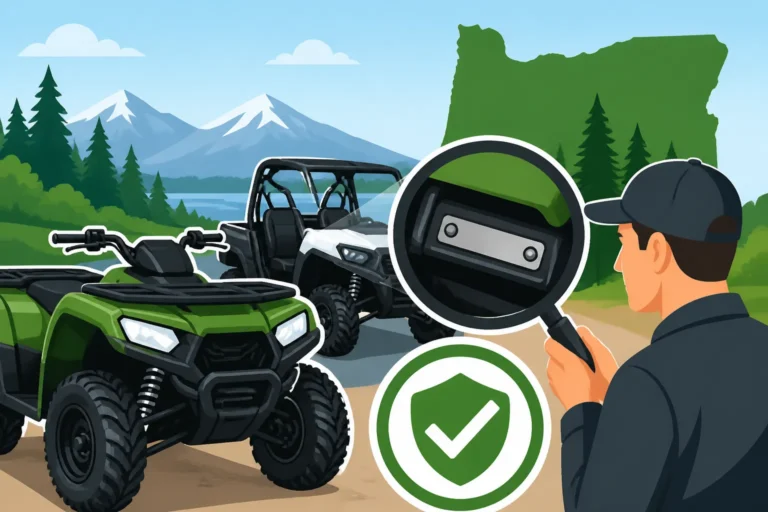
Oregon has specific guidelines for where your ATV operating permit decal needs to be placed on your off-highway vehicle. The goal is clear visibility and easy inspection. These rules can vary slightly depending on the class of your machine, but the general principle is to affix it to a prominent, easily viewable, and permanent part of the vehicle. For most Class I ATVs (quads), the decal must be affixed to the right side of the machine, which is the right side as if you are seated on it, near the operator's foot rest or fender area. This standard placement ensures rangers know exactly where to look. For more details on this, check out [Decal Placement on a Quad's Right Side].
For Class III off-road motorcycles (dirt bikes), the decal is also typically placed on the right side of the machine, often on the fork leg, fender, or a frame component, again ensuring it's readily visible. For larger Class IV side-by-sides (UTVs) and Class II off-road vehicles like sand rails or dune buggies, the placement can be a bit more flexible due to their varying designs. Often, it's affixed to the right side of the main body, a roll bar, or a permanent structure that's not easily removed, ensuring it's visible from the side. [Decal Placement on a Class IV Machine] has more specific guidance for these larger machines.
It's crucial to choose a clean, flat surface for application, ensuring the decal adheres properly. Avoid placing it on removable panels, items that get excessively hot (like exhaust components), or areas that are constantly caked in mud or will be frequently rubbed or abraded. A clean surface will ensure maximum adhesion and longevity. Improper placement or an obscured decal can lead to a ranger requesting you re-affix it, or even a citation, so taking a moment to apply it correctly is well worth the effort.
Keeping Your Decal Readable and Secure
Applying your Oregon ATV operating permit decal correctly is just the first step; maintaining its readability and security throughout its two-year lifespan is equally important. Off-road riding is inherently tough on vehicles, exposing them to dirt, mud, water, sun, and abrasive materials. These elements can quickly degrade a decal if it's not properly cared for. A faded, peeling, or illegible decal is almost as problematic as having no decal at all, as it prevents easy verification by enforcement officials.
To maximize your decal's lifespan, start with proper application on a clean, dry, and smooth surface, as mentioned previously. Once it's on, avoid power washing directly onto the decal or scrubbing it with harsh chemicals. A gentle wipe with soapy water and a soft cloth is usually sufficient to clean off dirt without damaging the adhesive or the printing. If your machine is frequently exposed to intense sunlight, parking it in the shade or using a cover when not in use can help prevent fading. Some riders even apply a clear protective film over the decal for an extra layer of defense against the elements.
Should your decal start to peel or become damaged, it's important to address it promptly. A peeling edge can quickly catch more dirt and moisture, accelerating its deterioration. You can sometimes gently re-adhere a peeling edge, but if it's beyond repair or completely lost, you'll need to obtain a replacement. Having a clearly visible, intact decal ensures you're always in compliance and avoids any questions from officials when you're out enjoying the trails. Don't let a small piece of sticker neglect ruin your day of riding.
What to Do if Your Decal Is Lost or Damaged
Life happens, especially when you're tearing up trails or conquering dunes. It's not uncommon for an ATV operating permit decal to get lost, torn, or otherwise rendered unreadable due to a branch strike, an unfortunate fender bender, or simply the rigors of off-road use. If you find yourself in this situation, don't panic, but also don't assume you can continue riding without a properly displayed, valid decal. Riding with a missing or illegible decal can still result in a citation, as it makes verification difficult for law enforcement.
The good news is that the Oregon Parks and Recreation Department understands these things happen and provides a process for obtaining a replacement decal. Typically, you'll need to contact OPRD directly or visit an authorized permit agent. There might be a small fee associated with issuing a replacement, primarily to cover administrative costs and the cost of the decal itself. You'll likely need to provide information about your original purchase, such as your name, the date of issue, and possibly the OHV information associated with the lost decal. This ensures they're issuing a replacement for a valid, existing permit.
Until your replacement decal arrives and is affixed, you technically should not operate your OHV on public lands unless you have some other form of temporary proof, such as a recently printed temporary permit if you just renewed. It's always best to err on the side of caution. Planning for a replacement promptly after noticing the issue will minimize any downtime and ensure you're back on the trails legally and quickly. For details specific to your situation, checking with the OPRD directly is always the best course of action. You don't want to get caught having to explain why your decal is missing to a ranger.
Maintaining and Renewing Your Oregon ATV Permit
Just like any other official document or pass, your Oregon ATV operating permit has an expiration date. It's easy to forget about it, especially with its two-year validity period, but letting it lapse can lead to fines and an abrupt end to your riding day. Proper maintenance of your permit isn't just about keeping the decal clean; it's also about understanding its lifespan and ensuring you renew it before it expires. This proactive approach saves you headaches and ensures uninterrupted access to Oregon's incredible OHV areas.
Renewing your permit isn't a complex process, but it does require you to be aware of the timeline. Many riders assume there's a special "renewal" button to press, but in Oregon, renewing your permit is essentially the same as buying a new one. This straightforward approach keeps things simple and consistent for all riders. Understanding the mechanics of renewal and the consequences of letting your permit lapse is key to being a responsible and law-abiding off-road enthusiast in the Beaver State.
Let's look at how to keep tabs on your permit's expiration, what the renewal process entails, and why avoiding an expired permit is always in your best interest. Staying on top of these details is a small effort for the big reward of legal, worry-free riding.
Knowing Your Permit's Expiration Date
The Oregon ATV operating permit is valid for two years from the month of purchase. This generous timeframe is a blessing, but it also means it's easy to lose track of the exact expiration date. Your permit decal itself will usually have the expiration date printed on it, typically showing the month and year. For example, "EXP: 07/XX" would mean it expires at the end of July in the specified year. This little piece of information is critical, and it's something you should check periodically, especially as you approach the two-year mark.
One common frustration riders face is realizing their permit is expired just as they're loading up for a weekend trip. This can lead to a mad dash to purchase a new one online or find a local agent. To avoid this kind of last-minute scramble, make a note of your permit's expiration date when you first receive it. You could add a reminder to your digital calendar, write it on your physical calendar, or even set a recurring annual reminder for a few months before the actual expiration. This gives you ample time to purchase a new permit without any stress.
Keeping tabs on your permit's expiration date isn't just about avoiding inconvenience; it's about avoiding potential legal issues. Riding with an expired permit is treated the same as riding without one at all. A quick glance at your decal or a note in your calendar can save you from a costly citation and the disappointment of having your riding day cut short. Proactive awareness is your best friend here. For more information, check out [Oregon ATV Permit Expiration Date].
The Renewal Process: Just Like Buying New
When your Oregon ATV operating permit is nearing its expiration date, the "renewal" process isn't a complex one with special forms or discounts. In Oregon, renewing your permit is essentially the same as purchasing a brand new one. You'll go through the exact same steps, whether you choose to buy it online through the OPRD website or in person at one of the authorized permit agents. This straightforward approach simplifies things considerably, as you don't have to learn a separate renewal system.
This means you'll pay the current [Oregon ATV Permit Cost] again, and you'll receive a new decal with a fresh two-year validity period. When you purchase online, you'll again get that invaluable temporary permit via email, allowing you to ride immediately while you await your new physical decal in the mail. If you renew at a physical agent, you'll walk out with your new decal in hand. There's no separate "renewal application"; you're simply initiating a new permit purchase.
This consistent process ensures that all riders, whether they're first-timers or seasoned veterans, navigate the same clear path. It avoids confusion about different forms or timelines for renewals versus initial purchases. The key takeaway is to treat your expiring permit as if you're acquiring a permit for the very first time. Just make sure you do it before the current one officially expires to maintain continuous legal operation of your OHV on public lands.
Riding on an Expired Permit: Avoid the Fines
It might seem like a minor oversight – your permit expired just last month, and you completely forgot. Surely, a park ranger would understand, right? Unfortunately, when it comes to riding on public lands in Oregon, an expired permit is functionally the same as having no permit at all. And riding without a valid permit is a violation of state law, which can lead to significant consequences. Law enforcement officials, whether they're OPRD rangers, Forest Service officers, or county sheriffs, are trained to check for valid permits, and they don't typically offer a grace period for expired ones.
The primary consequence of riding on an expired permit is a citation, which in Oregon is often classified as a Class C traffic violation. This isn't just a slap on the wrist; it comes with a monetary fine that can easily be more expensive than the cost of a two-year permit. Beyond the financial penalty, being cited can also interrupt or even end your riding day. A ranger might require you to trailer your machine off public land until you can secure a valid permit, which is a disappointing way to cut short an eagerly anticipated outing. [Oregon's Class C Traffic Violation for No Permit] can really put a damper on your weekend.
The best way to avoid this frustrating scenario is simply to stay on top of your permit's expiration date. Set reminders, check the decal periodically, and plan to renew a month or two before it's due. The small effort of proactive renewal pales in comparison to the hassle, expense, and disappointment of getting caught with an expired permit. Responsible riding includes responsible permitting, ensuring your adventures are always fun and free from unnecessary legal worries.
The Importance of Your Permit: Why It Matters on the Trails
Beyond simply being a legal requirement, your Oregon ATV operating permit plays a much larger role in the overall health and sustainability of off-road recreation in the state. It's not just a piece of paper or a sticker; it's a direct contribution to the maintenance, development, and management of the very trails and dunes you love to ride. Understanding this broader impact can transform the permit from a mere compliance item into a badge of responsible stewardship.
When you purchase a permit, you're not just buying access; you're investing in the future of the sport. This collective funding is vital for a variety of programs that enhance rider safety, preserve natural resources, and ensure the continued availability of high-quality riding areas. Without this revenue, the infrastructure that supports OHV use would quickly deteriorate, leading to closures, restricted access, and a diminished experience for everyone.
Let's delve into why your permit truly matters – from avoiding penalties to actively supporting the vibrant OHV community and maintaining the landscapes that make Oregon such a fantastic place to ride.
Enforcement and Penalties for No Permit
Let's be blunt: riding on public land in Oregon without a valid ATV operating permit is illegal, and law enforcement takes it seriously. It's not a rule that's ignored or casually enforced; rangers and other officials are on patrol specifically to ensure compliance with OHV regulations. The penalty for being caught without a permit can range from a warning (if you're very lucky and it's your first offense in a remote area) to a costly citation, which is far more common. This isn't just about a potential fine; it can also lead to the termination of your riding day, forcing you to trailer your machine out of the area.
In Oregon, riding without an OHV permit typically results in a Class C traffic violation. While specific fines can vary, they are often substantially higher than the cost of the two-year permit itself. Imagine shelling out a significant sum, perhaps several times the permit fee, just because you overlooked a small sticker. That's a bitter pill to swallow when you could have easily avoided it. Beyond the financial hit, there's the inconvenience and embarrassment of being pulled over, explaining yourself to a ranger, and having your fun interrupted. You can learn more about [Oregon's Penalty for an Unpermitted ATV].
The enforcement isn't just about punishing non-compliance; it's about ensuring fair play and proper funding for the OHV program. When everyone contributes by purchasing a permit, the system works as intended, and resources are available for trail work, safety programs, and area management. So, while the immediate concern might be avoiding a fine, the larger picture is about upholding the integrity of the system that benefits all riders. Always have your permit, clearly displayed, to ensure your adventures are hassle-free.
Supporting Oregon's OHV Program
One of the most compelling reasons to ensure your ATV has a valid Oregon operating permit isn't just to avoid a fine, but to directly support the very riding opportunities you enjoy. The money collected from the sale of these permits is a cornerstone of Oregon's Off-Highway Vehicle (OHV) program, which is managed by the Oregon Parks and Recreation Department (OPRD). This fund is absolutely vital for maintaining, improving, and expanding the extensive network of trails, staging areas, and facilities across the state.
Think about the well-maintained trails in the Tillamook State Forest, the accessible staging areas at the Oregon Dunes, or the clear signage that guides you in Millican Valley. All of these require significant resources to build and sustain. Your permit dollars go towards trail grading, bridge repairs, erosion control, garbage collection, educational programs, and even the enforcement efforts that keep everyone safe and responsible. Without this consistent funding, many of these cherished riding areas would quickly degrade or even face closure due to lack of resources. To see exactly where those funds go, check out [Where Oregon ATV Permit Money Goes].
Essentially, when you buy an Oregon ATV operating permit, you become a direct contributor to the health and future of off-road recreation in the state. It's a small investment that yields huge returns in terms of access, safety, and enjoyment for the entire OHV community. It's a testament to the idea that user fees, when properly managed, can create and sustain incredible recreational opportunities. By having your permit, you're not just complying with the law; you're actively participating in the stewardship of Oregon's amazing outdoor playground.
Peace of Mind on Public Lands
There's a certain feeling of liberation that comes with knowing you're fully compliant with all the rules and regulations when you're out riding. Having your Oregon ATV operating permit properly affixed and valid provides a profound sense of peace of mind. Instead of worrying if you'll be stopped by a ranger or if you're risking a citation, you can focus entirely on the thrill of the ride, the beauty of the Oregon landscape, and the camaraderie of your fellow riders. This intangible benefit is often underestimated but contributes significantly to a truly enjoyable experience.
Imagine pulling into a busy staging area on a sunny Saturday, seeing rangers conducting routine checks, and confidently knowing that your machine is legal. There's no need to try and subtly avoid eye contact or feel a knot in your stomach. You can wave, exchange a friendly greeting, and continue on your way, knowing your permit is in order. This kind of confidence enhances the entire experience, allowing you to immerse yourself fully in the adventure without any nagging concerns in the back of your mind.
Furthermore, being compliant isn't just about your interaction with law enforcement. It also sets a good example for others and reinforces the positive image of the OHV community. When riders demonstrate responsibility, it helps foster goodwill with land managers and the general public, which is crucial for maintaining access to riding areas. So, while the permit is a small sticker, the peace of mind it brings, and the positive impact it represents, are immense.
Reciprocity: Out-of-State Riders and the Oregon Permit
Oregon is a magnet for outdoor enthusiasts, and that certainly includes off-road riders from neighboring states like Washington, California, and Idaho. If you're planning a trip to the Oregon Dunes, the Tillamook State Forest, or any other of our fantastic OHV areas from out of state, one of the first questions you'll likely have is whether your home state's registration or permit is valid here. The concept of reciprocity – where one state honors another's permits – is common, but in Oregon, it comes with some very important specifics and limitations.
It's crucial not to assume that just because your machine is legal in your home state, it's automatically legal for public land use in Oregon. While some level of reciprocity exists, it's not a blanket acceptance of all out-of-state registrations or stickers. Understanding these nuances is key to avoiding an unexpected citation and ensuring your trip is filled with adventure, not administrative headaches. This section will clarify what out-of-state riders need to know and when an Oregon permit becomes a necessity.
Let's break down the rules for visitors, when out-of-state permits are not enough, and what to do if you're making a permanent move to the Beaver State with your OHV.
Do Visitors Need an Oregon ATV Permit?
This is a frequently asked question by our out-of-state visitors, and the answer is nuanced but clear. Yes, in many cases, visitors will need an Oregon ATV operating permit to legally ride on public lands. However, Oregon does offer some reciprocity for OHV permits or registrations from certain other states. This means if your home state has a comparable OHV permitting program, and your machine displays a valid sticker from that state, you might be exempt from needing an Oregon permit for a limited time.
The key phrase here is "limited time." Oregon typically honors out-of-state permits for up to 60 consecutive days within the state. This grace period is designed to allow visitors to enjoy short trips without having to purchase an Oregon permit for every machine. However, the list of states whose permits Oregon accepts is specific and does not include every state with an OHV program. For example, while California's "Green Sticker" program is generally recognized, a simple vehicle registration from a state without a dedicated OHV permit system might not qualify. You should definitely consult [Do Visitors Need an Oregon ATV Permit?] for the latest information.
The best practice for any out-of-state visitor planning to ride in Oregon is to check the official Oregon Parks and Recreation Department (OPRD) website or call them directly before your trip. Verify if your specific state's permit is honored and for how long. If you plan to stay longer than 60 days, or if your state isn't on the reciprocity list, then purchasing an Oregon ATV operating permit will be a necessary step to ensure you're riding legally. It's always better to be certain than to risk a fine far from home.
When an Out-of-State Permit Doesn't Work
While Oregon offers reciprocity for a limited time with some states' OHV permits, it's crucial to understand when your out-of-state permit won't work. Making assumptions can lead to an unwelcome surprise from a ranger. The primary reasons an out-of-state permit might not be valid in Oregon include:
- Your State Isn't on Oregon's Reciprocity List: Not every state with an OHV program is recognized by Oregon for reciprocity. Oregon maintains a specific list of states whose permits it honors. If your state isn't on that list, your permit, sticker, or registration, no matter how valid in your home state, will not grant you legal access to Oregon's public OHV lands. This is a critical point that many riders from states not on the list unfortunately discover too late. This also applies if you are wondering [Does Oregon Honor a Washington Registration?] or [Does Oregon Honor an Idaho Sticker?]. The lists are specific.
- Exceeding the 60-Day Limit: Even if your state's permit is on Oregon's reciprocity list, that acceptance is typically limited to 60 consecutive days of operation within Oregon. If you're staying for an extended period, perhaps for a multi-month vacation or seasonal work, you'll need to purchase an Oregon ATV operating permit once that 60-day window closes. This rule applies regardless of how long your home state's permit is valid for.
- No Comparable OHV Permit Program: Some states don't have a dedicated, specific OHV permitting or registration program that contributes funds directly to OHV recreation. If your machine is only registered with your state's DMV for general vehicle purposes but lacks a specific off-highway sticker or permit, Oregon generally won't recognize that as fulfilling its operating permit requirement. The Oregon system is built around dedicated funding for OHV areas, and a general vehicle registration doesn't always align with that.
The bottom line is, if you're coming from out of state, verify, verify, verify. A quick call to the Oregon Parks and Recreation Department or a check of their official website can save you a world of trouble and ensure your off-road adventure remains fantastic.
Moving to Oregon: Permitting Your Machine
If you've recently moved to Oregon and brought your beloved ATV or side-by-side with you, the rules regarding the operating permit will quickly shift from reciprocity to full Oregon compliance. While you might initially benefit from the 60-day reciprocity period if your previous state's permit is recognized, this is a temporary grace. Once you establish residency in Oregon, or after that 60-day window expires (whichever comes first), you are expected to purchase an Oregon ATV operating permit for your machine.
This is a fairly standard practice across states. Once you're a resident, you become part of the local system, and your contributions through permit fees are expected to support the state's OHV program directly. There isn't usually a direct transfer process from an out-of-state permit to an Oregon one; rather, you'll simply purchase a new Oregon permit as if you were buying it for the first time. This ensures that all resident riders are equitably contributing to the maintenance and development of Oregon's riding areas. For more details, consider [Oregon ATV Permit After Moving to the State].
It's a good idea to prioritize getting your Oregon permit once you've settled in. Don't rely on the 60-day reciprocity as a long-term solution. As a new Oregonian, embracing the local OHV permit system is part of becoming a responsible member of the state's vibrant off-road community. It's a small administrative step that secures your legal access for years to come and ensures you're helping to fund the very trails you'll be exploring in your new home state.
Where Does Your Permit Money Go?
Many riders purchase their Oregon ATV operating permit because it's required, and they want to avoid fines. But often, there's a deeper question lurking: where does that money actually go? It's a fair question, and the answer should give every permit holder a sense of satisfaction. The fees collected from these permits are not just absorbed into a general state fund; they are specifically earmarked for the Off-Highway Vehicle (OHV) program within the Oregon Parks and Recreation Department (OPRD). This means your dollars directly benefit the very activity you love.
Understanding the allocation of these funds can transform the permit from a mandatory fee into a visible investment in the future of off-road recreation. It demonstrates a transparent system where user fees directly support user facilities. From maintaining existing trails to developing new ones, and from ensuring rider safety to protecting the natural environment, your permit money is put to work in numerous tangible ways across the state.
Let's explore the various avenues through which your permit dollars are utilized, highlighting the crucial role they play in sustaining Oregon's diverse and exciting OHV opportunities.
Funding Trail Maintenance and Rider Programs
The vast majority of the funds generated by Oregon ATV operating permits are channeled directly into programs that enhance and sustain OHV recreation throughout the state. This includes the hands-on, boots-on-the-ground work of trail maintenance. Think about the thousands of miles of trails across Oregon, from the rocky paths in the mountains to the shifting sands of the coast. These environments are constantly impacted by weather, erosion, and heavy use. Your permit money pays for the equipment, labor, and materials needed to keep these trails open, safe, and enjoyable. This could involve clearing fallen trees, repairing washouts, building bridges over streams, or maintaining proper drainage to prevent further erosion.
Beyond physical trail work, the funds also support a wide array of rider programs. This often includes educational initiatives focused on safety, responsible riding practices, and environmental stewardship. For instance, parts of the funds may go towards developing and delivering the [Oregon ATV Safety Card Requirements] courses, which are mandatory for many riders. These programs teach new riders essential skills and reinforce best practices for everyone, ensuring a safer and more harmonious riding environment. Signage at staging areas, informational kiosks, and maps are also funded to help riders navigate trails and understand local rules.
The commitment of these funds ensures that the entire OHV experience is well-managed and constantly improved. It's a virtuous cycle: riders pay for permits, those funds maintain and improve trails and programs, which in turn encourages more riders to enjoy and support the system. This direct link between your permit purchase and visible improvements on the ground fosters a strong sense of community and responsibility among Oregon's off-road enthusiasts.
The Role of the Oregon Parks and Recreation Department
The Oregon Parks and Recreation Department (OPRD) is the central authority when it comes to the state's OHV program, and therefore, the primary steward of your ATV permit dollars. Unlike the DMV, which handles street-legal vehicle registration, OPRD is specifically tasked with managing recreational lands and ensuring the sustainability of activities like off-highway vehicle use. This means they are responsible for everything from the strategic planning of new trail systems to the day-to-day oversight of existing ones. Your permit money empowers OPRD to fulfill this crucial role effectively.
OPRD uses these funds to employ staff who specialize in OHV recreation, including park rangers, trail maintenance crews, and program administrators. These individuals are the unsung heroes who work tirelessly to keep our riding areas accessible and enjoyable. They are on the ground, assessing trail conditions, enforcing rules, responding to incidents, and generally serving as the front-line ambassadors for responsible recreation. Their expertise ensures that projects are well-planned and executed, aligning with both recreational needs and environmental protection goals. More on this can be found in [The Oregon Parks and Recreation Department's Role].
Furthermore, OPRD acts as a liaison between the OHV community and other land management agencies, such as the U.S. Forest Service and the Bureau of Land Management. They coordinate efforts, share resources, and ensure a cohesive approach to OHV management across different land designations. This collaborative effort means your permit dollars support not just OPRD's lands, but also contribute to a broader network of publicly accessible riding areas, fostering a more unified and robust OHV system across the state.
ATV Grants: How Your Dollars Make a Difference
Perhaps one of the most impactful ways your Oregon ATV operating permit money makes a difference is through the OHV Grant Program. A significant portion of the permit fees, along with a share of the state's gas tax revenue attributed to off-highway vehicle use (known as [Gas Tax Money in Oregon's ATV Fund]), is allocated to this grant program. This program then provides funding to various entities – including federal agencies (like the Forest Service and BLM), state parks, counties, and even non-profit organizations and OHV clubs – for projects that directly benefit off-road recreation.
These grants are competitive, meaning organizations must apply with detailed proposals for specific projects. This ensures that the funds are directed towards high-priority, well-planned initiatives that have a tangible impact. Projects funded by these grants can include anything from constructing new trails, improving staging areas with amenities like restrooms and parking, purchasing new trail maintenance equipment, to developing safety education materials, or conducting environmental restoration projects in riding areas. Your permit money is literally building and improving the places you ride.
The grant program is a powerful mechanism because it leverages local expertise and initiative. Local clubs or land managers often know best what improvements are needed in their specific areas. By providing grants, OPRD empowers these local partners to implement projects that might otherwise never get off the ground due to funding limitations. This creates a ripple effect of positive change, ensuring that every permit purchase contributes to a more vibrant, sustainable, and enjoyable future for off-highway vehicle recreation across Oregon. To learn more about specific examples, check out [What the Oregon ATV Grant Program Funds].
Navigating Legal Documents and Ownership in Oregon
While the Oregon ATV operating permit is focused on the act of riding on public lands, it's intrinsically linked to the concept of vehicle ownership. For many riders, especially those buying or selling used machines, understanding the legalities of ownership – even for off-road vehicles that don't require traditional registration – is paramount. This can be a tricky area, particularly since Oregon makes titling for most ATVs optional. This unique approach can lead to confusion about proving ownership, especially if you ever need to replace a permit or deal with legal issues.
Having clear documentation of ownership, even without a mandatory state title, is crucial for your peace of mind and to protect your investment. It ensures a smooth process if you ever need to sell your machine, prove its origin, or even deal with insurance claims. Navigating these details might not be as exciting as hitting the trails, but it’s an essential part of responsible ATV ownership in Oregon.
Let's explore the role of bills of sale, how to establish ownership without a title, and how external resources can help ensure your paperwork is always in order.
The Importance of a Bill of Sale
In Oregon, since titling an ATV is often optional, the bill of sale becomes an incredibly important document. While a title formally establishes legal ownership through the state, a well-executed bill of sale serves as your primary proof of purchase and transfer of ownership in its absence. This document records the transaction between the buyer and seller, detailing the machine's specifics, the purchase price, and the date of sale. It's the physical evidence that you legitimately acquired your ATV.
Imagine you're buying a used quad from a private seller. Without a state-issued title, the bill of sale is what links you to that machine. It protects you in several ways: it proves you paid for it, establishes the date of sale (important for permit renewal or warranty claims if applicable), and clearly identifies the machine via its Vehicle Identification Number (VIN). If there's ever a dispute over ownership, or if the ATV is unfortunately stolen, a solid bill of sale is your first line of defense in proving it's yours. It's also vital for when you need to [Proving Ownership Without a Title].
Even if you intend to get an optional title, a bill of sale is typically a prerequisite for that process. Don't ever complete a private sale of an ATV in Oregon without a detailed bill of sale signed by both parties. You can find generic templates online, or use a service like LawDepot, which provides customizable legal documents, to ensure all the necessary information is included. This small step protects both the buyer and the seller and prevents future headaches.
Establishing Ownership Without a Title
Oregon's optional titling for ATVs can be a blessing for simplicity but also a curse for proving definitive ownership. If you choose not to title your ATV, or if you purchased it from someone who never titled it, you need to rely on other documents to establish your ownership. This is particularly important for transactions involving used machines or if you ever need to report a theft. Without a title, the burden of proof falls more heavily on your personal documentation.
The most critical document, as mentioned, is a comprehensive bill of sale. This should include the full names and contact information of both buyer and seller, the date of sale, the purchase price, and a detailed description of the ATV, including its make, model, year, and crucially, its full Vehicle Identification Number (VIN). The VIN is the unique identifier for your machine, similar to a fingerprint, and it’s what connects you directly to that specific piece of property. Ensure both parties sign and date the document, and keep a copy in a safe place, perhaps even digitally. You should certainly be careful when [Buying From a Seller Who Kept No Records].
Other forms of proof, though secondary, can include previous registration documents (if you moved from a state that requires it), old insurance policies, or even a notarized statement from the previous owner if a bill of sale is missing. When using services like LawDepot for a bill of sale, you can often add specific clauses that attest to the seller's right to sell, further strengthening your ownership claim. While optional, obtaining a title, even just for peace of mind, is often recommended by experts when possible, as it provides the clearest and most universally accepted proof of ownership.
Disclaimer
This article is for general informational purposes only and does not constitute professional advice. Laws, prices and regulations vary by location and change over time. Consult a qualified professional for guidance on your specific situation.