The Six Oregon Counties That Opened Their Roads
There's a common ache among off-road enthusiasts in Oregon: the frustration of having your ATV or UTV parked right there, ready for adventure, but being boxed in by rules that keep you off public roads. You've got to trailer it everywhere, sometimes just to get across a paved section to the next dirt trail. It’s a real hassle, adding extra time and expense to every outing. But here’s some genuinely good news: a handful of Oregon counties have heard these pleas and taken proactive steps to open certain roads to these machines. This guide is all about shedding light on those pioneering counties, what it means for riders, and how you can navigate these newfound opportunities without running afoul of the law.
Oregon's General Stance on Off-Highway Vehicle Road Use
Before we dive into the exceptions, it’s crucial to understand the baseline. Oregon, like many states, generally restricts the operation of off-highway vehicles (OHVs) – which include ATVs and UTVs – on public roads, streets, and highways. The reasoning is rooted in safety, as these machines are primarily designed for off-road terrain, not for interacting with conventional vehicle traffic. This means that for the vast majority of paved, publicly maintained roads in the state, your quad or side-by-side isn't welcome.
The Legal Framework and Its Purpose
The Oregon Revised Statutes (ORS) lay out the prohibitions pretty clearly. An ATV or UTV isn't typically registered as a street-legal vehicle with the Department of Motor Vehicles (DMV), and therefore isn't allowed to operate where other registered vehicles do. This framework is in place to ensure public safety, prevent road wear from vehicles not designed for it, and manage traffic flow. It's not about being anti-OHV; it's about regulating how different types of vehicles interact within a shared public space. While Oregon requires an [Oregon's ATV Operating Permit] for riding on designated off-road trails and areas, this permit doesn't magically grant you permission to cruise down Main Street.
There are a couple of very limited state-level exceptions, such as the designated ATV routes in [Oregon's Only Two Designated ATV Routes: Lakeside and Sumpter], which are specific, highly regulated corridors designed to allow access through small towns to riding areas. But these are rare and don't represent a broad shift in policy. Most riders are left scratching their heads, wondering why their machine that's perfectly safe on a gravel forest road can't cross a half-mile of pavement to get to the next section of trail. It's a disconnect that many local communities are now trying to address through their own ordinances.
Distinguishing OHVs from Street-Legal Vehicles
It’s important to clarify that an ATV or UTV, even one that's been accessorized to the hilt with lights, mirrors, and turn signals, isn't automatically considered "street legal" in Oregon's eyes for general road use. While you might add components from places like SuperATV to enhance safety and visibility, these modifications alone don't change the vehicle's fundamental classification or grant it the same road privileges as a car or truck.
A true street-legal vehicle, in most contexts, has undergone a specific registration and titling process, meets Department of Transportation (DOT) standards, and often has features like a windshield, wiper blades, specific braking systems, and passenger restraints not always found on standard OHVs. There's a particular class of OHV, Class II, which includes certain types of dune buggies or sand rails, that can be registered as street-legal if they meet all the stringent requirements, including [Mandatory Insurance on Every Oregon Class II] and inspection. But for your typical quad or side-by-side, even a brand new one, the answer to [Are ATVs Street Legal in Oregon?] is generally "no," unless a specific county or state route says otherwise. This distinction is vital for understanding the scope of the county-level changes.
How a County Opens Its Roads to OHVs
The path to opening county roads for OHVs isn't a simple administrative tweak. It requires a deliberate legislative process at the local level, driven by community input, economic considerations, and often, the passionate advocacy of local riders. It's a significant undertaking that reflects a county's commitment to supporting recreational opportunities and local commerce.
The Ordinance Process: A Deep Dive
When a county decides to explore opening its roads to OHVs, it typically begins with research and public engagement. This involves gathering information on how other jurisdictions manage similar access, assessing local road conditions, and, crucially, soliciting feedback from residents, law enforcement, and businesses. Public hearings become a central forum where concerns about safety, noise, dust, and potential conflicts with other road users are aired. It's a chance for OHV advocates to explain the benefits – increased tourism, easier access to trails, support for local businesses – and for residents to voice their perspectives.
The county commissioners or equivalent governing body then draft an ordinance, a local law, that specifies which roads, or portions thereof, will be open, under what conditions, and for what types of OHVs. These ordinances are often highly detailed, outlining required safety equipment, operating hours, speed limits, and even specific types of machines allowed. Once drafted, the ordinance goes through formal readings and a vote. If passed, it becomes law, carving out specific exceptions to the general state prohibition on OHV road use within that particular county's jurisdiction. This isn't just a casual decision; it's a carefully considered legislative act. [Applying to Designate a New Oregon Route] at the state level is even more complex, highlighting the local autonomy in these county decisions.
Factors Influencing a County's Decision
Several factors typically motivate a county to open its roads to OHVs. Often, it's about economic development. Counties with significant natural resources and recreation areas, like those in Eastern Oregon or along the coast, recognize that OHV tourism can bring substantial revenue to small, rural communities. Riders need gas, food, lodging, and supplies, injecting money into local economies that might otherwise struggle. By providing legal road access, these counties aim to make it easier for riders to connect between trail systems, staging areas, and local towns, encouraging longer stays and more spending.
Another key factor is practical access. In many rural areas, county roads are the only way to get from a farm to a field, or from one section of forest land to another. For residents who use OHVs for legitimate [Oregon Agricultural Road Use for ATVs], closing off short road segments can create significant logistical hurdles. Opening these roads can serve a utilitarian purpose for local citizens, not just recreational users. Local advocacy groups, like ATV and UTV clubs, also play a vital role, demonstrating responsible riding, proposing solutions to potential issues, and showing the positive impact OHV recreation can have on the community. It's a delicate balance of managing concerns while fostering opportunities.
The Six Trailblazing Oregon Counties: Who They Are and What They Did
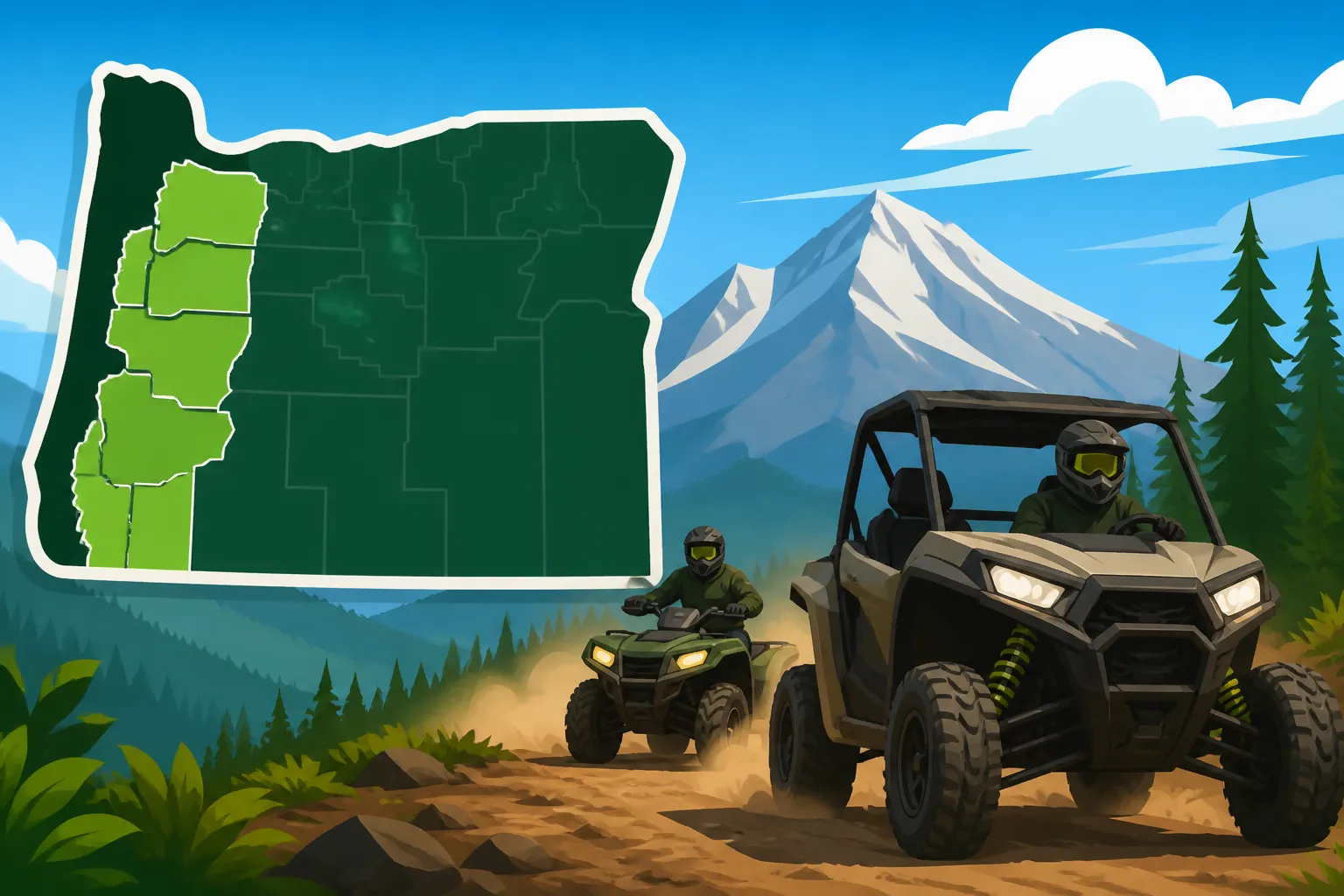
Oregon has indeed seen a growing trend of counties recognizing the value of OHV recreation, leading six of them to enact ordinances that allow some form of road access. This is a significant development for riders, opening up new possibilities for exploration and connecting trails. It's a testament to local communities identifying their unique needs and opportunities.
Union County's Initiative: Connecting Communities and Trails
Union County, nestled in northeastern Oregon, was one of the first to truly pave the way, passing [Union County Ordinance 2019-01]. Their ordinance allows OHVs on certain county roads, primarily those that are graveled and connect to larger trail systems or provide access to rural areas. The intent here is clear: to link towns like Union and La Grande with the vast Wallowa-Whitman National Forest, providing riders a way to access trailheads or even grab a bite to eat in town without having to load their machine onto a trailer.
The ordinance typically specifies things like operating hours (often daylight hours only), speed limits matching those for other vehicles, and required safety equipment beyond the basic permit, such as a rearview mirror, a horn, and working head and tail lights – essential components you might source from a supplier like SuperATV. This careful approach helps integrate OHVs into the existing road network in a controlled and safe manner, validating their presence on the roads within designated areas.
Grant County's Approach: Unlocking the High Desert
Further south and east, Grant County has also taken progressive steps, allowing OHV use on specific county roads, particularly those that are paved and connect communities and trail systems within the high desert landscape. The county is known for its incredible scenic beauty and extensive network of forest roads and trails, making it a prime destination for OHV enthusiasts. By opening designated sections of county roads, they've created valuable corridors that eliminate the need for constant trailering. Imagine being able to ride from your campsite to a general store in town, or directly from one OHV staging area to another, all legally.
[Riding a County Road in Grant County, Oregon] is now a reality for many, offering a more seamless and enjoyable riding experience. Like Union County, Grant County's ordinance comes with stipulations, often including requirements for operator licensing, insurance, and specific vehicle equipment. The goal is to provide access while ensuring that OHV operators are as visible and predictable as other vehicles on the road, contributing to overall safety.
Other Counties and Their Unique Rules
Beyond Union and Grant, several other counties have enacted their own ordinances, each with its specific nuances tailored to local geography and community needs. While the overarching goal is similar – to enhance OHV access – the details can vary significantly. These counties include Baker County, Harney County, Malheur County, and Wallowa County.
Here's a general overview of what you might find across these counties:
| County | Primary Focus / Road Type | Common Restrictions | Potential Benefits for Riders |
|---|---|---|---|
| Union | Gravel & connecting roads | Daylight hours, specific routes | Access to Wallowa-Whitman NF, town amenities |
| Grant | Paved connecting roads | Designated routes, equipment needs | Link trail systems, access local businesses |
| Baker | Rural, low-traffic roads | Speed limits, specific signage | Connects small communities, access to BLM/Forest lands |
| Harney | Agricultural & back roads | Limited to county-maintained, unpaved | Farm access, connecting vast high desert riding areas |
| Malheur | Eastern Oregon rural roads | Posted routes, enhanced visibility | Opens up remote areas, ties to regional trail networks |
| Wallowa | Scenic byways, town access | Seasonal, specific hours, equipment | Easier access to scenic areas, local services, Eagle Cap NF |
It's absolutely vital for riders to check the specific ordinance for the county they plan to visit. What's allowed in Union County might not be in Baker, and vice-versa. These ordinances are dynamic and can be updated, so staying informed is key. The Oregon Parks and Recreation Department (OPRD) often has links to these county ordinances or can provide guidance on where to find the most current information. The general principle is that if a road isn't specifically opened by a county ordinance, it remains closed to OHV operation.
Riding on Open County Roads: What You Need to Know
Having a county open its roads to OHVs is fantastic, but it comes with a significant responsibility for riders. These aren't free-for-all zones; they are shared spaces with specific rules designed to ensure everyone's safety and to maintain the privilege of road access. Ignoring these rules could not only lead to fines but also jeopardize future access for all riders.
Required Equipment and Documentation
When operating your ATV or UTV on open county roads, you'll need more than just your [Oregon's ATV Operating Permit]. Most county ordinances, in conjunction with state laws, will mandate specific equipment to make your machine more visible and safer for road use. This often includes:
- Headlights and Taillights: Fully functional, visible at required distances.
- Brake Lights: Clear indication when braking.
- Turn Signals: Necessary for indicating turns in traffic.
- Rearview Mirrors: At least one, sometimes two, to provide a clear view of traffic behind you.
- Horn: An audible warning device.
- Spark Arrester: A U.S. Forest Service approved [Oregon Spark Arrester Requirement] is critical for fire prevention.
- Muffler/Sound: Your machine must meet [Oregon Sound Limits for ATVs] to avoid disturbing residents.
- Fenders/Mud Flaps: To prevent throwing debris onto other vehicles.
Many riders will turn to aftermarket parts from companies like SuperATV to equip their machines with these road-legal accessories, ensuring they meet the standards set by local ordinances. Beyond the machine itself, you, the operator, must also be prepared:
- Oregon ATV Safety Education Card: All riders, regardless of age, need an [Oregon's ATV Safety Education Card] for public land use, and this extends to county roads.
- Valid Driver's License: If you're old enough to have one, you'll need a valid driver's license for road operation.
- Insurance: While not always required for off-road use, [Oregon Insurance Requirements for Class II] machines are mandatory for street-legal operation, and many county ordinances extend this to all OHVs on their roads. Even if not mandated, carrying liability insurance is a wise choice for any vehicle sharing public roads.
- Proof of Ownership: Have your title or registration readily available. [Titling an ATV in Oregon Is Optional], but a bill of sale or other proof is always smart.
Failing to have the proper equipment or documentation can result in a [Oregon's Class C Traffic Violation for No Permit] or other citations, which can be costly.
Adhering to Local Ordinances and State Laws
Once you're on a designated county road, you're expected to follow all traffic laws just as if you were driving a car. This means:
- Speed Limits: Observe posted speed limits.
- Stop Signs and Traffic Signals: Obey all regulatory signs and signals.
- Lane Discipline: Drive on the right side of the road and yield right-of-way as required.
- Passing: Pass other vehicles only when safe and legal.
- Road Etiquette: Be courteous to other drivers, cyclists, and pedestrians. Remember, you're representing the entire OHV community.
- Staying on Designated Routes: It cannot be stressed enough that these ordinances only open specific roads or sections. Straying onto an undesignated road can lead to [Oregon Fines for Riding an Unopened Road] and is illegal. Always consult up-to-date maps and respect all signage. If a road isn't clearly marked as open for OHVs, assume it's closed.
- No Reckless Operation: Operating an OHV in a manner that endangers others, creates excessive noise, or damages property is prohibited and can lead to serious consequences.
The success of these programs relies heavily on the responsible behavior of riders. Every time an OHV is operated safely and respectfully on these county roads, it reinforces the positive image of the sport and helps ensure these access opportunities continue.
Safety and Awareness on Shared Roads
Riding an OHV on a county road is a different experience than on a trail. You'll be sharing the road with passenger vehicles, trucks, farm equipment, and potentially bicycles and pedestrians. Your machine, even with added safety gear, might handle differently than a car, especially at higher speeds or on paved surfaces.
- Visibility is Key: OHVs are generally smaller than cars, making them harder to see. Use your headlights, wear bright clothing, and consider adding a flag or whip, especially in dusty conditions.
- Defensive Riding: Assume other drivers might not see you. Maintain safe following distances, be prepared to react, and always anticipate potential hazards.
- Helmet Use: While [Oregon Helmet Law for Adults] may not mandate a helmet for all adult OHV operators in all situations, it is highly recommended, especially when operating on public roads where impacts with other vehicles are a risk. For riders under 18, helmets are always mandatory.
- Passengers: Adhere to [Oregon Passenger Rules on a Quad] and in a side-by-side. Ensure any passengers are safely seated, have proper restraints, and footrests if applicable. Do not carry more passengers than your machine is designed for.
- Weather Conditions: Be extra cautious in adverse weather like rain or ice, which can significantly affect traction and braking on roads not primarily designed for knobby tires.
By taking these precautions, you're not just protecting yourself and your passengers, but also contributing to the longevity of OHV road access in Oregon.
The Impact and Future of County Road Access
The decision by these six Oregon counties to open some of their roads to OHVs represents a significant shift and has far-reaching implications for both the OHV community and the rural economies of the state. It's a testament to the power of local advocacy and the growing recognition of off-highway vehicle recreation's importance.
Benefits and Challenges
The benefits of increased county road access are clear for the OHV community. It enhances the overall riding experience by reducing the need for constant trailering, making it easier to connect between disparate trail systems, access amenities in small towns, and extend the range of a day's ride. For residents who use OHVs for work, it simplifies daily tasks. This accessibility can also lead to more riders exploring new areas, spreading out the impact and potentially reducing congestion on traditionally popular trails.
From an economic perspective, opening roads to OHVs can be a lifeline for many rural Oregon communities. Riders are tourists who spend money on fuel, food, accommodations, and local goods and services. This influx of tourism can support local businesses, create jobs, and contribute to the tax base, all of which are crucial for the sustainability of these often-remote areas. This is why initiatives like [What the Oregon ATV Grant Program Funds] are so vital, as they demonstrate the broader economic benefits of the sport.
However, these benefits don't come without challenges. Concerns about safety, noise pollution, dust, and potential conflicts with other road users are legitimate and need to be continuously managed. Local law enforcement faces the task of educating riders and enforcing ordinances, ensuring that the privilege of road access isn't abused. There's also the ongoing challenge of maintaining road quality, as OHVs, particularly those with aggressive tires, can contribute to wear and tear, especially on gravel roads. Striking the right balance between access and preservation is a perpetual balancing act.
How to Support Further Access and Responsible Riding
For those who wish to see more counties open their roads, or to ensure that current access remains, responsible riding is paramount. Every interaction an OHV rider has with other road users, local residents, and law enforcement shapes the perception of the entire community.
- Be a Good Steward: Follow all rules, respect private property, stay on designated routes, and practice Leave No Trace principles.
- Educate Yourself: Know the specific ordinances of any county you plan to ride in. These rules can change, so always check the latest information from the county or OPRD.
- Join and Support OHV Organizations: Local clubs and statewide organizations often play a crucial role in advocating for access, organizing clean-up events, and promoting safe riding practices. Their collective voice is powerful in discussions with county officials.
- Communicate Respectfully: If you encounter concerns from residents or other road users, engage in respectful dialogue. Explain the positive aspects of OHV recreation and address their concerns constructively.
- Report Issues Responsibly: If you witness illegal or irresponsible riding, report it to the appropriate authorities. This helps to self-police the community and demonstrate a commitment to safety and compliance.
The groundwork laid by these six Oregon counties is a promising start. By demonstrating that OHVs can coexist safely and beneficially on public roads under thoughtful regulation, the potential for expanding similar access across other parts of the state grows. It's an exciting time for Oregon's ATV and UTV enthusiasts, and with continued responsible action, the open road ahead looks brighter than ever.
Disclaimer
This article is for general informational purposes only and does not constitute professional advice. Laws, prices and regulations vary by location and change over time. Consult a qualified professional for guidance on your specific situation.