Oregon Agricultural Road Use for ATVs
It's incredibly frustrating when you rely on your ATV or UTV for daily tasks on the farm or ranch, only to feel like you're navigating a legal minefield every time you need to cross a road or move between fields. Many folks are left scratching their heads, wondering if that quick hop across the county road to mend a fence or haul feed is actually against the law, despite it being essential for their livelihood. This comprehensive guide aims to clear up the confusion surrounding Oregon's specific rules for using ATVs and UTVs on public roads for legitimate agricultural purposes, helping you understand when and how you can legally get your machine where it needs to go.
Understanding Oregon's General Road Rules for ATVs
Let's be real: for most recreational riders, the idea of a street-legal ATV in Oregon is pretty much a pipe dream. The state's laws are generally quite strict about where these machines can and cannot go. It's not like other states where you might see quads cruising down Main Street with a license plate. Oregon has carved out very specific niches for ATV use, and for good reason—safety is paramount, and these machines simply aren't designed for the speeds and traffic of paved roads. This baseline understanding is crucial before we dive into the agricultural exceptions, as it highlights just how special and limited these exemptions truly are.
The Core Prohibition: Why ATVs Aren't Road-Legal by Default
The vast majority of ATVs and UTVs, as defined by Oregon law, are considered Off-Highway Vehicles (OHVs). They're built for dirt, sand, mud, and rocks, not asphalt. Their suspension, tires, lighting, and even the way they handle corners are fundamentally different from vehicles designed for highway speeds. Because of these inherent design differences, Oregon's vehicle code generally prohibits them from operating on public roads, highways, or shoulders. This blanket prohibition is meant to keep everyone safe, preventing accidents that could arise from mixing high-speed road traffic with vehicles not equipped to handle it. You might have seen the question "Are ATVs Street Legal in Oregon?" come up often, and the short answer for most machines is a resounding "no" because of these foundational differences.
This often leads to a lot of head-scratching, especially for someone who just wants to get from one section of their property to another that's bisected by a public road. It feels counterintuitive when the distance is so short and the purpose so clear. But the law, in its general application, doesn't distinguish between a joyride and a necessary crossing without specific exemptions. The intent is to maintain order and safety across the entire road network, which means a blanket rule is easier to enforce than a case-by-case judgment for every ATV owner who wants to use a public thoroughfare.
The Limited Exceptions: Designated Routes and Crossings
While the general rule is "no public roads," Oregon does offer a few limited exceptions. The most well-known are the [Oregon's Only Two Designated ATV Routes: Lakeside and Sumpter], where local ordinances and state agreements allow OHVs to travel on specific town roads. These routes are clearly marked and come with their own set of rules, usually requiring machines to be properly permitted, insured (if a Class II machine), and equipped with certain safety features like lights and flags. These routes are primarily for recreational access to riding areas or local services, providing a lifeline for riders in those specific communities.
Beyond these designated routes, the law also recognizes that sometimes, an ATV or UTV needs to cross a public road to get from one piece of private property to another. This is where the agricultural exemption often comes into play, but it's not a free-for-all. These crossings are typically short, direct, and must be done safely, giving way to all other traffic. This isn't about riding down the road for a mile, but rather a strategic crossing to maintain connectivity for essential work. Understanding these very narrow exceptions is key to avoiding trouble, because deviating even slightly can land you in hot water. [Oregon Rules for Crossing a State Highway] provides more detail on the specifics of such movements.
Defining "Agricultural Purposes" in Oregon Law
When it comes to agricultural road use for ATVs, the devil is truly in the details of what "agricultural purposes" actually means. It's not enough to simply own a farm or ranch; the specific activity you're performing with your ATV on the road needs to directly align with the legal definition of farm or ranch work. This distinction is paramount because merely driving your ATV to town for supplies, even if you run a farm, likely won't qualify for this specific road use exception. The law is designed to facilitate necessary agricultural operations, not to provide general road access for all rural residents.
What Oregon Considers Farm or Ranch Work
Oregon Revised Statute (ORS) 821.010 is the core statute that often provides the framework for what constitutes agricultural use. Generally, this includes activities directly related to farming, ranching, or timber operations. Think about things like moving equipment or livestock between fields, inspecting crops or fences on property that straddles a public road, transporting tools or feed for immediate on-farm use, or responding to an emergency situation on agricultural land. It's about the integral, day-to-day tasks that are part and parcel of running a working farm or ranch. For instance, towing a small trailer of hay across a paved county road from one pasture to another would likely fall under this definition, assuming all other conditions are met.
However, the definition can get tricky. Taking your kids for a ride around the property might feel agricultural to you, but if that ride briefly crosses a public road for no direct farm purpose, it probably doesn't count. It’s important to remember that this exemption is about the purpose of the trip. If the trip's primary goal isn't directly related to crop production, livestock management, or timber harvest, then you're likely outside the bounds of the agricultural road use exception. Always err on the side of caution and ensure your activity is undeniably an essential part of your farming operations.
The Machine's Primary Use: Not Just Any ATV on the Farm
Another critical aspect is the primary use of the ATV or UTV itself. While it might be on a farm, that doesn't automatically mean it's being used for agricultural purposes when it touches a public road. The vehicle should primarily be engaged in or support farming or ranching activities. This means your recreational weekend warrior machine, while perhaps useful for hauling a few things around the barn, won't automatically qualify for agricultural road use simply because you live on a farm. The intent of the law is to support working vehicles, not to grant general road access to personal recreational machines.
Consider a SuperATV UTV equipped with a sprayer attachment or a blade for clearing farm roads. Its very configuration screams "workhorse." In contrast, a high-performance sport quad, even if owned by a farmer, isn't typically designed or primarily used for agricultural production tasks. While you might occasionally carry a small tool on it, its main purpose isn't farming. This distinction can be a gray area, but generally, law enforcement will look at the totality of the circumstances: what is the machine designed for, what equipment is it carrying, and what specific task are you performing at that moment? If it looks like work, smells like work, and has a work-related attachment, you're usually on safer ground.
Specific Road Use for Agricultural ATVs
So, you've got a legitimate agricultural task, and your ATV or UTV is the right tool for the job. Now, how exactly can you use public roads without breaking the law? The agricultural exemption is very specific, focusing mainly on crossings and limited access, rather than extended travel. It's about connectivity for operations that are otherwise confined to private property, ensuring farmers and ranchers aren't completely cut off by public thoroughfares. This isn't a license to drive your machine into town for groceries, but a practical allowance for essential work.
Crossing Public Roads for Farm Operations
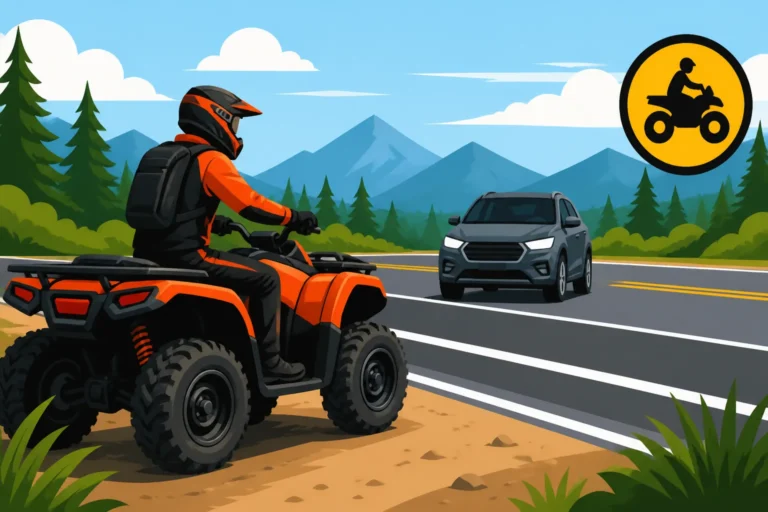
The most common scenario for agricultural road use is crossing a public road. This means moving directly across a highway or county road to access another parcel of your property. The law typically dictates that such crossings must be made as directly and safely as possible, yielding to all oncoming traffic. You can't just meander; it needs to be a purposeful, quick traverse from one side to the other. Think of it like crossing a busy street on foot – you look both ways, pick your moment, and move straight across.
For instance, if your cow pasture is on the east side of a county road and your barn is on the west, using your side-by-side to transport tools, feed, or even guide a few head of cattle across the road would be considered a valid agricultural crossing. This is distinct from riding down the road. When making these crossings, visibility is key. Consider adding extra flags or lights to ensure you are seen by other motorists, especially during dawn or dusk. It's also wise to check local county ordinances, as some jurisdictions might have specific requirements for agricultural crossings on their roads.
Riding on County or Forest Roads for Farm Access
Beyond direct crossings, there are instances where agricultural operations might require limited travel along county roads or even forest service roads. This usually applies when a portion of your farm or timberland is accessible only via a segment of a public road, and there's no reasonable alternative. Again, the emphasis is on direct access for a legitimate agricultural purpose, not recreational riding. [Oregon Rules for Riding a County Gravel Road] and [Oregon Rules for Riding a Forest Road] provide excellent context on general rules for these types of roads, but the agricultural use is a separate, more specific exception.
For example, if you own timberland that's landlocked by a stretch of Forest Service road, using your UTV to access that property for timber management (like planting seedlings, fire suppression, or boundary maintenance) would likely fall under this agricultural/resource management exemption. You would still need to adhere to speed limits, operate safely, and ensure your machine is appropriately permitted. This kind of use is usually about getting to a worksite, not cruising for leisure. The key is proving that the road segment is the only practical way to reach your agricultural land for essential work.
The Importance of Safe Operation and Visibility
Regardless of whether you're crossing a road or traveling a short distance along one for agricultural purposes, safe operation and visibility are absolutely paramount. ATVs and UTVs are lower to the ground, often slower-moving than other vehicles, and can be harder to see, especially on winding rural roads or during adverse weather. Failing to operate safely or ensuring your machine is visible can lead to dangerous situations and, very likely, legal trouble.
This means exercising extreme caution, using turn signals if equipped, and always yielding to other vehicles. Your machine should have working headlights and taillights, and consider adding a bright orange safety flag, especially if operating near hills or blind corners. [Oregon Lighting Requirements for Road Use] details the necessary illumination for any road use. If you're towing a trailer, ensure it's securely attached and properly lit. The goal is to minimize risk to yourself and others, demonstrating that your agricultural use of the road is done responsibly and with full awareness of traffic conditions.
Beyond the Road: Private Land and Agricultural Exemptions
It's easy to get tangled up in the nuances of public road use, but what about your own property? Most farmers and ranchers spend the vast majority of their ATV/UTV time on private land. While the rules are generally more relaxed there, it's a common misconception that any use on private land, even for agricultural purposes, is completely exempt from all state regulations. Oregon still has some important considerations, especially regarding permitting and safety, even if your machine never touches a public road.
Permitting and Safety Cards on Private Agricultural Land
Many people assume that if their ATV or UTV never leaves their farm, it doesn't need an Oregon ATV Operating Permit or that the operator doesn't need an Oregon ATV Safety Card. This isn't always the case. Oregon law states that an ATV permit is generally required for any ATV or Class II, III, or IV machine used on any land that is open to the public, whether or not a fee is charged. This includes many designated OHV areas, but it's important to understand the definition. However, if your farm or ranch is strictly private property, not open to the public for recreational riding, then your machines generally do not need an Oregon ATV Operating Permit simply for use on that private land. [Oregon Permits for a Machine on Private Land] delves into this in more detail.
However, the safety education card is a different story. Anyone operating an ATV or Class II, III, or IV machine in Oregon, regardless of whether it's on public or private land, is generally required to possess an ATV Safety Education Card. There are exceptions for adults with a valid driver's license operating a Class IV machine (side-by-side) and for those on an instructional permit, but for most riders, particularly on quads or off-road motorcycles, that card is mandatory. [Oregon ATV Safety Card Requirements] are clear on this. Even if you're just moving fence posts on your back forty, having that card demonstrates you understand the fundamentals of safe ATV operation, which is a critical aspect of preventing accidents, especially when machinery and livestock are involved.
When a Machine Used for Farm Work Still Needs a Permit
While recreational use on private, non-publicly accessible land doesn't require a permit, there's a crucial distinction. If your machine, which is primarily used for farm work, also occasionally travels on public roads (even for agricultural crossings) or accesses public land for any reason (even just to get to another private parcel), then it will need an Oregon ATV Operating Permit. The [Oregon ATV Permit Cost] is a small investment for the flexibility it offers.
This is where many farmers can get tripped up. They think, "My UTV is for farm work, so I don't need a permit." But then they need to cross the county road daily to feed cattle or check irrigation on another field. At that point, because the machine is touching a public road, even for agricultural purposes, it falls under the permitting requirements. It's not about the type of work, but where the work takes you. The permit signifies that the machine meets basic equipment requirements (like spark arresters) and helps fund trail maintenance and safety programs that benefit all riders, including those in agricultural settings.
Equipment and Safety Considerations for Farm Use
Using an ATV or UTV for agricultural work isn't just about legality; it's profoundly about safety. These machines are incredibly versatile on a farm, but they also carry inherent risks, especially when operating on or near public roads. Equipping your machine correctly and ensuring operators are properly trained can significantly reduce the chance of accidents and ensure you stay compliant with Oregon law.
Lighting, Flags, and Other Required Equipment
When your agricultural ATV or UTV is used on a public road, even briefly, it needs to be visible. This typically means having working headlights and taillights. Many modern UTVs come standard with these, but older ATVs or specialized farm machines might not. If your machine lacks proper lighting, you'll need to install it to meet legal standards for road use. Beyond basic lights, consider reflective tape or slow-moving vehicle (SMV) signs, especially if your machine's top speed is significantly lower than typical road traffic.
An orange safety flag, mounted high on a whip, is also a wise addition. While primarily associated with dune riding, it drastically improves visibility on roads, particularly over hills or around blind curves, making your presence known to oncoming traffic. Furthermore, ensure your machine has a U.S. Forest Service approved spark arrester, which is a mandatory requirement for all OHVs operating on public land or publicly accessible roads in Oregon. This prevents accidental fires, a critical concern in rural and agricultural areas. [Oregon Lighting Requirements for Road Use] and [Oregon Spark Arrester Requirement] are important references here.
Operator Licensing and Safety Training for Agricultural Use
As mentioned earlier, possessing an Oregon ATV Safety Education Card is generally required for anyone operating an ATV or UTV in Oregon, even on private land, unless specific exemptions apply (like a licensed driver over 16 on a Class IV machine). This card ensures that operators have a foundational understanding of safe riding practices, which is crucial whether you're working with livestock, hauling heavy loads, or navigating uneven terrain on the farm.
For agricultural use on public roads, operators of Class I (quads) and Class III (off-road motorcycles) machines must have the safety card. For Class IV (side-by-sides) machines, an operator who is 16 years or older and holds a valid driver's license is exempt from needing the ATV safety card for operation on designated routes or roads where permissible. However, if that Class IV operator is under 16, they still need the safety card. Even with these exemptions, taking the safety course is always a good idea. It covers vital topics like proper loading, stability, and emergency maneuvers that are directly applicable to farm work. [Oregon Driver's License Rules for Class IV] clarifies these distinctions for different machine types.
| Feature | General ATV Road Use (Recreational) | Agricultural ATV Road Use (Specific Exemptions) |
|---|---|---|
| Primary Purpose | Recreation/Access to OHV Areas | Farm/Ranch Work, Timber Ops |
| Permit Required? | Yes, if on public land/roads | Yes, if touching public land/roads |
| Safety Card Req.? | Yes (with exceptions) | Yes (with exceptions) |
| Road Travel | Only on designated routes | Brief crossings, limited access along roads |
| Visibility | Recommended (flags, lights) | Absolutely critical (lights, flags, SMV signs) |
| Legal Basis | ORS 821.010 (general OHV law) | ORS 821.010 & other agricultural specific statutes |
| Insurance | Mandated for Class II (street legal) | Mandated for Class II (if applicable) |
Navigating Potential Pitfalls and Misunderstandings
Even with the best intentions and a clear understanding of the rules, there are still common pitfalls and misunderstandings that can lead to trouble when using an ATV or UTV for agricultural purposes on or near public roads. The line between legitimate farm use and recreational riding can sometimes appear blurry to an enforcing officer, and knowing how to articulate your purpose and demonstrate compliance is key.
The Fine Line Between Farm Use and Recreational Riding
One of the biggest challenges is that an ATV or UTV, even one primarily used for farm work, can also be a lot of fun to ride. It's easy for the lines to blur. For example, if you're taking your kids for a joyride around the property and decide to "just quickly" cross the road for fun, that's not agricultural use. If you're heading to the feed store in your side-by-side, even if it's for the farm, that's generally not covered by the agricultural road use exemption because it's not a crossing or limited access to another part of your property for farming operations.
Law enforcement officers are trained to look at the intent and context of your travel. If your machine is loaded with tools, feed, or equipment, and you're moving directly between two sections of your farm, your purpose is clear. If you're cruising down a gravel county road without any obvious work-related gear, even if you eventually turn onto your property, it could be misinterpreted as recreational riding. Always be prepared to explain your purpose clearly and concisely if stopped. Carrying your farm's address or proof of land ownership can also help establish context.
What to Expect if Stopped by Law Enforcement
If you are stopped by an Oregon State Police Trooper, Sheriff's Deputy, or even a local park ranger while operating your ATV or UTV on a public road, remain calm and cooperative. They will likely ask about your destination, your purpose for being on the road, and request to see your permit (if required), safety card (if required), and driver's license (if applicable for Class IV machines). They may also check your machine for required equipment like a spark arrester and functional lights.
Be ready to explain that you are engaged in legitimate agricultural operations and that your road use falls under the specific exemption for farm vehicles. If you're simply crossing a road, point out your starting and ending points on your property. If you're using a section of road for access, explain why it's necessary and that there's no reasonable alternative. Being polite, having your documentation readily available, and clearly articulating your situation will go a long way. However, if you're found to be in violation—for example, if you're riding recreationally on an unapproved road or lack a required permit—you could face [Oregon Fines for Riding Without a Permit] or other citations. Understanding these nuances helps ensure that your essential farm work doesn't lead to unnecessary legal headaches.
Disclaimer
This article is for general informational purposes only and does not constitute professional advice. Laws, prices and regulations vary by location and change over time. Consult a qualified professional for guidance on your specific situation.