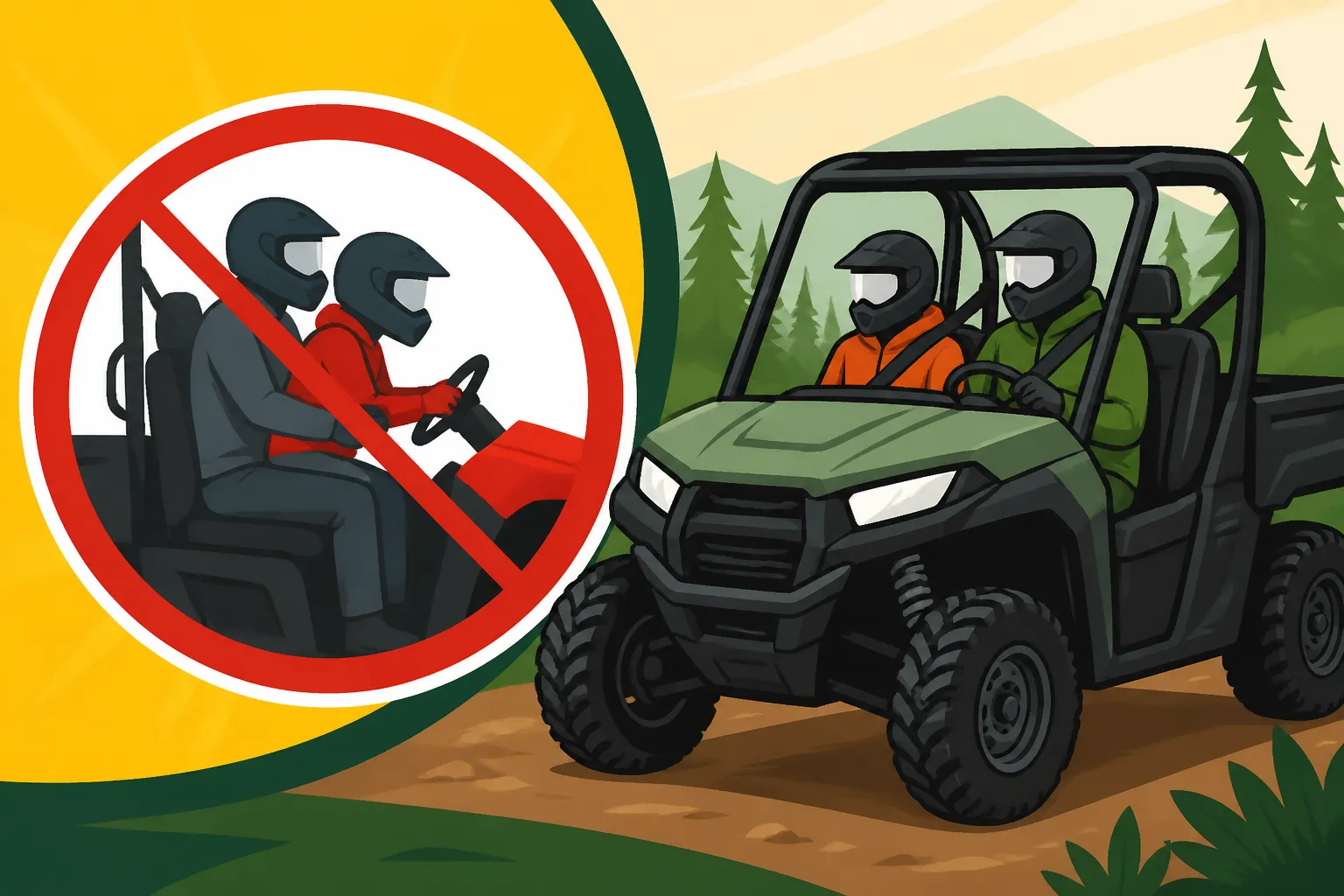
No Riding in the Operator’s Lap
It’s a scene many of us have witnessed out on the trails or even in a staging area: a parent or guardian with a small child perched precariously on their lap, eager to share the thrill of the ride. While the sentiment behind wanting to include a little one is completely understandable, Oregon’s regulations on ATV passengers are very clear, and for good reason: riding in the operator's lap is not only illegal but incredibly dangerous. This guide will walk you through Oregon’s comprehensive rules regarding passengers on ATVs and UTVs, covering everything from legal seating and age requirements to safety gear and what you absolutely need to know before you bring another person along for the adventure.
Understanding Oregon's Passenger Rules and Why They Matter
Oregon's approach to ATV and UTV passenger rules is rooted deeply in safety. The state doesn't just make rules for the sake of it; these regulations are designed to prevent serious injuries and fatalities that can occur when machines are operated outside their design specifications or with improper passenger arrangements. Thinking back to that child on a lap, it’s easy to imagine how a sudden bump, swerve, or even an emergency stop could throw them from the machine, or worse, pin them under it.
The Core Regulation: One Rider, One Seat
At its heart, Oregon's law, like that of many states, mandates that every rider on an all-terrain vehicle must have their own designated seat. This isn't just about comfort; it's about control and stability. The operator needs unrestricted movement and the ability to react instantly to changing terrain without a passenger hindering their ability to shift weight, use controls, or maintain balance. If a machine is designed and manufactured with only one seat, it's a single-rider machine, full stop. Trying to squeeze two people onto a seat designed for one compromises everyone's safety and can lead to serious legal repercussions.
This core principle applies across the board, whether you're navigating the sandy climbs of the Oregon Dunes or exploring the forest trails of the Tillamook State Forest. It’s not a suggestion; it’s a strict rule enforced by park rangers and law enforcement alike. Ignoring this can result in citations, fines, and even the termination of your riding privileges for the day. Always remember, the factory design of your machine dictates its passenger capacity.
The Dangers of Riding in a Lap
Beyond the legal aspect, the physical dangers of having a passenger in the operator's lap are significant. An ATV, especially a quad (Class I machine), requires the rider to use their body weight to lean into turns and absorb impacts. When a second person is on the lap, this critical ability is severely hampered. The center of gravity shifts unpredictably, making the machine unstable and much harder to control. Imagine trying to make a sharp turn on a dusty trail with a small child blocking your view of the handlebars or preventing you from shifting your weight to the side.
In the event of an accident, a passenger on a lap is incredibly vulnerable. They are not properly secured, lack proper handholds, and are directly in the path of the operator or the machine itself. Ejection is highly likely, and the force of impact can be devastating. Furthermore, the operator's ability to quickly dismount or take evasive action is compromised, potentially leading to greater injury for both individuals. It’s a risk that simply isn’t worth taking, no matter how short the distance or how slow the speed.
Legal Consequences and Fines
Riding with a passenger in the operator's lap or with more passengers than the machine is designed for constitutes a traffic violation in Oregon. This isn't a minor slap on the wrist. Depending on the specific circumstances and the discretion of the enforcing officer, you could be facing a Class C traffic violation. This typically involves a significant fine, and repeated offenses or incidents involving injury could lead to more severe penalties. The authorities take rider safety very seriously, especially when it involves children.
Beyond the immediate fine, being cited can lead to other issues. It might prompt a closer inspection of your machine, potentially uncovering other violations like an expired [Oregon's ATV Operating Permit] or improper decal placement. It can also sour your experience, as dealing with law enforcement can interrupt your planned day of riding. The best way to avoid these headaches and ensure a safe trip for everyone is to understand and strictly adhere to Oregon's passenger regulations before you even start your engine.
Oregon's ATV Classes and Passenger Capacity
Oregon categorizes off-highway vehicles (OHVs) into several classes, and understanding which class your machine falls into is crucial for knowing its legal passenger capacity. This system helps to clarify what type of machine is built for what kind of riding and how many people it can safely and legally carry. Misinterpreting your machine's class can lead to violations and, more importantly, put passengers at risk.
Class I (Quads) and Their Limitations
Oregon defines a Class I all-terrain vehicle as a motorized, off-highway, four-wheeled vehicle 50 inches or less in width, with a dry weight of 1,200 pounds or less, designed for one rider. This is your traditional quad or ATV, where the operator sits astride a saddle seat and uses handlebars for steering. The key phrase here is "designed for one rider." These machines require significant body movement from the operator to control and balance.
Because of this design, carrying a passenger on a Class I ATV is generally prohibited by Oregon law. There are very few exceptions, typically involving factory-designed two-up models, which are explicitly built with a longer seat and passenger handholds. Even then, such machines must clearly be designed for two by the manufacturer, not just an aftermarket addition of a rear seat pad. If you own a standard quad, assume it's a one-person machine. Trying to add a passenger to a single-rider quad, especially a child in your lap, directly contradicts the vehicle's design and Oregon's safety regulations. [The 50-Inch Limit That Defines a Class I] is a critical specification for these machines.
Class IV (Side-by-Sides) and Their Design
Class IV all-terrain vehicles, commonly known as side-by-sides or UTVs, are a different story entirely when it comes to passengers. Oregon defines these as motorized off-highway vehicles 75 inches or less in width, with a dry weight of 3,500 pounds or less, designed to be operated with a steering wheel and a nonstraddle seat. These machines often resemble miniature cars, featuring roll cages, seatbelts, and bench or bucket seats.
Due to their design, Class IV machines are typically built to carry multiple occupants, as indicated by the number of factory-installed seats and seatbelts. If your side-by-side has two bucket seats and two seatbelts, it's designed for two people. If it has a bench seat with three seatbelts, it can carry three. The critical factor is that each passenger must have their own designated seat and use the provided seatbelt. This design makes them much more stable for carrying multiple people, as the occupants are secured within the vehicle's frame. This makes them a popular choice for families and groups wanting to enjoy the trails together. [Oregon's Class IV Side-by-Sides Under 75 Inches] has specific criteria for these vehicles.
Distinguishing Multi-Passenger Machines
The difference between a legal multi-passenger machine and an improperly loaded single-rider vehicle boils down to factory design. A multi-passenger ATV or UTV will have:
- Dedicated Seating: Each person, including the operator, must have their own distinct, factory-installed seat.
- Secure Restraints: For Class IV machines, each seat must have a working seatbelt. For the rare factory two-up Class I, the passenger seat will typically include integrated handholds.
- Manufacturer Specification: The owner's manual or vehicle specifications will clearly state the intended passenger capacity.
Be wary of aftermarket modifications that claim to add passenger capacity to a single-rider machine without explicit manufacturer approval or a design that truly transforms the vehicle into a safe multi-passenger unit. While companies like SuperATV offer a vast array of parts for enhancing UTVs, always ensure any seating or cargo solutions you consider adhere to Oregon's safety standards and do not compromise the machine's intended passenger capacity or the operator's control. Always prioritize safety and legality over convenience.
| ATV Class | Machine Type | Seating | Passenger Capacity (Standard) | Key Safety Feature for Passengers |
|---|---|---|---|---|
| Class I | Quad (ATV) | Saddle | One (Operator Only) | Operator body movement for control |
| Class IV | Side-by-Side | Bench/Bucket | Multiple (based on seats/belts) | Seatbelts, roll cage, fixed seating |
Specific Rules for Different Machine Types
Oregon's rules for carrying passengers are nuanced, often depending on the fundamental design of your off-road machine. What might be acceptable for a side-by-side is strictly forbidden for a traditional quad. Understanding these distinctions is paramount, not just for compliance but for the safety of everyone on board. The difference often comes down to how the machine is ridden and the level of protection it offers.
Quads: Built for One (Mostly)
The vast majority of Class I ATVs, or quads, are engineered for a single operator. The design, with its saddle seat and handlebars, necessitates that the rider actively shifts their weight, leans into turns, and uses their legs and feet for balance and control. Introducing a passenger, especially a child on the lap, completely disrupts this dynamic. A child on the lap makes it impossible for the operator to properly position themselves, control the steering, or even reach the footrests and brake pedal effectively. This is why riding a passenger on a standard Class I quad is broadly prohibited in Oregon. It turns a machine designed for agile, responsive control into a top-heavy, unwieldy, and dangerous vehicle.
There are, however, some "two-up" or "extended seat" Class I ATVs that are factory-designed to carry a passenger. These machines will have a longer seat, separate footrests for the passenger, and integrated handholds. If your Class I ATV is one of these specific models, and it's clearly advertised and manufactured for two riders, then carrying a passenger is permissible. However, even on these machines, the passenger must be able to sit securely, reach the footrests, and hold onto the handgrips independently. [Oregon's Class I Under ORS 801.190] further details the definition of these machines.
Side-by-Sides: Designed for Multiple Occupants
Class IV machines, or side-by-sides (SxS), are fundamentally different. They are designed with multiple seats, seatbelts, and often a roll cage, providing a much more stable and secure environment for passengers. These vehicles are operated with a steering wheel and foot pedals, similar to a car, and do not rely on the operator's body weight for balance in the same way a quad does. This design makes them inherently safer for carrying multiple people. You'll find models designed for two, four, or even six occupants, all with dedicated seating positions.
When riding a side-by-side in Oregon, every passenger must occupy their own designated seat and wear the provided seatbelt. Children must be of an appropriate size to use the seatbelt properly, or be secured in an approved car seat or booster seat if their size necessitates it, assuming the vehicle allows for such a modification and it does not impede safety. The key is that each individual is secured independently. This makes side-by-sides an excellent option for family outings, as long as you respect the machine's capacity and safety features. When looking to enhance the safety or utility of your side-by-side for family rides, reputable manufacturers like SuperATV offer various accessories, from additional storage solutions to enhanced grab handles, all of which can contribute to a safer and more comfortable ride experience.
Aftermarket Seating and Accessories
The aftermarket world offers a vast array of accessories for ATVs and UTVs, including options for seating. However, it's crucial to exercise extreme caution and verify legality when considering aftermarket seating, especially for Class I machines. Adding a "buddy seat" or a cargo box with a seat cushion to the back of a single-rider quad does not magically make it a legal two-person machine in Oregon. These modifications often place the passenger too high, compromising stability, or too far back, making it difficult for the operator to maintain control. Furthermore, they rarely come with proper restraints or footrests for the passenger.
For side-by-sides, aftermarket seating solutions generally refer to replacing existing seats with more comfortable or specialized options, or adding temporary "jump seats" to cargo areas. While these might seem convenient, any aftermarket seating must be securely mounted, meet safety standards, and ideally, provide its own safety restraints. Crucially, any modification should never exceed the original manufacturer's Gross Vehicle Weight Rating (GVWR) or compromise the vehicle's structural integrity. When upgrading components, especially those related to occupant safety or comfort, opting for high-quality, purpose-built accessories from trusted brands like SuperATV can provide peace of mind and ensure better compatibility and adherence to safety.
Safety Gear and Practices for Passengers
Just like the operator, any passenger riding an ATV or UTV in Oregon is required to adhere to specific safety standards, particularly concerning protective gear. These aren't just recommendations; they are enforceable laws designed to minimize injury in the event of an incident. Ensuring your passenger is properly equipped and understands their role in safety is as important as your own preparation.
Mandatory Helmets and Protective Gear
Oregon's helmet law is comprehensive: every person riding an ATV or UTV on public lands, regardless of age, must wear a United States Department of Transportation (DOT) compliant helmet. This isn't optional; it's a non-negotiable requirement. For passengers, this means a helmet that fits snugly, is securely fastened with a chin strap, and is in good condition. A helmet that is too loose can shift during a ride or accident, offering minimal protection.
Beyond the helmet, other protective gear is highly recommended for passengers, especially if they are younger or less experienced. This includes:
- Eye Protection: Goggles or a full-face helmet visor to protect against dust, debris, and branches.
- Gloves: To protect hands from abrasions and provide a better grip.
- Long Pants and Long-Sleeved Shirt: Durable material helps protect skin from scrapes, sun, and brush.
- Over-the-Ankle Boots: To protect feet and ankles from impacts and provide stability.
As the operator, it's your responsibility to ensure your passenger is not only wearing the mandatory helmet but also adequately protected with additional gear. Offering spare gear if they don't have their own can be a thoughtful and responsible gesture, preventing a potentially dangerous situation or a premature end to your ride. [Oregon Helmet Law for ATV Riders] details these requirements thoroughly.
Proper Seating and Handholds
A passenger's safety is heavily dependent on their ability to stay securely seated and maintain their balance. For Class IV side-by-sides, this means utilizing the factory-installed seatbelts, ensuring they are snug and properly adjusted. Passengers should never be allowed to stand up or lean out of the vehicle while it's in motion. Their hands should remain inside the vehicle, preferably on designated grab handles or the roll bar, not on the operator or hanging outside.
On factory two-up Class I ATVs, the passenger must be able to sit independently behind the operator, with their feet firmly on the designated passenger footrests. They must also maintain a secure grip on the passenger handholds throughout the ride. If a passenger cannot reach the footrests or handholds, they are not safely positioned, regardless of whether the machine is designed for two. This inability to maintain proper posture and grip can lead to them being jostled off the machine with a sudden bump or turn.
Pre-Ride Briefings and Communication
Before embarking on any ride with a passenger, especially a new one, a thorough pre-ride briefing is essential. This is your chance to communicate expectations and ensure your passenger understands their role in staying safe. Cover key points such as:
- Staying Seated and Secure: Emphasize the importance of keeping limbs inside the vehicle and maintaining a firm grip.
- No Sudden Movements: Instruct them to avoid sudden shifts in weight or reaching for objects outside the vehicle.
- Communication: Establish clear hand signals or verbal cues for slowing down, stopping, or pointing out hazards.
- Trail Conditions: Explain that the ride might be bumpy, dusty, or involve leaning, and to expect movement.
- Emergency Procedures: Briefly explain what to do in case of a stop or if you need to dismount quickly.
For children, make this briefing age-appropriate and engaging. Reiterate these points periodically during the ride, especially after breaks. Effective communication ensures that both operator and passenger are on the same page, significantly reducing risks and making the experience more enjoyable for everyone. This preparation is a small investment of time that pays dividends in safety and peace of mind.
Riding with Children and Youth Passengers
Bringing children along for an off-road adventure can create lasting memories, but it comes with a heightened responsibility, especially concerning Oregon's specific regulations for youth passengers. These rules are in place to protect the youngest riders, who are often more vulnerable due to their smaller size, developing motor skills, and limited judgment.
Minimum Age Requirements and Supervision
Oregon law does not specify a minimum age for a passenger on a Class IV side-by-side, provided they are properly secured in a designated seat and wearing a helmet. However, the child must be tall enough to sit against the seatback with their feet flat on the floor or in an appropriate child restraint system that is securely installed and designed for vehicle use. The seatbelt must fit properly across their shoulder and lap, without riding up on their neck or stomach.
For Class I ATVs (quads) that are factory-designed for two riders, the rules are slightly different. Children must be able to reach the designated footrests and handholds and maintain their position securely throughout the ride. If they cannot do so, they are not permitted to ride as a passenger on a Class I machine, even a two-up model. Furthermore, all riders under 16 must complete an approved ATV safety education course and carry an [Oregon's ATV Safety Education Card]. While this often applies primarily to operators, ensuring any youth passenger is also aware of basic safety principles is always a good idea.
Foot Placement and Secure Seating
Crucial for any passenger, especially a child, is proper foot placement. On a Class IV side-by-side, their feet must remain inside the vehicle, resting on the floorboard. If a child's legs are too short to reach the floor, their feet cannot dangle freely. This is where appropriate child seats or booster seats come into play, raising them enough so their feet can be supported or at least preventing them from hanging outside the vehicle where they could be caught or injured.
For two-up Class I quads, the passenger's feet must be on the specific passenger footrests. This isn't just about comfort; it's about stability and preventing feet from getting caught in wheels or under the machine during bumps or turns. If a child cannot reach these footrests, they cannot safely ride as a passenger. Attempting to use a standard quad with a child passenger by having them ride in the operator's lap or stand on the footrests is both illegal and incredibly dangerous, directly increasing the risk of severe injury.
Youth-Specific Machines and Passengers
While some manufacturers produce youth-sized ATVs (often electric or small gas-powered quads), these are almost universally designed for single riders only, emphasizing that the focus is on the young operator developing their own riding skills. It's rare to find a youth-specific machine designed for a passenger. These smaller machines are already less stable at slower speeds and with lighter riders, making the addition of a passenger even more hazardous.
For the most part, if you're looking to ride with a child as a passenger, a multi-occupant Class IV side-by-side is the safest and most legally compliant option. It provides the necessary structure, restraints, and stability that simply aren't present on most Class I ATVs or youth models. Always refer to your machine's owner's manual for specific passenger recommendations and limitations, and ensure that any child riding with you meets all of Oregon's safety card and equipment requirements. [Oregon Rules for Riders Under 16] provides further context for youth operation.
Road Access and Passenger Rules
Oregon offers some unique opportunities for ATV and UTV riders to access certain roads, particularly in designated areas. However, these privileges come with strict rules, and passenger regulations often become even more critical when operating on public roads, even those designated for OHV use. The distinction between off-road and on-road operation, and how it impacts passenger rules, is an important aspect for riders to understand.
Designated Routes and Passenger Regulations
Oregon has a handful of designated ATV highway access routes, such as those found in Lakeside and Sumpter. On these routes, certain Class II and Class IV vehicles may be permitted to operate on public roads to connect trails or access services. When riding on these designated routes, all passengers must adhere to the same rules as if they were operating off-road:
- Helmets are mandatory for all occupants.
- Each passenger must have a designated seat and use seatbelts if applicable.
- No more passengers than the vehicle is designed for.
- Children must be properly secured as per off-road regulations.
The primary difference on these routes is the increased interaction with other vehicles, including cars and trucks. This means even greater vigilance is required from the operator, and passengers must understand the importance of remaining seated and quiet to avoid distracting the driver. The rules are designed to integrate OHVs safely into the broader road network. [Oregon's Only Two Designated ATV Routes: Lakeside and Sumpter] are key examples.
Crossing Highways Safely
Even outside designated routes, Oregon law allows ATVs and UTVs to cross highways, but only at right angles and after coming to a complete stop, yielding to all traffic. During these brief crossings, passenger rules remain in full effect. No matter how short the distance, passengers must be properly seated, helmeted, and secured. It's a moment of heightened risk due to the presence of fast-moving traffic, so any deviation from safety protocols, such as a child sitting on a lap, would be extremely dangerous and easily noticed by law enforcement.
This is not the time to become complacent. Ensure your passengers are aware that a crossing is imminent, and instruct them to remain still and allow you to focus entirely on the traffic and the safe negotiation of the road. Your attention must be undivided, and a well-behaved, properly secured passenger is essential for a safe crossing.
Insurance Considerations for Passengers (Especially Class II)
While a general ATV permit is required for most off-road machines in Oregon, certain Class II vehicles, which are street-legal and include some types of sand rails or dune buggies, have mandatory insurance requirements if they are registered for road use. If you operate such a machine and carry passengers, your insurance policy should adequately cover liability for all occupants. This is a critical consideration for any street-legal OHV.
Even for purely off-road machines where insurance isn't mandated, having a personal liability policy or ensuring your primary vehicle insurance extends to your OHV activities is a wise decision, especially when carrying passengers. Accidents can happen, and ensuring that any injuries sustained by your passengers are covered can save you from significant financial burden and personal distress. Always check with your insurance provider to understand your coverage when taking passengers on any type of ATV or UTV ride in Oregon. [Insurance and Oregon Class II Machines] highlights these specific requirements.
Disclaimer
This article is for general informational purposes only and does not constitute professional advice. Laws, prices and regulations vary by location and change over time. Consult a qualified professional for guidance on your specific situation.