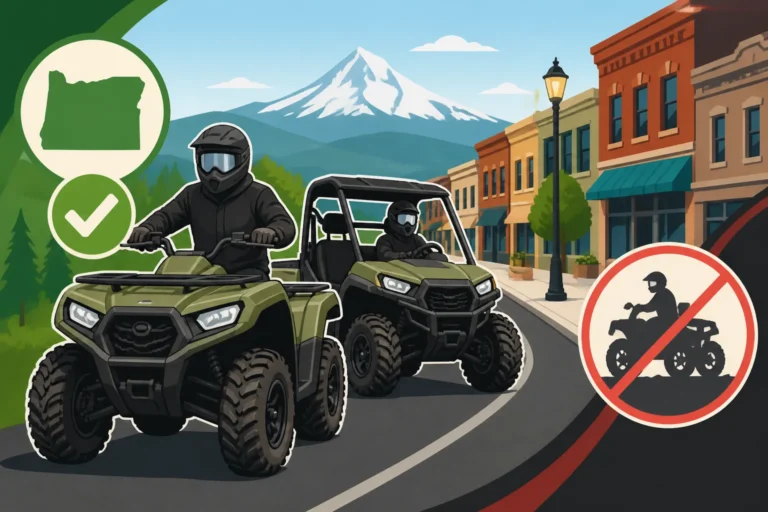
Lakeside and Sumpter: Oregon’s Only Two Routes
One of the most common headaches for Oregon ATV and UTV riders is the constant struggle with road access. We've all been there: you've got a fantastic machine, the trails are calling, but getting from your campsite or hotel into town for supplies, or even just connecting two great riding areas, often feels like an impossible maze of legal restrictions. This guide is here to shed light on those frustrations and, more importantly, to introduce you to the unique opportunities in Lakeside and Sumpter, Oregon's only two designated communities where OHV access on certain public roads is not just allowed, but embraced.
The Roadblock to Road Riding: Why Most Oregon Roads Are Off-Limits
It’s a tale as old as time for off-highway vehicle (OHV) enthusiasts in Oregon: you roll up to a gas station or grocery store, perhaps just a few miles from your campsite, only to realize that navigating those short stretches of paved road is fraught with legal peril. The default stance in Oregon has historically been a firm "no" when it comes to riding ATVs and UTVs on public roads. This isn't just a minor inconvenience; it's a major barrier to fully enjoying your machine and exploring the state's incredible landscapes. For years, riders have voiced their frustrations, seeing opportunities for tourism, economic growth, and simply more enjoyable riding experiences slip away because of these restrictive laws. It makes perfect sense that you'd want to just ride your side-by-side a couple of miles to grab a burger or pick up some ice – but the law usually doesn't agree.
The Legal Landscape: Oregon's Default Stance on OHVs on Public Roads
Oregon's motor vehicle laws are quite specific about what can and cannot legally operate on public highways, streets, and roads. Generally speaking, vehicles like ATVs, UTVs, and dirt bikes are classified as off-highway vehicles, designed and intended for use on unpaved surfaces, designated trails, and private property. They simply don't meet the stringent safety and equipment standards required for street-legal vehicles. This means they often lack things like turn signals, proper headlights, tail lights, rearview mirrors, and sometimes even a proper braking system or horn that meets road-going specifications. Because of these differences, the Oregon Department of Transportation (ODOT) and local municipalities typically prohibit their use on the vast majority of paved, publicly maintained roads. This blanket prohibition can feel incredibly limiting, especially when a mere half-mile of pavement stands between you and an amazing trail system or a friendly local business.
This isn't to say there are no exceptions, but they are generally few and far between, and often require very specific circumstances or vehicle modifications. For instance, agricultural use on farm-access roads might have some allowances, or crossing a highway at a perpendicular angle might be permitted under strict conditions. However, the idea of simply riding down a road, even for a short distance, usually runs afoul of the law. This creates a patchwork of rules that can be confusing for even seasoned riders, leaving many feeling like they have to trailer their machine everywhere, even for the shortest jaunts.
Frustrations for Riders: The Disconnect Between Trailheads and Towns
Think about it: you've just spent hours on the trails, maybe at the Oregon Dunes, or deep in the Tillamook State Forest. You're dusty, you're tired, and all you want is to grab a cold drink, some food, or maybe pick up that forgotten camping item. But your staging area is miles from the nearest town, and the road connecting them is strictly off-limits to your side-by-side or quad. So, you pack up your machine, load it back onto the trailer, and drive your tow rig into town. Then you drive back, unload, and set up camp again. It’s an exhausting and time-consuming process that completely breaks the flow of your adventure.
This disconnect isn't just an inconvenience; it can actively deter riders from visiting certain areas. Local businesses, from gas stations and restaurants to tackle shops and general stores, also miss out on potential revenue from enthusiastic OHV users who would gladly spend their money if only they could reach them more easily. Many riders dream of that seamless experience where they can ride their machine right from their camp, enjoy the trails, and then pop into a nearby town for a bite to eat or supplies without ever having to unhook their trailer. The current legal framework, in most parts of Oregon, makes this dream feel like a distant fantasy, fostering a sense of isolation between riding communities and the towns that could benefit from their presence.
The Legislative Journey: How Designated Routes Came to Be
Recognizing the growing demand from the OHV community and the potential economic benefits for rural towns, Oregon lawmakers and local advocates began to explore solutions. The idea wasn't to throw open all roads to all OHVs, but rather to create carefully considered, designated routes in specific communities where it made sense and local support was strong. This wasn't a quick or easy process; it involved years of lobbying, community meetings, and legislative discussions to find a balance between rider access, public safety, and local concerns.
The effort culminated in legislation that provided a framework for local jurisdictions to apply for designation of specific public roads as OHV routes. This process requires a thorough review by the Oregon Parks and Recreation Department (OPRD), the Oregon Transportation Commission, and consultation with various stakeholders including local law enforcement, residents, and OHV advocacy groups. The goal was to identify communities where the integration of OHV traffic could enhance local tourism and recreation without undue disruption. This legislative journey, though lengthy, has been pivotal in creating the unique opportunities we now see in places like Lakeside and Sumpter, offering a beacon of hope for other communities interested in similar initiatives.
Lakeside: A Coastal Gem for Road-Legal ATV Access
Lakeside, nestled on the picturesque Oregon Coast, stands out as a pioneering community that has embraced the OHV lifestyle by designating specific roads for ATV and UTV use. For riders who love the thrill of the Oregon Dunes, the ability to transition from the sandy trails to town roads seamlessly is nothing short of revolutionary. This small town, located near some of the most popular dune riding areas, recognized the economic potential that OHV tourism brings. Instead of forcing riders to trailer their machines every time they needed a gallon of milk or a tank of gas, Lakeside worked to create a system that allows for legal, regulated road access, enriching the entire visitor experience. It’s a genuine breath of fresh air for those who spend their weekends exploring the vast expanse of the dunes and need a convenient way to resupply or just stretch their legs in a different environment. [Riding an ATV Through Lakeside] is a unique experience that offers riders a glimpse into what expanded road access could look like across the state.
Exploring the Lakeside Route: Connecting Town to Dunes
The designated OHV routes in Lakeside primarily serve to connect the popular dune staging areas and campgrounds with the town's businesses and amenities. Imagine riding out of a staging area like Spinreel or Hauser, knowing that instead of loading your machine onto a trailer, you can legally navigate certain streets directly into town. These routes are clearly marked, guiding riders along specific paths that minimize impact on residential areas and maximize convenience for visitors. The streets generally lead to gas stations, convenience stores, and local eateries, allowing riders to grab essentials or enjoy a meal without interrupting their flow. This makes a huge difference in the overall enjoyment of a dune trip, especially for families or groups who might need frequent trips for supplies.
The routes are carefully chosen to offer the most direct and safest passage, often utilizing lower-traffic roads. Riders will find themselves on paved surfaces, sharing the road with traditional vehicle traffic, so awareness and adherence to standard traffic laws are paramount. The beauty of the Lakeside system is its simplicity: it removes a significant logistical hurdle, transforming a multi-step process (unload, ride, load, drive, unload, etc.) into a continuous adventure. This not only makes things easier for riders but also helps local businesses thrive by making them more accessible to the OHV community.
What You Need to Ride in Lakeside: Permits, Safety Cards, and Gear
Just because you can ride on the road in Lakeside doesn't mean all the usual Oregon OHV rules go out the window. Far from it! You still need to be fully compliant with state regulations. First and foremost, your machine must have an [Oregon's ATV Operating Permit]. This permit, indicated by a decal placed on your machine, shows that you've paid the necessary fees that contribute to trail maintenance and other OHV programs in Oregon. Without this, even on a designated route, you could face fines.
Beyond the permit, every rider, regardless of age, needs an [Oregon ATV Safety Card Requirements]. This card proves you've completed the required safety education course, which covers everything from safe operating practices to environmental stewardship. For those under 16, specific supervision rules apply, and hands-on training might be required, but even experienced adult riders need the card. When riding on public roads, even designated OHV routes, the usual safety gear remains essential. This includes a DOT-approved helmet – [Oregon Helmet Law for ATV Riders] is quite clear on this – and appropriate eye protection, long sleeves, long pants, gloves, and sturdy footwear. Remember, while the freedom of road access is wonderful, the responsibility to ride safely and legally rests squarely on your shoulders. Checking all these boxes before you hit the road ensures a smooth and enjoyable experience.
Riding Etiquette and Local Rules in Lakeside
Riding through a town like Lakeside on your ATV or UTV is a privilege, and with that comes a responsibility to be a courteous and respectful member of the community. It's crucial to remember that you are sharing the road with residents, pedestrians, and other vehicles who may not be accustomed to OHV traffic. This means observing posted speed limits diligently – often much lower than trail speeds – and being extra vigilant for children, pets, and driveways. Excessive noise can also be a point of contention; ensuring your machine has a properly functioning spark arrester and isn't overly loud will go a long way in maintaining good community relations. [Oregon Sound Limits for ATVs] are in place for a reason.
Beyond general courtesy, Lakeside may have specific local ordinances that supplement state regulations. For example, some routes might have time restrictions, or certain areas might be explicitly off-limits. Always look for signage and obey any local instructions. Remember, the continued success of designated routes like Lakeside depends heavily on the positive behavior of riders. A single inconsiderate act can jeopardize future access for everyone. By driving cautiously, being mindful of noise, and following all posted signs, you help ensure that Lakeside remains a welcoming place for OHV enthusiasts for years to come. This approach helps maintain the goodwill that made these routes possible in the first place.
Sumpter: High Desert History Meets OHV Accessibility
On the eastern side of the Cascade Mountains, in Oregon's high desert, lies the historic mining town of Sumpter. Like Lakeside, Sumpter has carved out a special place for itself by offering designated OHV road access, but its context is entirely different. Sumpter is steeped in gold rush history, surrounded by vast stretches of national forest and BLM land, offering a completely distinct riding experience compared to the coastal dunes. For riders exploring the mountains and high desert trails of Eastern Oregon, Sumpter offers a crucial link, allowing them to ride directly from the trails into a charming, historic town. This blend of outdoor adventure and small-town charm is a powerful draw, and the road access makes it incredibly convenient for riders to immerse themselves in both. [Riding an ATV Through Sumpter] is an opportunity to connect with Oregon's past while enjoying modern OHV access.
Navigating the Sumpter Route: A Journey Through History
The designated OHV routes in Sumpter are designed to facilitate access to the town's amenities from the surrounding trail networks. Imagine spending your day exploring old mining roads, forest trails, and picturesque mountain paths, then smoothly transitioning onto the paved streets of Sumpter. The routes often guide riders through the heart of the historic district, past the iconic Sumpter Valley Dredge State Heritage Area, and to local shops, restaurants, and the general store. This provides a truly immersive experience, blending the ruggedness of off-road riding with the charm of a bygone era. Unlike the coastal routes, Sumpter's designated roads allow riders to easily access services in a town that might otherwise feel remote and disconnected from the trail systems.
These routes are typically well-marked, guiding riders through the most appropriate streets. Just like in Lakeside, these are shared roads, meaning OHV riders must adhere to all standard traffic laws, including speed limits, stop signs, and yielding rules. The benefit here is the ability to enjoy the town's unique atmosphere, grab a bite, or resupply without the hassle of loading and unloading. This seamless connection enhances the overall adventure, allowing riders to experience Sumpter's rich history and natural beauty without interruption. It's an excellent example of how thoughtful planning can integrate recreational OHV use into a community's fabric.
Preparing for Sumpter's Terrain: High Desert Considerations
While Sumpter offers welcoming road access, the surrounding high desert terrain presents its own set of challenges and considerations that differ significantly from the coast. Riders in the Sumpter area will encounter drier, dustier conditions, often with rocky trails, steeper ascents and descents, and a greater emphasis on engine cooling. It's crucial to prepare your machine for these conditions, especially if you’re coming from a different riding environment. Checking tire pressure for optimal traction on varied surfaces, ensuring your air filter is clean to handle the dust, and verifying your cooling system is in top shape are all important steps.
Additionally, the high desert climate can bring extreme temperature swings. Days can be scorching hot, while nights can drop significantly, even in summer. Riders should pack accordingly, bringing plenty of water, sunscreen, and layers of clothing. Navigation can also be more challenging in vast, open landscapes, so carrying a reliable GPS or detailed maps of the [Millican Valley Outside Bend, Oregon] and surrounding areas is highly recommended. The beauty of Sumpter lies in its remote, rugged charm, but respecting the environment and preparing properly are key to a safe and enjoyable adventure. For those looking to upgrade their UTV or ATV for such terrains, companies like SuperATV offer a wide range of accessories, from heavy-duty suspension components to protective skid plates, that can help your machine tackle the demanding high desert trails around Sumpter with greater confidence.
Local Ordinances and Respectful Riding in Sumpter
Just like any community, Sumpter has its own local character and expectations for visitors. When riding on the designated routes, displaying respect for residents and local businesses is paramount. This includes adhering strictly to speed limits, which will be much slower than open trails, and being particularly mindful of noise levels, especially when passing through residential areas or near historic sites. The sound of an OHV can carry quite far in the quiet, high desert environment, so a well-maintained exhaust system is not just a legal requirement but a courtesy.
It's always a good idea to familiarize yourself with any specific local ordinances Sumpter might have in place regarding OHV use, as these can vary. These might include specific hours of operation for certain routes, or areas where OHV parking is designated. The goal is to integrate seamlessly into the community, contributing positively to the local economy without creating disturbances. Remember that the privilege of road access in Sumpter, much like Lakeside, is built on the foundation of positive rider behavior and community cooperation. By being a responsible and considerate rider, you help ensure that Sumpter continues to be a welcoming destination for OHV enthusiasts.
Beyond Lakeside and Sumpter: The Process for Designating New Routes
While Lakeside and Sumpter offer fantastic examples of successful OHV road access, they remain unique. Many other communities across Oregon could potentially benefit from similar designated routes, especially those that serve as gateways to popular riding areas. However, the path to achieving this status is complex and requires significant effort from local governments, OHV advocates, and state agencies. It's not as simple as a town deciding to open its roads; there's a detailed, multi-layered process involved that ensures all aspects, from safety to community impact, are thoroughly vetted. This is why you don't see designated routes popping up every other year – it's a monumental undertaking.
Applying for Designation: The Advisory Committee and Transportation Commission
The official process for designating new OHV routes begins with a local jurisdiction – typically a city council or county commission – submitting an application to the Oregon Parks and Recreation Department (OPRD). This application must demonstrate a clear need for the route, show evidence of community support, and detail how public safety will be maintained. OPRD then reviews the application, often seeking input from its [Who Sits on Oregon's OHV Advisory Committee], a diverse group of stakeholders, including OHV representatives, land managers, law enforcement, and local government officials. This committee plays a crucial role in evaluating the feasibility and potential impacts of proposed routes.
Following the advisory committee's review and OPRD's recommendations, the application moves to the Oregon Transportation Commission. This is a high-level state body responsible for transportation policy and approving major road changes. They examine the proposal from a broader transportation safety and infrastructure perspective. Their approval is the final hurdle at the state level. This multi-step review process ensures that any new designated route is thoroughly scrutinized, balancing the benefits of increased OHV access with the need to maintain public safety and community harmony. [Applying to Designate a New Oregon Route] is a lengthy and involved process that requires significant groundwork.
Community Buy-In: The Crucial Role of Local Support
One of the most critical, yet often challenging, aspects of establishing a designated OHV route is securing genuine community buy-in. It’s not enough for a few enthusiasts or even a single local business to champion the idea; there needs to be broad support from residents, local law enforcement, emergency services, and other businesses. Without this, even a well-intentioned proposal can face significant opposition and ultimately fail. Local residents often have legitimate concerns about noise, increased traffic, potential safety issues, and the overall impact on their quality of life.
Successful designation efforts typically involve extensive public outreach, town hall meetings, and open dialogues where concerns can be addressed, and compromises can be reached. Demonstrating the economic benefits, such as increased tourism revenue for local businesses, can be a powerful motivator. Proactive measures to mitigate potential negative impacts, such as strict enforcement plans, clear signage, and educational campaigns for riders, are also vital. When a community truly embraces the idea and sees the mutual benefits, the path to designation becomes much smoother.
The Challenges of Expansion: Why More Routes Aren't Common
Despite the success stories of Lakeside and Sumpter, widespread expansion of OHV designated routes across Oregon remains challenging. Several factors contribute to this. First, the application and approval process is rigorous and time-consuming, requiring significant resources and dedication from local governments. Many smaller towns may lack the staff or expertise to navigate such a complex bureaucratic landscape. Second, overcoming public perception and resistance from community members who are wary of OHV traffic is a persistent hurdle. Even with compelling economic arguments, concerns about noise, safety, and environmental impact can be difficult to sway.
Furthermore, infrastructure compatibility is a factor. Not all roads are suitable for mixed OHV and traditional vehicle traffic, and modifications or enhanced signage might be required, incurring costs. Finding a balance between promoting recreation and preserving community character is delicate. Finally, funding for enforcement and maintenance of these routes needs to be secured, adding another layer of complexity. These combined challenges explain why, despite enthusiasm from the OHV community, designated road access remains a unique feature of only a few pioneering towns in Oregon.
Understanding Your Machine's Role: What Can Be Road-Legal?
When we talk about designated OHV routes, it's important to understand that not every off-highway vehicle is automatically eligible to ride on them. Oregon's vehicle classification system plays a significant role in determining what can and cannot be made street-legal, or at least legal for designated routes. This can be a source of confusion for many riders, especially when comparing different types of ATVs, UTVs, or dirt bikes. It's not just about adding a few lights; it's about meeting specific criteria that often hinge on the vehicle's original design and intended purpose.
Oregon's Class II Exception: The Path to Street Legality
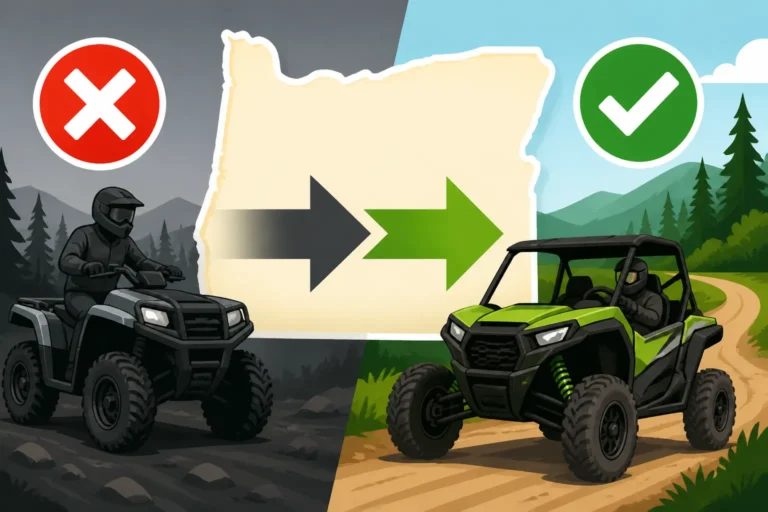
In Oregon, the most common type of OHV that can legally gain limited street access, including on designated routes, falls under [Oregon's Class II Under ORS 801.193]. These are generally larger, heavier vehicles that are more akin to small cars than traditional ATVs. Think of them as side-by-sides (SxSs) or certain types of dune buggies or sand rails that might have been originally manufactured with some road-going features or can be modified to meet specific safety standards. Key characteristics that often distinguish a Class II from a Class I ATV include: a steering wheel instead of handlebars, bench seating instead of a straddle seat, and a dry weight typically exceeding 800 pounds (though weight limits can vary and should always be checked with current regulations).
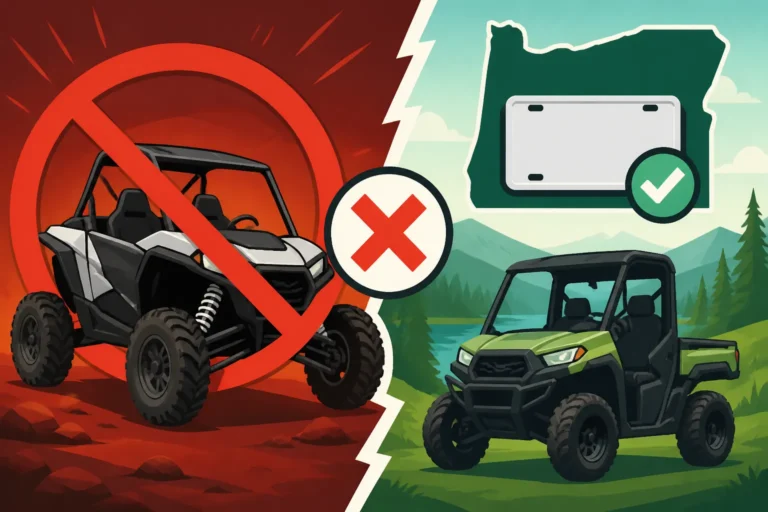
Crucially, for a Class II machine to be eligible for road use, it needs to be titled and registered with the Oregon Department of Motor Vehicles (DMV), and it must carry liability insurance. This is a significant difference from other OHV classes, which only require an operating permit for off-road use. The process of getting a Class II street-legal involves ensuring it has all the necessary equipment like turn signals, mirrors, a horn, proper headlights and taillights, and often a windshield and wipers. Once these requirements are met, and it's properly registered, a Class II vehicle can access the designated routes in Lakeside and Sumpter, and potentially other county roads where local ordinances allow, within the strict parameters of that Class II status.
Essential Modifications for Road Use: Lights, Signals, and Horns
Converting an off-highway vehicle for any kind of road use, even on designated routes, usually requires a series of essential modifications to meet safety and visibility standards. These aren't just suggestions; they are often legal requirements to ensure the vehicle is safe for sharing the road with other traffic. The absolute basics include:
- Headlights: Must meet specific brightness and beam pattern standards, often requiring both high and low beams.
- Taillights and Brake Lights: Clearly visible from the rear, with brake lights activating when the brakes are applied.
- Turn Signals: Front and rear, amber in color, and clearly visible to signal intentions.
- Horn: An audible warning device that can be heard at a safe distance.
- Rearview Mirrors: Typically at least two, providing adequate rear visibility.
- Windshield: Often required for Class II vehicles, complete with a windshield wiper system for clear visibility in all weather conditions.
- Tires: Must be DOT-approved street tires, not aggressive off-road knobbies that might be unsafe on pavement.
- Seatbelts/Restraints: For all occupants, meeting safety standards.
For riders looking to make these modifications, a company like SuperATV offers a comprehensive array of aftermarket parts, from full windshield kits to universal turn signal kits and mirrors, specifically designed for various UTV models. Investing in quality, compliant components is crucial, as law enforcement will be checking for proper functionality and adherence to regulations. Trying to cut corners here could lead to citations or deem your vehicle unfit for road use.
Why Other Classes Are Generally Excluded from Road Use
While Class II machines have a pathway to limited road legality, other classes of OHVs in Oregon generally do not. This includes:
- Class I ATVs (Quads): These are the traditional four-wheeled machines with straddle seats and handlebars. They are explicitly designed for off-road use and do not have provisions in Oregon law for full street-legal conversion. Their design, seating position, and lack of standard road safety features make them unsuitable for mixed traffic.
- Class III Off-Road Motorcycles (Dirt Bikes): Similar to Class I ATVs, dirt bikes are built for trails, not roads. While some states allow "dual-sport" conversions, Oregon's regulations generally do not permit Class III machines to be registered for public road use, beyond specific crossings or limited exceptions.
- Class IV UTVs (Side-by-Sides under 75 inches wide that do not meet Class II requirements): While many UTVs fall into this category and resemble Class II machines, they often lack specific features or meet certain dry weight limits that would allow them to be registered as Class II. If a UTV doesn't meet the strict criteria for Class II (e.g., if it's too light, or not originally designed with certain safety features that can be added), it remains a Class IV and is therefore generally excluded from public road use, even on designated routes. [Oregon Driver's License Rules for Class IV] highlight some of the distinctions for this class.
The exclusion of these classes is primarily due to fundamental design differences, safety concerns, and the legislative intent behind Oregon's vehicle codes. These machines are engineered for performance and durability in off-road environments, not for the demands of shared public roads. Attempting to ride them on designated routes without meeting the Class II criteria and registration could result in significant fines and legal issues. This distinction is critical for riders to understand before planning their trips to Lakeside or Sumpter.
Safety and Compliance on Designated Routes
Riding an OHV on a designated public road route is a unique privilege that combines the freedom of off-roading with the structure of conventional traffic. This means that while you're enjoying the convenience of connecting trails to towns, you're also subject to a stricter set of rules and safety requirements than you might encounter on an isolated trail. Compliance isn't just about avoiding a ticket; it's about ensuring your safety and the safety of everyone else on the road, including pedestrians and other drivers. Failing to adhere to these rules can quickly turn a fun outing into a serious problem.
Oregon's Helmet, Passenger, and Age Restrictions on Roads
When you're operating an OHV on any public road, even a designated route, Oregon's safety regulations become much more stringent. One of the most critical rules is the helmet law: [Oregon Helmet Law for ATV Riders] dictates that all riders, regardless of age, must wear a DOT-approved helmet when operating an OHV on designated public roads. This applies to both the operator and any passengers. This is a non-negotiable safety measure designed to protect against head injuries in the event of an accident, which can be more severe on harder paved surfaces at road speeds.
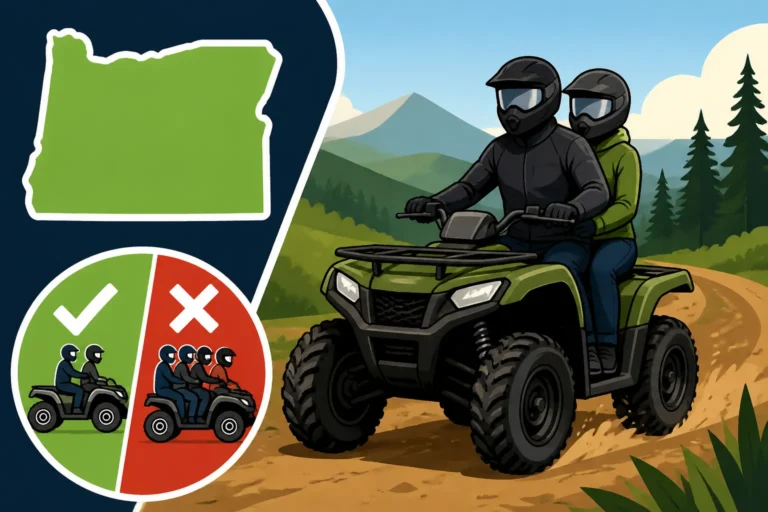
Passenger rules also change considerably. On trails, some ATVs might allow for a single passenger if the machine is factory-designed for two-up riding and has appropriate foot pegs and seating. However, on designated road routes, passengers must typically be able to reach the footrests and firmly grasp handholds. Children riding as passengers must also be of an appropriate age and size to safely do so, and often there are strict prohibitions against children riding in the operator's lap. Furthermore, operator age restrictions apply. While younger riders can operate OHVs off-road with certain safety cards and supervision, driving on designated roads generally requires the operator to hold a valid driver's license, especially for Class II machines. This ensures that the operator has passed standard driving tests and understands traffic laws, making them better equipped to handle a shared road environment.
Insurance and Registration: The Must-Haves for Class II Machines
This is where the distinction for Class II machines becomes extremely important. Unlike Class I, III, or IV OHVs which only require an [Oregon's ATV Operating Permit] for off-road use, Class II machines that operate on any public road, including designated routes in Lakeside and Sumpter, must be titled and registered with the Oregon Department of Motor Vehicles (DMV). This is the same process that a standard car or motorcycle goes through, obtaining a license plate and registration stickers.
Beyond registration, [Oregon Insurance Requirements for Class II] are mandatory. Every Class II machine operating on a public road must carry liability insurance. This insurance protects against financial responsibility for damages or injuries you might cause to others while operating your vehicle. This is a critical legal requirement that cannot be overlooked. Without proper registration and insurance, even if your Class II machine is physically equipped for road use, you are operating it illegally on designated routes. Law enforcement agencies in areas like Lakeside and Sumpter are well aware of these requirements and will enforce them. This means carrying proof of insurance and registration with you at all times when riding on these routes.
| Requirement/Item | Class I/III/IV (Off-Road) | Class II (On Designated Route) |
|---|---|---|
| Operating Permit | Required | Required |
| DMV Title | Optional | Required |
| DMV Registration | No | Required (with license plate) |
| Liability Insurance | Not required | Required |
| Safety Card | Required | Required |
| DOT-Approved Helmet | Required (under 18, all on public land) | Required (all riders) |
| Driver's License | Not required (with safety card/age rules) | Required for operator |
| Turn Signals | Not required | Required |
| Rearview Mirrors | Not required | Required |
| Horn | Not required | Required |
Avoiding Fines: Common Pitfalls and How to Stay Compliant
Riding on designated OHV routes is a fantastic opportunity, but it also comes with increased scrutiny and the potential for fines if you're not compliant. Here are some common pitfalls riders encounter and how to avoid them:
- Missing or Expired Permit/Registration: Always double-check your [Oregon ATV Permit Expiration Date] and ensure your Class II registration is current. An expired decal or plate is an easy target for a citation.
- No Safety Card: Even if you're an adult and an experienced rider, the [Oregon ATV Safety Card Requirements] are mandatory. Make sure you have yours.
- Lack of Insurance: For Class II machines, carrying valid liability insurance is non-negotiable. Don't let your policy lapse.
- Incomplete Road Equipment: If you have a Class II machine, ensure all your street-legal modifications (lights, signals, horn, mirrors) are fully functional before you hit the pavement. A burned-out bulb could be enough for a stop.
- Speeding: Designated routes often run through residential areas or small towns. Speed limits will be significantly lower than what you're used to on trails. Adhering to these limits is crucial for safety and community relations.
- Improper Passenger Rules: Ensure all passengers are legally allowed to ride, are properly secured, and are wearing helmets.
- Operating an Ineligible Machine: Trying to ride a Class I quad or a dirt bike on these routes is a definite no-go and will result in a ticket. Only Class II machines that meet all DMV requirements are permitted.
- Riding Off the Designated Route: Stick to the clearly marked OHV routes. Veering onto non-designated streets, even for a short distance, can lead to fines. Maps are often available online or at local businesses for [Oregon ATV Highway Access Route Map].
By being meticulous about your paperwork, ensuring your machine is properly equipped, and riding responsibly and courteously, you can enjoy the designated routes in Lakeside and Sumpter without any unwelcome interruptions.
The Broader Impact: Benefits and Criticisms of Designated Routes
The existence of designated OHV routes in Lakeside and Sumpter isn't just about rider convenience; it represents a larger conversation about the role of off-highway vehicles in rural economies and communities. Like any public land use decision, these routes come with both significant benefits and understandable criticisms. Understanding this broader context helps to appreciate the careful balance that policymakers and communities strive to achieve. It's a testament to the power of collaboration, but also a reminder of the ongoing challenges in integrating diverse recreational interests.
Economic Boost for Local Communities
One of the most compelling arguments for establishing designated OHV routes is the potential for significant economic benefits for small, rural communities. When riders can legally access local businesses directly from trails or staging areas, they are much more likely to spend money in town. This influx of tourism revenue can be a lifeline for gas stations, grocery stores, restaurants, lodging establishments, and even specialized OHV shops. Think of the impact when a group of side-by-side riders, fresh off the dunes, stops for lunch at a local cafe in Lakeside, or when a group of dirt bikers refuels at Sumpter's only gas station. These are sales that might otherwise go to larger towns further away, or simply not happen at all if riders are forced to trailer their machines everywhere.
This economic activity often leads to job creation, increased tax revenues for local services, and a general boost to the local economy. It can help revitalize struggling main streets and provide stability for small business owners who depend on tourism. The presence of OHV access can also put a town on the map for a specific niche of recreational travelers, encouraging repeat visits and positive word-of-mouth. Essentially, these routes transform riders from transient visitors passing through to engaged customers contributing directly to the local prosperity.
Environmental Concerns and Community Relations
Despite the economic upside, designated OHV routes are not without their critics, and many of these concerns revolve around environmental impacts and community relations. Residents often express worries about increased noise pollution, particularly from modified exhaust systems, which can disrupt the peace and quiet of a town. There are also concerns about air quality, especially in dry, dusty conditions, and potential impacts on local wildlife if riders stray from designated paths. While the routes themselves are paved, the ease of access they provide to surrounding natural areas can sometimes lead to discussions about the broader ecological footprint of OHV recreation.
Maintaining positive community relations is crucial for the long-term success of these routes. If local residents feel that OHV traffic is creating excessive noise, safety hazards, or negatively impacting their quality of life, it can lead to calls for restrictions or even the closure of routes. This is why rider etiquette – being mindful of speed, noise, and local rules – is so incredibly important. It's a delicate balance: providing access for recreationists while ensuring the well-being and satisfaction of the local population. Continuous dialogue, education, and proactive measures to mitigate negative impacts are essential for fostering a harmonious coexistence.
The Future of OHV Road Access in Oregon
The success of Lakeside and Sumpter has ignited interest in other communities, but the future of expanded OHV road access in Oregon remains an evolving landscape. On one hand, the demonstrated economic benefits and increased recreational opportunities are strong motivators for other towns to consider similar initiatives. The desire for a more integrated riding experience, where trailheads and towns are seamlessly connected, continues to grow among the OHV community. As vehicles like UTVs become more versatile and popular, the demand for legal road access will likely intensify.
However, the challenges of navigating complex legislative processes, securing community buy-in, and addressing environmental and social concerns will persist. Future expansion will likely depend on careful planning, robust public engagement, and a commitment from both local governments and the OHV community to responsible and sustainable practices. The process will likely remain incremental, focusing on specific communities where the conditions are most favorable for successful integration. As the state continues to grow and recreational demands shift, the conversation around [Are ATVs Street Legal in Oregon?] and the expansion of designated routes will undoubtedly remain a significant topic for riders, communities, and policymakers alike.
Disclaimer
This article is for general informational purposes only and does not constitute professional advice. Laws, prices and regulations vary by location and change over time. Consult a qualified professional for guidance on your specific situation.