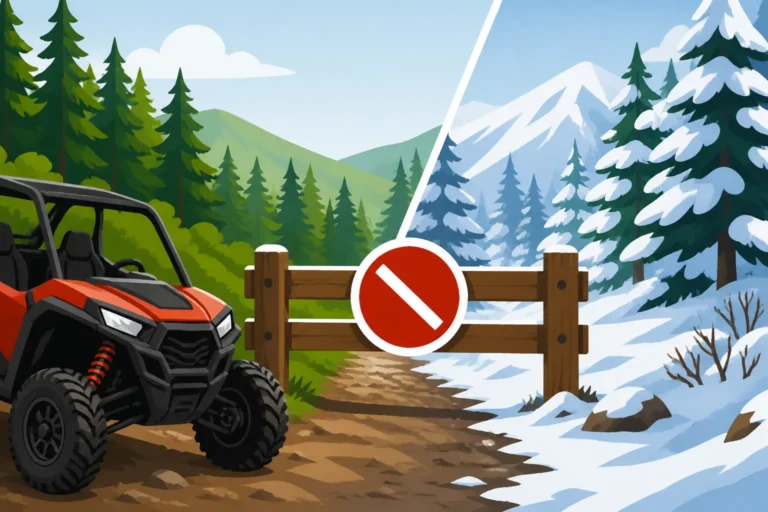
Golf Cart Rules on Manzanita’s Streets
Oh, the charm of a coastal town like Manzanita! It’s a place where the ocean breeze invites you to slow down, and for many, that means considering a golf cart for getting around. But let's be honest, trying to figure out what's allowed on the streets, especially when you have an ATV or UTV in mind, can be as confusing as reading a tide chart without a clock. This guide is here to untangle the specific rules governing golf carts on Manzanita's streets, clarify how they differ from general Oregon ATV and UTV laws, and help you navigate the local ordinances without a headache.
What Exactly is a Golf Cart in Oregon? Navigating the Nuances
Before we dive into Manzanita’s specific rules, it’s absolutely critical to understand what we’re even talking about when we say "golf cart." In Oregon, the legal landscape for smaller, slower vehicles on public roads isn’t always as straightforward as you might hope. There's often a significant distinction between a true "golf cart," a "low-speed vehicle" (LSV), and an "off-highway vehicle" (OHV) like an ATV or UTV. Misunderstanding these definitions is where a lot of folks run into trouble, especially when they assume their side-by-side can just cruise through town.
Golf Carts Versus Low-Speed Vehicles
Historically, a golf cart was pretty much just that: a vehicle designed for use on a golf course. They’re built for relatively flat terrain, low speeds, and short distances, usually around a specific property. They typically don't have all the bells and whistles you'd expect on a regular car, and frankly, they don't need them for their intended purpose. Think about the average cart you’d see at Gearhart Golf Links or a local country club – that’s your classic golf cart.
However, the world of small vehicles has evolved, and with it, classifications. Oregon, like many states, also recognizes "Low-Speed Vehicles" (LSVs). An LSV is often defined by its speed capability – generally, a vehicle with four wheels designed to be operated at speeds of more than 20 miles per hour but not more than 25 miles per hour. Crucially, to be considered an LSV and permitted on certain public roads, it must meet specific federal safety standards. This means it needs things like headlights, taillights, turn signals, stop lamps, reflectors, a parking brake, a rearview mirror, a windshield, seatbelts, and a Vehicle Identification Number (VIN). Some golf carts can be modified or manufactured to meet these LSV standards, effectively becoming street-legal LSVs, but a standard golf cart right off the course generally doesn't qualify. This distinction is paramount when looking at local ordinances like Manzanita's.
The Key Differences from ATVs and UTVs
Now, let's talk about the big confusion point: ATVs and UTVs (often called side-by-sides). These are definitively classified as Off-Highway Vehicles (OHVs) in Oregon. They are built for rugged terrain, higher speeds, and are generally far more robust than any golf cart or LSV. They come with powerful engines, aggressive suspension, and tires designed for dirt, sand, and mud, not asphalt. Oregon law is very clear about where these machines can and cannot operate. Unless specifically designated, ATVs and UTVs are not street legal on most public roads, highways, or city streets.
You might be thinking, "But my UTV looks just like some of those golf carts I see!" And that's where the visual similarity can be misleading. While a side-by-side might have a steering wheel and bucket seats, it's still fundamentally an OHV. It doesn't meet the federal LSV standards for road use and, critically, it's regulated under an entirely different set of state laws, primarily managed by the Oregon Parks and Recreation Department (OPRD), not the DMV for street registration. So, while you might find fantastic aftermarket parts from a company like SuperATV to enhance your UTV's off-road capabilities, those upgrades don't magically make it a street-legal golf cart for buzzing around town. The bottom line is: a golf cart is not an ATV or UTV, and trying to pass one off as the other in a legal setting will only lead to fines and frustration.
Manzanita's Unique Approach to Golf Carts: A Coastal Exception
Manzanita, being a charming and relatively small coastal town, has long grappled with the desire for convenient, low-speed transportation for its residents and visitors. Unlike much of Oregon, which strictly prohibits ATVs and UTVs on public roads (except for very specific designated routes), Manzanita has carved out a special allowance for genuine golf carts. This local ordinance is a significant deviation from the state's general stance on off-highway vehicles and is designed to enhance the town's laid-back atmosphere, allowing for easy access to shops, the beach, and local attractions without always needing a full-sized car.
Understanding Manzanita's Local Ordinance
The Manzanita City Council, recognizing the unique needs and character of its community, adopted specific rules to permit the operation of golf carts on certain public streets. This wasn't a snap decision; it was a carefully considered move to balance convenience with public safety. The ordinance typically defines what constitutes an "allowable" golf cart within city limits, often aligning with the spirit of a true golf course cart – meaning it's generally slower and not built for highway speeds. It's crucial to understand that this ordinance doesn't open the door for all low-speed vehicles or, critically, for your beefed-up side-by-side. The intent is specifically for golf carts to serve as a practical, low-impact mode of local transportation, especially for residents and those renting vacation homes who want to avoid constantly moving their cars.
This local rule is a perfect example of how [Golf Carts Versus ATVs in Oregon Towns] can play out very differently from one municipality to the next. What's permissible in Manzanita might be completely illegal just a few miles down the road in another town. Always check the specific city or county ordinances, as they can (and do) vary wildly.
Which Streets are Open to Golf Carts?
Not all streets in Manzanita are open to golf cart traffic. The ordinance typically designates specific streets where golf cart operation is permitted. These are generally local streets with lower speed limits and less traffic, designed to ensure the safety of golf cart operators, pedestrians, and other vehicles. You won't find golf carts zipping down Highway 101, for instance, which is a major state route and far too high-speed for such vehicles.
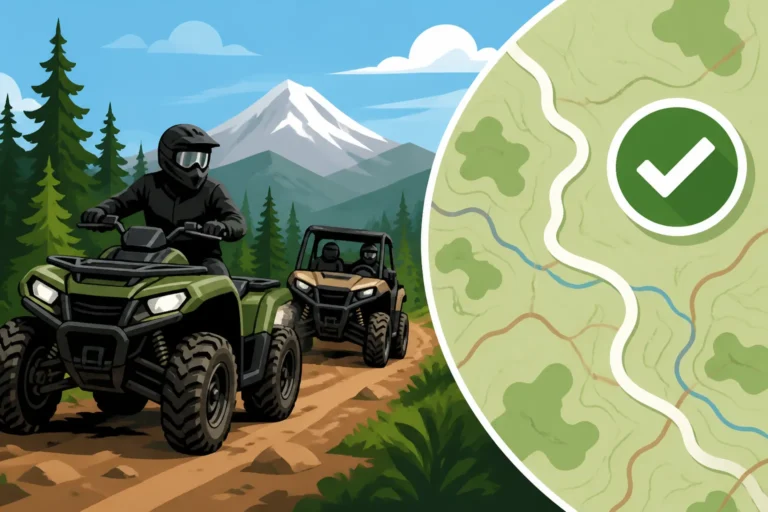
Often, the allowed streets are those that connect residential areas to the town's core, the beach, or other public amenities. There might be clearly marked signs indicating where golf carts are allowed or prohibited. It’s absolutely essential for anyone operating a golf cart in Manzanita to familiarize themselves with a map of these designated streets. Ignorance of the local law is, unfortunately, no excuse, and straying onto a prohibited street could result in a citation. Think of it like knowing the local trails for your OHV – you stick to the designated routes for safety and legality.
Operational Requirements Within Town Limits
Even on designated streets, golf cart operators in Manzanita must adhere to a strict set of operational requirements. These rules are in place to ensure everyone's safety. Common requirements often include:
- Speed Limits: Golf carts must generally adhere to posted speed limits, which are often low on residential streets anyway. The inherent design of a golf cart usually keeps speeds below 20-25 mph, aligning with LSV definitions in some respects.
- Driver's License: The operator must hold a valid driver's license. This isn't a free-for-all; you need to be a licensed driver to get behind the wheel.
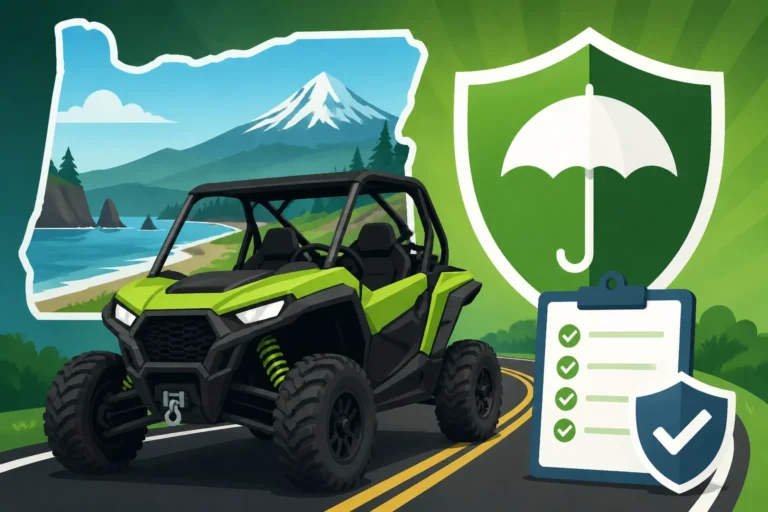
- Insurance: Proof of financial responsibility, typically in the form of liability insurance, is usually required. This protects everyone on the road in case of an accident.
- Equipment: While not full LSV requirements, basic safety equipment like working headlights, taillights, turn signals, and brake lights are often mandated, especially if operating at dawn, dusk, or night.
- Road Rules: All standard rules of the road apply – stop signs, traffic signals (if any), yielding to pedestrians, etc. Golf carts are vehicles like any other when on these streets.
These rules reflect a careful balance by the city to allow golf cart use while maintaining a safe environment for everyone. It’s important to respect these guidelines to ensure the privilege of golf cart use continues for residents and visitors alike.
Oregon State Laws and Street Legality for OHVs: A Stark Contrast
While Manzanita offers a special carve-out for golf carts, it’s vital to understand that this is an exception to the general rule in Oregon. For the vast majority of the state, Off-Highway Vehicles (OHVs) like ATVs and UTVs are explicitly not street legal. This often catches out-of-state visitors or new residents by surprise, especially if they come from areas with more permissive OHV road access laws. The state's regulations are designed to keep these powerful, off-road machines off public highways and city streets, primarily due to safety concerns, their lack of street-legal features, and the differing classification under vehicle codes.
The Strict General Rule for ATVs and UTVs
Oregon Revised Statutes are pretty clear: ATVs and UTVs are designed for off-road use. This means that, by default, you cannot simply drive your quad or side-by-side down a state highway, a county road, or most city streets. The reasons are numerous:
- Safety Features: OHVs lack many of the safety features mandatory for on-road vehicles, such as specific lighting, mirrors, seatbelt standards (for ATVs), and crumple zones.
- Tires: Their knobby tires are excellent for traction on dirt and mud but perform poorly on pavement, affecting braking and handling.
- Speed Disparity: While some UTVs can reach highway speeds, they are not designed to safely operate alongside passenger cars and trucks in a mixed traffic environment.
- Regulatory Framework: The state manages OHVs through the Oregon Parks and Recreation Department (OPRD) for off-road permits, not the Department of Motor Vehicles (DMV) for street registration. You'll need an [Oregon ATV Operating Permit] for off-road riding, but that doesn't confer street-legal status. [Why Oregon's DMV Does Not Register ATVs] is a key point here.
This strict general rule is why you see people trailering their ATVs to staging areas like Sand Lake or Browns Camp, rather than just riding them from home. If you're planning a trip to a riding area, you'll need to know [Oregon Rules for Riding to a Trailhead] and plan your transport accordingly.
Oregon's Class II Street-Legal Exception and Why It's Rare
There is a very narrow exception within Oregon law, primarily for "Class II" OHVs. [Oregon's Class II Under ORS 801.193] defines these vehicles as wider, heavier machines, often including dune buggies, sand rails, and some larger utility vehicles, which can potentially be made street legal. However, this is far from simple and applies to a very specific type of vehicle, not your typical quad or side-by-side. To achieve street legality, a Class II machine must be modified to meet all federal motor vehicle safety standards (FMVSS) for on-road vehicles, which means installing things like DOT-approved tires, windshield wipers, specific lighting, a horn, and often undergoing an inspection process to confirm compliance.
Even if a Class II machine can meet these rigorous standards, it’s a costly and time-consuming endeavor. Most people choose to keep their ATVs and UTVs purely for off-road adventures, which is their intended purpose. It's a testament to how seriously Oregon takes the distinction between off-road and on-road vehicles. [Insurance and Oregon Class II Machines] is another vital consideration here, as mandatory insurance is required if you manage to plate one of these for street use.
Navigating Oregon's Designated Highway Access Routes
Despite the general prohibition, Oregon does have a few, very limited, designated "highway access routes" where OHVs (including ATVs and UTVs) are permitted to operate on public roads. These are rare and specifically created for connecting trails, staging areas, or providing limited access through small communities to other riding areas. Currently, there are only two such designated routes in the entire state: Lakeside and Sumpter.
These routes are typically very short, clearly marked, and come with their own set of rules and restrictions, such as speed limits, time of day restrictions, and requiring an [Oregon ATV Safety Education Card]. [Oregon's Only Two Designated ATV Routes: Lakeside and Sumpter] serve specific purposes in those communities to facilitate OHV tourism and access. They are NOT a green light for statewide street riding. So, while you might hear about [Riding an ATV Through Lakeside] or [Riding an ATV Through Sumpter], these are very specific, localized arrangements, completely different from Manzanita's golf cart rules, and certainly not applicable to general road use across the state. They highlight just how tightly controlled street access is for OHVs in Oregon.
Permitting, Licensing, and Safety for Manzanita Golf Carts: The Practicalities
Operating a golf cart on Manzanita’s streets might seem casual, but it’s still a serious responsibility with specific legal requirements. Just because it’s a golf cart doesn’t mean you can throw caution to the wind. The city has put these regulations in place to ensure a safe environment for everyone, whether you’re driving the golf cart, walking the sidewalk, or sharing the road in a car. It's all about making sure that the convenience of golf cart use doesn't come at the expense of public safety.
Driver Licensing and Insurance Requirements
This is one of the most common questions, and the answer is unequivocal: yes, you need a valid driver's license to operate a golf cart on Manzanita’s public streets. This isn't a loophole for unlicensed drivers; the city views operating a golf cart on a public thoroughfare as requiring the same basic competence and legal authorization as driving any other motor vehicle. Whether you have a full Oregon driver's license or an equivalent from another state, you must be legally permitted to drive. This ensures a baseline level of knowledge of traffic laws and responsible driving behavior.
Beyond licensing, you'll also typically need to carry liability insurance. This is a critical safeguard. Accidents, even at low speeds, can happen, and they can result in property damage or personal injury. Having insurance ensures that you are financially responsible for any incidents you might cause. Just as [Oregon Insurance Requirements for Class II] machines are mandatory if they're plated for the road, the principle of financial responsibility extends to golf carts operating on public streets. Always check the current Manzanita city ordinance for exact insurance limits, but expect to need at least the state minimum liability coverage.
Safety Equipment and Vehicle Standards
Even though they're not full-blown highway vehicles, golf carts operating on Manzanita's streets still need to meet certain safety equipment standards. These usually include:
- Headlights and Taillights: Essential for visibility, especially during dawn, dusk, or foggy coastal conditions.
- Brake Lights: To clearly signal when the cart is slowing or stopping.
- Turn Signals: To indicate your intentions to other drivers and pedestrians.
- Reflectors: Additional passive visibility, particularly from the sides.
- A Horn: For warning others of your presence.
- A Rearview Mirror: To see traffic behind you.
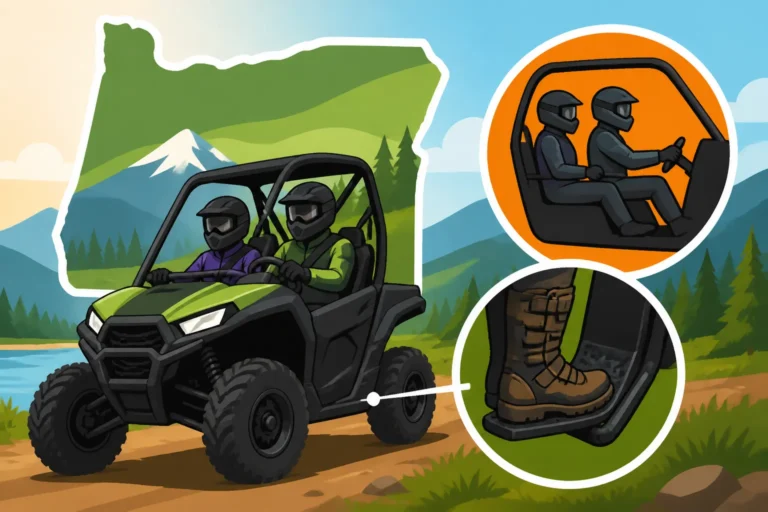
- Seatbelts: Often required for all occupants, aligning with basic safety principles.
- A Windshield: To protect occupants from debris and weather.
It's important to differentiate these from the robust standards your UTV might have, where [Oregon Lighting Requirements for Road Use] for a street-legal Class II machine would be much more extensive and rigorously tested. For golf carts, the requirements are practical for low-speed, local use. You're not trying to make your golf cart trail-ready with heavy-duty SuperATV accessories; you're simply equipping it for safe street travel. Make sure your golf cart is well-maintained, with working brakes and all lights functional, before venturing out.
What About Parking and Enforcement?
Parking a golf cart in Manzanita generally follows the same rules as parking any other vehicle. You'll need to park in designated parking spaces, obey any time limits, and avoid blocking driveways, fire hydrants, or crosswalks. Don't assume that because it's a small vehicle, you can park it anywhere. Respect common parking etiquette, especially in a busy tourist town where parking can be at a premium.
Enforcement of these rules falls to the Manzanita Police Department. Officers are tasked with ensuring that golf cart operators comply with both the local ordinance and state traffic laws. Getting stopped without a valid license, insurance, or with non-functional safety equipment can result in a citation. The goal isn't to discourage golf cart use, but to ensure it's done responsibly and safely for everyone enjoying the beautiful town of Manzanita.
Common Misconceptions and Practical Advice for Coastal Riding
The allure of cruising the coastal town in a small, open-air vehicle is strong, and Manzanita's specific rules for golf carts are a fantastic amenity. However, this unique allowance often breeds confusion, especially for those unfamiliar with Oregon's generally strict OHV laws. It's easy to get carried away or make assumptions that could lead to an unwanted interaction with local law enforcement. Let's clear up some common misunderstandings and offer practical advice to ensure your Manzanita golf cart experience is nothing but smooth sailing.
Don't Confuse Your UTV with a Golf Cart
This is perhaps the most significant and most common misconception. Just because your UTV (side-by-side) has a steering wheel, side-by-side seating, and might even look somewhat like a beefed-up golf cart, it is almost certainly not considered a golf cart under Manzanita’s ordinance. Your UTV is an Off-Highway Vehicle (OHV) in Oregon, subject to a completely different set of rules.
Think about it: your UTV likely has a powerful engine, robust suspension, and features designed for rugged trails, not residential streets. Many UTVs, like those from Polaris, Can-Am, or Yamaha, are purpose-built for off-road performance. Adding a horn, turn signals, or a small windshield doesn't magically transform it into a street-legal golf cart or LSV in Manzanita. You can buy fantastic aftermarket parts from places like SuperATV to make your UTV an absolute beast on the trails, but those same parts don't make it street-legal for town cruising. Attempting to drive your UTV on Manzanita's streets, even the designated ones for golf carts, will almost certainly result in a citation for operating an unpermitted or unregistered vehicle on a public road, which can be a hefty [Oregon Fines for Riding Without a Permit] violation. It's crucial to understand [Oregon Rules for a Machine Over 50 Inches] and how they classify UTVs very differently from golf carts.
Visiting Manzanita with Your Own Machine
If you're visiting Manzanita and hoping to bring your own golf cart, first and foremost, ensure it genuinely qualifies as a golf cart under the city's ordinance and meets all the operational requirements discussed earlier (license, insurance, safety equipment). Don't just assume your neighborhood electric vehicle (NEV) from back home automatically fits the bill without checking Manzanita's specific definition.
If you own an ATV or UTV, remember the strict general rule: your OHV is not street legal in Manzanita or most of Oregon. Plan to trailer your UTV to an approved off-road riding area like the Oregon Dunes, which might be a drive south, rather than trying to use it for local errands in town. If you’re caught riding an OHV on Manzanita’s streets, you could face significant penalties, and it could put a real damper on your coastal vacation. Always research local rules extensively before you pack your machine.
The Future of Golf Cart Use in Coastal Towns
The allowance for golf carts in towns like Manzanita is a local decision, often influenced by community character, tourism, and resident convenience. These ordinances aren't set in stone and can be reviewed and amended by city councils as circumstances change. Factors like increased traffic congestion, a rise in accidents involving golf carts, or simply shifts in community sentiment could lead to changes in the rules, or even their repeal.
For now, enjoy the privilege of golf cart use in Manzanita, but do so responsibly. Adhering to the rules, driving safely, and being respectful of pedestrians and other drivers will help ensure that this unique amenity remains available for everyone to enjoy. It's a fantastic way to experience the charm of Manzanita without the hassle of a full-sized vehicle, as long as you play by the rules. This local flexibility is why [Oregon Golf Cart Street Rules] aren't uniform across the state; it's a patchwork of specific local ordinances.
| Feature | Golf Cart (Manzanita Ordinance) | Low-Speed Vehicle (Oregon LSV Standard) | ATV/UTV (Oregon OHV Classification) |
|---|---|---|---|
| Primary Use | Golf Course, Local Transport | Neighborhood, Local Transport | Off-Road Trails, Recreation |
| Typical Speed | Under 20 mph | 20-25 mph | Varies widely, often > 25 mph |
| Street Legal? | Yes, on designated Manzanita streets | Yes, on specific Oregon roads (by law) | No, except specific access routes (rare) |
| Driver's License | Required (valid) | Required (valid) | Required for road use, or Safety Card |
| Insurance | Typically Required (liability) | Required (liability) | Required for plated Class II, recommended otherwise |
| Key Equipment | Lights, horn, mirror, brake lights | Headlights, tail/brake lights, turn signals, windshield, seatbelts, VIN, etc. | Varies by class, off-road focused |
| Regulatory Body | Manzanita City Council (local ordinance) | Oregon DMV (state statute) | Oregon Parks & Recreation Dept. (OPRD) |
| Examples | Traditional golf carts | Street-legal electric carts | Quads, side-by-sides, dirt bikes |
Disclaimer
This article is for general informational purposes only and does not constitute professional advice. Laws, prices and regulations vary by location and change over time. Consult a qualified professional for guidance on your specific situation.