Oregon Rules for Riding to a Trailhead
There's nothing quite like the freedom of an Oregon off-road adventure, but let's be honest, the logistics of getting to the trailhead can be a real headache. You've got your ATV or UTV, your gear all packed, and the open trails calling your name, but then you're faced with the question: can I just ride there? Or am I stuck loading up the trailer for a five-minute drive down a gravel road? It's a common frustration for many riders in our beautiful state. This guide is here to untangle the often-confusing web of Oregon's rules for riding your machine from your campsite, cabin, or even a local lodging directly to the trailhead, helping you understand where you can legally ride the roads and what you need to do to stay on the right side of the law.
The Reality of Street Legality for ATVs in Oregon
First things first, let's talk about what "street legal" actually means in Oregon, because it's probably not what you're hoping for with your typical quad or side-by-side. The state has some very specific definitions, and unfortunately, most of our beloved off-road machines don't quite fit the bill for full highway use.
Why Most ATVs Can't Be "Street Legal"
For the vast majority of us who ride Class I (quads) and Class IV (side-by-sides), hitting the paved streets and highways like a regular car simply isn't an option. Oregon law, specifically through the Department of Motor Vehicles (DMV), has stringent requirements for a vehicle to be registered and plated for street use. These requirements include things like specific lighting, braking systems, horn, windshield wipers, and often, safety glass, none of which are standard on most off-road machines designed for dirt and dunes.
Think about your typical sport quad or even a utility side-by-side. They're built tough, sure, and they're incredibly capable off-pavement, but they lack the full suite of equipment found on a passenger car or even a motorcycle. This is why [Why Oregon Will Not Plate a Quad] and [Why a Class IV Cannot Get Oregon Plates] are such important distinctions. The state sees these machines as primarily off-highway vehicles, and the regulations reflect that intent. It's not about being a killjoy; it's about road safety and integrating vehicles built for different purposes into the existing traffic infrastructure. So, while you might dream of cruising the main drag into town, for most ATVs and UTVs, it's just not going to happen.
The Exception: Street-Legal Class II Machines
Now, before you lose all hope, there's an important exception: Class II machines. These are the unique birds of the off-road world, often custom-built vehicles like sand rails, dune buggies, or other specialized machines that can be made street-legal in Oregon. [Oregon's Class II Under ORS 801.193] defines these as vehicles primarily designed for off-highway use but which, through specific modifications and compliance with all motor vehicle equipment standards, can qualify for registration as a regular vehicle.
What does this entail? It means they have to meet all the same safety and equipment standards as a passenger car or truck, or at least a motorcycle, depending on their configuration. This often involves turn signals, proper headlights and taillights, brake lights, a horn, rearview mirrors, a windshield (sometimes), and appropriate tires. If you manage to get your Class II machine to jump through all those hoops, then you can indeed get a title and registration for it. This process is detailed in [Titling and Registering a Street-Legal Rail]. It's a significant undertaking, requiring inspections and often professional installation of approved components. And here's another critical point: if you get your Class II machine plated for the street, you're also looking at [Mandatory Insurance on Every Oregon Class II]. Unlike other OHVs, which aren't always required to carry liability insurance, a street-legal Class II machine operates under the same insurance mandates as any other on-road vehicle. It's a whole different ballgame, but it is an avenue for true street legality if your machine fits the Class II definition and you're willing to make the necessary investments.
Beyond the Blacktop: Understanding "Road Legal" vs. "Street Legal"
This is where the rubber meets the gravel, quite literally, for most of us. There's a huge difference between being "street legal" (meaning you can drive on any public paved road or highway) and being "road legal" (meaning you can use certain types of public roads, usually unpaved or low-traffic, to access trails or designated areas). When you're thinking about riding to a trailhead, "road legal" is what you're usually aiming for.
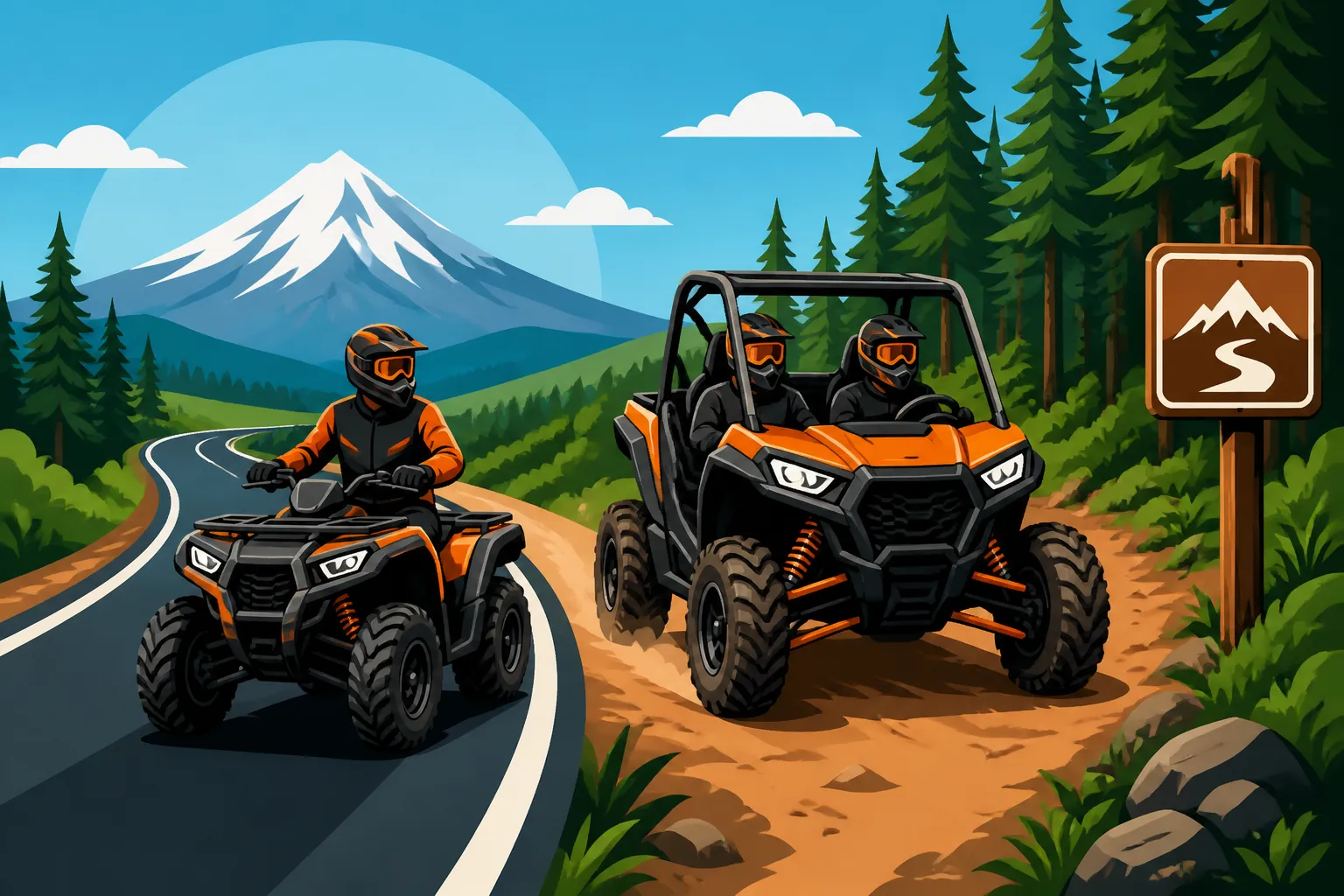
Oregon law acknowledges that off-highway vehicles need to use roads to get to where the fun begins. This typically refers to county roads, Forest Service roads, and Bureau of Land Management (BLM) roads. These aren't your typical busy highways; they're often gravel, dirt, or unimproved surfaces that are integral to accessing our vast outdoor recreational areas. The key here is that even if a road is "open" to OHVs, your machine is not "street legal" for general highway use. You're essentially being granted specific access rights on certain road types for the purpose of recreation, not carte blanche to drive wherever you please. Understanding this distinction is crucial to avoiding citations and knowing exactly where you can and cannot ride your quad or side-by-side without a trailer.
Riding on Forest and County Roads to Access Trailheads
Okay, so your quad probably isn't going to be cruising down I-5, but that doesn't mean you're chained to your trailer. Oregon has made significant strides in allowing OHV access on certain forest and county roads, which is exactly what you need to get from your camp to a killer trail.
The Six Oregon Counties That Opened Their Roads
This is big news for riders, and it's a relatively recent development. Back in 2017, Oregon passed legislation that allowed individual counties to create ordinances permitting OHV use on specific county roads. This was a game-changer, and it's something worth celebrating! As a result, there are now [The Six Oregon Counties That Opened Their Roads] for OHV use. This means that in these particular counties, you might be able to ride your ATV or UTV on designated county roads—often gravel or less-trafficked routes—to get to your favorite trailhead or connect between trail systems.
However, here's the crucial caveat: this isn't a statewide free-for-all. Each county has its own specific ordinances, which dictate which roads are open, what the hours of operation are, and any other unique rules. What's legal in Union County might not be in Grant County, for example. It's absolutely essential to do your homework and check the specific county's ordinance before you head out. A quick search on the county's official website or a call to their public works department can save you a lot of grief (and potential fines). The intent behind [Oregon's 2017 Road Access Change Explained] was to provide local control, so local knowledge is your best friend here. Don't assume; always verify.
Navigating National Forest and BLM Roads
Beyond county roads, a huge portion of Oregon's riding opportunities exist within National Forests and Bureau of Land Management (BLM) lands. These federal lands are crisscrossed with a vast network of unpaved roads, many of which are explicitly open to OHV use. In fact, these roads often serve as the primary conduits to trailheads. When you're out in areas like the Tillamook State Forest or Millican Valley, those gravel roads are how you get deeper into the riding areas.
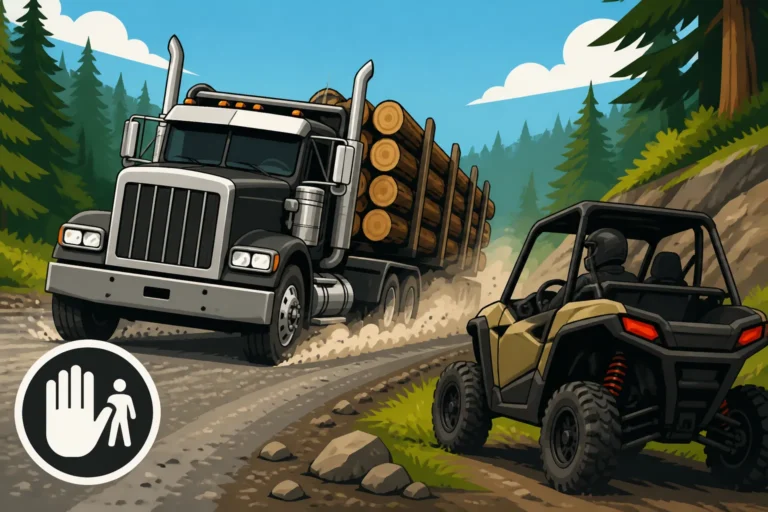
Understanding the hierarchy and rules on these federal lands is key. Forest Service roads, for instance, are usually numbered, and knowing how to interpret them can tell you a lot about their status. [Reading a Forest Service Road Number] can provide clues about whether it's a main arterial road or a spur trail. Generally, if a Forest Service or BLM road is publicly accessible and not specifically marked as closed to OHVs, you can use it to reach a trailhead. However, it's always wise to have current maps—like those from the Forest Service or BLM themselves—and to check for any temporary closures due to fire danger, logging operations, or environmental concerns. These roads are shared by various users, from hikers to log trucks, so always ride defensively and expect other traffic.
Important Rules and Considerations for Road Use
Even on roads where OHV use is permitted, you're not entirely off the hook. There are still a number of rules you need to follow to ensure safety and compliance. First, always obey posted speed limits, which are often lower on gravel roads and within recreation areas. Yield to other traffic, especially larger vehicles like logging trucks, which always have the right of way.
Your machine also needs to meet certain equipment requirements for road use. This includes functional headlights and taillights, a horn, and at least one rearview mirror. Many riders find that aftermarket mirrors, like those available from SuperATV, are a great upgrade for visibility and durability on rough roads. Speaking of durability, consider how your tires are suited for both road and trail – you might not want knobby tires if you're going to hit a lot of pavement, even if it's just to connect trails.
Beyond equipment, you must have an [Oregon ATV Operating Permit] displayed correctly on your machine. This permit decal signals to law enforcement and land managers that your vehicle is legal to operate on designated OHV trails and roads. And just like on the trails, all riders, regardless of age, need to carry their [Oregon's ATV Safety Education Card], unless they're driving a street-legal Class II machine with a valid driver's license. Lastly, don't forget the environmental rules: your machine must be equipped with a US Forest Service approved spark arrester, and you need to adhere to [Oregon Sound Limits for ATVs]. Riding responsibly means being a good steward of the land and a respectful neighbor to other users.
| Road Type | OHV Access Status (General) | Key Considerations |
|---|---|---|
| State/US Highways | Generally NOT allowed | Designated access routes (Lakeside/Sumpter) are rare exceptions. Crossing rules apply. |
| Paved County Roads | Check local ordinances | Only allowed in [The Six Oregon Counties That Opened Their Roads] with specific routes. |
| Unpaved County Roads | Check local ordinances | More likely to be open in designated counties, but still verify. |
| Forest Service Roads | Often allowed | Generally open unless marked closed; check current maps. |
| BLM Roads | Often allowed | Similar to Forest Service roads; check maps/signs. |
| Private Roads | Strictly NOT allowed | Unless you have explicit permission from the landowner. |
Oregon's Designated ATV Highway Access Routes: Lakeside and Sumpter
While riding to a trailhead on unpaved forest or county roads is common, riding your ATV or UTV through a town or on a state highway is almost unheard of in Oregon, save for two very special places.
Where You Can Truly Ride Through Town
This is where the magic happens for a select few towns in Oregon: Lakeside and Sumpter. These two communities have gone through the rigorous process of designating specific routes through their towns that allow OHVs to operate on public roads, including paved ones, to connect to riding areas. They are [Oregon's Only Two Designated ATV Routes: Lakeside and Sumpter]. Imagine pulling out of your vacation rental in Lakeside and riding your quad directly to the dunes, or riding through the historic mining town of Sumpter to access the high-desert trails. It's a fantastic convenience for riders and a unique feature in Oregon.
For example, [Riding an ATV Through Lakeside] allows you to connect the various staging areas around the Oregon Dunes National Recreation Area without having to trailer your machine between them or back to your lodging. This kind of access is not granted lightly; it involves significant planning, community input, and approval from the state's Transportation Commission. It's a testament to the local communities' dedication to OHV recreation. However, even within these routes, you're still expected to follow all traffic laws, speed limits, and respect private property. These are exceptions, not the rule, and they exist to enhance recreational opportunities, not to turn quads into daily commuters.
Crossing State Highways and Main Roads
Okay, so what if you're on a legal county road or Forest Service road, and you need to get to another riding area that's just across a state highway? This is a common scenario, and Oregon has specific rules for it. You can't just cruise down the highway; that's generally illegal for most OHVs. However, you can perform a right-angle crossing.
[Oregon Rules for Crossing a State Highway] dictate that if you need to cross a paved highway that isn't a designated OHV route, you must do so at approximately a 90-degree angle to the road, after yielding to all traffic, and then proceed directly onto the connecting road or trail. You cannot travel along the highway for any distance. This means stopping safely at the edge of the pavement, looking both ways multiple times, and making a quick, direct crossing. It's a quick dash from one legal OHV path to another, not a moment to test your top speed on the asphalt. Always exercise extreme caution, especially on busy state routes, and ensure you have clear sightlines before attempting a crossing.
Planning Your Ride: Maps, Signs, and Local Knowledge
You can't just wing it when it comes to riding on roads to access trailheads. This isn't the Wild West, and ignorance of the law is definitely not an excuse. Accurate, up-to-date information is your most valuable tool. Always carry detailed maps of the area you plan to ride. These should include not only the trails but also the roads that lead to them. The Forest Service, BLM, and Oregon State Parks often provide excellent OHV-specific maps, which you can usually find online or at ranger stations. [Oregon Trail Maps Worth Carrying] are not just a suggestion; they're essential for knowing where you are and where you're legally allowed to be.
Beyond maps, pay close attention to signs. "Road Closed," "No OHV Access," "Private Property," or "Seasonal Closure" signs are there for a reason and must be obeyed. Don't assume that because a road looks open, it is. Sometimes, a map might show a road as open, but a physical sign on the ground indicates a temporary closure due to logging, fire, or wildlife migration. Always defer to the physical signage. Finally, local knowledge is invaluable. Talk to staff at ranger stations, local OHV clubs, or even other riders you meet. They can often provide insights into current conditions, recent closures, or nuances of local regulations that might not be immediately obvious on a map. Always call ahead or check official websites before you load up and head out.
Gear, Permits, and Staying Legal
When you're riding your ATV or UTV on any public road in Oregon—even a gravel Forest Service road leading to a trailhead—you're subject to certain rules regarding your equipment and documentation. This isn't just about trail etiquette; it's about legal compliance and safety for yourself and others.
Essential Equipment for Road-Legal Riding
Operating your machine on any road that's open to the public, even unpaved ones, means you need to have specific safety and operational equipment in good working order. First and foremost, a helmet is non-negotiable for most riders. [Oregon Helmet Law for ATV Riders] is strict, especially for those under 18, but it's a good practice for everyone. Make sure your helmet is DOT-approved and fits properly. Eye protection, such as goggles or a face shield, is also mandatory to protect you from dust, debris, and glare.
Beyond personal safety gear, your machine needs to be equipped. Functional headlights and taillights are critical, especially if you might be riding near dusk or dawn, or if conditions are dusty. A working horn is also required for signaling. Perhaps one of the most commonly overlooked items is a rearview mirror. At least one mirror is typically required for road use, allowing you to see traffic approaching from behind. If your machine didn't come with one, or if yours is broken, it's a simple fix. Companies like SuperATV offer a wide range of mirrors, from universal clamp-on designs to specialized side-by-side mirrors that can greatly enhance your visibility and safety when you're on a road with other vehicles. Many also opt for additional lighting, like LED light bars, for better visibility to others, even if not strictly required for a short road connection. Lastly, don't forget the spark arrester and ensuring your exhaust meets [Oregon Sound Limits for ATVs] to be a good neighbor to the environment and other recreationists.
Permit and Safety Card Requirements
No matter if you're ripping through the dunes or just cruising down a gravel forest road, your machine needs to be properly permitted. This means having an [Oregon ATV Operating Permit] decal clearly displayed on your ATV or UTV. [Oregon Permit Decals and Where They Go] provides specific guidance on placement, but generally, it needs to be visible on the right-hand side of your machine. This decal confirms you've paid your fee and are legally allowed to operate your OHV on designated public lands and roads in Oregon.
Additionally, every rider, with very few exceptions, needs to have an [Oregon ATV Safety Card]. This isn't just for kids; adults need it too. The only real exception is if you're operating a truly street-legal Class II machine that's registered and plated, and you hold a valid driver's license for that class of vehicle. Otherwise, even if you're 60 years old and have been riding for decades, you need that card. You can take the free online course provided by Oregon State Parks to get yours. Keep a physical copy or an image on your phone readily available, as rangers or law enforcement may ask to see it during a roadside stop.
Avoiding Citations and Staying Safe
The goal, of course, is to have a fantastic time and get to your trailhead without any issues. The best way to do that is to be prepared and informed. During a roadside stop, whether it's by a Forest Service Ranger or an Oregon State Trooper, they'll likely check for a few key things. [What an Oregon Trooper Checks Roadside] typically includes your operating permit decal, your safety card (if applicable), and your basic vehicle equipment like lights, horn, and mirror. They'll also be looking for any signs of illegal operation, such as riding in a closed area, excessive speed, or being on an undesignated road.
The fines for riding illegally can be steep. [Oregon Fines for Riding an Unopened Road] or [Oregon Fines for Riding Without a Permit] can quickly turn a fun day into a costly headache. Always double-check your route, consult the latest maps, and respect all signage. If you're unsure about a specific road, err on the side of caution. It's better to trailer your machine a bit further than to risk a citation, especially when a great riding experience is just around the corner. By being proactive, informed, and compliant, you ensure everyone can continue to enjoy Oregon's incredible off-road opportunities for years to come.
Disclaimer
This article is for general informational purposes only and does not constitute professional advice. Laws, prices and regulations vary by location and change over time. Consult a qualified professional for guidance on your specific situation.