Sharing a Gravel Road With Log Trucks
There's nothing quite like the feeling of heading out onto Oregon's vast network of forest and gravel roads, the promise of adventure in the air. But if you've spent any time on these routes, you know that exhilarating feeling can quickly turn to a heart-stopping moment when a massive log truck appears, seemingly out of nowhere, barreling down a narrow, dusty lane. It's a legitimate fear, a sudden jolt back to reality that these aren't just recreational trails. This guide is all about equipping you with the knowledge and strategies to share these roads safely with the working giants of the Oregon timber industry, so you can enjoy your ride with peace of mind.
The Unique Dangers of Active Logging Roads in Oregon
Riding an ATV or UTV on a gravel road is one thing, but riding one on an active logging road introduces a whole new set of challenges that recreational riders must understand. These aren't your typical paved roads with clear lanes and shoulders; they are the arteries of an industrial operation, built and maintained for heavy machinery, not necessarily for a leisurely drive.
Blind Corners and the Dreaded Dust Cloud
Imagine rounding a bend on a winding gravel road, dust swirling behind your machine, only to realize that the sound you've been hearing isn isn't just the wind or your own engine. It's the unmistakable roar of an engine brake, growing louder with terrifying speed. Blind corners are a persistent menace on logging roads. The dense forest canopy often limits visibility, making it impossible to see oncoming traffic until it's right upon you. Compounding this, the sheer size of log trucks kicks up colossal clouds of dust that can linger, completely obscuring the road for several minutes. If you're riding into one of these clouds, you're essentially driving blind, a scenario that is incredibly dangerous when heavy traffic is present. It’s why staying alert and anticipating what might be around the next bend is absolutely crucial.
The Weight and Speed of Industrial Traffic
Log trucks are not only enormous, but they're also often operating on strict schedules, meaning they might be traveling at speeds that feel disproportionately fast for the road conditions. Their immense weight gives them tremendous momentum, and consequently, very long stopping distances. A fully loaded log truck can weigh upwards of 80,000 pounds. Trying to stop that kind of mass quickly on loose gravel, especially downhill, is a monumental task. As an ATV or UTV rider, this means you can't rely on a truck being able to swerve or stop abruptly to avoid you. The responsibility largely falls on the smaller, more agile vehicle to get out of the way. Understanding this dynamic is key to making safe decisions.
Road Degradation and Unexpected Hazards
The constant passage of heavy log trucks takes a serious toll on gravel roads. What might start as a relatively smooth surface can quickly devolve into a washboard mess, filled with deep potholes, loose rock, and uneven ruts. These conditions are not just uncomfortable for ATV riders; they can be downright hazardous. Loose gravel can cause a loss of traction, leading to slides or rollovers, especially for lighter machines. Furthermore, you might encounter unexpected debris, such as fallen branches, rocks dislodged by trucks, or even pieces of equipment that have come loose. It's a reminder that these are working roads, not pristine trails, and you need to be constantly scanning for hazards.
Pre-Ride Preparations for Logging Road Safety
Before you even hit the gravel, a bit of planning and preparation can drastically improve your safety when riding on active logging roads. These roads demand a different kind of respect and readiness than a typical recreational trail.
Maximizing Your Visibility to Others
One of the most effective ways to mitigate the risk of encountering a log truck is to make yourself as visible as possible. Think of yourself as a tiny needle in a very large haystack. Wear bright, high-contrast clothing, like fluorescent greens, oranges, or yellows. Even if it's a sunny day, always ride with your headlights and taillights on. This creates a visual presence that helps you stand out against the often-drab forest background. Consider adding a safety flag or whip, especially if you're riding in areas known for deep ruts or blind hills, similar to how riders use a [Whip Height for a Coastal Dune]. The higher your flag, the sooner an oncoming driver might spot you peeking over a rise. Remember, for a log truck driver, spotting a small ATV among the trees and dust is incredibly difficult, so every bit of extra visibility helps.
Equipping Your Machine for Rough Terrain
Your ATV or UTV also plays a crucial role in your safety on these challenging roads. Ensure your tires are in good condition and set to an appropriate pressure for gravel and mixed terrain, which often means a slightly lower pressure than pavement for better grip and shock absorption. Good brakes are non-negotiable; test them before you head out. Beyond the basics, consider accessories that enhance safety and comfort. A sturdy windshield, perhaps from a brand like SuperATV, can dramatically reduce the amount of dust and flying debris that hits you, improving visibility and protecting your face. Half doors or full doors on a UTV can also offer added protection from flung rocks. Good mirrors are also essential for checking behind you, especially if you need to quickly assess a pull-over spot. Remember, the goal is to equip your machine to handle the abuse of a working road while keeping you as protected as possible.
Understanding Road Access and Operating Hours
Many logging roads are privately owned by timber companies but are generously opened to the public for recreational use. However, this access often comes with conditions and an implicit understanding that industrial operations take precedence. It's vital to research the specific area you plan to ride. Some timber companies or land management agencies might close roads to recreational traffic during weekdays when active hauling is underway, only opening them on weekends. [Roads Closed Seasonally by the Forest Service] is a common practice in many areas, not just for logging but also for wildlife. Always check local forest service or timber company websites, or look for posted signs at staging areas and road entrances. Ignoring these closures or restrictions isn't just a potential legal issue; it's a direct safety hazard that puts you and the truck drivers at risk. Understand that your right to be there is often a privilege, not an absolute right, and respecting the working nature of these roads is paramount.
Navigating an Encounter: What to Do When a Truck Appears
Despite all the preparation, an encounter with a log truck is almost inevitable if you spend enough time on Oregon's gravel roads. The key is knowing exactly how to react quickly and safely in the moment.
Safe Pull-Over Procedures and Communication
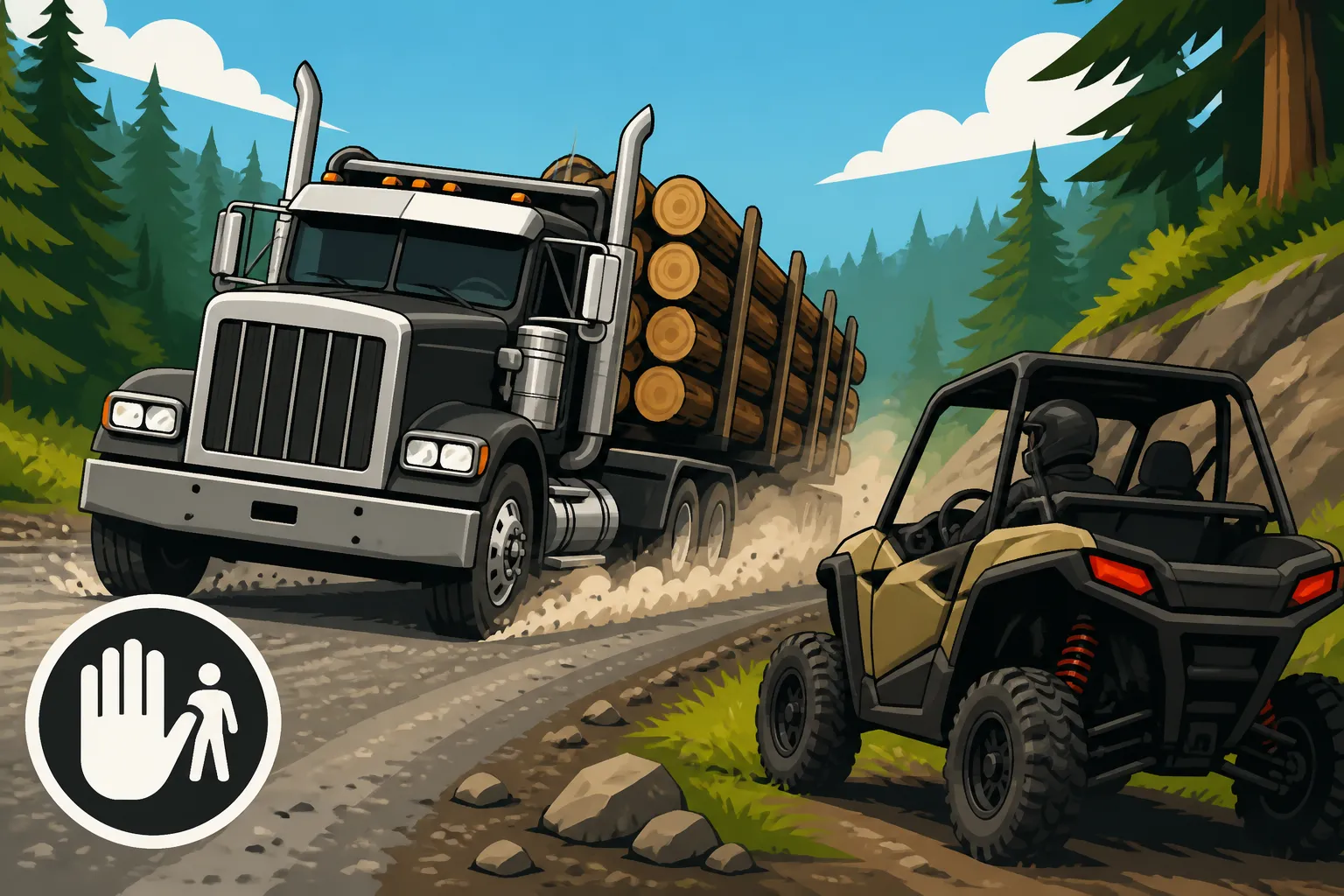
The moment you become aware of an approaching log truck – whether you see its dust cloud, hear its engine, or spot it around a bend – your immediate action should be to slow down and find a safe place to pull over. Always yield the right-of-way to the larger, commercial vehicle. Look for a wide spot, a pull-out, or even a flatter, more stable section of the road shoulder. Pull as far to the right as you can, completely off the main travel lane if possible. Once stopped, it's often a good idea to turn off your engine, especially if the truck will be passing close by. This reduces noise, allowing you to hear any instructions or signals, and it also minimizes dust kicked up by your own machine. If you make eye contact with the driver, a simple wave can acknowledge that you've seen them and are safely out of the way. This simple act of courtesy goes a long way.
Managing Dust and Staying Alert Post-Pass
After a log truck rumbles past, it leaves behind a truly massive cloud of dust. Resist the urge to immediately pull back onto the road and continue your journey. Driving into that dense dust is incredibly dangerous, as it creates zero visibility for both you and any potential vehicles following the truck. Wait it out. Give the dust cloud several minutes to settle, or until you have clear visibility of the road ahead. Use this time to scan the road for any new hazards the truck might have dislodged, like rocks or debris. Remember that trucks often travel in convoys, so one truck might be followed by another. Always assume there could be more than one. Keep your lights on, even in daylight, to ensure you remain visible to any subsequent traffic. Patience here is a virtue that can prevent an accident.
The Importance of Defensive Riding
Defensive riding isn't just about reacting to immediate threats; it's about constantly anticipating them. On logging roads, this means riding at a speed that allows you to react to unexpected situations, whether it's a pothole, a deer, or an oncoming truck. Always assume there's something around the next blind corner. Stay to the far right of the road, even when there's no apparent traffic, leaving ample room in the middle for larger vehicles. When approaching crests or blind turns, ease off the throttle and be prepared to stop. Think about where you would pull over if a truck appeared suddenly. Having a mental exit strategy for every challenging section of road can save precious seconds when a real encounter occurs. Regularly check your mirrors, and be aware of your surroundings, especially if you're riding with a group. This proactive approach is your best defense against the unpredictable nature of [Riding Timber Roads With Active Hauling].
Beyond the Basics: Etiquette and Legalities
Beyond the immediate safety measures, there are broader considerations of etiquette, understanding local regulations, and being a responsible user of shared resources. These aspects contribute to not only your safety but also the continued access to these incredible riding areas.
Respecting Timber Company Rules and Right-of-Way
It's easy to forget that many of the gravel roads we love to ride through Oregon's forests are not public roads in the traditional sense. They are often built and maintained by private timber companies, or by the Forest Service, specifically for industrial operations. While many companies graciously allow public recreational access, this is often a privilege that can be revoked if not respected. The primary purpose of these roads is timber hauling, not recreation. Therefore, industrial traffic, especially log trucks, always has the right-of-way. Your presence is secondary. This means you should always yield, never impede their progress, and absolutely never engage in risky behavior that forces them to take evasive action. Respecting these rules is crucial for maintaining good relationships between recreational riders and the timber industry, ensuring that these areas remain open for future enjoyment. You can learn more about specific regulations regarding private land in [Oregon Rules for a Machine on Private Land].
Essential Oregon ATV Permits and Safety Requirements
Even on private timber roads that are open to the public, you still need to adhere to Oregon's ATV regulations. This means your machine needs an [Oregon ATV Operating Permit], often displayed as a decal. Knowing [Oregon ATV Permit Decal Placement] is important to avoid issues. These permits help fund trail maintenance and safety programs. Additionally, most riders need to carry an Oregon ATV Safety Education Card. While log truck drivers don't typically check for these, a Forest Service or local law enforcement officer might, and they are essential for legal operation. Always carry your permit and safety card with you, along with any other necessary documentation. A key part of being a responsible rider is ensuring you're legal to be on the road in the first place, whether it's a dedicated trail or a multi-use gravel road. Furthermore, ensuring your machine has a properly functioning [Oregon Spark Arrester Requirement] is crucial to prevent wildfires, especially when driving on dry gravel roads where sparks can easily ignite roadside vegetation.
Being a Responsible User of Shared Resources
Riding on these gravel roads means you're part of a larger ecosystem of users, including hikers, mountain bikers, hunters, other OHV users, and, of course, industrial traffic. Your actions impact everyone. Beyond safety with trucks, this means riding responsibly, staying on marked routes, respecting private property boundaries, and minimizing your environmental impact. Follow sound limits, don't litter, and pack out everything you pack in. If a section of road is clearly marked "No OHVs" or "Closed," respect it. The continued access to many of these beautiful areas for recreational riding depends on all of us being good stewards and responsible users. By taking the initiative to be prepared, riding safely, and showing respect for the land and other users, you contribute to a positive future for Oregon's ATV and UTV community.
Pre-Ride Checklist for Logging Road Safety
Before you head out onto those scenic, but potentially dangerous, Oregon gravel roads, use this checklist to ensure you're as prepared as possible.
| Category | Item | Details |
|---|---|---|
| Visibility | Bright Clothing | Wear high-contrast colors (fluorescent orange, green, yellow) to stand out against the natural backdrop. |
| Lights On (Day & Night) | Always use headlights and taillights, even in bright daylight, for increased visibility. | |
| Safety Flag/Whip | Consider a tall flag on your machine, especially for blind crests and turns. | |
| Machine Prep | Tire Condition & Pressure | Ensure good tread and adjust tire pressure for optimal grip and shock absorption on gravel. |
| Braking System | Test brakes thoroughly before each ride; ensure they are fully functional and responsive. | |
| Windshield/Doors (UTV) | Install a windshield (e.g., from SuperATV) to protect from dust and debris; doors enhance safety. | |
| Mirrors | Ensure mirrors are clean and properly adjusted for clear rearward visibility. | |
| Spark Arrester | Verify your machine has a working, U.S. Forest Service-approved spark arrester to prevent wildfires. | |
| Knowledge & Docs | Road Status & Closures | Check with local Forest Service or timber companies for current road closures, active logging schedules, and any specific restrictions. |
| Oregon ATV Operating Permit | Ensure your machine has a current, properly affixed [Oregon ATV Operating Permit] decal. | |
| ATV Safety Card | Carry your Oregon ATV Safety Education Card or recognized out-of-state equivalent. | |
| Route Plan | Have a map and a clear understanding of your route, including potential pull-over spots or wider areas. [Oregon Rules for Riding a Forest Road] can offer further guidance. | |
| Rider Prep | Helmet & Gear | Always wear a DOT/Snell approved helmet ([Oregon Helmet Law for Adult Riders] is serious) and appropriate riding gear (gloves, eye protection, sturdy boots). |
| First Aid Kit | Carry a basic first aid kit for minor injuries. | |
| Communication | Have a way to communicate (cell phone with charged battery, satellite messenger, or CB radio if riding with others). | |
| Water & Snacks | Stay hydrated and fueled, as rides can be longer and more demanding than expected. |
Disclaimer
This article is for general informational purposes only and does not constitute professional advice. Laws, prices and regulations vary by location and change over time. Consult a qualified professional for guidance on your specific situation.