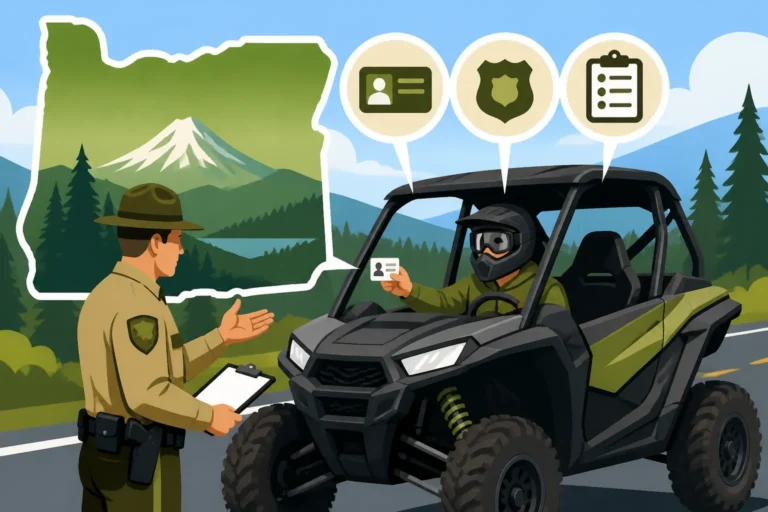
Proving Your Class at a Stop
Picture this: You’re out enjoying a perfect day on the Oregon dunes or cruising a forest trail, feeling the wind in your hair, when suddenly you see those flashing lights or a ranger waving you over. Your heart might do a little skip, especially if you’re not entirely sure how all the rules apply to your specific machine. One of the first things a law enforcement officer or an Oregon Parks and Recreation Department (OPRD) ranger might ask is about your ATV's classification. Not knowing the answer or being unable to prove it can turn a fun day into a frustrating one, possibly even ending with a citation. This guide is here to unravel the mysteries of Oregon's ATV classification system and empower you with the knowledge and practical tips to confidently prove your machine's class at any roadside stop.
Why Your ATV's Class Matters in Oregon
It might seem like a minor detail, but your off-highway vehicle (OHV)'s classification in Oregon is a really big deal. It's not just a label; it's a critical factor that determines where you can legally ride, what permits you might need beyond the standard operating permit, and even whether you need special insurance. Getting it wrong can have real consequences.
Oregon's Detailed Classification System
Unlike some states that might just lump everything into "ATV" or "UTV," Oregon has a very specific and detailed system. It’s designed to categorize machines based on their physical characteristics, like width, weight, seating, and controls. The Oregon Parks and Recreation Department (OPRD) oversees this system, and they don't mess around with these definitions.
- Class I: Think of your traditional, sport-style quad. These are typically narrower machines designed for a single rider or sometimes an operator and one passenger, where you straddle the seat and use handlebars.
- Class II: This is where things get interesting and often confusing. These are the rare machines that can be street-legal in Oregon under very specific conditions. They tend to be wider or heavier, and might include things like sand rails or dune buggies that have been specifically registered for highway use.
- Class III: This class is pretty straightforward – it’s for off-road motorcycles, commonly known as dirt bikes. Two wheels, straddle seat, handlebars. Simple as that.
- Class IV: This is your side-by-side (SxS) or utility terrain vehicle (UTV). These are wider machines, often with bench or bucket seating, a steering wheel, and usually designed to carry multiple passengers and/or cargo.
Each of these classifications has its own set of rules, from where you can ride to what safety gear is mandatory. It’s why knowing which box your machine fits into is absolutely essential for a stress-free ride. You can dive deeper into these categories with our article on [Oregon's Four ATV Classes Explained].
The Stakes of Misclassification
Let’s be honest, nobody wants to get a ticket or have their riding day cut short. But misclassifying your machine, even unintentionally, can lead to just that. Imagine this scenario: You’ve got a wider side-by-side, but you genuinely thought it counted as a Class I because it feels nimble on the trails. You're out at a popular staging area like Spinreel or Browns Camp, and a ranger flags you down. If your machine is technically a Class IV but you're trying to access a trail designated only for Class I machines, you're in a bind.
The consequences can range from a verbal warning to a significant citation, such as [Oregon's Class C Traffic Violation for No Permit] (even if you have a permit, it might be for the wrong class of machine if you’re riding somewhere restricted). In more serious cases, you could even face fines for riding on a restricted road or trail. The ranger might require you to load your machine back on the trailer and leave the area. It’s a real bummer, and it’s completely avoidable by understanding and being able to prove your machine's correct classification.
Understanding Oregon's ATV Classes: What to Look For
When an officer or ranger stops you, they're not just going to take your word for it. They're looking for tangible, measurable characteristics that define your machine's class. Knowing these details for your specific OHV is your best defense.
Class I: The Traditional Quad
This is probably what most people picture when they hear "ATV."
- Width: The absolute defining characteristic for a Class I is its width. It must be 50 inches or less at its widest point. This usually means measuring from the outside of one tire to the outside of the opposite tire. If your quad is 50.1 inches wide, it's not a Class I in Oregon's eyes. This strict limit is explained in [The 50-Inch Limit That Defines a Class I].
- Dry Weight: While width is primary, Class I machines also typically have a dry weight (without fuel or fluids) of 1,200 pounds or less.
- Seating: A Class I features a straddle seat. This means you sit on it like a motorcycle, with a leg on each side.
- Controls: You'll be using handlebars to steer.
Think about common sport quads like a Yamaha Raptor, Honda TRX, or a Polaris Scrambler. These are classic examples. If you've got an older machine or one with aftermarket parts, always take the time to measure its actual width. Even a slightly wider set of tires can push you over that 50-inch threshold.
Class II: The Street-Legal Exception
Class II machines are the outliers in Oregon's OHV world. They are unique because they are the only class that can legally be registered for highway use, and even then, only under very specific circumstances.
- Characteristics: These machines are often wider than 50 inches or heavier than 1,200 pounds, but they are specially built or modified to meet highway safety standards. This can include custom-built sand rails, some heavily modified dune buggies, or even some specific multi-purpose vehicles.
- Registration and Insurance: If your machine is a Class II and you intend to ride it on designated highway access routes or even just cross a highway, it absolutely needs to be registered with the DMV, not just have an OHV operating permit. This also means mandatory liability insurance. You can learn more about this in [Insurance and Oregon Class II Machines] and [Registering a Street-Legal Class II in Oregon].
- Controls & Seating: Class II machines typically have a steering wheel and non-straddle seating (like bench seats or bucket seats), often accommodating multiple passengers.
These are not your everyday quads or side-by-sides. If you have a Class II machine, you'll know it because you've gone through a specific process to get it titled and registered for road use, which is very different from simply getting an OHV operating permit.
Class III: Off-Road Motorcycles
This class is the least complicated to identify:
- Characteristics: Class III machines are defined simply as two-wheeled vehicles designed for off-highway use.
- Seating & Controls: They have a straddle seat and are controlled with handlebars.
Essentially, if it's a dirt bike, it's a Class III. While easy to identify, it still requires an Oregon OHV operating permit for use on public lands. For more specific details, check out [Class III Off-Road Motorcycles in Oregon].
Class IV: Side-by-Sides, UTVs, and Wider Machines
The Class IV category has seen a massive surge in popularity and often causes the most confusion, especially when trying to distinguish it from a modified Class I.
- Width: Class IV machines are generally wider than 50 inches. While they usually fall under 75 inches in width, some larger utility models or heavily customized performance machines (think a RZR with long travel suspension from SuperATV) might push that limit. Oregon specifically defines [Oregon's Class IV Side-by-Sides Under 75 Inches]. You might also want to consult [A Machine Under 50 Inches Wide] and [A Machine Over 75 Inches Wide] for comparison points.
- Dry Weight: These typically have a dry weight of under 3,500 pounds.
- Seating: Class IVs feature non-straddle seating, meaning you sit in bench seats or individual bucket seats, much like a car. They're designed to carry multiple passengers side-by-side (hence the name).
- Controls: Steering is done with a steering wheel, not handlebars.
Common examples include Polaris RZRs, Can-Am Mavericks, Honda Pioneers, and Kawasaki Teryxes. These machines are incredibly versatile for trails, dunes, and utility tasks, but their size is what primarily differentiates them from Class I machines.
Practical Steps to Prove Your Machine's Class Roadside
Getting stopped is usually a nerve-wracking experience, but being prepared can make it much smoother. The key is to have accessible proof and to understand the defining features of your machine.
Documentation is Key
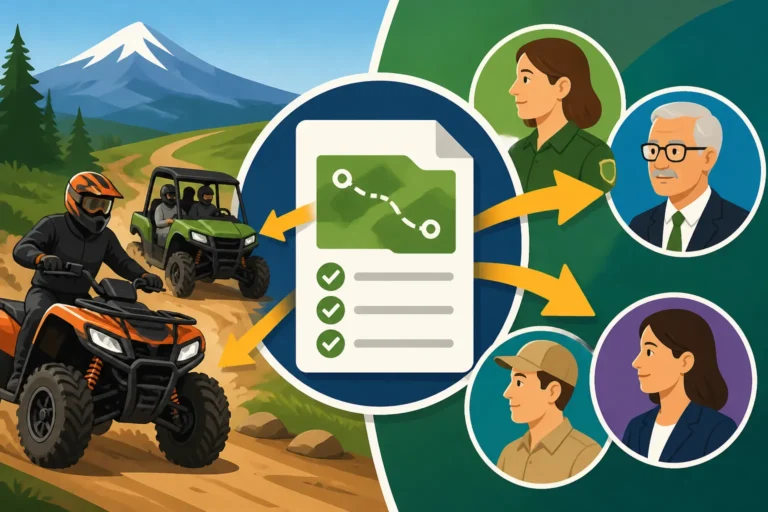
When a ranger or officer asks about your machine's class, the best way to back up your claim is with solid documentation.
- Owner's Manual: This is your best friend. Most owner's manuals clearly list the original specifications of your machine, including its width, dry weight, and seating configuration. Keep a physical copy in a waterproof bag on your machine, or at least have a digital copy readily accessible on your phone.
- Bill of Sale or Title: These documents can also confirm the make, model, and year, which can then be cross-referenced with manufacturer specifications if needed. While titling an ATV in Oregon is optional, it can be useful for proving ownership and original specs. Read more about why an Oregon title might be worth having anyway in [Why an Oregon Title Is Worth Having Anyway].
- Photos: As an extra layer of defense, having a photo of your machine’s VIN plate or a screenshot of its official manufacturer specifications on your phone can be helpful.
It’s always a good idea to protect your documents from the elements. If you’re riding near the coast, for instance, a dry bag or a sturdy, waterproof case is invaluable. We have some great tips on [Keeping Paperwork in a Wet Climate].
Be Prepared to Measure and Point Out Features
Sometimes, documentation isn't enough, or maybe you've made modifications. A ranger might ask you to step aside and measure your machine's width, or they might do it themselves.
- Know Your Measurements: Have a mental note (or even a small, laminated card) with your machine's exact width and, if relevant, its dry weight. Knowing these numbers off-hand shows you're prepared and understand the rules.
- Highlight Key Features: Be ready to point out your machine's controls (handlebars vs. steering wheel) and seating (straddle vs. bench/bucket). These are immediate visual cues for an officer.
- Understand Your Modifications: This is critical. If you've added wider A-arms, offset wheels, or bigger tires from a company like SuperATV, you've likely changed your machine's factory width. What was once a 48-inch Class I quad could now easily be 51 inches, instantly reclassifying it as a Class IV. You need to be aware of how these aftermarket parts affect your machine's legal classification. Be honest and prepared to discuss how your modifications might impact the classification.
Knowing Your Permit and Decal
While your OHV operating permit itself doesn’t specify your machine’s class (since there’s [One Oregon Permit Price for Every Class] regardless of class), the reason you were stopped might be related to it. Often, officers are checking for the mandatory operating permit and correct decal placement.
- Proper Decal Placement: Ensure your Oregon ATV permit decal is correctly affixed and visible on your machine, according to OPRD guidelines. Incorrect placement can draw unwanted attention. You can find detailed instructions in [Oregon Permit Decals and Where They Go].
- Why You Were Stopped: Sometimes, an officer or ranger will stop you because they suspect your decal isn’t placed correctly, or perhaps they didn’t see one at all. They might be performing a routine check at a staging area, as described in [What a Ranger Checks at an Oregon Staging Area]. If you're stopped for [Getting Stopped Without a Decal], they'll inevitably also check your machine's characteristics. This initial stop can quickly escalate into a class verification if there's any ambiguity.
Common Pitfalls and Misconceptions
Even experienced riders can sometimes fall into common traps or hold onto misconceptions about ATV classes in Oregon. Being aware of these can help you avoid problems.
The "It's Just a Quad" Trap
Many people, especially those new to the sport or coming from states with less strict regulations, assume all ATVs are more or less the same. They might refer to all machines with four wheels as "quads" or "ATVs" indiscriminately. However, Oregon's system is much more nuanced, and for good reason. The specific classifications exist to address different safety requirements, environmental impacts, and appropriate access for various types of machines. A small, nimble Class I quad has a different footprint and operating dynamic than a large, powerful Class IV side-by-side. Officers are trained to recognize these differences, and so should you. Don't assume that because it has four wheels, it automatically fits into the simplest category.
Aftermarket Mods and Unintended Reclassification
This is perhaps one of the biggest sources of unintended violations. It's incredibly common for riders to customize their machines, often for better performance, stability, or aesthetics. Companies like SuperATV offer a huge range of aftermarket parts, from lift kits and wider A-arms to extended axles and aggressive tires.
- Width Changes: Installing wider suspension components or tires can easily push your machine beyond the critical 50-inch limit for a Class I. If your quad started as a Class I at 48 inches wide, but you put on some new wheels and tires that make it 51 inches, it is no longer a Class I. It would now fall under Class IV rules, which have different access restrictions on some trails.
- Weight Increases: Adding heavy accessories like winches, bumpers, larger roll cages, or sound systems can also increase your machine's dry weight, potentially pushing it into a different category if it was on the border.
Always re-measure your machine and consult its modified specifications after any significant changes. What you thought was an aesthetic or performance upgrade could inadvertently change your legal classification.
The "Street Legal" Ambiguity
The concept of a "street-legal ATV" is a huge area of confusion for many riders. In Oregon, the simple truth is that most Class I quads and Class IV side-by-sides cannot be legally plated for street use.
- Limited Exceptions: Only Class II machines, which are quite distinct and purpose-built or modified, can be truly street-legal under specific Oregon regulations. Even then, they are typically limited to designated highway access routes.
- Misconceptions from Other States: Riders moving to Oregon from states with more permissive street-legal ATV laws might assume their machine is good to go on Oregon roads. This is a dangerous assumption.
- The Reality Check: You can't just slap a turn signal kit and a license plate holder on your RZR and expect it to be street-legal. The requirements are far more complex and stringent. For a clear understanding, refer to our articles [Are ATVs Street Legal in Oregon?] and [Can You Plate a Side-by-Side in Oregon?]. Understanding this distinction is vital to avoid fines and potential accidents on public roads.
Being prepared with your machine's exact specifications, understanding Oregon's class definitions, and carrying relevant documentation will go a long way in proving your class at a stop and keeping your rides enjoyable and compliant with the law.
| Feature | Class I (Quad) | Class II (Street Legal) | Class III (Dirt Bike) | Class IV (Side-by-Side/UTV) |
|---|---|---|---|---|
| Width Limit | ≤ 50 inches | Varies (often > 50 inches) | N/A (two wheels) | > 50 inches, ≤ 75 inches (most common) |
| Dry Weight Limit | ≤ 1,200 pounds | Varies (often > 1,200 pounds) | N/A (much lighter) | ≤ 3,500 pounds |
| Seating Type | Straddle seat | Non-straddle (bench/bucket), often multiple passengers | Straddle seat | Non-straddle (bench/bucket), multiple passengers |
| Control Type | Handlebars | Steering wheel | Handlebars | Steering wheel |
| Road Access | Limited to OHV trails & designated routes | Specific highway access, OHV trails | Limited to OHV trails & designated routes | Limited to OHV trails & designated routes |
| Permit/Reg. | OHV Operating Permit | DMV Registration (street-legal) + OHV Operating Permit | OHV Operating Permit | OHV Operating Permit |
| Insurance Req. | Not required for off-road | Mandatory for street-legal operation | Not required for off-road | Not required for off-road |
Disclaimer
This article is for general informational purposes only and does not constitute professional advice. Laws, prices and regulations vary by location and change over time. Consult a qualified professional for guidance on your specific situation.