Roads Into the Prospect Trail System
Navigating the beautiful, diverse landscapes of Oregon with your ATV or UTV is an incredible experience, but figuring out how to legally get to those epic trails, especially systems like Prospect, can feel like trying to solve a puzzle. Many riders find themselves scratching their heads, wondering if they can legally ride that gravel road to the trailhead or if their machine is even allowed on certain county roads. This guide aims to clear up the confusion surrounding road access into the Prospect Trail System, providing you with the essential information to plan your next adventure safely and legally.
Understanding the Prospect OHV Area and Its Access Points
The Prospect Off-Highway Vehicle (OHV) Trail System, nestled in Southern Oregon not far from Crater Lake, is a gem for riders seeking a mix of challenging singletrack, scenic forest roads, and dedicated play areas. It's a fantastic network that offers something for nearly every skill level, from the [Woodruff Play Area] for those looking to practice their moves to miles of winding trails through the Umpqua National Forest.
However, like many of Oregon's prime riding locations, getting to the trails often means utilizing a combination of designated OHV routes and public roads. Unlike some areas where you can simply offload and start riding directly into the wilderness, Prospect requires a bit of pre-planning regarding how you access the various staging areas. These staging areas, such as Woodruff or Union Creek, are typically found along or just off Forest Service roads or less-traveled county roads. The confusion for many riders stems from whether their machine is permitted on these roads leading up to the designated staging lots and trailheads. It's not always as simple as seeing a gravel road and assuming it's fair game.
The Prospect area is maintained and managed by the Bureau of Land Management (BLM) and the U.S. Forest Service, often in conjunction with the Oregon Parks and Recreation Department (OPRD). This multi-agency oversight means that rules can sometimes overlap or have nuances that are tricky to decipher without some prior knowledge. You'll find signs, maps, and other informational resources at major staging areas, but understanding the underlying regulations before you even arrive is key to a hassle-free trip. Many riders, myself included, have pulled up to a trailhead, only to realize we've taken a road that wasn't technically approved for our specific type of off-highway vehicle, leading to unnecessary stress or even potential fines. It's crucial to distinguish between roads that lead to an OHV area and roads that are part of an OHV trail system itself.
The Lay of the Land Around Prospect
The Prospect OHV system is generally accessed via a network of Forest Service roads that spiderweb through the Umpqua National Forest. These roads are often gravel, dirt, or a mix of both, and they connect to state highways or more major county roads. For example, you might be driving your truck and trailer along Highway 62 and then turn onto a numbered Forest Service road to reach a staging area. The critical distinction here is that while your tow vehicle is perfectly legal on these roads, your ATV or UTV might not be for transit to the staging area itself, unless the road falls under specific Oregon OHV road access rules.
These Forest Service roads are often multi-use, meaning you'll share them with other recreational users like campers, hikers, mountain bikers, and even logging trucks during certain seasons. This means awareness, caution, and adherence to speed limits are paramount. While the roads might feel remote, they are still public thoroughfares, and you're expected to operate your machine responsibly. It's not uncommon to see a family car sharing the same gravel path as a heavily loaded timber hauler, making the need for visibility and adherence to regulations even more critical. Equipping your machine with durable SuperATV accessories like mirrors and robust light bars can significantly enhance your safety when navigating these shared access roads, especially in dusty conditions or low light.
Connecting to the Prospect Trailhead Legally
So, how do you legally connect your machine from your campsite or a local lodging to the actual trails within the Prospect system? The answer lies in understanding Oregon's nuanced approach to OHV road access. Most ATVs and UTVs are not considered street legal in Oregon for general public road use. This is a common misconception, leading many to believe they can simply ride from their cabin down to the trail. While there are some very limited exceptions, such as [Oregon's Class II Street-Legal Exception] for certain specialized vehicles, the vast majority of consumer ATVs and UTVs fall into categories that prohibit their use on paved or fully maintained public roads for transportation.
The primary method for accessing the Prospect trails legally on your machine involves utilizing designated OHV routes or roads that have been specifically opened for OHV use. In most cases around Prospect, this means Forest Service roads or certain unmaintained county gravel roads that lead directly to staging areas or connect different trail sections. It is vital to check current maps and signs provided by the BLM, Forest Service, or OPRD to confirm which specific roads are open to OHV travel. Assuming all gravel roads are fair game can quickly lead to an unexpected conversation with a ranger or local law enforcement, which nobody wants on their weekend adventure. Always have your [Oregon ATV Operating Permit] and [Oregon ATV Safety Card Requirements] in order, as these will be checked at any roadside or trailhead stop.
Navigating Oregon's ATV Road Rules Near Prospect
Oregon's rules regarding ATV and UTV use on roads can be confusing because they differ significantly from how standard automobiles are regulated. Generally speaking, unless specifically designated, ATVs and UTVs are not allowed on public paved roads. This is a crucial distinction. The state differentiates between operating an OHV on a trail system and using it for transportation on publicly maintained roads that are typically used by passenger vehicles.
The regulations are primarily designed to keep riders safe and minimize conflicts with other road users, while also protecting the environment. Violating these rules can result in citations and fines, so understanding them thoroughly before you ride is paramount. It’s not just about knowing where you can ride, but how you can do it legally. This includes having the correct permits, safety equipment, and understanding the specific type of roads you're on.
The General Rule: No Street Legal Status for Most OHVs
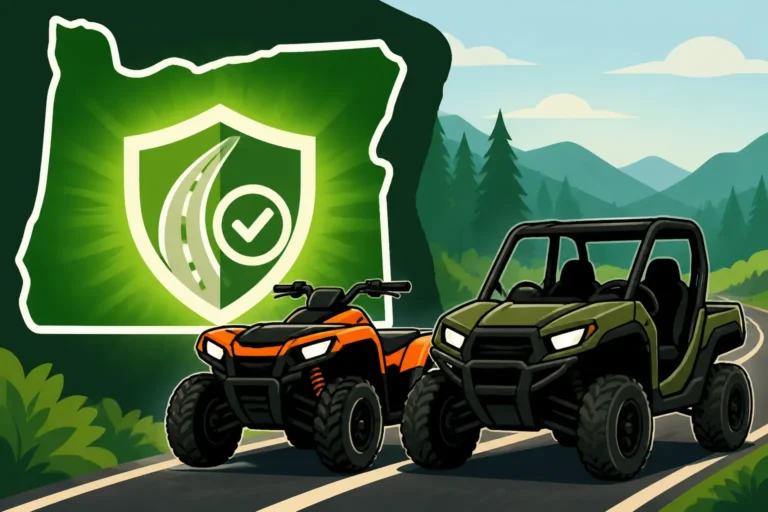
For the vast majority of ATVs and UTVs (Class I, III, and IV), Oregon does not grant street-legal status for general use on public highways, city streets, or fully maintained county roads. This means you typically cannot ride your quad down a paved road to the gas station or across town to a friend's house. Your machine must be trailered to the staging area or to roads that are specifically designated for OHV access.
This is a point of frequent frustration for riders, especially those accustomed to more lenient rules in other states or for those who simply want to connect short distances. The state's stance is rooted in safety regulations, given that most OHVs lack the full suite of safety features (like turn signals, specific lighting, and crash protection) required for safe operation alongside typical road traffic. Even a highly customized UTV with many street-legal modifications might still not qualify without specific registration and inspection, which is very difficult to obtain for most models.
Exceptions and Designations for Road Access
While general street legality is largely a no-go, Oregon does allow OHV use on specific types of roads:
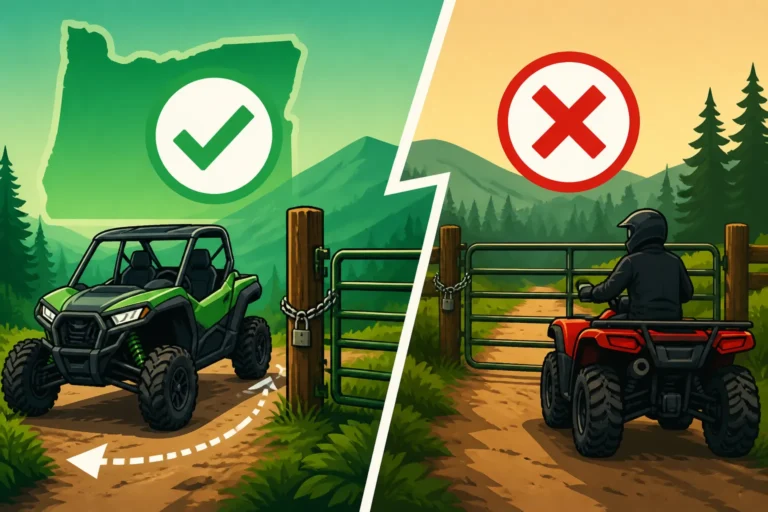
- Forest Service Roads and BLM Roads: Many of these unpaved roads within national forests and BLM lands are open to OHVs. These are the primary arteries that lead into and connect various parts of the Prospect Trail System. However, not all Forest Service or BLM roads are open to OHVs. Always look for signage, check current maps (often available at ranger stations or online), and adhere to any posted restrictions. Some roads might be seasonally closed, restricted to certain vehicle types, or have specific usage hours. These are the roads where you will most likely be riding your ATV or UTV to access different parts of Prospect. This falls under [Oregon Rules for Riding a Forest Road].
- County Gravel Roads: Some counties in Oregon have ordinances that open certain unpaved county roads to OHV use. These are typically rural, low-traffic gravel roads that connect agricultural areas or provide access to remote recreational sites. For the Prospect area, it’s less common to encounter specifically designated county roads than Forest Service roads, but it’s always worth checking with Jackson or Klamath County road departments if you plan on using any county-maintained routes. Riders should reference [Oregon Rules for Riding a County Gravel Road] for more information.
- Designated ATV Highway Access Routes: These are very specific, limited routes that allow OHVs to travel through small towns or connect to specific riding areas, often for short distances. The most famous examples are [Lakeside and Sumpter: Oregon's Only Two Routes]. It is important to note that the Prospect area does not have such designated highway access routes for general through-town travel. The roads around Prospect are about accessing the trails, not navigating a town center.
- Class II Machines: This is where things get a bit more complex. [Oregon's Class II Under ORS 801.193] defines a specific category of off-highway vehicles that can be registered and made street legal. These are typically custom-built vehicles like sand rails, dune buggies, or heavily modified jeeps that meet specific safety and equipment requirements (e.g., windshield, wipers, horn, turn signals, DOT tires, etc.). If you happen to have one of these rare Class II machines that is fully registered and insured as street legal, then the rules for its operation on public roads change significantly. However, standard production ATVs and UTVs (Class I and IV) generally do not fall into this category, even with aftermarket modifications. Mandatory insurance is also required for Class II machines.
| Road Type | General OHV Access in Oregon | Notes Relevant to Prospect |
|---|---|---|
| Paved State Highways | Generally No | Trailer OHV to staging |
| Paved City Streets | Generally No | Trailer OHV to staging |
| Maintained County Roads | Generally No | Check local ordinances, but unlikely for regular OHVs |
| Unmaintained/Gravel Forest Service Roads | Often Yes, check signage | Primary Access to Prospect Trails |
| Unmaintained/Gravel BLM Roads | Often Yes, check signage | Primary Access to Prospect Trails |
| Designated ATV Highway Access Routes | Only specific locations (e.g., Lakeside, Sumpter) | Not applicable to Prospect area |
Permits and Safety Cards: Your Road-Legal Essentials
No matter which type of road you're riding on to access Prospect, two things are non-negotiable in Oregon: your OHV must have a current [Oregon's ATV Operating Permit], and you (the rider) must possess an [Oregon ATV Safety Card Requirements]. These are not just good ideas; they are legal requirements.
- Oregon ATV Operating Permit: This permit is a decal you display on your machine. It signifies that you've paid the necessary fee, which contributes to trail maintenance and other OHV programs in the state. The [Oregon ATV Permit Cost] is the same for every class of machine and lasts for two years. Without this decal, even on an open Forest Service road, you could face a citation.
- Oregon ATV Safety Card: This card demonstrates that you've completed an approved OHV safety education course. While many experienced adult riders might feel they don't need it, it's mandatory for all riders, regardless of age or experience, for Class I and Class III ATVs. For Class IV (side-by-sides), only riders under 16 need one, but it's strongly recommended for everyone. You can often take these courses online for free. Law enforcement and rangers regularly check for both the permit and the safety card at staging areas and on trails, including access roads.
Remember, even if a road is open to OHVs, it doesn't mean all other traffic laws are suspended. You are still subject to speed limits, stop signs, yielding to other traffic, and other basic rules of the road. Carrying your safety card and permit details with you (perhaps in a waterproof bag) is always a smart move.
Practical Considerations for Road Access Around Prospect
Beyond the legalities, there are practical considerations that contribute to a safe and enjoyable experience when using roads to access the Prospect Trail System. Thinking ahead about these details can save you headaches and ensure your adventure goes smoothly.
Equipping Your Machine for Shared Roads
When you're riding any road, even a gravel Forest Service road, you're sharing it with other users, who might not be expecting an ATV or UTV. Proper equipment on your machine isn't just about legality; it's about safety.
- Visibility: Dust can be a significant issue on gravel roads, drastically reducing visibility for you and others. A bright whip flag (like those durable options from SuperATV) is mandatory in dune areas but is a good idea on dusty Forest Service roads too. Headlights and taillights should always be functional, and turning them on even during the day can increase your presence.
- Sound: Oregon has [Oregon Sound Limits for ATVs]. While aftermarket exhausts can be tempting for performance, ensure your machine meets these sound limits, especially when passing through residential areas or near campgrounds. Excessive noise can lead to complaints and further restrictions on OHV access.
- Spark Arrester: A U.S. Forest Service-approved [Oregon Spark Arrester Requirement] is mandatory on all OHVs operated on public lands in Oregon. This prevents sparks from igniting wildfires, which is a critical concern in forested areas, particularly around Prospect. Check your exhaust system to ensure it has one and that it's in good working order.
- Tires: While knobby off-road tires are great for trails, they can wear quickly and handle differently on hard-packed gravel or paved sections. Be aware of how your tires behave on varying surfaces and adjust your speed and riding style accordingly.
Mapping, Planning, and Checking for Closures
One of the biggest mistakes riders make is relying solely on general maps or outdated information. The Prospect area, like many parts of Oregon's wildlands, can experience dynamic conditions.
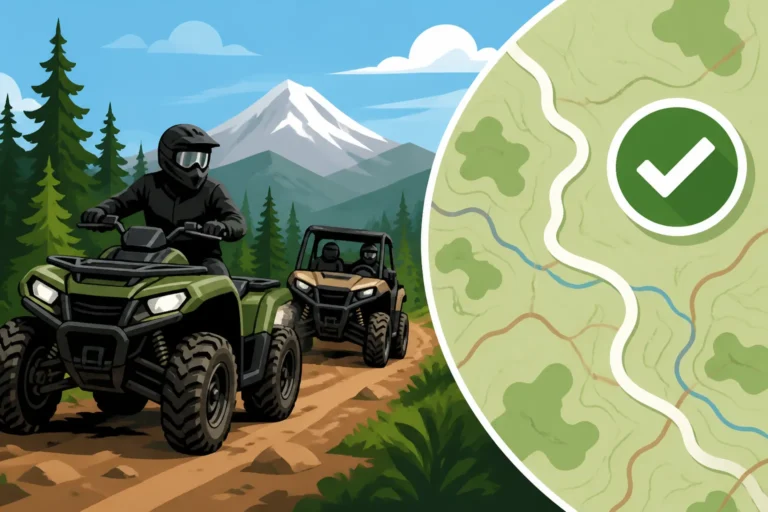
- Official Maps: Always seek out the latest official OHV maps for the Umpqua National Forest or BLM lands in the area. These maps will clearly indicate which roads and trails are open to OHVs. Often, these are available at local ranger stations or via the Forest Service or BLM websites. Don't just rely on consumer GPS apps for OHV-specific access.
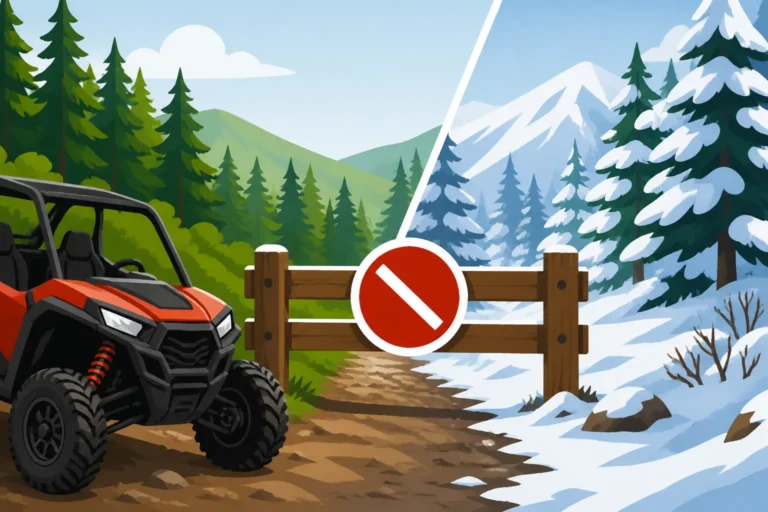
- Checking for Closures: Fire season, heavy rain, snow, logging operations, or wildlife management can all lead to temporary road and trail closures. Before heading out, check the websites of the Umpqua National Forest, BLM, and OPRD for current conditions and closures. [Oregon Rules for Riding a Closed Trail] apply even if you didn't see the sign.
- Waypoint Markers: As you ride the access roads, keep an eye out for waypoint markers or numbered signs. These are often used by the Forest Service to identify specific roads and junctions, which can be invaluable for navigation, especially if you lose cell signal (which is common in remote areas around Prospect).
Etiquette and Safety on Shared Access Roads
When sharing access roads with other vehicles, particularly logging trucks or passenger cars, common courtesy and safety are paramount.
- Yielding: Always yield to larger vehicles, especially logging trucks. These heavy vehicles have long stopping distances and limited maneuverability. Pull over to the side of the road and let them pass safely.
- Dust Control: When conditions are dry, slow down when approaching other vehicles or passing homes to minimize dust. Excessive dust can blind other drivers and is a major nuisance.
- Speed: Even if there isn't a posted speed limit for OHVs on a gravel road, use common sense. Excessive speed on rough, winding, or dusty roads is dangerous for everyone.
- Riding Position: Stay to the far right of the road, just as you would in a regular vehicle, and be predictable in your movements.
By being well-prepared, both legally and practically, you can ensure your ride into the Prospect Trail System is as enjoyable and safe as the trails themselves.
Distinguishing Prospect from Designated ATV Highway Access Routes
It's really important to understand that the roads leading into the Prospect Trail System are fundamentally different from the designated ATV highway access routes found in towns like Lakeside or Sumpter. Confusing the two can lead to significant problems and potential legal issues.
In towns like Lakeside and Sumpter, specific ordinances and state regulations allow OHVs (primarily Class I, II, and IV) to operate on clearly marked public streets and highways within the town limits. These are true "street legal" exceptions for a defined purpose: to allow riders to access the dunes or local amenities from their lodging, or to travel short distances through town as part of a recreational loop. These routes are usually well-signed, and there are very clear rules about speed, yielding, and often even specific hours of operation. You can learn more about these specific instances through resources like [Lakeside and Sumpter: Oregon's Only Two Routes].
The roads around Prospect, on the other hand, do not fall under this type of "designated highway access route" for through-town travel. While many Forest Service roads are open to OHVs for direct access to trails and staging areas, they are not intended for general transportation on the wider public road network. The emphasis is on access to the wilderness trails, not on making your machine street legal for running errands or commuting.
This means that while you might be able to ride your UTV down a gravel Forest Service road from your dispersed campsite to a trailhead within the Prospect area, you almost certainly cannot ride it on a paved state highway or even a fully maintained county road to get from a nearby town like Prospect, Oregon, to the national forest boundary. To do that, you'll need to trailer your machine. Attempting to ride your ATV or UTV on these non-designated roads can result in a citation for operating an unpermitted vehicle on a public roadway, which can carry significant fines. You could face [Oregon Fines for Riding an Unopened Road] or one not designated for OHV use.
The distinction is critical for your safety and to avoid legal trouble. Always remember that Oregon values its natural resources and public safety, and the regulations are put in place to ensure both. When in doubt, always err on the side of trailering your machine to the staging area. It might take a little extra effort, but it's far better than getting a ticket or, worse, being involved in an accident on a road where your OHV doesn't belong. Understanding and respecting these differences will help ensure that your adventures in the Prospect Trail System remain memorable for all the right reasons.
Disclaimer
This article is for general informational purposes only and does not constitute professional advice. Laws, prices and regulations vary by location and change over time. Consult a qualified professional for guidance on your specific situation.