Oregon Rules for Riding Around a Locked Gate
There's nothing quite like the frustration of heading out for a fantastic day of Oregon ATV or UTV riding, map in hand, only to be met by an unexpected locked gate. You know the feeling: your adrenaline is pumping, the rig is loaded, and then BAM – a barrier stands between you and the trails you were dreaming of. It's a common scenario, and it leaves many riders wondering, "Can I just go around that?" This guide is all about navigating those locked gates, understanding what they mean, and crucially, doing it all legally and responsibly to keep our beloved riding areas open for everyone.
The Core Principle: Respect Private and Public Land Boundaries
When you're out exploring Oregon's vast and diverse landscapes on your ATV or UTV, it's easy to assume that if you're not on a paved road, you're on public land. But that's a common misconception, and it's the root of much of the confusion (and frustration) when encountering a locked gate. Oregon's land ownership can be a complex patchwork, and understanding who owns what is the first, most critical step to responsible riding.
Understanding Land Ownership in Oregon
Imagine you're driving your side-by-side down a gravel road, enjoying the scenic beauty of the Willamette National Forest, heading towards a favorite staging area. Suddenly, the road takes a turn, and you find a sturdy, locked gate blocking your path. Your map shows the trail continuing, but there it is. This situation often arises because land ownership isn't always continuous blocks of "public" or "private." Instead, it can be a "checkerboard" pattern, especially in areas with a history of railroad grants or timber sales. One parcel might be managed by the U.S. Forest Service, the next by the Bureau of Land Management (BLM), the one after that by the Oregon Department of Forestry (managing state forests), and then suddenly, a large tract owned by a private timber company. Even smaller, seemingly insignificant parcels could be privately owned farm or ranch land. A locked gate almost invariably signifies a boundary, or at the very least, a specific, often temporary, restriction on access. It's a clear signal that someone, be it a public agency or a private landowner, has made a deliberate decision to control who (or what) passes that point.
The frustration is absolutely valid when you hit one of these gates. Maybe you rode this exact trail last year, and it was wide open. Or perhaps your paper map, even a good one, doesn't clearly delineate the ownership changes on a small, less-traveled road. It feels unfair, a personal affront to your weekend plans. But that gate is a message, and it’s one we need to heed. Ignoring it, even with the best intentions, can lead to serious repercussions, not just for you, but for the wider riding community.
The Legal Implications of Trespassing
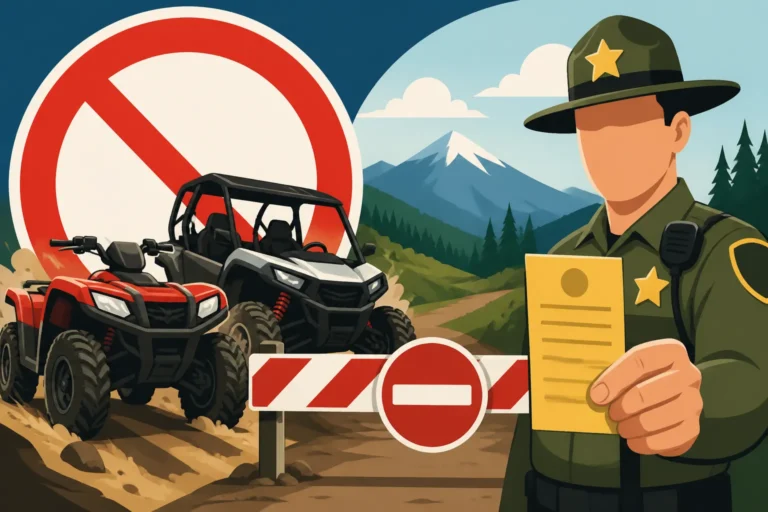
Let's be blunt: going around a locked gate, whether it's on public or private land, is almost always considered trespassing. It doesn't matter if you genuinely thought it was public land, or if you figured no one would ever know. The act of bypassing a barrier intended to restrict access is a violation. The consequences can range from hefty fines, much like a [Oregon Fines for Riding an Unopened Road], to the impoundment of your beloved machine, and even criminal charges if you damage property or ignore clear "No Trespassing" signs. Imagine having your carefully built machine, perhaps outfitted with durable accessories like a SuperATV winch or heavy-duty axles, confiscated because you decided to squeeze around a gate. That's a real possibility.
The frustration of encountering an unexpected closure is a feeling every rider can relate to. We plan our trips, we load up our gear, maybe we even invested in some great aftermarket parts, and then a gate throws a wrench in everything. It feels like public land should be our land. However, even on public lands, closures and gates are put in place for specific, important reasons. And on private land, regardless of how "open" it might appear, the landowner's rights are paramount. Understanding this distinction is key to staying out of trouble and being a responsible ambassador for our sport.
Types of Gates and What They Mean
Not all locked gates are created equal, and the reason behind their existence can vary wildly depending on who owns the land. Knowing the different types of gates and what they usually signify can help you understand the rules and, more importantly, avoid legal trouble.
Gates on Public Lands: Forest Service, BLM, State Forests
Public lands in Oregon, managed by agencies like the U.S. Forest Service, Bureau of Land Management (BLM), or the Oregon Department of Forestry, are fantastic resources for ATV and UTV riders. We have access to incredible [Forest Service Roads Open to Oregon ATVs] and a network of trails. However, even on these lands, you will encounter locked gates. These aren't there to spite you; they serve important management purposes.
Common reasons for gates on public lands include:
- Seasonal Closures: Many roads and trails are closed seasonally to protect wildlife (like elk during calving season), prevent road damage during wet winter months, or allow for snowpack accumulation. You might encounter a gate for [Roads Closed Seasonally by the Forest Service].
- Active Logging Operations: Timber harvesting is a vital activity on both federal and state forest lands. Gates are locked for safety reasons when heavy machinery is operating, preventing recreational riders from entering active work zones.
- Fire Danger: During high fire season, certain areas or roads may be gated off to reduce human-caused fires or to allow firefighters unimpeded access.
- Road Maintenance and Construction: Sometimes, roads need extensive repair or rebuilding, and closures are necessary to ensure the safety of both workers and the public.
- Administrative Reasons: Occasionally, a gate might be locked for specific administrative reasons, such as managing access to research plots or sensitive ecological areas.
When you encounter a gate on public land, there will almost always be signage explaining the closure, the dates, and sometimes even a contact number for more information. It's frustrating when you see a gate on a [Forest Service Road Number] you've ridden for years, now locked for "winter closure." It means that for that period, the route is off-limits. Bypassing these gates, even if you see no one around, is still illegal. It's a violation of agency regulations and can lead to fines and other penalties. Remember, these gates are there for a reason, often for your safety or the preservation of the resource, and respecting them helps ensure continued access in other areas.
Gates on Private Timber Company Lands
Oregon has vast tracts of private timberland, owned by companies like Weyerhaeuser, Stimson Lumber, and Hancock Forest Management. These lands often have roads that appear identical to public forest roads, and historically, many were open to public recreation. However, these are private lands, and the owners have the right to control access. You'll frequently encounter robust, sometimes sophisticated, gate systems on these properties.
The key takeaway here is that even if you've "always ridden here," or it looks completely abandoned, the land is privately owned. Timber companies might have their own permit systems, or they might close areas completely for logging, fire prevention, or to prevent illegal dumping or vandalism. The frustration is understandable: you see what looks like prime riding terrain, but a "No Trespassing" sign and a locked gate stop you cold. Rules and land ownership can change, so it's always best to assume a locked gate on private land means "keep out" unless you have explicit, written permission. Attempting to bypass these gates is a direct act of trespassing and can lead to severe penalties, including potential impoundment of your ATV or UTV. These landowners are often far less forgiving than public agencies, as their primary concern is protecting their investment and resources.
Gates on Private Property (Farm, Ranch, Residential)
This category is the most straightforward, yet sometimes still causes confusion. If a gate is clearly leading onto what appears to be a farm, a ranch, a private residence, or land clearly marked "Private Property," there should be no question: do not enter without explicit permission from the landowner. These gates might be less imposing, sometimes just a simple wire gate or a wooden bar, but their purpose is the same as a heavy-duty steel gate on a timber road.
Imagine you're exploring some lesser-known gravel roads, perhaps looking for a new route to a distant trailhead. You come across a small, unassuming gate that looks like it just leads to more trails. However, there's a small "Private Drive" sign, barely visible. Ignoring that gate, even if it looks easily passable by your nimble quad, is a direct invasion of someone's private space. [Oregon Rules for Trespassing Riders] are clear: this is illegal. Not only is it a legal offense, but it can also lead to hostile encounters with landowners who are simply trying to protect their property and privacy. Respecting these boundaries is non-negotiable for responsible riders.
Navigating Gated Access Legally and Responsibly
Encountering a locked gate can certainly throw a wrench in your riding plans, but it doesn't have to ruin your day if you approach the situation responsibly. The key is to be prepared and know what to do when you're faced with an unexpected barrier.
Researching Before You Ride
The absolute best defense against the frustration of a locked gate is proactive research. Before you even load up your rig, take some time to understand the land you plan to ride. This is especially true if you’re exploring a new area or haven't been to a familiar spot in a while.
Start with current maps:
- Motor Vehicle Use Maps (MVUMs): For Forest Service land, these are invaluable. They explicitly show which roads and trails are open to specific vehicle types (including ATVs and UTVs) and indicate seasonal closures. You can often download these for free from Forest Service websites or pick up physical copies at ranger stations.
- BLM Maps: The Bureau of Land Management also provides maps detailing access and restrictions on their lands.
- State Forest Maps: The Oregon Department of Forestry manages state forests and typically provides maps and information on their websites regarding access and closures.
- Private Timber Company Websites: Many large timber companies, like Weyerhaeuser or Stimson, have sections on their websites dedicated to public access, often detailing areas open to permits or specific recreational uses. Always check these, as rules can change frequently.
Beyond maps, check agency websites for current alerts, news releases, or permit requirements. The [Oregon Parks and Recreation Department's Role] also extends to providing information on some OHV areas. A quick phone call to a local ranger district or land manager can also clarify any uncertainties about a specific road or area you plan to visit. Using a good GPS unit or a smartphone app with updated land ownership layers, like those often available for outdoor recreation, can be incredibly helpful for real-time navigation and boundary awareness. While these aren't always 100% current, they're far better than guessing. Just make sure your [Oregon Trail Maps Worth Carrying] are also up-to-date.
What to Do When You Encounter a Locked Gate
So, you've done your research, but you still hit an unexpected locked gate. What's the protocol?
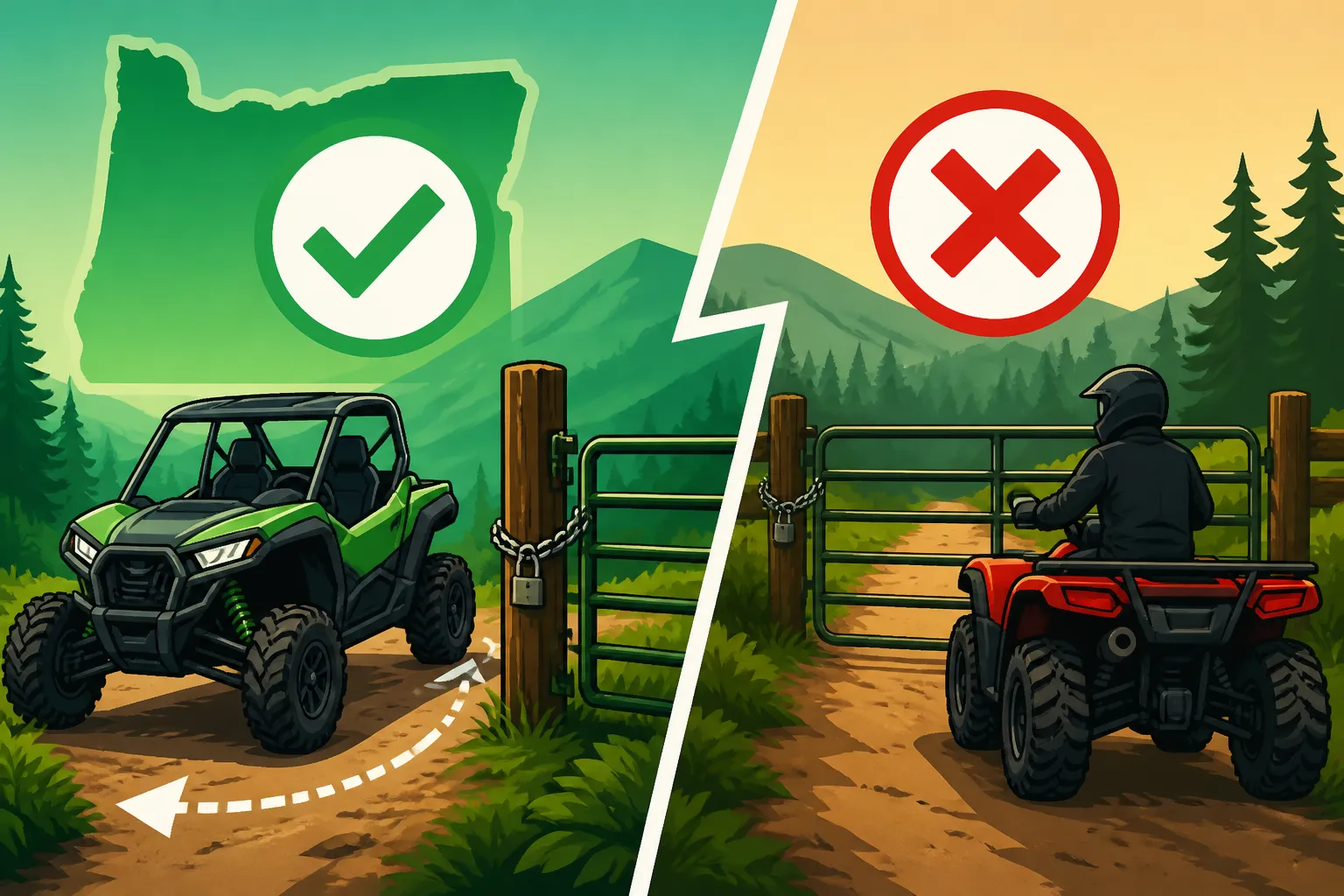
- Turn Around: This is the simplest and most important action. Do not attempt to bypass, break, or damage the gate. Period. Your adventure can continue by finding an alternative route or exploring a different area.
- Do Not Bypass: This means no riding around the ends, no climbing over, no cutting fences, and absolutely no attempting to force the gate open. These actions are illegal and contribute to landowners tightening restrictions even further.
- Look for Signage: Take a moment to examine the gate and surrounding area for signs. There might be a small notice explaining the closure, a phone number to call for information, or simply "No Trespassing" signs. Sometimes [Maps That Disagree With Signs], and the sign on the ground is the authority.
- Report Un-Signed or Confusing Gates: If you believe a gate is improperly placed, lacks necessary signage on public land, or creates an unnecessary obstruction, you can report it to the relevant land management agency. Provide as much detail as possible, including GPS coordinates if you have them.
It's tempting to think, "My side-by-side with its lifted suspension and heavy-duty SuperATV rock sliders can easily go around that!" But remember, those modifications are for legitimate challenges on designated trails, not for illegally circumventing access barriers. Your machine's capability doesn't override property rights or public land regulations. [Oregon Rules for Riding a Closed Trail] apply even if you think you can get around it.
The Perils of Unsanctioned "Bypasses"
The thrill of finding a "secret" way around a gate might seem appealing in the moment, but the long-term consequences are far-reaching and detrimental to our sport.
- Environmental Damage: Bypassing a gate often means riding off the established trail or road, creating new, illegal routes. This can lead to soil erosion, damage to fragile vegetation, disturbance of wildlife habitats, and the spread of invasive species. These "social trails" degrade the environment and are expensive to remediate.
- Safety Risks: Gated areas are often closed for safety reasons—active logging, unstable ground, or other hazards. Bypassing a gate puts you directly into unknown and potentially dangerous situations. You could get stuck, encounter heavy equipment, or be far from help if an accident occurs.
- Legal Consequences: As mentioned, trespassing, property damage, and violating land use regulations carry fines, impoundment, and sometimes criminal charges. The cost of a day's ride can quickly escalate into thousands of dollars in fines, legal fees, and recovery costs for your machine. A citation for [Oregon Rules for Riding Off a Designated Route] is something no one wants.
- Ethical Considerations and Loss of Access: Every time a rider illegally bypasses a gate, it erodes the trust between the riding community, landowners, and land managers. Repeated incidents almost inevitably lead to more stringent closures, stricter enforcement, and potentially permanent loss of access for everyone. This is a huge blow to the sport. Being a responsible rider means respecting boundaries, even when they're inconvenient.
Consequences of Riding Around a Locked Gate
It’s easy to dismiss a locked gate as a minor inconvenience, but the truth is, riding around one can lead to a cascade of negative consequences, both for you personally and for the entire off-road community. Understanding these repercussions might make that momentary urge to find a "shortcut" seem far less appealing.
Fines and Legal Penalties
The most immediate and tangible consequence of bypassing a locked gate is often a fine, but it can quickly escalate from there. Depending on who owns the land and the specific laws violated, you could face:
- Trespassing Charges: This is the most common offense. Whether it's on private land (like a timber company's property) or public land (where a gate signifies an official closure), knowingly entering an area where access is restricted is a violation. Fines for trespassing can vary significantly but are rarely cheap.
- Property Damage Charges: If, in the act of bypassing a gate, you damage the gate itself, a fence, signage, or the land (e.g., tearing up soft ground to create a new trail), you could face additional charges for property destruction. This often comes with a requirement to pay for repairs or remediation, which can be thousands of dollars.
- Machine Impoundment: This is a rider's worst nightmare. Law enforcement or land managers have the authority to impound your ATV or UTV if you are caught trespassing or committing other serious violations. Retrieving your machine can involve significant impound fees, storage costs, and administrative hurdles, on top of any fines or legal penalties. Imagine your pride and joy, perhaps decked out with a custom SuperATV windshield and light bar, sitting in an impound lot for days or weeks.
- Criminal Charges: In more severe cases, especially involving repeated offenses, extensive property damage, or confrontation with landowners, charges can escalate from civil infractions to criminal offenses, potentially leading to a criminal record.
The combined cost of fines, potential legal fees, and the hassle and expense of retrieving an impounded machine can quickly make a single "shortcut" an incredibly expensive mistake. It far outweighs the brief satisfaction of getting around a gate. Remember, the rangers at popular spots like [Decal Checks at Spinreel] or [Decal Checks at Browns Camp] aren't just checking permits; they're also ensuring riders are following all rules. [Oregon Fines for Riding an Unopened Road] are a real thing, and they hurt the wallet.
Loss of Access for Everyone
Perhaps the most significant long-term consequence of riders ignoring locked gates is the erosion of access for the entire off-road community. When private landowners or public land managers continually experience issues with illegal access, property damage, or environmental harm caused by riders bypassing gates, their response is almost universally to further restrict access.
Consider these scenarios:
- Private Landowners: A timber company might have a policy of allowing limited, permitted access to certain areas. But if gates are repeatedly cut or riders continually bypass them, that company is likely to revoke all public access, permanently locking down vast tracts of land that were once available. This is how the riding community loses trails and riding opportunities.
- Public Land Managers: Agencies like the Forest Service or BLM strive to balance multiple uses, including recreation. However, if specific areas that are gated for seasonal protection or active logging are continually abused, managers may decide to make those closures permanent, or implement more restrictive rules that affect all users. The hassle of dealing with illegal access takes away resources that could be used to maintain and improve legal trails. [Oregon Rules for Riding a Timber Company Road] are often born from a desire to maintain access while protecting their assets.
Every time a gate is ignored, it sends a message that riders cannot be trusted to respect boundaries. This leads to a vicious cycle: more illegal activity leads to more closures, which in turn fuels more frustration and potentially more illegal activity. It's crucial for every rider to be an ambassador for the sport, demonstrating responsible behavior, respecting all gates and closures, and understanding [Who Owns the Road You Are Riding]. By doing so, we help preserve the limited access we currently enjoy and potentially open doors for future riding opportunities. That powerful, robust UTV with its aftermarket roll cage from SuperATV is designed for navigating challenging, legal terrain, not for breaking trail where you shouldn't be.
| Gate Type | Typical Location | Common Reasons for Closure | Recommended Action |
|---|---|---|---|
| Public Land Gate | Forest Service, BLM, State Forests | Seasonal, logging, fire, maintenance | Turn around, look for signage, respect closure. |
| Private Timber Gate | Commercial timberland (e.g., Weyerhaeuser) | Logging, fire, security, private access | Do not enter without explicit, current permission. |
| Private Property Gate | Farms, ranches, residential, private roads | Owner's privacy, property protection | Absolutely do not enter without owner's permission. |
Encountering a locked gate is undeniably a bummer when you're geared up for a great ride. But it's also a clear boundary that demands our respect. By understanding the reasons behind these closures, doing a little research before you head out, and always choosing to turn around rather than bypass, you're not just protecting yourself from legal trouble; you're actively contributing to the preservation of riding access for every ATV and UTV enthusiast in Oregon. Ride smart, ride safe, and let's keep our trails and backroads open for generations to come.
Disclaimer
This article is for general informational purposes only and does not constitute professional advice. Laws, prices and regulations vary by location and change over time. Consult a qualified professional for guidance on your specific situation.