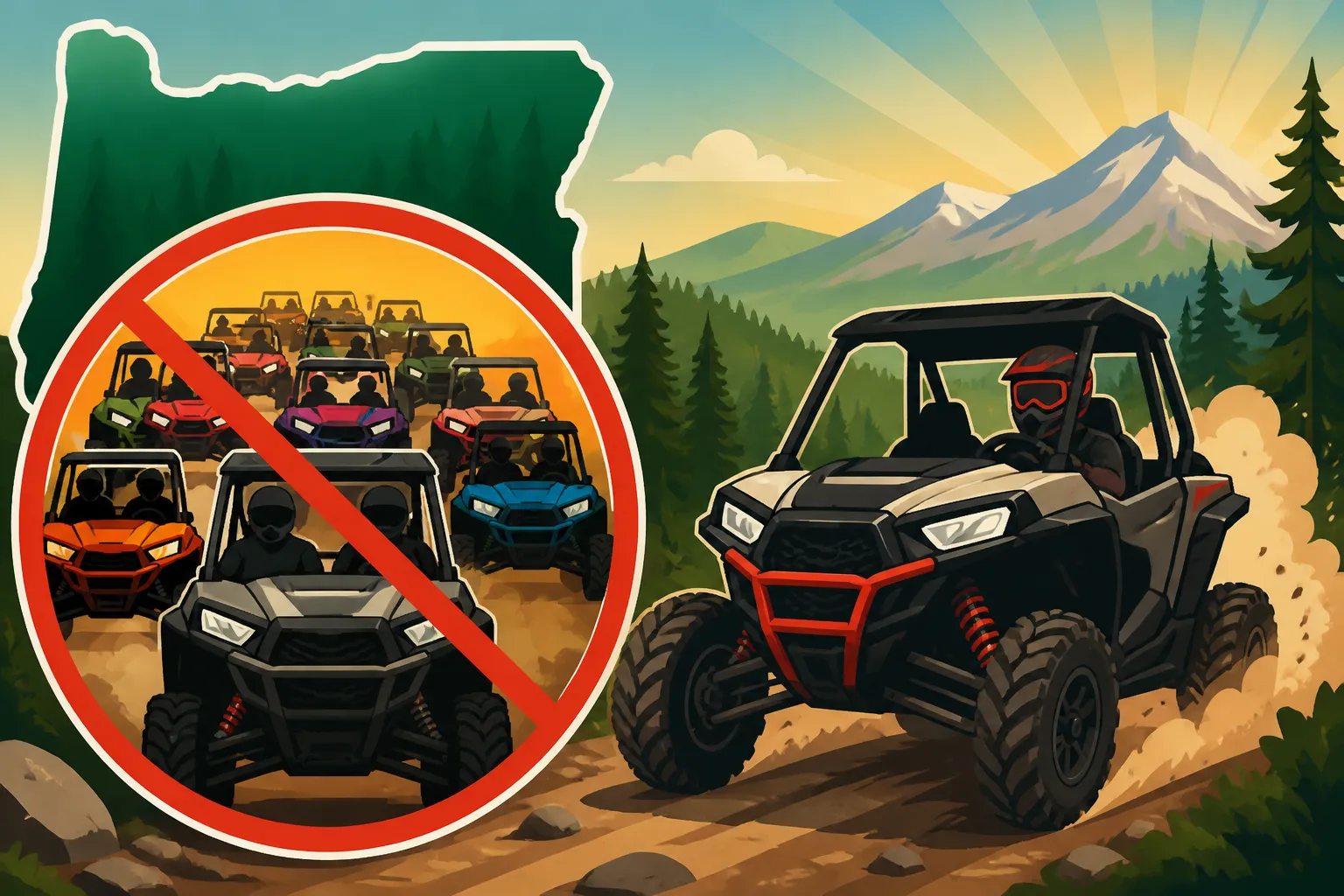
Oregon Riding Areas That Fill Up on Holidays
Holiday weekends can turn a quiet Oregon trailhead into a long line of trucks, full staging lots, and crowded trails. If you have ever hauled a quad or side-by-side for hours only to struggle to park, you know how frustrating that feels. This guide explains which Oregon riding areas tend to draw holiday crowds and how to plan a less stressful ride.
Oregon riding areas that tend to get crowded on holidays
Holiday crowds vary with weather, closures, and local events, so no area is guaranteed to be packed every time. Still, places with well-known trail networks, dune access, and convenient camping often attract more riders on long weekends. Arriving with a backup plan matters as much as choosing your first destination.
Oregon Dunes staging areas
The Oregon Dunes National Recreation Area is a major draw for riders heading to the coast. Popular staging points around Florence, Winchester Bay, and North Bend can feel especially busy on summer holidays, when OHV riding overlaps with beach trips and campground stays. The North Bend and Winchester Bay areas include well-known staging locations such as Hauser and Spinreel; farther north, riders use staging areas around Florence.
Crowding is not limited to the dunes themselves. A busy day can affect parking, unloading, access roads, fuel stops, and nearby campgrounds. If your group needs to air down tires, unload several machines, or get young riders settled, allow extra time rather than assuming you can roll straight from the highway into a quick ride.
Before setting out, decide which staging area you will use and identify another option in case the first lot is full or access has changed. A north-to-south overview can help you compare locations before committing to a long coastal drive: [Oregon Dune Staging Areas From North to South]. If Hauser is on your itinerary, it is also worth planning around its busy-weekend patterns: [Hauser Staging on a Busy Weekend].
Browns Camp and the Tillamook State Forest
Browns Camp, in the Tillamook State Forest west of Portland, is a familiar destination for many riders in the Willamette Valley. Its proximity to the Portland area makes it a practical choice for a day trip, which can also mean more people show up on a holiday weekend. Expect shared roads and trails, active staging areas, and more pressure on parking than on a quiet weekday.
Other parts of the Tillamook State Forest may offer a different riding experience, but don’t assume that a nearby alternative will be empty. Riders may spread out across different trailheads, and weather or maintenance can affect which routes are open. A little research before leaving home can prevent the unhappy discovery that your preferred trail or access road is closed.
For a more specific look at what a busy day can feel like, see [Browns Camp on a Saturday]. If you are comparing destinations within reach of the metro area, [Oregon OHV Areas Near Portland] can help you think beyond a single popular staging spot.
Sand Lake and other coastal destinations
Sand Lake Recreation Area attracts both OHV riders and visitors who come for the coast, camping, or day use. On holiday weekends, that mix can make the surrounding roads and facilities busy even if you are focused only on riding. Plan for slower movement near entrances and give yourself enough time to unload and organize before heading out.
The coast can also change the feel of a trip quickly. Fog, rain, soft sand, and shifting conditions may affect visibility and how long it takes to reach your intended riding area. If your group is new to dune riding, arriving during the busiest part of the day can make an already unfamiliar environment feel more hectic. Consider starting early, reviewing local rules, and agreeing on a simple meeting point in case riders get separated.
Sand Lake is not the only coastal option, but choosing a less familiar destination without checking access details can create its own problems. Verify that the riding area is open, confirm where you can park, and check whether the route you have in mind is suitable for your machine and experience level.
Millican Valley and central Oregon riding areas
Millican Valley east of Bend offers a very different setting from the coast, with high-desert terrain and multiple staging areas. Holiday traffic can build there too, particularly when riding conditions are comfortable and other nearby recreation is drawing visitors. Because the area is spread out, it may be possible to find a quieter starting point, but that depends on access, closures, and the day’s conditions.
Do not treat distance between staging areas as a guarantee of solitude. Riders can converge on the same open routes, and a remote setting makes preparation more important. Carry water, know where you are going, and make sure your group can navigate back to its vehicle if cell service is unreliable. A planning overview of the area’s staging options is available in [Millican Valley's Nine Staging Areas].
What makes holiday riding areas feel crowded
Crowding is more than a full parking lot. A busy riding area can mean longer waits to unload, slower travel on shared routes, limited space to turn around, and more people navigating unfamiliar terrain. Understanding where pressure builds helps you choose a realistic arrival time and decide whether the trip still fits your group.
Arrival time and parking pressure
Many riders aim to reach a popular staging area in the late morning, especially when they are driving from a nearby city or checking into a campground first. That can concentrate arrivals into a short window. On a holiday, a late start may leave you circling for a place to park, unloading in a cramped spot, or changing plans after a long drive.
For a smoother start, pack the trailer the night before and agree on who is responsible for each task. One person can guide the tow vehicle while another checks the parking setup; riders can put on helmets and gloves after the machine is unloaded rather than blocking the access lane. Keep the staging area clear and follow posted directions, even when the lot feels chaotic.
A useful approach is to decide in advance what you will do if your preferred lot is full. That might mean trying a second designated staging area, switching to a different riding destination, or postponing the ride rather than parking somewhere unauthorized. Keep [Oregon Trail Closures to Check First] on your planning list so an alternate route is not a closed one.
Campgrounds and day-use traffic
A holiday ride may involve more than the trailhead. Campgrounds, fuel stations, dump points, grocery stores, and coastal highways can all become busy at the same time. If your plan depends on arriving at a campground and then riding immediately, confirm the reservation and access details before leaving. A full campground can complicate the day even when the riding area itself remains open.
For trips that include overnight stays, look into [Oregon OHV Campground Reservations] well before the holiday. Camping close to a riding area can reduce morning driving, but it does not necessarily mean you can ride directly from your campsite or park a trailer wherever there is room. Follow campground rules and use designated access routes.
Trail congestion and mixed experience levels
On a busy weekend, you may encounter new riders, children, experienced riders, utility vehicles, and machines moving at different speeds. Dust can reduce visibility, and a blind corner can leave little room to react. Be patient when catching up to a slower group, leave space between machines, and avoid cutting across marked routes to get around traffic.
Families should agree on a regrouping point before riding, especially if a group includes beginners or young riders. Keep the pace comfortable for the least experienced person, not the fastest machine. If the trail feels crowded or visibility is poor, slowing down or turning back is often the sensible choice.
How to plan a holiday ride without adding stress
A good plan does not require you to predict exactly how busy a site will be. It means deciding what you will check, what you will carry, and what you will do if conditions do not match your expectations. That preparation is particularly helpful when you are towing a trailer or traveling with several riders.
Check access, closures, and local requirements
Before departure, check the managing agency’s information for the specific riding area. Look for closures, seasonal restrictions, fire-related limits, construction, and changes to access or parking. A trail shown on an old map may not be open on the day you arrive, and a route that is open to one vehicle type may not suit every machine.
Use a current map alongside official notices, rather than relying on memory or a screenshot from a previous trip. Mapping tools such as onX Offroad can help you review routes and orient yourself before arriving, but confirm access and closures with the relevant land manager. Save the information you need ahead of time if you expect weak cell service.
Also check the requirements that apply to your machine and riders. Permit, safety-card, helmet, and equipment rules can depend on the vehicle class, the rider’s age, and where you plan to ride. Handle those details before the holiday morning, when a missing document or an unexpected stop can derail the whole outing.
Build a backup plan and set a turnaround time
Choose a primary riding area and at least one backup before you leave. The backup should be a genuinely workable option, not simply another name on a map. Check its access, permitted vehicle types, parking, and any separate day-use requirements. If it is too far away or has the same likely bottleneck, it may not help when the first destination is full.
Decide how long you are willing to wait for parking or access. For example, a family might agree to try the preferred staging area once, then move to the backup if there is no safe, legal space. A group with a long tow may set a different limit, but making the decision in advance helps avoid an argument beside a crowded entrance.
Keep navigation simple. Before the trip, onX Offroad or another mapping option can help your group understand the general layout and mark a meeting point. Do not assume every rider will have a signal, battery power, or the same map details, so share the plan verbally and carry a suitable backup.
Pack for delays and keep the staging area safe
A crowded staging area can turn small oversights into big hassles. Bring drinking water, food, basic tools, recovery equipment appropriate for your machine, and supplies for minor discomforts. Secure loose gear before you tow, and leave enough room for other vehicles to pass while you unload.
When you reach the lot, follow signs and staff instructions. Do not block access lanes, park in a way that prevents another trailer from leaving, or unload on a route used by moving vehicles. If the space is too tight to operate safely, wait for a better opening or use your backup plan.
Review [Riding Etiquette on a Busy Staging Day] with your group before the engines start. On a holiday, being considerate in the lot and on the trail is not just good manners; it helps keep a crowded day manageable for everyone.
| Planning question | Why it matters on a holiday | Practical step |
|---|---|---|
| Is the riding area open? | Seasonal or temporary closures can change access | Check the managing agency’s notices before departure |
| Is there a second staging option? | The preferred lot may be full or difficult to enter | Choose and verify a backup location in advance |
| How will the group regroup? | Riders may move at different speeds or become separated | Pick a clear meeting point and share it with everyone |
| Are parking and day-use requirements covered? | A riding permit may not cover every site fee or parking rule | Check the requirements for the specific location |
| Can the group navigate without cell service? | Remote areas may have limited reception | Save maps, charge devices, and carry a backup plan |
| Is the ride suitable for everyone? | Crowded routes can be stressful for beginners and young riders | Match the route and pace to the least experienced rider |
Choosing a destination that fits your holiday
A popular area may still be the right choice if the group values its terrain, facilities, or familiarity. The key is to be honest about what kind of day you want. If your priority is a relaxed ride with room to learn, a highly publicized coastal staging area on a major summer weekend may not be the easiest first outing.
Match the location to your group
Think about tow time, riding experience, machine type, and how much structure your group needs. A family with young riders may prefer a straightforward plan with a known meeting point and a shorter route. A group of experienced riders may be comfortable navigating a broader area, but should still agree on boundaries, turnaround times, and communication.
Consider the full trip, not just the trail. A destination that looks appealing on a map may involve a long drive, limited services, or a staging setup that is difficult with a large trailer. If your group is staying overnight, make sure the campsite and riding access work together rather than assuming one automatically includes the other.
Choose a less pressured time when possible
If your schedule allows, riding outside the peak holiday window can make parking, lodging, and trail interactions easier. The day before or after a holiday may be quieter at some locations, though that is never guaranteed. Weather, local events, and seasonal openings can shift demand, so keep checking conditions instead of treating a calendar pattern as a promise.
A weekday trip can also be a good way to introduce a new rider to an area. With fewer machines moving through the staging lot, there may be more time to review controls, safety procedures, and the route plan without feeling rushed. For a broad comparison of destinations, [Oregon Riding Areas That Fill Up on Holidays] is a useful topic to consider alongside the specific area you are planning to visit.
Make the day successful even if you change plans
Sometimes the best holiday decision is to ride somewhere else, shorten the outing, or turn around. That can feel disappointing after loading the trailer and driving to the coast or forest, but it is better than forcing a ride when parking is unsafe, access is closed, or the group is too tired to continue.
Keep your expectations flexible. If your preferred route is congested, choose a permitted alternative only after confirming it is open and suitable. If no safe option is available, enjoy the non-riding part of the trip or save the machines for another day. A good outing is not measured by how many miles you cover; it is measured by whether everyone gets home safely and still wants to go riding again.
Disclaimer
This article is for general informational purposes only and does not constitute professional advice. Laws, prices and regulations vary by location and change over time. Consult a qualified professional for guidance on your specific situation.