A Northwest Forest Pass Instead of the Day Fee
A coastal dunes trip can start with an annoying question: will the Northwest Forest Pass on your dashboard cover the day-use fee at the staging area, or will you need to pay again? The answer depends on who manages that specific site and what its fee signs say. This guide explains how to check, what the pass may cover, and what it never replaces.
When a Northwest Forest Pass can replace the day-use fee
The short answer depends on the site
A valid Northwest Forest Pass can generally be used instead of a day-use fee at participating U.S. Forest Service recreation sites. That may include eligible fee areas within the Oregon Dunes National Recreation Area, which is managed by the Forest Service. But don’t assume that every coastal parking area, campground, or staging point accepts the same pass.
The important detail is the managing agency and the fee notice at the entrance. If a site’s sign lists the Northwest Forest Pass as an accepted pass, display it as instructed and you generally won’t need to pay the separate day-use fee for that visit. If the sign lists only a different payment method or says the pass is not accepted, follow the sign.
This is why it helps to identify your exact destination before you leave. “The dunes” could mean several access points spread along the coast, and nearby places may have different operators, fee rules, or facilities. For a broader overview of the site fee, see [The $5 Day Use Fee on Oregon Dunes]. For help matching a pass to coastal locations, [Which Annual Pass Covers Oregon's Coastal Dune Sites] is also relevant.
Check the entrance sign, not just the map
A map can help you find a staging area, but it may not tell you whether the Northwest Forest Pass is accepted there. Check the Forest Service information for the specific recreation site and look for posted signs when you arrive. The entrance or fee-station notice is the practical guide to what you owe at that location.
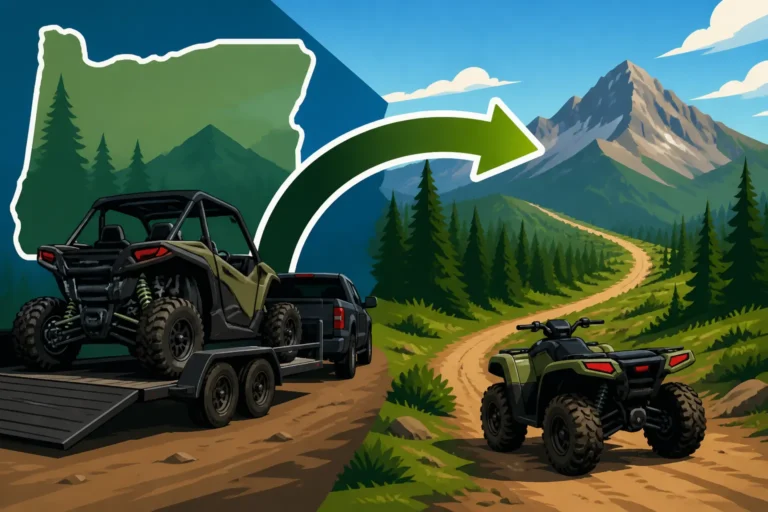
This matters when a route includes more than one stop. Imagine you park at a Forest Service fee site in the morning, then drive to a different beach access or private campground later. Your pass may cover the first location but not the second. A valid pass is not a blanket ticket for every recreation area on the Oregon coast.
If you use onX Offroad to plan your route, treat it as a navigation aid rather than proof that a pass applies. Check the site’s managing agency and fee instructions separately. That small bit of planning can prevent an awkward surprise at a kiosk or a second fee stop.
What the pass covers and what it does not
A day-use fee is not an ATV operating permit
A Northwest Forest Pass and an Oregon ATV operating permit serve different purposes. A Forest Service pass addresses recreation-site fees where it is accepted. An ATV permit is tied to the off-highway vehicle and Oregon’s riding requirements. Having one does not replace the other.
For example, a rider could have a properly permitted quad but still need to pay a day-use fee to park at a particular fee site. Conversely, a driver displaying an accepted Northwest Forest Pass may have the parking fee covered, but still need to meet the ATV permit and other riding rules before operating on trails or dunes. Review [Oregon's ATV Operating Permit] and [Oregon ATV Permits Explained] if you’re sorting out the machine-related requirements.
It’s useful to think of the trip as having separate checkboxes:
| Requirement | What it applies to | What to check |
|---|---|---|
| Northwest Forest Pass | Day-use access at participating Forest Service sites | Whether the specific site accepts the pass and how it must be displayed |
| ATV operating permit | The off-highway vehicle and its operation | Whether the machine has the required Oregon permit or qualifies for an applicable exemption |
| Safety card or training requirement | The rider, depending on machine and circumstances | Oregon’s requirements for the rider and machine class |
| Campground or lodging fee | A campsite or overnight stay | The campground’s own payment and reservation rules |
| Other site-specific fee | A separate facility or managed area | The posted instructions for that location |
That separation can save you from assuming that a pass covers more than it does. A day-use pass does not automatically authorize riding, and an ATV permit does not automatically pay for parking.
Parking, camping, and other charges may be separate
A day-use pass usually relates to access at a specific recreation site, not every expense connected with a trip. Camping, overnight parking, special facilities, or access managed by another agency may have separate charges or conditions. Always check the rules for the exact place where you plan to leave your vehicle or trailer.
This is especially easy to miss when a campground sits close to a riding area. You might park at a fee site for the day, then stay overnight at a campground with its own reservation and payment rules. The Forest Service pass should not be treated as a substitute for a campsite reservation or campground fee unless the campground explicitly says so.
The same caution applies to a multi-stop itinerary. If you plan to ride out of Spinreel, Hauser, or another access point, confirm the rules for that precise location before you head out. [Oregon Dunes Staging Areas From North to South] can help you compare access points, while [Why the Permit Does Not Cover Parking] explains why the vehicle-related fee and the riding permit are separate.
How to use the pass on an Oregon dunes trip
Confirm the destination and fee instructions before leaving
Start with the name of the actual recreation site, not just a broad destination such as Florence or the Oregon Dunes. Look up the site through its managing agency, then check whether the Northwest Forest Pass is accepted there. If the information is unclear, use the site’s posted contact details or plan to follow the instructions at the fee station.
This step is particularly helpful if your group is meeting at one location and launching from another. A friend may say, “We have a forest pass, so we’re covered,” based on a previous trip. That could be true for the access point they used last time and wrong for the one you’re visiting today.
You can use onX Offroad to map your route and keep track of access roads, but pair it with official site information for fees and closures. Save the site details before you lose cell service. An offline map can help you navigate, while the agency’s instructions tell you how to pay and where the pass is valid.
Display the pass as directed
Follow the pass’s own display instructions and any additional directions on the entrance sign. Some passes must be visibly displayed in the vehicle, and the exact placement or documentation can depend on the pass type. Don’t tuck it somewhere that makes it impossible to see if the instructions require visible display.
If you’re towing a trailer, pay attention to which vehicle the fee applies to and where the pass must be shown. A pass displayed in the tow vehicle may not satisfy a site’s instructions if the fee notice tells visitors to display it in a different way. Avoid guessing; read the posted directions before leaving the vehicle.
Keep the pass and any payment confirmation accessible, especially if your group is splitting up or switching vehicles. A small dry pouch or glove-box folder can help protect paperwork from sand and coastal moisture. [Documents in a Dry Bag on the Coast] offers practical ideas for keeping ride documents readable in wet, sandy conditions.
Have a backup plan if the pass is not accepted
If the sign does not list the Northwest Forest Pass, use the payment option it does list. Don’t assume that a pass from one agency will be honored by another, and don’t rely on a pass merely because the location is nearby or appears on the same map. The managing agency and posted terms control.
It’s sensible to bring a payment method that works at the site, along with enough time to deal with a fee station before unloading. On a busy weekend, a quick stop can become a bottleneck if everyone in the group is checking which pass to use at the last minute. Decide beforehand who will handle the fee and where the pass or receipt will be displayed.
If you’re comparing passes for several outings, consider where you ride most often and which agencies manage those locations. [Using an Interagency Pass on the Oregon Coast] may help when your itinerary includes multiple kinds of public lands, but it still doesn’t mean every coastal site accepts every pass.
Common mistakes to avoid
Assuming a pass works everywhere on the coast
The most common mistake is treating “Oregon coast” as one fee area. It isn’t. A Forest Service recreation site, a state-managed location, a county access point, and a private campground can all have different fee arrangements. A pass accepted at one does not automatically cover the others.
The second mistake is assuming that a pass applies to every vehicle in a group. Read the pass terms and the site instructions to understand what it covers, which vehicle it applies to, and whether it must be displayed. If two vehicles arrive separately, don’t assume that one pass covers both.
A third mistake is relying on an old memory. Fee signs, access arrangements, and closures can change. Before a trip, check the destination’s official information; at the site, follow the current posted notice. [Paying the Day Use Fee at a Staging Area] can help you think through the payment step when you arrive.
Confusing a pass with permission to ride
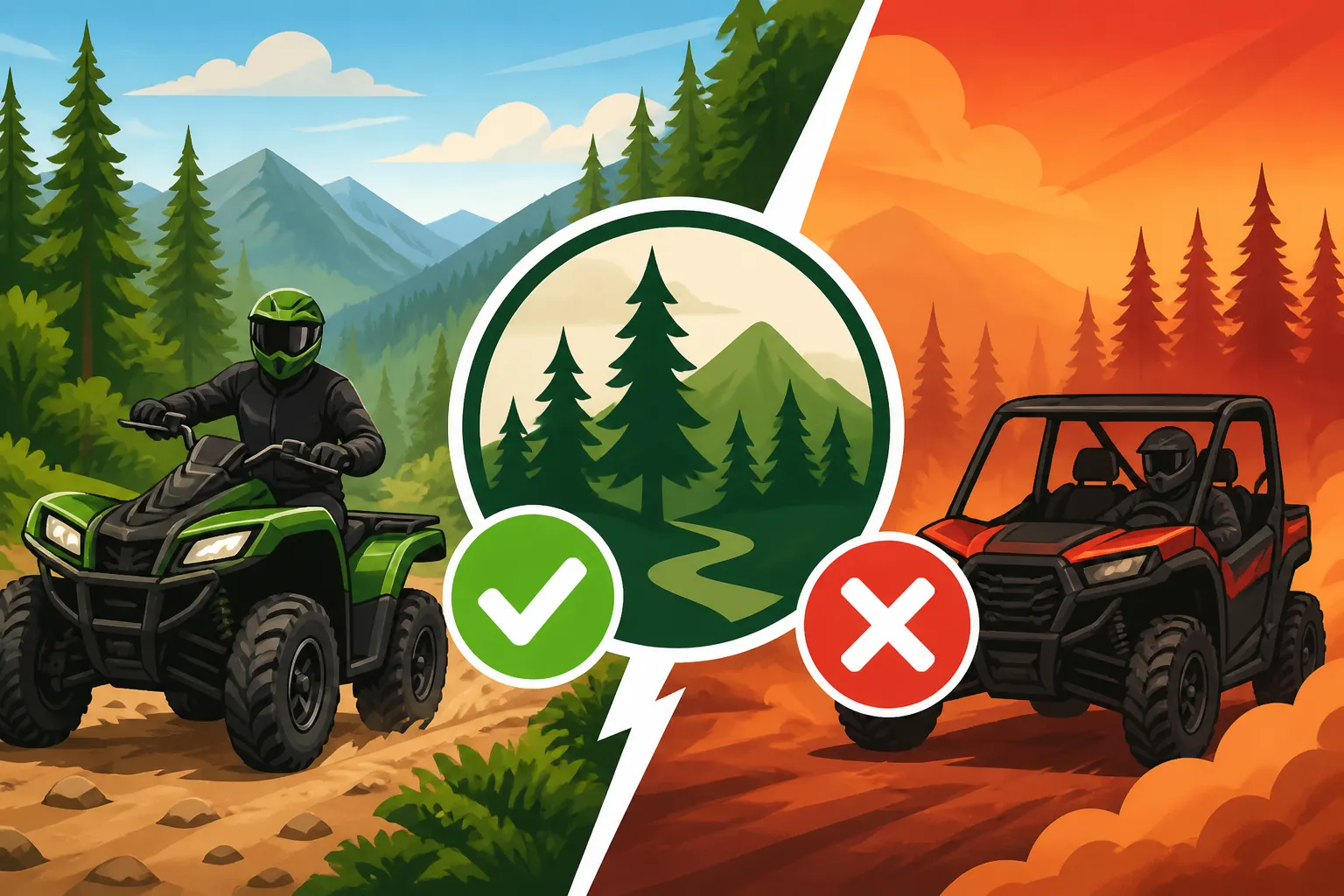
A pass that covers a day-use fee is not permission to ride wherever you can reach from the parking area. Riding access may depend on open routes, vehicle class, permit status, closures, and other rules. Stay on routes open to your machine and pay attention to boundary and closure signs.
Navigation apps can be useful for understanding the route and locating access points, but don’t use a map line alone to decide that a road or riding area is open. onX Offroad can help you plan and orient yourself, while official land-manager information and signs provide the rules to follow. If an app, an old map, and a posted sign appear to disagree, stop and verify before continuing.
Before heading out, check the pass for the exact site, confirm the machine’s permit requirements, and make sure your group understands where riding is allowed. That combination helps avoid both an unexpected fee and the more serious problem of riding somewhere closed or unauthorized.
Disclaimer
This article is for general informational purposes only and does not constitute professional advice. Laws, prices and regulations vary by location and change over time. Consult a qualified professional for guidance on your specific situation.