Oregon Riding Areas Near a Brewery Town
Planning an Oregon ride around a good meal or local brewery sounds easy until you realize that a trailhead, a town, and a safe place to park a trailer may be farther apart than expected. This guide pairs ride areas with nearby towns, explains what each trip feels like, and helps you plan the practical details before you head out.
Oregon riding areas near brewery towns at a glance
A useful way to plan is to pick the riding area first, then treat the nearby town as a place to refuel, eat, or spend the evening—not as an extension of the trail system. The table below gives you a starting point. Check current access, site rules, and business hours before committing to a route or making reservations.
| Riding area | Nearby town or base | Best fit for | Planning consideration |
|---|---|---|---|
| Millican Valley | Bend | Riders looking for high-desert terrain and a Bend stay | Conditions and access can vary by area and season |
| Tillamook State Forest | Tillamook, with Portland-area access | Forest riding and a coastal-range trip | Expect changing weather, mud, and a drive between town and riding areas |
| Oregon Dunes riding areas | Florence, North Bend, or Coos Bay | Sand riding, camping, and coastal stops | Staging areas, fees, closures, and beach access rules vary |
| OHV areas near Eugene | Eugene | A city base with options for a forest or coast-oriented trip | Confirm which riding area is open and appropriate for your machine |
The pairings aren’t interchangeable. A Bend weekend is a high-desert trip; a Tillamook outing is a forest-and-coast-range trip; and the dunes require a different kind of machine preparation and riding awareness. If you’re still choosing a region, [Where to Ride an ATV in Oregon] offers a broader starting point.
Bend and Millican Valley for a high-desert weekend
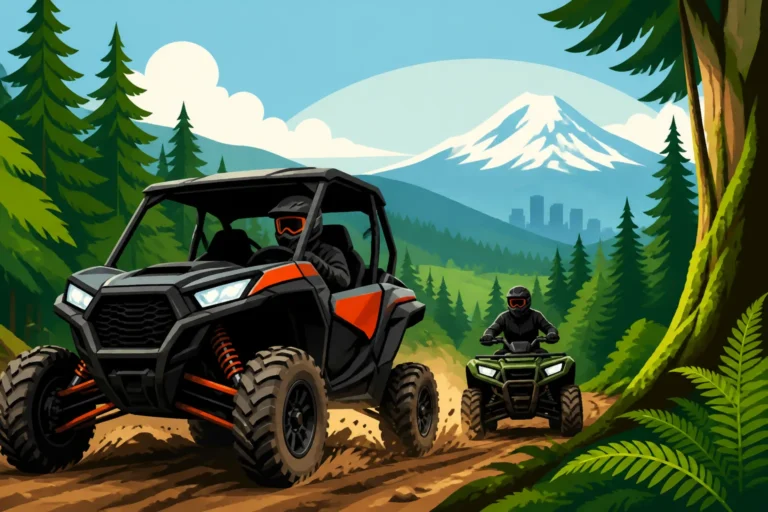
Bend is a convenient base for exploring the high desert, and Millican Valley is one of the riding areas to look into when you’re planning a trip in that direction. The surroundings are quite different from the wet, densely forested Coast Range: expect open country, dry conditions in many periods, and dust that can affect visibility when several machines are moving through an area. The details of access and conditions can change, so check the specific staging area and trails you intend to use rather than assuming every part of the riding area is open.
Bend makes it easier to arrange lodging, meals, and supplies around a ride. But don’t plan as if you’ll simply finish a trail and roll straight into town for dinner. You’ll need to return to your tow vehicle, secure or clean your machine as needed, and drive into town. If your day includes a brewery visit, designate a driver and leave the machines parked. A machine that’s permitted for off-highway riding is not automatically allowed on public streets.
For regional orientation and details about the riding area, see [Millican Valley Outside Bend] and [Oregon OHV Areas Near Bend]. A tool such as onX Offroad can help you review the broader route and terrain, but treat it as a planning aid rather than permission to ride. Check official land-manager information and posted signs for current access and closures.
Tillamook and the Coast Range for a forest ride
The Tillamook area works well for riders who want forest scenery and a coastal-range getaway. Tillamook can serve as a town base for meals and supplies, while the actual riding takes place in designated areas of the surrounding forest. You’ll need to plan for the drive between your lodging or meal stop and the staging area, and leave enough time to get back before dark or before you’re too tired to load safely.
Coast Range weather can shift the feel of a ride quickly. A route that seems straightforward on a dry day may be slick, muddy, or harder to see in rain and fog. If you’re riding with a group, agree on a meeting point and a plan for a separated rider before leaving the staging area. Check whether the trails suit your vehicle’s width and capability, especially if you’re bringing a side-by-side rather than a narrower machine.
For a closer look at the region, read [Oregon's Tillamook State Forest Trails] and [Oregon Riding Areas Near Portland]. The latter can help if you’re comparing a trip from the Portland area with one based farther west. Don’t assume that a road visible on a map is an authorized OHV route; confirm the route’s status before riding it.
Choosing the right town-and-trail pairing
The best pairing depends on the ride you want, the time you have, and how much driving you’re willing to do between the staging area and town. A destination with plenty of restaurants may be a comfortable base, but it doesn’t mean the closest trails are right for your machine or experience level. Make the riding plan first, then choose lodging and food stops that fit the route.
Choose Bend for a high-desert base
Bend is a sensible choice if your group wants a town stay alongside a high-desert ride. It can work especially well for riders who value the option of a comfortable overnight stop, a grocery run, or a sit-down meal after packing away their gear. The trade-off is that you still need to organize the day around the ride area, transport, and conditions—not simply around where you’d like to spend the evening.
Before you go, confirm which part of Millican Valley you plan to use and what access applies to that location. Take note of fuel, water, and recovery needs before leaving town. Open terrain can make distances feel deceptively manageable, and a machine issue or navigation mistake is more stressful when your group hasn’t agreed on a return plan. Save useful map information before you lose cell service, and carry water even when the day looks cool.
Choose the Coast Range or dunes for a coastal trip
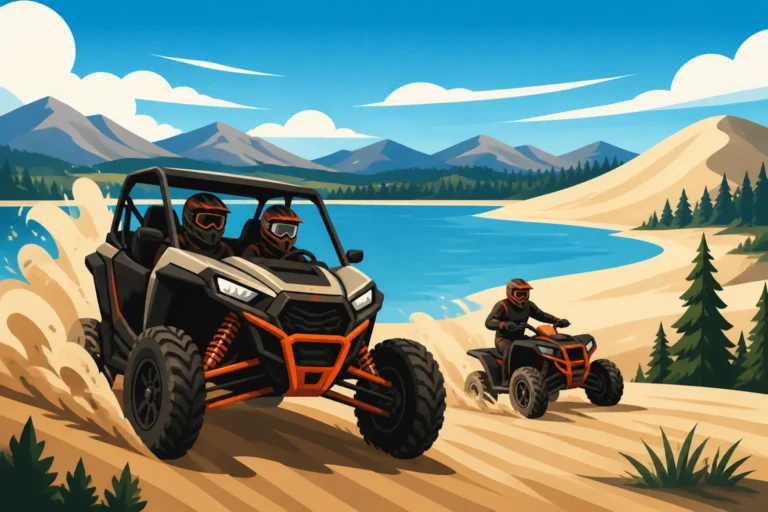
A coastal trip can mean very different things depending on your destination. Riding forest trails in the Tillamook area is not the same outing as taking an OHV to the dunes near Florence, North Bend, or Winchester Bay. Sand riding requires attention to visibility, terrain, dune flags, and the location of staging areas. Forest riding brings its own concerns, including wet surfaces, changing weather, and road or trail closures.
Florence, North Bend, and Coos Bay can each work as a base for exploring parts of the coast, but don’t pick a town solely because it has the food or nightlife you want. Compare the drive to your chosen staging area, overnight parking arrangements, and the rules that apply to the specific riding site. [Oregon OHV Areas on the Coast] and [Oregon Dunes Staging Areas From North to South] can help you narrow down the coastal options.
If your trip includes a stop for a drink, plan it for after the machine is secured and the riding day is over. Keep a sober driver in your group, and don’t ride after consuming alcohol or cannabis. It’s an easy detail to overlook when an outing mixes outdoor recreation with a town visit, but it should be settled before the trip begins.
How to plan a ride before the town stop
A smooth day depends on more than picking a trail and a restaurant. Permits, equipment, staging logistics, weather, and closures can all affect whether your plan works. A little preparation at home can prevent the familiar frustration of arriving at a trailhead only to discover you have the wrong information, an unsuitable machine, or nowhere safe to leave your trailer.
Check access, closures, permits, and riding conditions
Start by identifying the specific riding area and staging location—not just the nearest town. Then check the land manager’s current access information, seasonal restrictions, and rules for the trails you expect to use. Conditions can change because of weather, fire danger, maintenance, wildlife protections, or other closures. A route that appeared open when you began planning may not be open on the day you arrive.
Confirm the permit requirements for your vehicle and where the permit must be displayed. Also check for separate day-use or parking fees; an OHV permit does not necessarily cover every site fee. If you’re riding as a visitor, make sure your out-of-state permit or registration is accepted for the circumstances of your trip. [Oregon Trail Closures to Check First] is a useful reminder to build a current-condition check into your routine rather than relying on an old trip report.
For navigation, onX Offroad can help you get a sense of routes and surrounding terrain while planning. Download or save the information you’ll need before heading into areas with limited signal. Then compare your planned route with official maps, signs, and local rules. A digital map can assist with orientation, but it doesn’t override a gate, a closure notice, or a land manager’s directions.
Pack for the riding area, not the brewery stop
Your gear should match the terrain. For a forest outing, prepare for rain, mud, and changing visibility. For the dunes, bring eye protection and clothing that keeps sand manageable, and make sure any required flag and safety equipment are in order. For high-desert riding, take water, sun protection, and basic tools. Across all three settings, carry a charged phone, a backup navigation option, and enough supplies to handle a delay.
Think through the trailer and parking plan, too. Check whether the staging lot can accommodate your tow vehicle, trailer, and group. Arriving with a long trailer at a crowded lot can turn a relaxed morning into a tense round of reversing and shuffling. Secure valuables, take a quick walk-around before unloading, and agree on a clear place to meet if anyone gets separated.
Finally, plan the town stop around the return drive. Put machines away, secure the trailer, and make sure everyone has a safe way back to lodging. [Camping at an Oregon OHV Area] can help you think through an overnight plan if you’d rather stay near the riding area than make a longer drive after a full day outdoors.
A simple itinerary for a relaxed Oregon weekend
A brewery-town riding weekend doesn’t need to be crammed with stops. One well-planned riding day, a dependable place to sleep, and a meal afterward often make for a better trip than trying to cover several distant trail systems at once. Give yourself a margin for weather, traffic, loading, and the unexpected pause to check a map.
Build the day around the staging area
The night before, confirm the ride area is open, check the forecast, pack your gear, and make sure the machine and trailer are ready. Set a realistic departure time based on the drive to the staging area, not simply the distance between your hotel and the nearest town center. Share your destination and expected return time with someone who isn’t riding with you.
At the staging area, review posted notices before unloading. Check that every rider understands the route plan, regrouping points, and what to do if a machine breaks down. For a mixed-experience group, keep the route and pace comfortable for the least experienced rider. A ride that stays within the group’s ability is more enjoyable than one that turns into a rescue mission.
When you finish, take a few minutes to check the machines and secure the load properly. Sand, mud, and dust can travel back to town with you, so bring a brush, cover, or other simple cleanup supplies if appropriate. Leave enough time to return the trailer or vehicle to a safe parking spot before heading out for dinner.
Keep a backup plan
Have an alternative if the weather, trail conditions, or a closure changes your plans. That backup might be a different staging area, a shorter ride, or a non-riding activity in town. Don’t improvise a new route onto land or roads just because your first choice is unavailable; verify the alternative is open to OHVs and suitable for your machine.
A second map check can help you understand how the backup fits into the day. onX Offroad may be useful for comparing route options, while official land-manager notices remain essential for confirming access. If the group is traveling from different places, send everyone the same meeting location and backup plan before they set out.
The most enjoyable version of this trip is usually the one with enough breathing room: a confirmed riding area, a realistic drive, a secure place for the trailer, and a town stop that doesn’t put anyone back behind the controls after drinking. Whether you choose Bend, Tillamook, or the coast, planning those details makes it easier to focus on the ride itself.
Disclaimer
This article is for general informational purposes only and does not constitute professional advice. Laws, prices and regulations vary by location and change over time. Consult a qualified professional for guidance on your specific situation.