East Dunes and West Winds Compared
East Dunes and West Winds are two camping options at Oregon’s Sand Lake Recreation Area, but choosing between them is about more than picking a spot with a convenient name. Your preferred approach to the dunes, tolerance for busy riding areas, and need for a quieter campsite can all shape the trip. This guide compares the two and explains what to check before you go.
East Dunes and West Winds at a glance
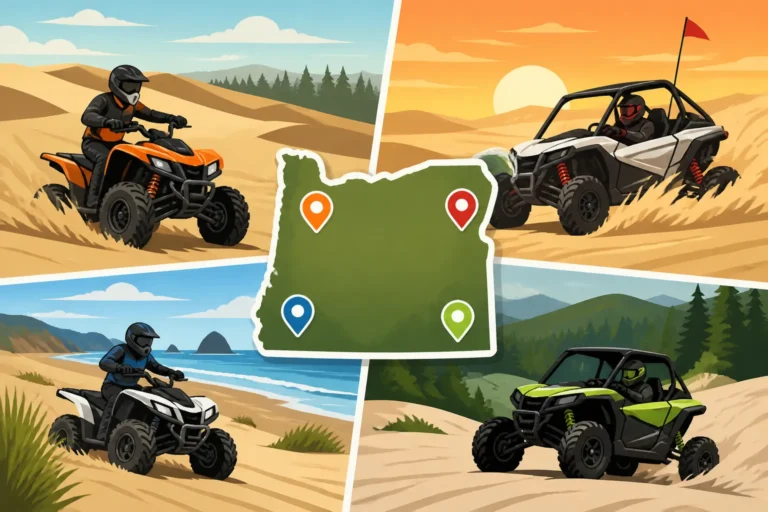
East Dunes and West Winds sit within the Sand Lake riding area near Pacific City, where coastal forest, open sand, and ocean weather all influence the experience. The names are a useful starting point for orientation, but they do not tell you everything about access, campsite conditions, or the route you can take to ride. Check the current site map and posted signs before choosing a spot.
| What matters | East Dunes | West Winds |
|---|---|---|
| Basic distinction | A camping option on the eastern side of the Sand Lake area | A camping option on the western side of the Sand Lake area |
| Best reason to consider it | You want to orient your trip around the eastern side of the recreation area | You want to orient your trip around the western side of the recreation area |
| What to verify before booking or arriving | Site access, road conditions, available facilities, and the route to your intended riding area | Site access, road conditions, available facilities, and the route to your intended riding area |
| Important for both | Confirm current rules, closures, and vehicle access before unloading | Confirm current rules, closures, and vehicle access before unloading |
The useful takeaway is not that one campground is automatically better. It is that the location you choose may affect how you organize your day, where you stage your machines, and how much you need to drive between camp and the area you want to explore. For a wider look at the options, [Sandbeach, East Dunes and West Winds] and [Sand Lake's Four Oregon Campgrounds] can help put these two choices in context.
What the names do and do not tell you
“East” and “West” can help you picture where each campground sits within the recreation area, but they are not a guarantee of a particular view, level of privacy, or direct route onto the dunes. Roads, gates, seasonal restrictions, and designated access points can affect how you actually move around. A route that looks short on a map may not be open to the vehicle you are bringing.
That distinction matters when you are traveling with a trailer or a group. You might arrive expecting to unload and head straight toward the sand, only to discover that access works differently than you assumed. Before making a reservation or setting out, compare the campground location with the official Sand Lake map and check any posted restrictions.
A planning app such as onX Offroad can help you get a general sense of the surrounding roads and riding area. Use it as a planning aid rather than as the final word on access: posted signs and current land-manager information should guide your decisions on the ground.
Why your riding plan should drive the choice
Think about what you want to do during the weekend before deciding where to camp. If your group expects to spend most of the day riding, prioritize practical access, room to stage safely, and a clear plan for getting to an open riding area. If some people would rather stay at camp, relax, or explore nearby without riding, consider whether the campground setting and your group’s transport plan will work for them too.
Also account for differences in experience and pace. A confident dune rider may want long sessions on the sand, while a beginner may prefer shorter outings with breaks to regroup. Choosing a campsite that makes it easy for the group to return, rest, and check equipment can be more valuable than choosing based on a vague assumption that one side is “closer” to everything.
For a broader comparison of coastal riding destinations, [Oregon Dune Riding Areas Compared] is a useful next step. It helps you think beyond the campground itself and consider whether Sand Lake fits the kind of terrain, trip length, and riding atmosphere your group wants.
How to choose between East Dunes and West Winds
The most practical way to compare East Dunes and West Winds is to work through your trip logistics rather than rely on a general ranking. Start with your machine and trailer, then consider your group’s riding habits, campsite needs, and comfort with coastal conditions.
Match the campground to your arrival and setup
A long drive with a loaded trailer can make an awkward arrival feel much more stressful than it looked during trip planning. Before you go, confirm the access road, turning space, parking arrangements, and whether your vehicle and trailer combination is suitable for the route. Do not assume that every road shown on a navigation app is appropriate for towing or leads to an open campsite.
If you are arriving with several machines, agree on a simple setup plan. Decide who will park the tow vehicle, where riders will gather, and how you will avoid blocking neighboring campers or access lanes. It may help to unload one machine at a time instead of having everyone move around at once, especially if the campground is busy or visibility is reduced by trees, dust, or coastal weather.
Check the campground details directly before you commit. Available amenities, site layouts, and access conditions are the kinds of practical details that can change or vary between locations. When those details matter to your group—such as whether you need a particular kind of parking or a quiet place for children to rest—confirm them instead of relying on assumptions.
Consider how your group likes to ride
A group that rides together for hours has different needs from a family with mixed interests. If everyone is riding, think about how quickly you can get organized each morning and where you plan to enter the riding area. If some people will stay at camp, consider how they will spend the day and whether they can comfortably manage without a separate vehicle.
Newer riders may appreciate a plan with predictable breaks and a clear meeting point. Before setting out, identify a location where the group can regroup and agree on what to do if someone gets separated. Coastal sand can make it harder to see other riders over rises, and wind or engine noise can make shouted directions ineffective. Carrying a map and agreeing on simple communication rules can prevent confusion.
The riding area may also have restrictions that affect where you can go. Check [Oregon Trail Closures to Check First] before the trip, and follow signs at the site even if a route appears open in an app. onX Offroad can help your group discuss a route in advance, but treat the map as one part of your preparation rather than permission to ride anywhere.
Factor in the rest of the weekend
Your choice may depend on more than riding. If the trip includes beach time, sightseeing, or downtime at camp, consider how you will divide the day and where you need to travel. Sand Lake has different recreation opportunities and access points, so build your plan around the specific activity rather than assuming every campground is equally convenient for every outing.
It is also worth comparing camping preferences. One group may value a simple base close to its riding plan; another may care more about a quieter evening or an easy place to gather after the machines are parked. Talk through these preferences before booking. A few minutes of planning can prevent the familiar weekend disagreement where one person expected a full day on the dunes and another expected a relaxed camping trip.
If you are planning your first visit, [Sand Lake for a Weekend] offers a helpful broader framework for organizing the trip. You can also look at [Fisherman's Day Use at Sand Lake] if your group wants to understand how day-use activities fit alongside camping and riding.
Preparing for Sand Lake’s coastal conditions
Even a well-chosen campground can feel inconvenient if you arrive unprepared for coastal weather and soft sand. Conditions can change during the day, and wind, fog, and moisture may affect visibility, comfort, and machine handling. Build some flexibility into your plans rather than expecting every ride to go exactly as scheduled.
Plan for soft sand and changing visibility
Soft sand can feel very different from a firm forest road. A machine may lose momentum more easily, and a rider who makes abrupt steering or throttle changes can find themselves working harder than expected. If your group has limited dune experience, start conservatively, stay within your ability, and avoid following another rider’s line unless you can see the terrain clearly.
Visibility deserves just as much attention. Fog, blowing sand, and the shape of the dunes can limit sight lines, particularly when riders crest a rise without knowing what is on the other side. Keep a safe distance, slow down near blind crests, and establish a meeting procedure before anyone rides out of sight. A dune flag or whip can help make a machine easier to spot, but it does not make a blind crossing safe. Review [Oregon Dune Flags and Whips] before you head out.
Tire-pressure decisions should be made carefully and with knowledge of your machine, tires, load, and manufacturer guidance. Do not copy another rider’s setup without considering those differences. If you are unfamiliar with coastal sand, read [Soft Sand and Tire Pressure on the Coast] and avoid making large adjustments without understanding how they affect handling.
Check permits, fees, and access separately
A campground reservation or day-use arrangement does not necessarily cover every requirement for riding. Vehicle permits, safety requirements, site fees, and access rules are separate questions. Confirm what applies to your machine and your group before leaving home, particularly if you are bringing a side-by-side, a youth machine, or a vehicle registered outside Oregon.
The rules can also depend on where you intend to ride and what kind of machine you have. Check the relevant permit and safety-card requirements, then keep required documents available during the trip. Do not assume that paying a site fee also provides permission to ride, or that a vehicle permit covers parking or camping costs. [Oregon Day Use Fees Separate From the Permit] explains why those costs and permissions should be treated separately.
If you are traveling with people who have not ridden in Oregon before, make sure everyone understands the riding rules and any age-related requirements that apply. It is much easier to sort out paperwork at home than to discover a missing requirement at the staging area.
Use maps without relying on a single source
Before departure, compare your campground location, intended route, and riding area using more than one source. The official recreation-area information and signs provide essential access and closure guidance. A navigation tool such as onX Offroad can help with general orientation, route discussion, and planning a return point, but maps may not reflect every temporary restriction or change on the ground.
Save or carry the information you need in a form you can access when cell service is weak. Include the campground name, a meeting point, the route back, and a backup plan if a road is closed. [Oregon Trail Maps Worth Carrying] offers practical context for preparing a map plan, while [Camping at Sand Lake] can help with the camping side of your checklist.
Once you arrive, take a few minutes to look at posted notices before unloading. If a sign conflicts with your plan or your map, follow the sign and ask the appropriate site staff for clarification. A little caution at the beginning of the trip is better than having to turn around after the group and equipment are already spread out.
A practical decision checklist
East Dunes and West Winds can both work as a base for a Sand Lake trip. The better choice is the one that fits your confirmed access, camping needs, and riding plan—not the one that sounds closest or most appealing from its name alone.
Before you decide, ask:
- Does the campground fit the size and type of vehicle and trailer you are bringing?
- Have you confirmed the current site access, rules, and available facilities?
- Does your planned route lead to an open area where your machine may legally ride?
- Are permits, safety requirements, and day-use arrangements handled separately?
- Does the campsite work for riders and non-riders in your group?
- Do you have a map, a meeting point, and a plan for poor visibility or a closure?
- Have you discussed expectations for riding time, rest breaks, and regrouping?
If those answers are clear, choosing between East Dunes and West Winds becomes much simpler. Compare the locations against your actual itinerary, check the latest site information, and leave room for weather or access changes. That approach helps you spend less time sorting out logistics after arrival and more time enjoying the coast responsibly.
Disclaimer
This article is for general informational purposes only and does not constitute professional advice. Laws, prices and regulations vary by location and change over time. Consult a qualified professional for guidance on your specific situation.