Fisherman’s Day Use and Free Parking
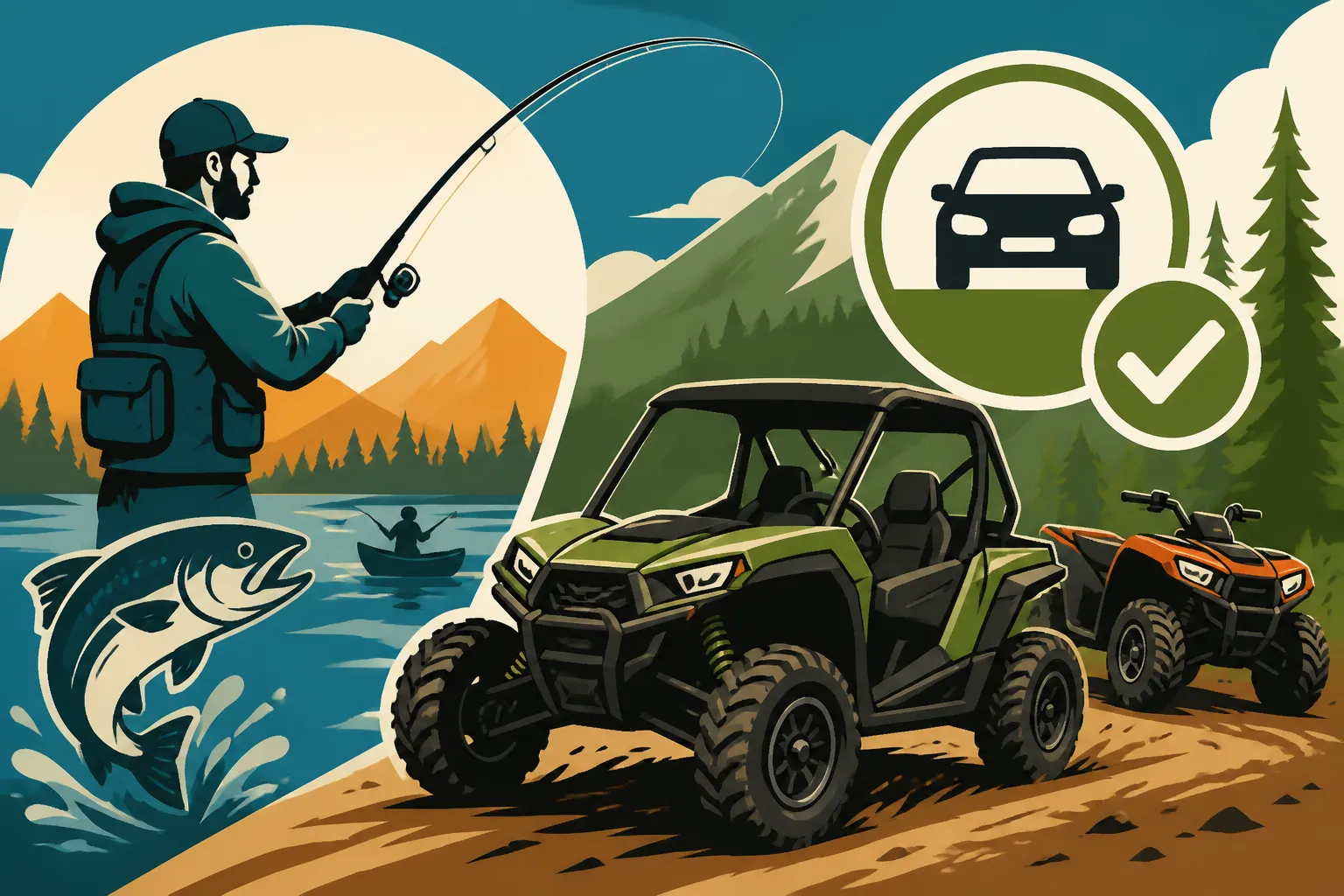
Fisherman’s Day Use Area at Sand Lake can be a useful place to park without paying a parking fee, but “free parking” does not mean every part of an OHV outing is free or that every nearby access point has the same rules. This guide explains what to check before you arrive, how to plan your ride, and how to avoid confusing parking access with permits and riding-area requirements.
What to know about Fisherman’s Day Use Area
Free parking is only one part of the trip
Fisherman’s Day Use Area is an access point at Sand Lake on the Oregon coast, near Pacific City. It can appeal to riders who want to avoid a parking charge at a different recreation site, but don’t assume that a free lot means you can ride anywhere from it. Parking, access to the dunes, and permission to operate an OHV are separate questions.
Before unloading, read the signs at the entrance and in the parking area. Look for directions about where vehicles may park, where trailers belong, and whether a route from the lot is open to OHVs. If a sign directs riders toward a particular staging area, follow that route rather than cutting across a road, beach, or dune to reach the sand more quickly.
It also helps to check whether the lot suits your vehicle and trailer. A free space is not much of a bargain if the rig blocks a travel lane or leaves no room for other visitors to turn around. Arriving with a clear unloading plan makes the stop easier for your group and for everyone sharing the lot.
Parking and riding rules are not interchangeable
Treat Fisherman’s as a place to park and organize your day, not as a blanket pass for the whole Sand Lake recreation area. Other access points and riding zones may have different fees, restrictions, or facilities. If you are comparing destinations, [Sand Lake for a Weekend] gives you a broader look at how to plan a visit, while [East Dunes and West Winds Compared] can help clarify that nearby areas are not necessarily interchangeable.
Your machine also needs to meet Oregon’s OHV requirements. The right permit depends on the machine and where it will be ridden, so confirm its class and permit status before leaving home. [Oregon's ATV Operating Permit] explains the permit’s role, and [Oregon ATV Permit for a Side-by-Side] is a helpful starting point if you are bringing a UTV.
Keep the permit decal visible and readable, and carry any required documents or cards for the riders in your group. A free parking spot does not replace an operating permit, a safety card when required, or compliance with posted site rules. If you are riding with visitors, don’t assume that an out-of-state permit or safety credential automatically covers every Oregon requirement; check the rules that apply to their situation.
How to plan your arrival and unload
Check the route and site conditions before driving out
Sand Lake’s coastal setting makes conditions part of the plan. Fog can reduce visibility, wind can move sand across access routes, and a busy weekend can make parking and unloading feel cramped. Check current access information and posted notices before setting out, and have a second plan in case the lot is full or an area is closed.
A mapping app such as onX Offroad can help you orient yourself and review mapped routes before the trip. Use it as a planning aid, not as permission to ride a route. Maps may not show a recent closure, temporary restriction, or sign posted at the entrance. When the map and the signs disagree, follow the on-site direction and stop to confirm the route rather than guessing.
If your group is meeting at the site, agree on a precise meeting point and a backup. Cell service can be unreliable in some coastal areas, and “meet by the entrance” can mean different things when vehicles are arriving from several directions. Sharing the planned route in advance is especially useful when one vehicle is towing and another is carrying riders or gear.
Make unloading orderly and safe
Set up your vehicle and trailer so you can unload without blocking traffic or the space another visitor needs to maneuver. Keep children and passengers away from moving vehicles, and avoid letting anyone stand behind a trailer while it is being repositioned. If the lot is crowded, wait for a suitable opening rather than forcing a tight turn.
Before riding, walk around the machine and check the items that are easy to overlook in a hurry: tires, fuel, lights, safety gear, and the permit decal. Secure loose gear so it cannot fall off on a trail or dune. Pack drinking water, a basic tool kit, and a way to contact your group if riders become separated.
A simple pre-ride routine can prevent a frustrating start:
- Read all entrance and parking signs.
- Confirm that your intended route is open to your machine.
- Park and unload without blocking other vehicles.
- Check permits, safety requirements, and essential equipment.
- Agree on a meeting point and a return time with your group.
For navigation, onX Offroad may help you keep track of mapped routes and plan where to regroup. Still, keep an eye out for trail markers and closure signs as you ride. A line shown on a screen does not override a barrier or a posted restriction.
What “free parking” does and does not cover
Use this comparison before you leave
The main benefit of Fisherman’s is straightforward: it may let you park without paying a parking fee at that location. The rest of your day may involve separate requirements or costs. The table below is a planning checklist, not a substitute for signs at the site.
| Part of the outing | What to check | Why it matters |
|---|---|---|
| Parking at Fisherman’s | Signs, designated spaces, and trailer directions | Free parking does not mean every space is suitable for every vehicle |
| OHV riding | Whether your route and riding area are open | Access rules can differ between nearby sites |
| Machine permit | Class, decal, and permit requirements | Parking does not authorize riding |
| Rider requirements | Safety-card and age rules that apply to each rider | Requirements can vary by age and machine class |
| Other recreation areas | Posted fees and access restrictions | A different lot or riding area may have different conditions |
| Navigation | Signs, maps, and current closures | Digital maps may not reflect a new restriction |
If your plan includes visiting other Sand Lake facilities, check those locations separately rather than assuming Fisherman’s parking arrangements apply to them. [Sand Lake's Four Oregon Campgrounds] is useful if you are combining a day ride with an overnight stay. For a wider comparison of terrain and riding settings, [Oregon Dune Riding Areas Compared] can help you decide whether Sand Lake fits your group’s plans.
Keep a backup plan for a full lot or a closure
Free parking can be popular, particularly when the weather is pleasant or a holiday brings more visitors to the coast. If you arrive and there is no legal space for your rig, don’t park along a road, block an entrance, or unload where it interferes with traffic. Move to an appropriate alternate location and recheck the route and fees there.
This is where a little advance research saves a lot of irritation. Identify another suitable staging option before you leave, note any relevant access rules, and tell your group what to do if the first choice is unavailable. onX Offroad can be one tool for reviewing the broader area, but compare what it shows with official land-management information and signs at the site.
Avoid treating a nearby road or beach as an informal overflow lot. It may be private, restricted, or unsafe for a parked trailer. If you cannot confirm that parking is allowed, keep looking for an authorized option.
Making a comfortable day of it
Pack for coastal riding, not just the forecast
A mild forecast does not guarantee a comfortable day on the sand. Coastal wind and fog can make it feel colder than expected, while bright conditions can create glare and reduce visibility. Bring layers, eye protection, and enough water for the time you expect to be out. A change of clothes can be welcome after a sandy ride, especially if the group plans to stop in town afterward.
Sand can work its way into clothing, storage compartments, and equipment. Keep phones, keys, and important papers in sealed protection, and avoid leaving loose items where wind can carry them away. If your group includes newer riders, set a conservative pace and agree that nobody rides out of sight without checking in.
The riding environment matters, too. Sand, dunes, and shared access areas call for extra attention to visibility and spacing. Leave room between machines, slow down near other visitors, and avoid assuming that another rider has seen you through blowing sand or fog. [Oregon Dune Flags and Whips] covers an important visibility consideration for dune riding.
Leave the access area ready for the next group
Before you head out, make sure your machine and equipment are ready for the return trip. Keep a basic recovery plan in mind, and don’t ride beyond your group’s experience or the conditions you can handle. If someone gets separated, return to the agreed meeting point rather than sending several riders off in different directions.
When you return, load carefully and leave the parking space clean. Secure loose sand-covered items, check that nothing has fallen beneath the trailer, and pack out all rubbish. A tidy departure helps keep a convenient access point usable and welcoming for the next visitor.
For a Sand Lake outing, the practical approach is simple: enjoy the parking convenience, but verify the riding rules separately. Check the signs, confirm your machine and rider requirements, and have a backup if conditions or crowding change your plan. onX Offroad can support your route planning, while on-site directions and applicable land-management rules should guide what you actually do.
Disclaimer
This article is for general informational purposes only and does not constitute professional advice. Laws, prices and regulations vary by location and change over time. Consult a qualified professional for guidance on your specific situation.