Buying a Permit at an Oregon State Park
It's happened to the best of us: you've loaded up the quad, driven out to the coast or the forest, and you're just about to hit the staging area when that little voice in your head screams, "Did I remember the ATV permit?" Or maybe you're visiting from out of state and realize you need to get one on the fly. The good news is, Oregon State Parks can often be your saving grace for buying that essential permit right when you need it. This guide will walk you through the practicalities of getting your Oregon ATV operating permit directly from a state park, so you can stop stressing and start riding.
Why a State Park is a Smart Place to Get Your ATV Permit
When you're out enjoying Oregon's incredible natural beauty, whether you're camping, hiking, or just exploring, you're often already in the vicinity of a state park. These parks aren't just for picnicking; many of them are equipped to help you get your Off-Highway Vehicle (OHV) permit, making them incredibly convenient points of sale. It's a real lifesaver when you've hit the road and realize you forgot to order it online or couldn't find a dedicated permit agent on your route.
The Convenience Factor for Riders
Imagine this: you've packed the side-by-side, driven a couple of hours from Portland, and you're pulling into the Sand Lake Recreation Area or gearing up for a weekend at Browns Camp. You're almost ready to unload and hit the trails or the dunes, but then it dawns on you – your permit expired last month! Instead of having to backtrack to a town, frantically search for a small business that sells them, or wait days for an online order to arrive, many Oregon State Parks offer the immediate solution. Their offices are often strategically located near popular riding destinations, making them a one-stop shop for your permit needs. It's about getting you legal and on the dirt as quickly and efficiently as possible, especially for those spontaneous trips or when you're just passing through.
This immediate availability is a huge advantage over other methods. While buying online is convenient for planning ahead, it means waiting for your decal to arrive in the mail, which can take several days. If you're heading out to ride the same day or the next, that's simply not an option. And while there are numerous permit agents across the state, their hours can sometimes be unpredictable, or they might be located off your direct path. A state park, with its more consistent operational hours and often prominent location, often provides a reliable alternative when time is of the essence. You can literally pull off the highway, grab your permit, and be on your way to your adventure, sometimes within minutes. [Where Oregon Sells ATV Permits]
Supporting Oregon's Recreation Efforts
Every single Oregon ATV operating permit purchased, regardless of where you buy it, directly contributes to the maintenance and improvement of the state's amazing OHV program. When you buy your permit at an Oregon State Park, you're not just getting a sticker for your machine; you're directly investing in the trails, staging areas, and facilities that you and other riders enjoy. This funding is crucial for things like trail grooming, signage, restroom facilities, and even ranger patrols that ensure everyone is riding safely and responsibly.
The Oregon Parks and Recreation Department (OPRD) manages the state's OHV program, and the revenue generated from permit sales is channeled back into making your riding experiences better. It's a sustainable model where the user fees directly benefit the user community. So, when you hand over your payment at the state park office, you can feel good knowing that your money is helping to preserve and enhance the very places you love to explore on your ATV or UTV. It’s a direct link between your enjoyment and the resources that make it possible, solidifying the idea that riders are active participants in protecting and improving their sport's infrastructure. [What Oregon's $10 ATV Operating Permit Covers]
What You Need to Bring to the State Park Office
While buying your permit at a state park is generally straightforward, it's not quite as simple as just walking up to the counter and saying, "One ATV permit, please!" There are a few key pieces of information and items you'll need to have on hand to ensure a smooth transaction. Being prepared will save you time and potential frustration, getting you onto the trails quicker.
Required Documentation for Your Machine
Even though Oregon has an optional titling system for off-road-only ATVs, you still need to prove you're the rightful owner of the machine you're trying to permit. This is a critical step to prevent fraud and ensure the permit is correctly linked to your vehicle. The most common form of proof is your vehicle's Manufacturer's Statement of Origin (MSO) if it's a new machine, a previous title if you bought it used and it was titled, or a detailed bill of sale if you purchased it from a private party and it wasn't titled.
The key piece of information the state park staff will need is your machine's Vehicle Identification Number (VIN). This unique identifier is usually stamped on the frame of your ATV or UTV, and it's how they'll record the permit for your specific vehicle. Before you head to the park, make a note of your VIN or take a clear photo of it. Having your proof of ownership document along with the VIN ensures that the permit is issued accurately and verifies that you have the legal right to permit that machine. Without this, they simply cannot process your permit, so double-check your paperwork before you leave home!
Payment Methods Accepted at Parks
The cost of an Oregon ATV operating permit is consistent across all sales points, whether you buy it online, from a private agent, or at a state park. So, you won't pay more or less by choosing a park. Generally, Oregon State Parks are well-equipped to handle various forms of payment. Most will accept major credit and debit cards, which is often the easiest and most convenient way to pay. Cash is usually accepted, though it's always wise to have the exact amount if possible, especially in more remote park locations where change might be limited. Some parks might also accept personal checks, but this is less common and often requires specific identification, so it's best to confirm with the specific park if that's your preferred method.
It's always a good idea to call ahead to the specific state park you plan to visit, just to confirm their accepted payment methods and current permit fees. While the permit price itself is uniform, the payment options can vary slightly from one location to another, especially with smaller operations. Having multiple payment options ready will ensure that a minor hiccup like a card reader issue or a lack of cash doesn't derail your plans to get out and ride. Regardless of your machine's class or where you buy it, the price is the same, making it easy to budget for. [One Oregon Permit Price for Every Class]
Understanding Your Machine's Class
While you don't need to be an expert on Oregon's ATV classification system to buy a permit, it's good practice as a rider to know which class your machine falls into. The park staff might ask you for details about your machine to ensure they're providing accurate information or to clarify any specific nuances of your vehicle. Oregon defines four main classes of ATVs: Class I (traditional quads, often under 50 inches wide), Class II (larger off-road vehicles like dune buggies or sand rails that can sometimes be made street-legal), Class III (off-road motorcycles, or dirt bikes), and Class IV (side-by-sides, or UTVs, typically with a steering wheel and roll cage).
Knowing your machine's class can be helpful if you have questions about specific regulations or riding areas, as some trails or areas might have restrictions based on vehicle type or size. For the permit purchase itself, the price is the same across all classes, so it won't affect the transaction cost. However, understanding your machine's category can help streamline the conversation with the park staff and ensures you're getting the right information about where and how you can legally ride in Oregon. It shows you're a knowledgeable and responsible rider, which is always a good thing! [Oregon's Four ATV Classes Explained]
The Step-by-Step Process at the Park Counter
Once you've arrived at the state park with all your necessary documentation and payment in hand, the actual process of purchasing your permit is usually quite simple and quick. The park staff are accustomed to assisting riders and will guide you through the necessary steps. It's often one of the most efficient ways to get your permit immediately and avoid any riding delays.
Finding the Right Spot in the Park
Oregon State Parks are often expansive, featuring campgrounds, day-use areas, trails, and sometimes even beach access. When you arrive, you're not just looking for any park employee. You'll need to locate the main park office, ranger station, or visitor center. These are typically the designated spots where administrative tasks, like selling permits, are handled. Look for clear signage directing you to "Park Office," "Visitor Center," or "Information." If you're unsure, pull over safely and look at the park map, or ask a park employee if you spot one.
For example, if you're at a popular riding destination like Sand Lake on the Oregon Coast, you'll want to head towards the main park entrance area where the offices are located, not directly to one of the staging areas like Sandbeach or West Winds. Similarly, if you're exploring the Tillamook State Forest area, you might find a nearby state park office that handles permits. The goal is to get to the official point of contact where staff are trained and equipped with the necessary forms and decals. Don't waste time looking for a permit booth at every campground loop; head straight for the main hub.
Filling Out the Permit Application
Once you're at the counter, the park staff will provide you with a short application form for your OHV permit. This form is typically straightforward and will ask for basic information about you and your machine. You'll need to provide your name, address, and contact information. Then, you'll fill in the details about your ATV or UTV, which is where having your VIN, make, model, and year readily available becomes crucial. This information is entered into the system to link the permit to your specific vehicle and create a record for the Oregon Parks and Recreation Department.
The process is designed to be quick, usually taking just a few minutes. If you have any questions while filling out the form, don't hesitate to ask the park staff. They are there to assist you and ensure all the information is accurate. Accuracy is key because this information will be used to generate your official permit record and, later, your physical permit card that will be mailed to you. Double-checking your VIN before handing the form back can prevent future headaches.
Receiving Your Decal and Temporary Permit
This is the moment of truth! Once your application is complete and payment is processed, the park staff will hand you your new Oregon ATV operating permit decal right over the counter. This is the physical sticker you'll affix to your machine. Along with the decal, you'll also receive a temporary permit. This is usually a printed receipt or a temporary paper card that serves as official proof of purchase until your more durable, plastic permit card arrives in the mail from OPRD.
The temporary permit is incredibly important. It allows you to legally ride your ATV or UTV immediately. Think of it as your immediate green light. Make sure to keep this temporary proof with you whenever you ride, especially during the first few weeks after purchase. While the decal on your machine is the most visible sign, having the paper proof can be essential if a ranger has any questions, or if your decal somehow gets damaged or lost before your permanent card arrives. The peace of mind knowing you're legal to ride right away is one of the biggest benefits of purchasing your permit in person at a state park. [Oregon's Thirty-Day Temporary Permit] [Riding the Day You Buy Online]
Beyond the Purchase: What to Do Next
Getting your permit decal and temporary proof of purchase is a huge step, but your job isn't quite done. To ensure you remain compliant and avoid any issues with rangers or law enforcement, there are a few important follow-up steps you need to take. These involve correctly applying your decal, securely carrying your documentation, and understanding the validity of your permit.
Proper Decal Placement and Adherence
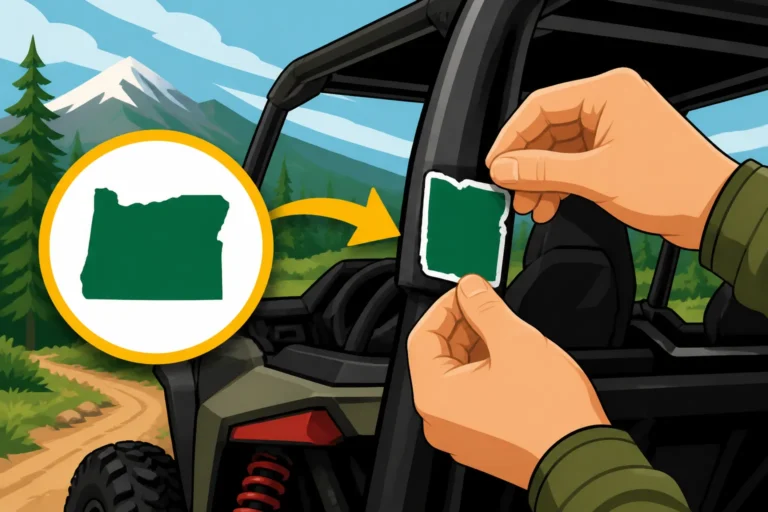
Once you have that shiny new decal in your hand, don't just toss it in your glove box. It needs to be properly affixed to your machine in a visible location. For Class I ATVs (traditional quads), the decal must be placed on the right-hand side of the machine. For Class III off-road motorcycles, it typically goes on the right fork tube or another clearly visible spot. For larger Class IV side-by-sides or Class II machines like sand rails, it needs to be placed on the rear or side of the vehicle where it is clearly visible. The key is visibility for rangers who are checking permits at staging areas or on trails.
Before applying, make sure the surface is clean, dry, and free of any dirt, grease, or old adhesive. Peel off the backing slowly, and press the decal firmly onto the surface, working out any air bubbles to ensure a good, lasting seal. A poorly applied decal can peel off, get damaged, or become unreadable, which could lead to questions from a ranger, even if you have your temporary permit. Taking a moment to apply it correctly ensures it lasts for its full two-year lifespan and makes your permit clearly identifiable. [Oregon Permit Decals and Where They Go] [Decal Placement on a Quad's Right Side]
Carrying Your Temporary Permit and Card
While your decal is proudly displayed on your machine, it's equally important to carry your temporary paper permit (the one you received from the park) and, once it arrives, your official plastic permit card from OPRD. Think of these as your proof of registration. Rangers, especially during routine checks at popular spots like Spinreel or Browns Camp, might ask to see your physical permit card in addition to checking your decal.
It's wise to store these documents in a waterproof and secure location on your machine or on your person. A small dry bag or a waterproof pouch in your toolbox or backpack is ideal, especially given Oregon's often wet climate. You don't want your paper permit dissolving after a sudden downpour, nor do you want to lose your official card. Always be prepared to present your permit documentation when asked, as it verifies the decal on your machine is current and belongs to you. [Oregon's ATV Operating Permit] [Decal Checks at Spinreel]
Understanding Your Permit's Expiration
An Oregon ATV operating permit is valid for two years. However, it's crucial to understand that this isn't a fixed calendar period ending on December 31st of an even year, for example. Instead, your permit is valid for two years from the month of purchase. So, if you buy your permit in July 2024, it will be valid until July 2026. This personalized expiration date can sometimes catch riders off guard if they're used to fixed yearly registrations.
Keep track of your permit's expiration month and year. You'll receive your official plastic card in the mail, which will clearly state the expiration date. It's a good idea to make a note of it in your calendar or on your phone, perhaps even setting a reminder a month or two before it's due to expire. This gives you ample time to renew your permit, either online, through a permit agent, or at another state park, ensuring you don't accidentally ride with an expired permit. Staying aware of this two-year cycle from your purchase month is key to continuous compliance. [Why Oregon's Permit Lasts Two Years] [Two Years From the Month You Buy]
Tips for a Smooth State Park Permit Experience
While purchasing your permit at an Oregon State Park is generally a convenient and efficient option, a little bit of foresight can make the experience even smoother. Knowing what to expect and how to prepare can save you time, stress, and ensure you get your permit without a hitch, especially during peak riding seasons.
Checking Park Hours and Availability
Not all state park offices operate with the same hours, and some may have limited staff or specific windows for permit sales. Before you head out, especially if you're making a dedicated trip to a state park for a permit, it's always a good idea to check their specific operating hours. The Oregon Parks and Recreation Department's website usually provides contact information for individual parks. A quick phone call can confirm that their office is open and able to process ATV permits when you plan to arrive.
This is particularly important during holidays, off-season periods, or if you're planning to arrive late in the day. While parks might be open for general access or camping, their administrative offices often have more restricted hours. There's nothing more frustrating than arriving at a park, excited to get your permit, only to find the office closed. A few minutes of planning can ensure your permit purchase is successful and that you can get on with your riding adventure without unnecessary delays. [Oregon Permit Agents You Can Walk Into]
Planning Ahead for Peak Season Rides
Oregon's riding areas, especially the coastal dunes and popular forest trails, can get incredibly busy during peak season – think summer weekends, holiday long weekends, and spring break. During these times, state park offices, like any other permit agent, might experience higher volumes of visitors. This could mean longer wait times or even occasional system slowdowns. While park staff do their best to process permits quickly, unforeseen circumstances can arise.
If you know you'll be riding during a busy period, consider getting your permit a little in advance, if possible. Even buying it a day or two before your big trip can save you precious riding time on a busy Saturday morning. If you must purchase it on a peak day, try to arrive right when the office opens to beat the crowds. A little patience and a proactive approach will make your experience much more pleasant and ensure you spend more time on the trails and less time waiting in line. [Buying a Permit Before a Dunes Weekend]
Troubleshooting Common Issues
Even with the best planning, sometimes things don't go perfectly. What if the park's computer system is down? What if they're unexpectedly out of decals? While rare, these situations can happen. The key is to remain calm and be prepared for a contingency. If a state park office can't process your permit for some reason, ask if they can direct you to the nearest alternative permit agent. Having the general OPRD phone number handy might also allow you to quickly find another local option.
Another scenario is if you've brought incorrect documentation. This is why double-checking your VIN and proof of ownership is so important before you leave home. If you forget a crucial piece of paper, you might need to make a trip back to retrieve it. While the goal is a seamless purchase, understanding that minor hiccups are possible and having a relaxed attitude and a backup plan will ensure that your quest for an Oregon ATV permit is ultimately successful, getting you out to enjoy the fantastic riding opportunities the state has to offer.
| Item | Description |
|---|---|
| Machine Information | Vehicle Identification Number (VIN), make, model, year of your ATV/UTV |
| Proof of Ownership | Bill of sale, previous title, or Manufacturer's Statement of Origin (MSO) |
| Payment | Credit/debit card, cash, or check (verify acceptance with the park) |
| Personal ID | Driver's license or other government-issued identification |
| Knowledge of Machine Class | While not always required, knowing if it's Class I, II, III, or IV is helpful |
| Patience & Good Cheer | Park staff are there to help, especially during busy times! |
Disclaimer
This article is for general informational purposes only and does not constitute professional advice. Laws, prices and regulations vary by location and change over time. Consult a qualified professional for guidance on your specific situation.