How Long a Visitor Can Ride Oregon
A visitor can ride in Oregon without immediately buying an Oregon ATV permit only if the machine has qualifying out-of-state credentials and meets the reciprocity rules. The main limit is 60 consecutive days, but that is not a blanket exemption for every visitor or every state. Check the permit, safety-card, and riding-area requirements separately before unloading.
The 60-day limit applies only when reciprocity qualifies
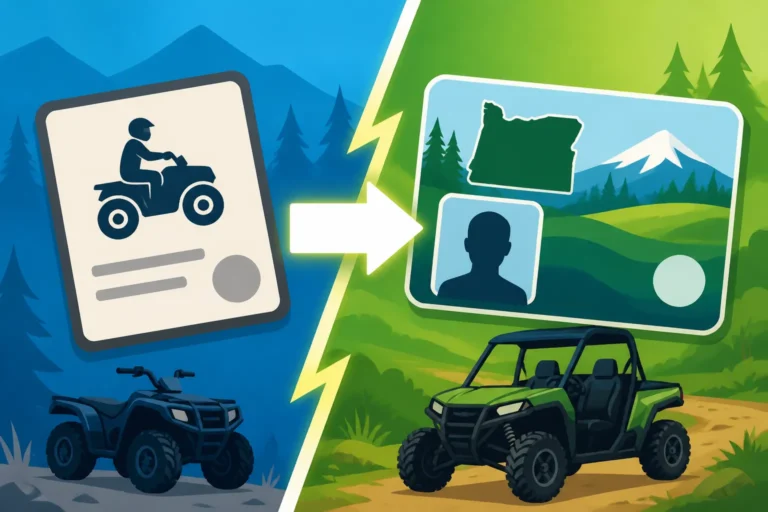
Oregon recognizes certain out-of-state ATV permits or registrations for a limited period. For a qualifying visitor, reciprocity can cover the machine for up to 60 consecutive days in Oregon. After that, the visitor generally needs an Oregon ATV permit to continue riding.
The key word is “qualifying.” Having a plate, registration document, or sticker from another state does not automatically mean Oregon will accept it. Oregon’s reciprocity rules depend on the issuing state and the type of credential. Check the current Oregon Permit Reciprocity List before you travel, and make sure the document or decal on the machine matches the credential Oregon recognizes.
The 60-day limit is a ceiling on reciprocity, not a free riding period available to everyone. If your home state is not on Oregon’s list, or your machine does not have the required state credential, you may need an Oregon permit before riding. A visitor should not assume that a short trip out of Oregon restarts the 60-day period; confirm how the current rule applies to your travel plans with the official program.
| Visitor’s situation | What to check | Practical next step |
|---|---|---|
| Home state appears on Oregon’s permit reciprocity list | Whether your machine has the specific valid permit or registration Oregon recognizes | Carry the credential and follow its display rules |
| Home state is not on the list | Whether your machine needs an Oregon permit before it is ridden | Arrange an Oregon permit before riding |
| Your visit may reach 60 consecutive days | When your Oregon stay began and when reciprocity ends | Get an Oregon permit before continuing past the limit |
| You have an out-of-state safety card | Whether Oregon’s separate safety-card list accepts it | Verify the card rule for each rider |
| You plan to ride at a managed recreation site | Day-use, parking, or other site-specific requirements | Check the land manager’s current rules |
For more detail about how Oregon’s qualifying states and credentials work, see Riding Oregon With an Out-of-State Permit and Oregon’s Sixty-Day Cap on Reciprocity. The cap is especially relevant to seasonal visitors, people staying with family for an extended period, and anyone who rides Oregon trails in more than one trip.
How to count your visit
Treat the 60-day period as a limit on consecutive time in Oregon, not as a number of days actually spent riding. A visitor who brings a machine into Oregon and leaves it at a campsite or property for several weeks should not assume those non-riding days do not count. The safest approach is to track the period from when the machine and rider are in Oregon under the reciprocal credential, then confirm the details with Oregon’s official ATV program if the timing is close.
Do not wait until the last planned ride to sort out the permit. Processing, delivery, or finding a seller may take time, and a visitor can avoid a preventable interruption by checking the deadline early. If your trip could approach the limit, plan on getting an Oregon permit before the reciprocal period ends.
Your home-state credential must meet Oregon’s rules
Oregon reciprocity is about the machine’s qualifying permit or registration, not simply the rider’s home address. A resident of a reciprocal state may still have a problem if the machine lacks the required credential, the credential has expired, or its decal is not displayed as required. Conversely, a visitor should not expect an Oregon permit to be unnecessary just because the machine is registered for some other purpose.
Check the details before the trip:
- Confirm the state is on Oregon’s current reciprocity list. Do not rely on a friend’s experience from another state or an old online discussion.
- Identify the credential Oregon recognizes. A vehicle registration, OHV sticker, and trail permit can serve different purposes. The name of the document alone may not establish that it qualifies.
- Check that it is current. An expired decal or registration can undermine the basis for reciprocity.
- Make the credential visible where required. Follow the issuing state’s display rules and Oregon’s rules for reciprocal machines.
- Keep proof available. Carry the relevant card or paperwork, and have a clear photo or copy as backup where permitted. A copy does not replace a required decal.
State lists for machine permits and rider safety cards are not the same. A state may be recognized for one purpose but not the other, which is why a visitor needs to check both. See Two Lists That Do Not Match in Oregon and Does Oregon Accept an Out-of-State Safety Card?.
The safety-card question is about the person operating the machine. It is separate from whether the machine has a valid reciprocal permit. A rider may have the correct machine decal but still need to meet Oregon’s rider-education requirement. The answer can also vary by ATV class and the rider’s age, so check the relevant rules for each operator rather than assuming one adult’s documents cover everyone in the group. Oregon Rules for a Visiting Rider is useful when the trip includes riders with different credentials or ages.
If your state is not on Oregon’s reciprocity list, or you cannot verify that your document is accepted, the straightforward option is to arrange an Oregon permit before riding. See Oregon ATV Permit for a Nonresident for the visitor-specific details. Avoid relying on a dealer’s out-of-state paperwork or a general road registration unless Oregon’s official guidance confirms that it satisfies the OHV requirement.
Permit reciprocity does not cover every ride expense or rule
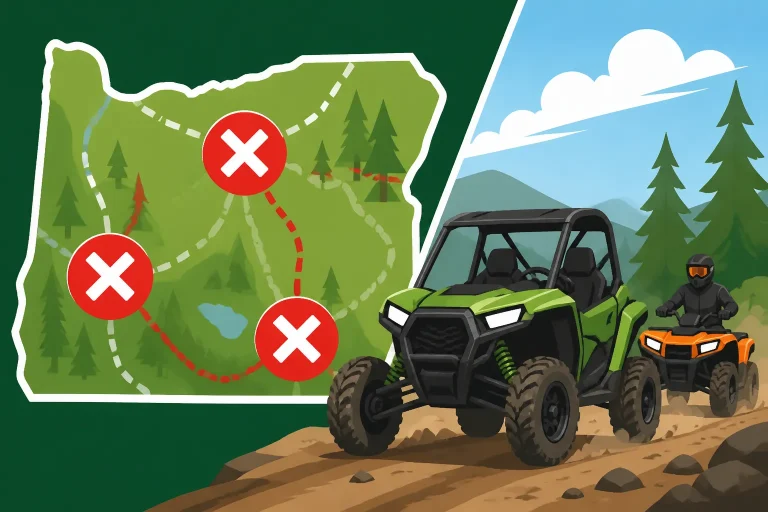
A valid reciprocal credential addresses the machine-permit requirement for a limited period. It does not grant access to every trail, road, staging area, or recreation site. Land managers can have separate rules, closures, and fees, and the visitor remains responsible for following them.
For example, a site may charge a day-use or parking fee even when the machine has a valid state permit. Those charges are not interchangeable: paying for parking does not make an unpermitted machine legal, and an ATV permit does not necessarily pay for access to a particular site. Check Oregon Day Use Fees Explained before heading to a staging area, especially if your itinerary includes more than one recreation area.
The same distinction applies to other riding requirements. A reciprocal permit does not excuse a rider from applicable safety-card rules, equipment requirements, road-use restrictions, or closures. A trail map may not reflect a temporary closure, and a road that looks open on a navigation app may have signs or restrictions that control access. Check the rules for the specific land manager and riding area shortly before the trip.
A simple pre-ride review can prevent most paperwork surprises:
- Verify the machine’s class and the credential it needs.
- Confirm Oregon recognizes the credential from your state.
- Check the credential’s expiration and decal placement.
- Determine whether each rider needs an Oregon safety card or has an accepted out-of-state card.
- Check the 60-day limit if the machine will be in Oregon for an extended stay.
- Look up day-use, parking, camping, and other site charges separately.
- Check current trail and road closures before riding.
If you need to switch from a reciprocal credential to an Oregon permit, do it before the exemption ends. A permit purchased after a problem arises may not solve the immediate issue if you are already stopped or are not able to obtain it promptly. Visitors planning a long stay can compare the timing and process in After Sixty Days an Oregon Visitor Buys a Permit.
A practical plan for short and extended visits
For a brief vacation, start by confirming that the machine’s home-state credential qualifies and is current. Then check the safety-card requirement for each rider and the rules at the destination. If those pieces are in order, the 60-day limit may not affect a short trip, but other site and riding restrictions still apply.
For a longer stay, keep a written record of when the machine enters Oregon and when the reciprocal period is expected to end. Build in time to obtain an Oregon permit rather than treating the final day as the day to start looking. If your visit includes a gap outside Oregon, or the machine is stored in the state while you travel elsewhere, ask the official program how that affects the consecutive-day calculation. Do not assume that crossing the state line resets the clock.
Visitors often bring several machines on one trailer. Check each one individually: a quad’s permit status does not cover a side-by-side, dirt bike, or another family member’s machine. Likewise, a person’s safety card is not a substitute for a machine permit. Keep the documents organized by machine and rider so that a roadside check does not turn into a search through bags and phones.
If you are uncertain whether your home-state permit qualifies, take the cautious route: verify it with Oregon’s official ATV program before riding, or obtain an Oregon permit. That is more reliable than relying on a general statement that Oregon “accepts out-of-state permits,” because acceptance depends on the state, credential, and time in Oregon. The central takeaway is simple: qualifying reciprocity can let a visitor ride for up to 60 consecutive days, but the permit, safety-card, and site rules must each be checked on their own.
Disclaimer
This article is for general informational purposes only and does not constitute professional advice. Laws, prices and regulations vary by location and change over time. Consult a qualified professional for guidance on your specific situation.