Does Oregon Accept an Out-of-State Safety Card?
A safety card from another state may let you ride at home, but that does not automatically mean Oregon will accept it. Oregon recognizes cards from certain states, and its safety-card reciprocity rules are separate from rules for ATV permits and machine decals. Check your card’s issuing state and your machine’s class before you head to an Oregon riding area.
The short answer: Oregon accepts some out-of-state cards
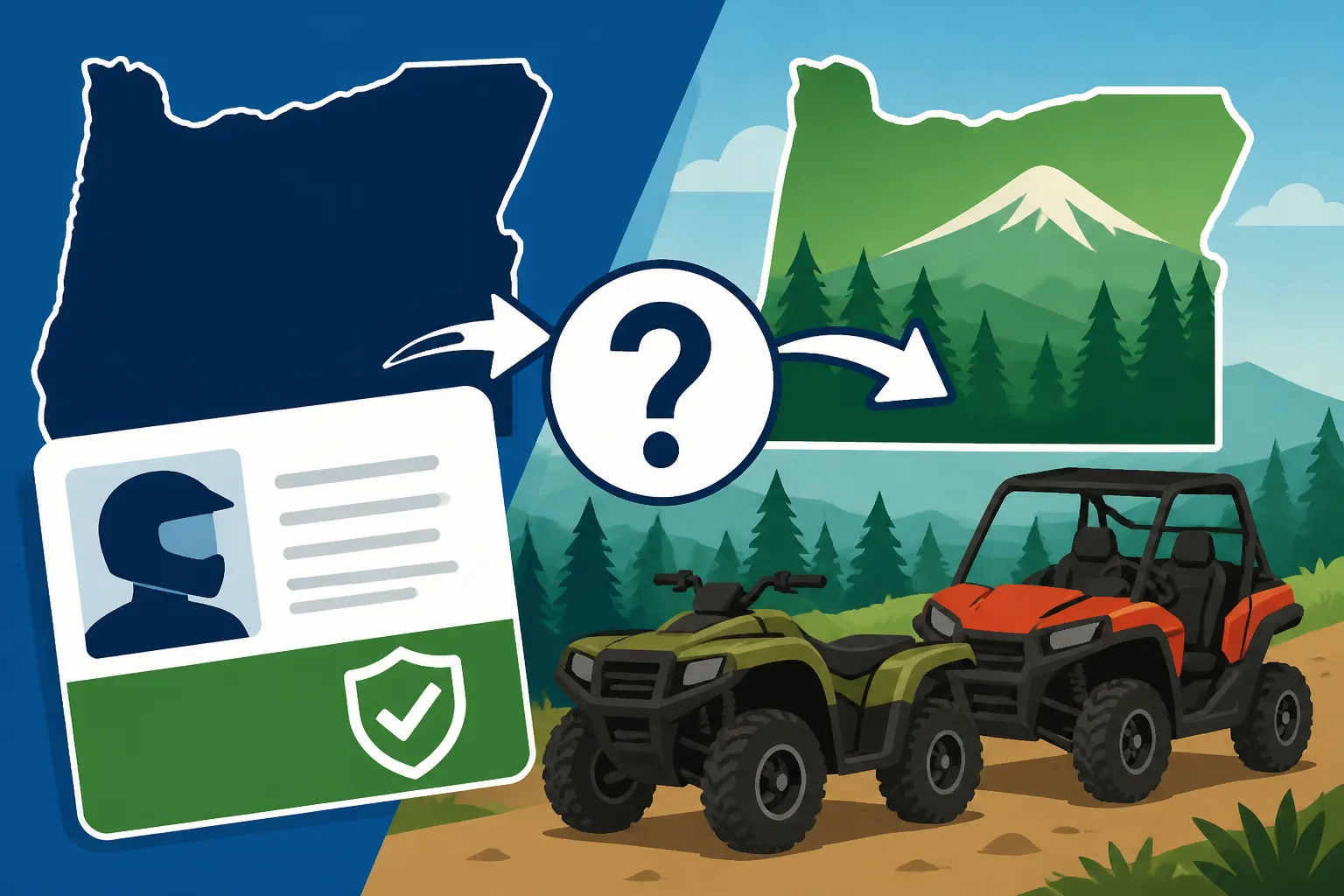
Oregon accepts an out-of-state ATV safety card only when it comes from a state on Oregon’s safety-card reciprocity list. The list covers 13 states, but a card from a state that is not listed does not qualify just because it is valid at home or was earned through a safety course.
The key is to check the state that issued your card against the current Oregon Safety Card Reciprocity List. Do not rely on a friend’s experience, an old forum post, or the fact that you have ridden in Oregon before. Reciprocity is a specific recognition rule, not a general acceptance of every state’s training credential.
Two examples make the distinction clear: Oregon accepts an Idaho safety card, while a Washington card is not on Oregon’s reciprocity list. Those examples are useful, but they do not replace checking the full list. If your card was issued by another state, confirm that state’s current status before riding.
Oregon’s recognition of a card also does not make the card a substitute for every other requirement. You still need to follow the rules that apply to your vehicle class, riding location, and situation. A safety card does not provide an Oregon operating permit, authorize riding on a closed route, or turn an off-highway machine into a street-legal vehicle.
| What you have | What it addresses | What it does not automatically cover |
|---|---|---|
| Out-of-state safety card | Rider education, if Oregon recognizes the issuing state’s card | Oregon operating permit, decal, road access, or machine registration |
| Oregon safety card | Oregon’s ATV education requirement where it applies | Site day-use fees, route permissions, or machine-specific requirements |
| Out-of-state permit or registration | The machine’s permit or registration status, subject to Oregon’s separate reciprocity rules | Rider safety-card requirements |
| Driver’s license | Driving privileges in situations where a license is required | Every ATV safety-card requirement or permission to ride any road |
For a fuller picture of the rider requirement, see Oregon ATV Safety Card Requirements. The practical takeaway is simple: treat the safety card, the machine permit, and any road-use authorization as separate checks.
Check the machine class and rider requirement too
A valid card from a recognized state is only useful if a safety card is required for the machine and rider in the first place. Oregon’s requirements vary by ATV class. Class I and Class III machines have safety-card rules that differ from the rules for Class IV machines, and a driver’s license may satisfy a requirement in limited circumstances. Do not assume one rule applies to every ATV or UTV.
Oregon’s class system is based on machine features such as width, weight, seating, and controls. If you are unsure which category your machine fits, start with Oregon’s Four ATV Classes Explained or Which Oregon ATV Class Your Machine Falls Into. A side-by-side and a quad may be subject to different card rules even if they are used on the same trail.
Keep these distinctions in mind:
- For Class I and Class III machines, check the card requirement for the rider even if the rider is an adult. Oregon’s rules are not necessarily limited to children.
- For a Class IV machine, the card requirement is tied to the rider’s age. Do not assume that a UTV driver of any age must meet the same card rule as a Class I rider.
- A driver’s license may replace a safety card in a limited situation, but it is not a blanket exemption for every class or activity. Confirm that the specific exception applies to the machine and rider.
- Separate age, supervision, passenger, helmet, and operating rules may still apply. A card does not waive those requirements.
These distinctions matter for families and mixed groups. An adult operating one type of machine may face a different card requirement from a teenager riding another type. Check each rider and machine separately rather than treating the group’s paperwork as one package. The related Oregon Rules for Riders Under 16 can help clarify youth requirements.
A safety card is also not the same as a driver’s license. Some road situations have licensing requirements of their own, and some off-road routes are closed to certain vehicles regardless of the operator’s education credential. If your plan includes riding on a road, review the road-access rules as well as the card rule.
What to do if Oregon does not recognize your card
If the issuing state is not on Oregon’s reciprocity list, do not assume that your home-state card will be accepted. The straightforward option is to complete Oregon’s approved ATV safety education process and carry the resulting Oregon card when you ride, if your class and circumstances require one.
Oregon offers an online safety course and card process. The course is a practical choice if you are planning a trip and cannot verify that your existing credential qualifies. Start with How to Get an Oregon ATV Safety Card and confirm the current process through the official Oregon ATV safety education service. If you have already taken substantial training elsewhere, check whether Oregon offers an approved equivalency route rather than assuming your existing course transfers automatically.
Use this checklist before leaving:
- Identify the machine’s Oregon class. Use the machine’s design and specifications, not just the name on its model badge.
- Check the rider’s situation. Age, license status, and vehicle class can affect whether a card is needed or whether a limited exception applies.
- Check the issuing state. Compare it with Oregon’s current safety-card list. Make sure you are looking at the safety-card list, not a permit reciprocity list.
- Confirm the credential is valid and belongs to the rider. Keep the card or another accepted form of proof accessible during the ride.
- Complete Oregon’s process if needed. If the state is not recognized, use the Oregon course or another officially approved route before riding.
- Check the machine’s permit separately. A recognized safety card does not cover the operating permit or decal.
If the card is accepted, keep proof available rather than leaving it at home. A digital card may be convenient, but have a way to show it if a phone battery dies or there is no signal. If you are unsure whether a digital version is accepted for the situation, confirm before your trip.
For a rider whose credential is not recognized, starting the Oregon course ahead of time is more reliable than trying to resolve the question at a staging area. A rental shop may have its own safety procedures, but those procedures do not automatically settle whether your personal out-of-state card qualifies. If renting, ask the shop what it provides and what you must bring; see Oregon Rules for a Rented Machine.
Keep safety-card reciprocity separate from permit reciprocity
One of the most common mix-ups is assuming that Oregon’s acceptance of a machine permit or registration also means it accepts the operator’s safety card. These are different forms of reciprocity, with separate lists and separate purposes.
The safety card concerns the rider’s education requirement. A permit or registration concerns the machine’s authority to operate under applicable rules. Oregon’s permit reciprocity list includes 18 states, while the safety-card reciprocity list includes 13. The lists do not match. A visitor can therefore have a machine credential Oregon recognizes while still needing to address the safety-card requirement, or have a recognized safety card while needing a separate Oregon permit.
For visitors, check both sides of the trip:
- Rider: Is the card accepted for this machine class and rider?
- Machine: Does the machine have an Oregon permit, or does its out-of-state permit or registration qualify under Oregon’s separate rules?
- Location: Does the riding area require a separate day-use payment, pass, or other access authorization?
- Route: Is the trail or road open to that machine class?
See Oregon Permit Reciprocity List and Riding Oregon With an Out-of-State Permit for the machine-side rules. In particular, do not treat a state registration sticker as proof that Oregon accepts the rider’s safety card. The reverse is also true: an accepted safety card does not prove that the machine meets Oregon’s permit requirements.
Before a trip, save or print the official information you used to confirm both credentials. This is especially useful if the card is from a state with a similar but differently named training program. If the credential’s wording or issuing authority is unclear, ask the appropriate Oregon program administrator before riding rather than relying on the card’s appearance.
The safest rule is to verify the exact card, class, and rider—not just the state name. Oregon recognizes cards from a limited set of states, including Idaho, but not every out-of-state credential qualifies. When in doubt, complete Oregon’s approved safety-card process and check the machine permit separately.
Disclaimer
This article is for general informational purposes only and does not constitute professional advice. Laws, prices and regulations vary by location and change over time. Consult a qualified professional for guidance on your specific situation.