Oregon ATV Permit for a Nonresident
Heading out for an epic ATV or UTV adventure in Oregon sounds incredible, but if you're visiting from out of state, the world of permits and safety cards can feel like trying to navigate the dunes in a blindfold. It's totally understandable to feel a bit confused about what Oregon requires from nonresidents. This comprehensive guide is here to clear up all that uncertainty, so you can focus on enjoying Oregon's amazing off-road trails and stunning scenery without any unwelcome surprises.
Do Visitors Need an Oregon ATV Permit?
This is often the first question on every nonresident rider's mind, and it's a really good one because the answer isn't a simple "yes" or "no." Oregon has a specific set of rules regarding out-of-state machines and how long you can ride here before needing an Oregon ATV operating permit. It’s all about making sure everyone contributes to maintaining our incredible riding areas, but also acknowledging that visitors aren't here permanently.
Understanding Oregon's Reciprocity Rules
Oregon actually has a pretty rider-friendly reciprocity policy when it comes to ATV permits, especially for those just passing through or enjoying a shorter vacation. If your off-highway vehicle (OHV) is legally registered or permitted in your home state, you typically don't need to immediately rush out and buy an Oregon permit the moment you cross the border. The state understands that you've already fulfilled similar requirements where you live. This initial grace period is a huge relief for many travelers, allowing them to enjoy our diverse landscapes, from the coastal dunes to the high desert trails, without an immediate bureaucratic hurdle.
However, this courtesy isn't endless. Oregon’s law states that your out-of-state permit or registration is honored for "sixty consecutive days." This "sixty consecutive days" is key because it means if you arrive on June 1st, your out-of-state permit is valid through July 30th, even if you don't ride every single day within that period. Imagine you’re a family from California who loves to visit the Oregon Dunes every summer. You might come for a long weekend in June, head home, and then come back for another week in July. As long as your total stay in Oregon, not necessarily continuous riding days, doesn't exceed 60 days from your first entry, your California registration or permit should cover you. But if you decide to extend your stay, perhaps for an entire summer working remotely from a cabin near Millican Valley, you’ll definitely need to look into getting an Oregon permit before that 60-day mark hits.
What an Out-of-State Permit or Registration Covers
So, what exactly counts as a valid "permit or registration" from your home state? Oregon is generally looking for a current, valid operating permit, registration, or equivalent decal that proves your machine is legally authorized to be ridden off-road in your state of residence. This could be a green sticker from California, an ATV registration from Nevada, or a permit decal from Arizona. The goal is to ensure that the machine isn isn't just a free-for-all, but rather that its ownership and operational status are recognized somewhere.
It’s important to note that while Oregon might honor your home state's permit for 60 days, the rules for the [Oregon ATV Safety Card] are slightly different and need to be checked separately. Oregon maintains a specific list of states whose safety cards it reciprocates. So, even if your machine's permit is good to go, you still need to make sure you, and any young riders, meet the safety education requirements. For instance, a Washington state ATV registration might get your machine on the trail for 60 days, but because Washington isn't on Oregon's safety card reciprocity list, you might still need to get an Oregon safety card if your home state's card isn't accepted. Always confirm both aspects to avoid any issues.
When a Nonresident Absolutely Needs an Oregon Permit
The moment your visit to Oregon stretches beyond that initial sixty consecutive days, or if your home state simply doesn't have an equivalent off-road permit or registration system, you'll need to obtain an Oregon ATV operating permit. This is particularly relevant for those planning extended stays, like snowbirds from colder climates who spend an entire winter exploring the high desert trails around Christmas Valley, or individuals who move to Oregon and bring their machines with them. If you’ve been here for over two months, even if you’ve only ridden a few times, your out-of-state permit has expired its welcome, and it's time to get an Oregon permit.
Failing to do so can lead to a Class C traffic violation, which means a fine and an interruption to your ride. Imagine you're enjoying a glorious day at the dunes, perhaps at Spinreel or Hauser, and a park ranger spots your out-of-state decal that expired its reciprocity weeks ago. Instead of an uninterrupted day of tearing up the sand, you're looking at a citation. It’s a minor inconvenience that can easily be avoided by planning ahead. So, if you’re planning on becoming a semi-permanent fixture on Oregon’s trails, or just extending your vacation longer than originally planned, make that Oregon permit a priority to keep your adventures smooth and worry-free.
How to Get an Oregon ATV Permit as a Nonresident
Once you determine that you do, in fact, need an Oregon ATV permit, the process is quite straightforward, whether you're still living out of state or have temporarily relocated to Oregon. The state has made it relatively easy to get the necessary documentation so you can legally enjoy the vast network of trails and riding areas available. You have a couple of convenient options to choose from, depending on your urgency and preference.
Buying an Oregon Permit Online
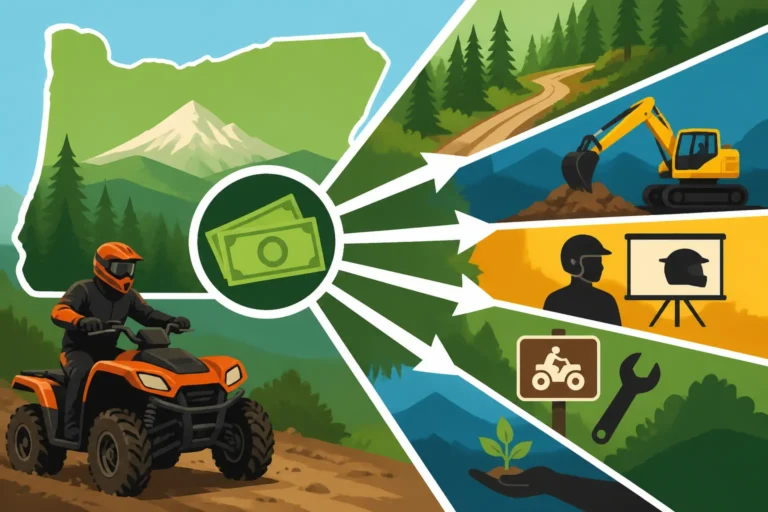
For many nonresidents, especially those planning their trip in advance or who live far from an Oregon permit agent, purchasing your permit online is the most convenient option. The [Oregon Parks and Recreation Department's Role] in managing these permits means their website is the go-to place for online purchases. The process is typically user-friendly: you'll navigate to their OHV permit section, provide details about your machine (like its make, model, VIN, and class), and input your personal information. You'll pay the permit fee, which is [One Oregon Permit Price for Every Class], regardless of whether you ride a quad, a side-by-side, or an off-road motorcycle.
The great thing about buying online is that you'll usually receive a temporary permit via email almost immediately after purchase. This means you can hit the trails right away, [Riding the Day You Buy Online], while you wait for your physical decal to arrive in the mail. Keep that temporary permit on your person or easily accessible on your phone, as it serves as proof until the physical decal shows up. Just remember that shipping times can vary, so if you're leaving for your trip very soon, you might want to consider the in-person option for an instant decal.
Finding an Oregon Permit Agent
If you prefer to get your decal in hand right away, or if you find yourself needing a permit unexpectedly during your trip, visiting one of Oregon's many authorized permit agents is the way to go. These agents are scattered throughout the state, often located in dealerships, outdoor recreation stores, and even some convenience stores, especially in areas popular with off-road enthusiasts. The benefit of an in-person purchase is that you walk out with the actual permit decal immediately, ready to be affixed to your machine. This eliminates any waiting period and gives you peace of mind.
You can usually find a list of [Oregon Permit Agents You Can Walk Into] on the Oregon Parks and Recreation Department's website. They often provide a search tool where you can enter a zip code or city to find the nearest agent. This is incredibly helpful if you're [Finding a Permit Agent on the Way] to a riding area like the Oregon Dunes or the Tillamook State Forest. When you go, be prepared to provide the same machine and owner information as you would online. The staff at these locations are usually very knowledgeable and can help you ensure you're getting the correct permit for your specific machine, whether it's [Oregon ATV Permit for a Side-by-Side] or [Oregon ATV Permit for an Off-Road Motorcycle].
What You'll Need for the Purchase
Regardless of whether you buy your permit online or in person, you'll need to have certain information and potentially some documentation ready. The primary details required are typically:
- Your personal information: Name, address (even your out-of-state address is fine), phone number, and email.
- Machine details: This includes the make, model, year, and vehicle identification number (VIN) of your ATV, UTV, or off-road motorcycle.
- Proof of ownership: While an Oregon title isn't mandatory for the permit itself (in fact, [Titling an ATV in Oregon Is Optional]), you might be asked to provide proof that you are the legal owner of the machine. This could be a bill of sale, a previous registration, or a title from your home state. Having a clear record of ownership is always a good idea, and resources like LawDepot can provide templates for a [Oregon Bill of Sale for an ATV] if you ever need to document a transfer of ownership, which can be useful when proving your machine is yours.
Having all this information organized beforehand will make the permit acquisition process much smoother and quicker, getting you onto the trails faster.
The Oregon ATV Safety Card for Nonresidents
Beyond the permit for your machine, Oregon also has a separate requirement for rider safety education – the Oregon ATV Safety Card. This is a crucial component of responsible off-road riding in the state, and it applies to nonresidents just as it does to residents. It's designed to ensure that everyone operating an ATV or UTV on public lands has a basic understanding of safe riding practices, environmental responsibility, and the rules of the trail.
Do Nonresidents Need a Safety Card?
Yes, with some specific exceptions, nonresidents generally do need an Oregon ATV Safety Card to legally operate an OHV on public lands in Oregon. This applies to most riders, regardless of age, though there are specific rules for riders under 16. It's not enough to just have a permit for your machine; the state wants to make sure the operator knows how to ride safely. However, Oregon does have a reciprocity agreement for safety cards with several other states. If you hold a valid ATV safety education card from one of the states on Oregon's approved list, your card will likely be honored.
It’s vital to check the current list of [Oregon Safety Card Reciprocity List] states because it can differ from the list of states whose permits Oregon reciprocates. For example, while your machine might be permitted in Washington, your Washington safety card may not be valid in Oregon. Always verify both your machine's permit status and your safety card's reciprocity before you arrive. If your home state's card isn't accepted, or if your state doesn't have such a program, you'll need to obtain an Oregon Safety Card. [Why Oregon's Two Reciprocity Lists Differ] is something many riders find confusing, but it boils down to different agreements for different types of credentials.
Getting an Oregon Safety Card Online
The good news is that getting an Oregon ATV Safety Card is completely free and can be done entirely online, which is incredibly convenient for nonresidents. The Oregon Parks and Recreation Department offers an online safety education course that covers all the necessary material. It’s designed to be comprehensive yet accessible, teaching you about everything from proper riding gear and environmental awareness to specific Oregon laws and trail etiquette.
After completing the online course, you'll take a test. You typically need to achieve an 80% pass mark. Once you pass, you can print your safety card right away. This immediate access means you don't have to wait for anything to be mailed, and you can ride as soon as you have your permit and card in hand. While the online course is excellent for theoretical knowledge, remember that for riders under 16, or for those without a valid driver's license, Oregon often has [Oregon Hands-On Training Requirements] within six months of getting the online card. Always check the specifics for your age and machine class.
Age and Supervision Rules
Oregon takes youth rider safety very seriously, and these rules apply equally to nonresidents. Generally, riders under the age of 16 must have an ATV Safety Card and must be supervised by an adult at all times while operating an OHV on public lands. There are specific guidelines regarding the type of machine they can operate based on their age and physical capabilities. For instance, children under 10 are typically restricted to Class I ATVs that are appropriately sized for them, and often cannot operate Class III or Class IV machines.
It’s not just about the safety card; it's also about proper supervision. The supervising adult must either possess a valid Oregon ATV Safety Card themselves or hold a valid driver's license. They need to be in a position to effectively supervise and assist the youth rider. These rules are in place to prevent accidents and ensure that our youngest riders develop safe habits from the start. So, if you're bringing a family from out of state to enjoy Oregon's trails, make sure all your youth riders meet both the safety card and supervision requirements before heading out.
What to Expect When Riding in Oregon as a Visitor
Once you've got your machine permitted and your safety card in hand, you're almost ready to hit Oregon's incredible trails. But before you launch into the sand or forest, it's wise to be aware of a few more practical aspects and common regulations that apply to all riders, including visitors. Being prepared will ensure a smooth, enjoyable, and uninterrupted experience.
Decal Placement and What Rangers Check
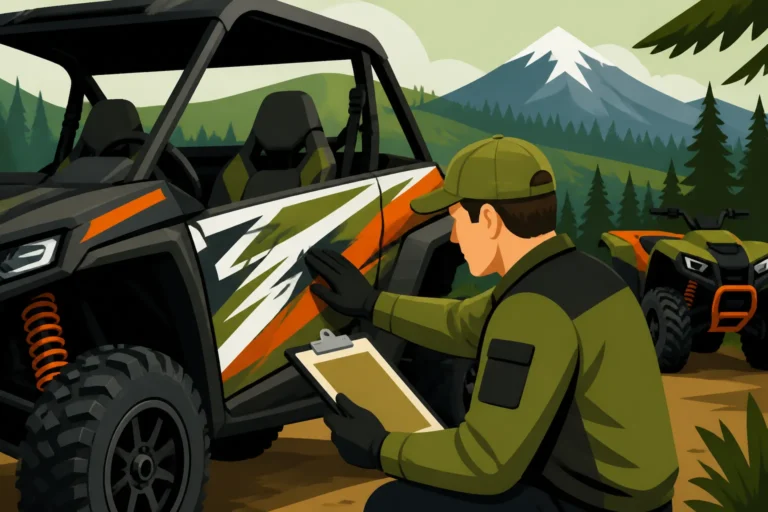
When you get your Oregon ATV permit, you'll receive a decal that needs to be properly affixed to your machine. The exact location depends on the type of OHV you're riding. For a Class I ATV (quad), the decal should be placed on the right-hand side of the machine, typically on the front fender or somewhere clearly visible. For Class IV side-by-sides, it’s often on the right side of the machine, visible to the rear. Off-road motorcycles (Class III) usually have their decal placed near the rear fender or license plate area. [Oregon Permit Decals and Where They Go] provides excellent visual guidance. The key is visibility.
When you roll into a staging area like the one at [Decal Checks at Spinreel] on the dunes, or [Decal Checks at Browns Camp] in the Tillamook State Forest, expect rangers or law enforcement to be present. They're often checking for valid permits, proper decal placement, and safety cards. They're not trying to spoil your fun; they're ensuring everyone's safety and compliance. Having your decal properly displayed and your safety card readily available (on your phone or printed) will make these checks quick and hassle-free. It shows you're a responsible rider and helps keep our public lands safe for everyone.
Other Oregon Rules to Be Aware Of
Beyond permits and safety cards, Oregon has a number of other regulations that all riders, including nonresidents, must adhere to. These are in place to protect riders, other recreationists, and the environment.
- Spark Arresters and Sound Limits: Every OHV operating on public lands in Oregon must be equipped with a U.S. Forest Service approved spark arrester. This is crucial for preventing wildfires, especially during dry seasons. Additionally, there are strict [Oregon Sound Limits for ATVs] in place to reduce noise pollution. Aftermarket exhausts are fine, but they must meet these decibel limits. Rangers at staging areas, such as those at Millican Valley, often conduct sound checks, and failing one can lead to a citation.
- Helmet Laws: Oregon has a mandatory [Oregon Helmet Law for Adults] and all riders under 18 must wear a DOT or Snell approved helmet, securely fastened. Even if you're over 18, it's highly recommended for safety. While a roof or roll bar in a Class IV machine offers some protection, it generally doesn't exempt an adult from helmet requirements on open trails.
- Designated Riding Areas and Closures: Always ride in designated OHV areas and stay on marked trails. Riding off-route or in closed areas can damage sensitive ecosystems and lead to hefty [Oregon Fines for Riding Without a Permit] (or for riding where you shouldn't be). Be aware of seasonal closures, especially in areas like the [The Oregon Dunes National Recreation Area], where closures may occur for wildlife protection (like the Snowy Plover) or fire danger. Check local conditions before you head out.
- Towing and Passengers: Be mindful of Oregon's rules for carrying passengers on ATVs, especially quads, which are often designed for one rider. If your machine is designed for two, ensure the passenger has proper footrests and handholds. [Oregon Passenger Rules on a Quad] are specific. Also, if you're towing a trailer or other equipment with your side-by-side, understand the state's towing regulations.
- Documentation: Always carry your permit card, safety card, and any other relevant identification or proof of ownership with you while riding. While a physical title might not be required, having something like a bill of sale (which you can draft using a template from a service like LawDepot) or registration from your home state can prove ownership if questioned. Keeping these documents in a waterproof bag is a smart move, especially in Oregon's often damp climate.
By familiarizing yourself with these regulations, you're not just avoiding potential fines; you're contributing to a safer, more sustainable riding environment for everyone. Enjoy the ride, and welcome to Oregon's incredible OHV community!
| Requirement | Oregon Resident | Nonresident (Initial 60 Days) | Nonresident (After 60 Days) |
|---|---|---|---|
| Machine Permit | Required | Out-of-state honored | Oregon Permit Required |
| Safety Card | Required | Reciprocal states honored | Oregon Card Required |
| Cost | Standard Fee | N/A (for initial 60 days) | Standard Fee |
| Decal Placement | Specific rules | N/A | Specific rules |
| Online Purchase | Yes | N/A (for initial 60 days) | Yes |
| In-Person Purchase | Yes | N/A (for initial 60 days) | Yes |
| Spark Arrester | Required | Required | Required |
| Helmet Law | Required | Required | Required |
Disclaimer
This article is for general informational purposes only and does not constitute professional advice. Laws, prices and regulations vary by location and change over time. Consult a qualified professional for guidance on your specific situation.