Titling an ATV in Oregon Is Optional
Navigating the world of ATV ownership in Oregon can sometimes feel like sifting through a pile of shifting sand dunes, especially when it comes to official paperwork. Many folks assume that buying an ATV means you'll automatically get a title, just like with a car or truck, and then they're left scratching their heads when they find out it's not quite that straightforward. This comprehensive guide is here to clear up all that confusion and explain exactly why titling an all-terrain vehicle in Oregon is actually optional, what that truly means for you, and how to make the best decisions for your machine and peace of mind.
Understanding Oregon's Optional ATV Titling
When you buy a car, a title is non-negotiable; it's the bedrock proof of ownership. So, it's totally natural to assume the same applies to your shiny new (or new-to-you) ATV, dirt bike, or side-by-side. But in Oregon, the rules for off-highway vehicles (OHVs) take a bit of a different path. The state decided some time ago that while an operating permit is absolutely mandatory for riding on public lands, a formal vehicle title is actually an elective step. This distinction can throw a lot of new owners for a loop, and even seasoned riders sometimes forget the nuances.
Why Oregon Chose Optional Titling
The decision to make ATV titling optional wasn't arbitrary; it came from a place of understanding how these machines are primarily used in Oregon. Unlike street-legal vehicles that spend their lives on public roads, off-highway vehicles, by their very nature, spend most or all of their time off the beaten path. For many years, OHVs were largely seen as recreational equipment, similar to a boat or a snowmobile, which often have different ownership documentation requirements than passenger vehicles. The state aimed to reduce unnecessary bureaucratic hurdles for owners who might only use their machines on private property or in designated off-road areas.
It also simplified things from an administrative standpoint. The sheer volume of ATVs and UTVs used for farming, logging, or just exploring the backcountry meant that mandating titles for every single one could create a significant burden for both owners and state agencies. By making it optional, Oregon acknowledged the diverse ways these machines are utilized, from a weekend warrior ripping up the dunes to a rancher checking fence lines. This flexibility, while convenient for some, does introduce a layer of complexity for others, particularly those who are used to the clear-cut process of titling a road-going vehicle. You can dive deeper into this specific choice in [Why Oregon Made Titling Optional].
What "Optional" Really Means for You
The word "optional" can sometimes feel like a suggestion, but in this context, it carries significant implications for your rights and responsibilities as an ATV owner. If you choose not to title your ATV in Oregon, you're not breaking any laws, and you won't be penalized simply for lacking a state-issued title. However, this choice shifts the burden of proof of ownership directly onto you. Without that official piece of paper from the state, you'll need to rely on other documents, like a bill of sale, purchase agreements, or previous registration documents, to establish that the machine is rightfully yours.
This can become particularly important in situations that aren't quite so fun, such as if your ATV is stolen, or if you need to resolve a dispute about its ownership. While an operating permit proves you're allowed to ride on public land, it doesn't serve as a legal document of ownership. So, while you technically can forgo the title, it's crucial to understand the potential challenges that might arise down the road if you do. For many, the peace of mind offered by an official title far outweighs the minimal effort involved in obtaining it, especially for valuable machines or those bought and sold frequently.
The Differences Between Titling and Permitting Your ATV
This is where a lot of folks get tripped up, and it's absolutely one of the most important distinctions to grasp for any Oregon ATV owner. Titling and permitting are two completely separate processes, governed by different state agencies, and they serve entirely different purposes. Confusing one for the other can lead to frustrating moments at the staging area or even during a roadside stop. An operating permit is about allowing you to ride; a title is about proving you own the machine.
Oregon's ATV Operating Permit vs. Title
Let's break it down: An Oregon ATV Operating Permit is a sticker, or decal, that you place on your machine, signifying that you've paid the necessary fees to ride on designated public lands. This permit is mandated by the Oregon Parks and Recreation Department (OPRD) and its sole purpose is to ensure that you're contributing to the fund that maintains and develops OHV riding areas. Think of it like a pass or a membership card to Oregon's fantastic trail systems and dunes. Without it, you could face a hefty fine if caught riding on public land. [Oregon's ATV Operating Permit] goes into much more detail on this essential requirement.
A title, on the other hand, is a legal document issued by the Oregon Driver and Motor Vehicle Services (DMV). It formally establishes legal ownership of your ATV. It’s a certificate, usually on security paper, that names you as the legal owner. It has nothing to do with whether you can legally ride on the Oregon Dunes or in the Tillamook State Forest; it's purely about who holds the deed to the machine. You absolutely need a permit to ride public trails, but you don't necessarily need a title to legally own your machine, though many choose to obtain one for the benefits it offers.
Why Oregon's DMV Does Not Handle ATV Permits
Another common source of confusion is which state agency handles what. People often assume that because the DMV handles car registrations and titles, they'd also handle ATV permits. But that's not the case. The Oregon Parks and Recreation Department (OPRD) is the state agency responsible for the entire OHV permit program, including issuing permits, managing the funds generated, and overseeing the trail systems. The DMV, while they can issue titles for ATVs (if you choose to get one), has no involvement in the operating permit system.
This separation of duties makes sense when you consider the mission of each agency. The DMV's focus is primarily on road-going vehicles, driver licensing, and establishing legal ownership for items that require registration for highway use. OPRD, conversely, is all about outdoor recreation, land management, and maintaining the quality of Oregon's natural spaces for public enjoyment. The funds collected from [Oregon's ATV Operating Permit] go directly back into the OHV program, ensuring that those fantastic trails stay open and well-maintained. So, if you're looking for an operating permit, head to OPRD or one of its authorized vendors; if you want a title, that's a DMV affair. For more on the DMV's limited role, see [Why Oregon's DMV Does Not Register ATVs].
Benefits of Titling Your ATV Even if It's Optional
Even though Oregon gives you the option to skip the title, there are compelling reasons why many experienced riders and savvy buyers choose to go through the process. Think of it as an extra layer of protection, a kind of insurance for your ownership rights that can save you a lot of headaches down the line. It's often about proactive problem-solving, preventing potential disputes or complications before they even arise.
Proving Ownership and Preventing Theft
The most significant benefit of an Oregon ATV title is the irrefutable proof of ownership it provides. In a perfect world, a bill of sale would always be enough, but we don't live in a perfect world. A title, issued by the state, is universally recognized as the definitive legal document stating who owns a particular vehicle. If your ATV is ever stolen, having a title can dramatically simplify the recovery process with law enforcement and insurance companies. Without one, you might have to gather various other documents—bills of sale, payment records, photographs—to build a case for ownership, which can be time-consuming and stressful.
Moreover, a title acts as a deterrent to theft in a subtle way. When you report a stolen titled vehicle, it can be flagged in national databases, making it much harder for thieves to sell or re-title it elsewhere. While a title certainly doesn't prevent theft entirely, it makes the machine a "hot potato" that is harder to dispose of legally. It also provides a clear chain of custody, which is vital if the machine changes hands multiple times. [Proving Ownership Without a Title] can be a real challenge, underscoring the value of a title.
Smoother Resale and Inheritance Processes
When it comes time to sell your ATV, having a clean Oregon title makes the transaction significantly smoother and often more appealing to potential buyers. Think about it: when you're buying something expensive, you want all the paperwork to be in order. A title provides that sense of security and legitimacy. Buyers are generally more comfortable purchasing a titled machine because it removes any doubt about who the rightful owner is and simplifies their own subsequent titling or permitting process. It eliminates the need for them to heavily scrutinize a bill of sale or wonder about past ownership history.
Similarly, if you ever plan to pass your ATV down to a family member, or if it becomes part of your estate, a title streamlines the inheritance process. It clearly designates the asset as yours, making it easier for your beneficiaries to transfer ownership without probate court complications or disputes among heirs. Without a title, family members might face difficulties in proving the machine was truly part of your estate, potentially requiring affidavits or other legal steps to establish their right to it. A simple [Oregon Bill of Sale for an ATV] is helpful, but a title adds a layer of legal certainty that's hard to beat for major life events.
How to Title an ATV in Oregon (When You Choose To)
Okay, so you've decided the benefits outweigh the optional nature, and you want to title your ATV in Oregon. Great choice! The process, while involving a trip to the DMV, is generally straightforward once you have all your ducks in a row. It's not as complex as some might imagine, but attention to detail, especially with documentation, is key.
Required Documents for Titling
Before you even think about heading to your local DMV office, gather all the necessary paperwork. This will save you a world of frustration and a potential second trip. Here’s what you’ll typically need:
- Application for Title (DMV Form 735-226): This is the core document. You can usually download it from the Oregon DMV website or pick one up at any DMV office. Fill it out completely and accurately.
- Proof of Ownership: This is crucial. For a new ATV, you'll need the Manufacturer's Statement of Origin (MSO) or Manufacturer's Certificate of Origin (MCO). If it's a used ATV, you'll need the previous owner's Oregon title (if they had one) signed over to you, or a bill of sale, especially if the machine was previously untitled or came from a state where titling wasn't required. A detailed [Oregon Bill of Sale for an ATV] is vital here, especially when dealing with machines without previous titles. Even if you're using a template from a service like LawDepot, ensure all the critical information is included: buyer/seller names, addresses, date, price, and vehicle identification number (VIN).
- Vehicle Identification Number (VIN) Inspection: Sometimes, especially if the ATV is from out-of-state or has no prior Oregon record, the DMV might require a VIN inspection. This helps verify that the VIN on the machine matches your paperwork and hasn't been tampered with. It can often be done at the DMV office, or sometimes by law enforcement.
- Lien Release (if applicable): If there was a loan on the ATV, you'll need a lien release from the lender proving the loan has been paid off.
- Payment for Titling Fees: There's a fee associated with obtaining a title. As specifics vary, always check the current rates on the Oregon DMV website or by calling ahead.
The Titling Application Process
Once you have your documents in hand, the actual application process is quite simple:
- Visit a DMV Office: This usually needs to be done in person for the initial titling, especially if a VIN inspection is required. Make sure to bring all your original documents.
- Submit Your Application: Present your completed application, proof of ownership, and any other required documents to the DMV clerk. They will review everything for completeness and accuracy.
- Pay the Fees: You'll pay the applicable titling fees at this point.
- Receive Temporary Proof: The DMV will usually issue you a temporary registration or receipt, which serves as proof that your application is being processed.
- Wait for Your Title: Your official Oregon ATV title will then be mailed to you, typically within a few weeks. The turnaround time can vary, so be patient.
It's a straightforward process, but preparing thoroughly beforehand is the best way to ensure a smooth experience. This process is essentially the same whether you're titling [Titling a Class I Without Registering It] or any other class of ATV.
Checking a VIN Before Buying Used
This step isn't just for titling, but it's absolutely critical if you're considering titling a used ATV, or even just buying one. Before you hand over any cash for a used machine, whether from a private seller or a dealer, always perform a thorough VIN check. The Vehicle Identification Number is unique to that specific ATV and holds a wealth of information. A VIN check can reveal if the ATV has been reported stolen, if it has a salvage history, or if there are any outstanding liens against it.
There are various online services that can run a VIN check for a fee, or you can contact local law enforcement to inquire about its status, especially for stolen vehicle reports. You want to make sure the VIN on the machine physically matches the VIN on any paperwork the seller provides, like a bill of sale or a previous title. Discrepancies here are a major red flag. Taking the time for [Checking a VIN Before Buying Used] can save you from inadvertently purchasing a stolen machine, a headache you definitely don't want when trying to establish legal ownership, even if titling is optional. LawDepot is an example of a service that can help you generate a professional bill of sale, which would include a VIN field, making it easier to track and verify.
What Happens If You Don't Title Your ATV
Deciding not to title your ATV in Oregon is a perfectly legal choice, but it's one that comes with certain responsibilities and potential challenges. It's not about being "wrong," but about understanding the consequences of relying solely on a bill of sale or other informal documentation for proof of ownership. While it might seem like a minor detail when you're hitting the trails, these issues can quickly become major headaches in less-than-ideal circumstances.
Challenges with Proving Ownership Without a Title
Without an official Oregon title, your ability to unequivocally prove ownership of your ATV becomes more complicated. Imagine this scenario: you're at the Oregon Dunes, and your ATV goes missing from your camp. When you report it to the authorities, they'll ask for proof of ownership. If all you have is a handwritten bill of sale from a private party five years ago, and perhaps that person's contact information is now outdated, it can make it incredibly difficult for law enforcement to confirm you're the rightful owner. They might have to spend extra time investigating, delaying the recovery process.
This also extends to insurance claims. If your ATV is damaged or stolen, your insurance company will require proof of ownership before they'll pay out a claim. While a comprehensive bill of sale (perhaps one you crafted using a template from LawDepot) coupled with other evidence like purchase receipts or photos can often suffice, a state-issued title is always the cleanest and most universally accepted form of proof. It eliminates ambiguity and speeds up the entire claims process. Without it, you might find yourself gathering multiple documents and statements to build your case, wasting valuable time and energy.
Complications When Selling or Buying an Untitled Machine
The optional nature of titling in Oregon can create particular challenges in the used ATV market. If you're selling an ATV that you never titled, you might encounter buyers who are hesitant, even if you have a perfectly legitimate [Oregon Bill of Sale for an ATV]. Many buyers, especially those new to Oregon's ATV laws or from states with mandatory titling, expect a title. They might worry about the machine's history, potential hidden liens, or simply how they'll prove ownership themselves down the road. This can lead to lower offers or a longer sales process as you try to reassure potential purchasers.
Conversely, if you're buying an untitled used ATV from a private seller, you need to be extra vigilant. It's imperative to get a comprehensive bill of sale that includes all the machine's details, the VIN, and the full contact information of both buyer and seller. Without a title, you're relying entirely on the seller's honesty and the thoroughness of your bill of sale. [Buying a Used Quad in Oregon] can be simplified if you understand the titling nuances. Always perform a VIN check to ensure it's not stolen, and be prepared that if you later decide to title the machine, the Oregon DMV might require additional steps or documentation to verify its origin.
Specific Scenarios: Titling for Different ATV Types and Uses
The decision to title often hinges on the specific circumstances of the ATV, how it's acquired, and how it will be used. While the general process remains the same, understanding these specific scenarios can help solidify your choice and ensure you gather the right documentation from the start.
Titling a New ATV from a Dealer
When you purchase a brand-new ATV from an authorized dealer in Oregon, the process for titling, if you choose to do so, is usually the most straightforward. The dealer will typically provide you with a Manufacturer's Statement of Origin (MSO) or Manufacturer's Certificate of Origin (MCO). This document is essentially the "birth certificate" for your ATV, proving it's new and has never been titled before. The dealer will often help you fill out the necessary paperwork for the DMV, or at least provide you with everything you need to take to the DMV yourself.
They're usually well-versed in the optional titling laws and can guide you on the steps, including how to acquire an [Oregon ATV Permit Cost] for riding. Because the MSO/MCO is an official document from the manufacturer, it leaves no doubt about the machine's origin and initial ownership. This makes applying for an Oregon title simple, as you have clear, undisputed proof of ownership right from the start. It’s also often easier to finance a new, titled machine, as lenders prefer the clear ownership documentation.
Titling a Used ATV from a Private Seller
This is where the optional titling can get a bit more complex, especially if the previous owner never titled the machine themselves. If you're buying a used ATV and the seller does have an Oregon title, they will simply sign it over to you, much like with a car title. You then take this signed-over title, along with the application form and fees, to the DMV to have it transferred into your name. This is the ideal scenario for a used purchase.
However, if the seller never titled the ATV (which is common in Oregon), you'll need a comprehensive bill of sale as your primary proof of ownership. This bill of sale should clearly identify the ATV by VIN, make, model, and year, along with the names, addresses, and signatures of both the buyer and seller. Using a template from a reputable source like LawDepot can ensure you capture all necessary details. When you go to the DMV, they will process your application using this bill of sale and may require additional verification or a VIN inspection to ensure the machine isn't stolen or has any prior issues. This is covered in [Buying a Used Quad in Oregon].
Titling for Machines Used Only Off-Road
Many ATVs in Oregon are purchased specifically for use on private land—farms, ranches, timber properties, or large recreational parcels. For these machines, the need for an operating permit is often moot, as permits are only required for public land use. This scenario is a prime example of why titling was made optional in the first place: why impose extra bureaucracy on a machine that will never touch a public trail or road? If your ATV is strictly a "woodlot-only" machine or for private property use, you might truly feel that a title is unnecessary.
However, even for these machines, the benefits of clear ownership still apply. Should the machine ever be stolen from your property, a title makes recovery easier. If you decide to sell it down the line, a title will still make the sale more attractive and less complicated for the next owner, even if they also plan to use it exclusively on private land. So, while a title might not be legally necessary for private-land-only use, it still offers robust protections for your investment. Find more information in [Oregon Title for a Machine Used Only Off-Road].
Titling an ATV Bought Out of State
Bringing an ATV into Oregon from another state adds another layer to the titling decision. States have varying titling and registration laws for OHVs. Some states, like California, have mandatory registration (like a "green sticker") but might not issue a traditional title in the same way Oregon's DMV does for cars. Others might have no titling or registration requirements at all. If you're bringing in a machine that was titled in another state, you'll generally follow a process similar to transferring an Oregon title, providing the out-of-state title as your proof of ownership.
If the machine comes from a state with no titling, or if the previous owner never titled it there, you'll need a comprehensive bill of sale and possibly other forms of ownership proof (like past registration cards from that state). The Oregon DMV will want to establish a clear chain of custody. They may also require a VIN inspection to confirm the machine's identity, as mentioned earlier. It's always best to contact the Oregon DMV directly or visit their website for the most up-to-date requirements when dealing with an out-of-state purchase, as the specifics can sometimes be nuanced. [What Oregon Requires After an Out-of-State Purchase] details these requirements further.
Potential Pitfalls and Common Misconceptions About Oregon ATV Titling
Even with the optional nature of titling, there are still some common misunderstandings that can lead to confusion or unintended issues for ATV owners. It's easy to conflate different documents or assume that one piece of paper serves multiple purposes, but in the world of vehicle ownership, precision matters.
Confusion with Vehicle Registration
One of the biggest misconceptions is confusing ATV titling with vehicle registration. For cars, trucks, and motorcycles that operate on public roads, titling and registration often go hand-in-hand, both handled by the DMV. Registration grants you permission to operate the vehicle on public highways and requires things like license plates and often proof of insurance. This is why many people think "registration" applies to ATVs too.
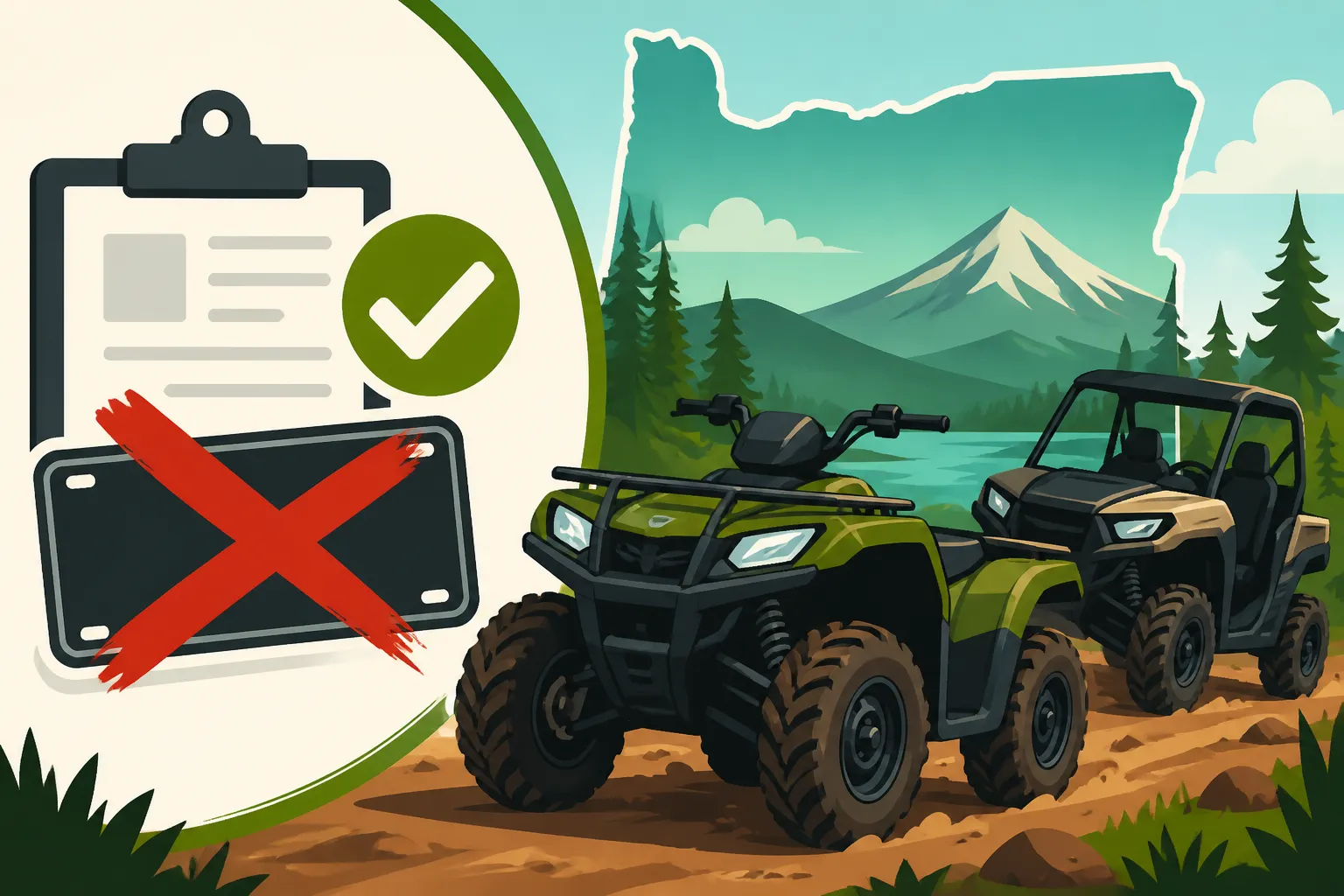
However, ATVs are generally not street legal in Oregon (with very limited exceptions for specific classes and designated access routes), and therefore do not undergo traditional vehicle registration for road use or receive license plates. The closest equivalent for an ATV is the operating permit issued by OPRD, which, as we've discussed, is completely separate from a title. So, while you might title your ATV at the DMV, you won't be "registering" it in the typical sense for highway use, nor will you receive license plates for it. You can review [Oregon's Class II Street-Legal Exception] for rare cases, but for most ATVs, the distinction remains.
The Role of a Bill of Sale in Lieu of a Title
Many owners in Oregon, embracing the optional nature of titling, rely solely on a bill of sale as their proof of ownership. And yes, a properly executed bill of sale can serve as legal proof of ownership. It's a contract between a buyer and seller, detailing the transaction and identifying the machine. Services like LawDepot offer excellent templates for comprehensive bills of sale that cover all the necessary legal points. It can be a very effective document for many purposes.
However, it's crucial to understand that a bill of sale is a private contract, whereas a state-issued title is an official government document. In a dispute, a title from the DMV holds a stronger legal weight because it's validated by the state. While a bill of sale is a powerful piece of evidence, especially when combined with other documentation (like payment records or previous permit applications), it can be more easily disputed or lost than an official title. For example, if the original seller disappears or the bill of sale gets damaged, proving ownership becomes significantly harder without a state title as backup. This highlights why some people still choose to title their machines, even if they have a robust bill of sale.
Making an Informed Decision: To Title or Not to Title
Ultimately, the decision to title your ATV in Oregon rests with you. There’s no single right answer for everyone, as personal circumstances, the value of your machine, and your comfort level with different levels of documentation all play a role. However, by understanding the pros and cons, you can make an informed choice that best suits your needs and protects your investment.
Weighing the Pros and Cons
Let's break down the advantages and disadvantages to help you decide:
| Feature | With Oregon Title | Without Oregon Title |
|---|---|---|
| Proof of Ownership | Strongest, state-verified legal document. | Relies on private documents (bill of sale), potentially weaker. |
| Theft Recovery | Simplifies reporting, identification, and recovery. | Can be more complex, requiring more supporting evidence. |
| Resale Value | Generally higher buyer confidence, smoother sale. | Buyers may be hesitant, potentially lower offers. |
| Inheritance | Streamlines transfer to heirs, clear asset designation. | May require additional legal steps for heirs. |
| Insurance Claims | Clear, undisputed proof of ownership speeds claims. | May require additional documentation to prove ownership. |
| Initial Cost | Small one-time fee to the DMV. | No direct cost for titling. |
| Effort | Requires a trip to the DMV and paperwork. | No DMV trip for titling. |
As you can see, the "pros" of titling generally revolve around peace of mind and protection against future complications, especially concerning legal proof of ownership and asset management. The "cons" are minimal – mainly the initial time and cost involved. For many, these small hurdles are well worth clearing for the security a title offers.
When Titling is Highly Recommended
While optional, there are definitely situations where I'd strongly recommend going ahead and titling your ATV:
- High-Value Machines: If you've invested a significant amount in your ATV, whether it's a brand-new side-by-side or a vintage quad, the small cost and effort of titling are a wise investment to protect that asset.
- Frequent Buying and Selling: If you're someone who upgrades their machine every few years, having a title will make each sale and subsequent purchase much smoother, avoiding any buyer hesitation. This is particularly important for [Selling an ATV in Oregon].
- Concerns About Theft: Unfortunately, ATV theft is a reality. A title provides a critical layer of defense and greatly assists in recovery efforts if your machine is ever stolen.
- Out-of-State Travel: If you plan to travel with your ATV to other states, particularly those with mandatory titling or registration, having an Oregon title can sometimes make cross-state travel and enforcement interactions less complicated, even if your Oregon permit generally covers recreational riding in reciprocity states.
- Financed Machines: If you financed your ATV, the lender will almost certainly require a title with their lien noted on it anyway, so the decision is already made for you.
- Peace of Mind: Honestly, for many, the greatest benefit is simply the peace of mind. Knowing you have the definitive legal document of ownership can alleviate future worries and make you feel more secure in your investment.
Even though Oregon doesn't make it mandatory, choosing to title your ATV is a smart, proactive step for many owners. It’s about building a robust foundation for your ownership, ensuring that your joy on the trails isn't overshadowed by paperwork headaches down the road.
Disclaimer
This article is for general informational purposes only and does not constitute professional advice. Laws, prices and regulations vary by location and change over time. Consult a qualified professional for guidance on your specific situation.