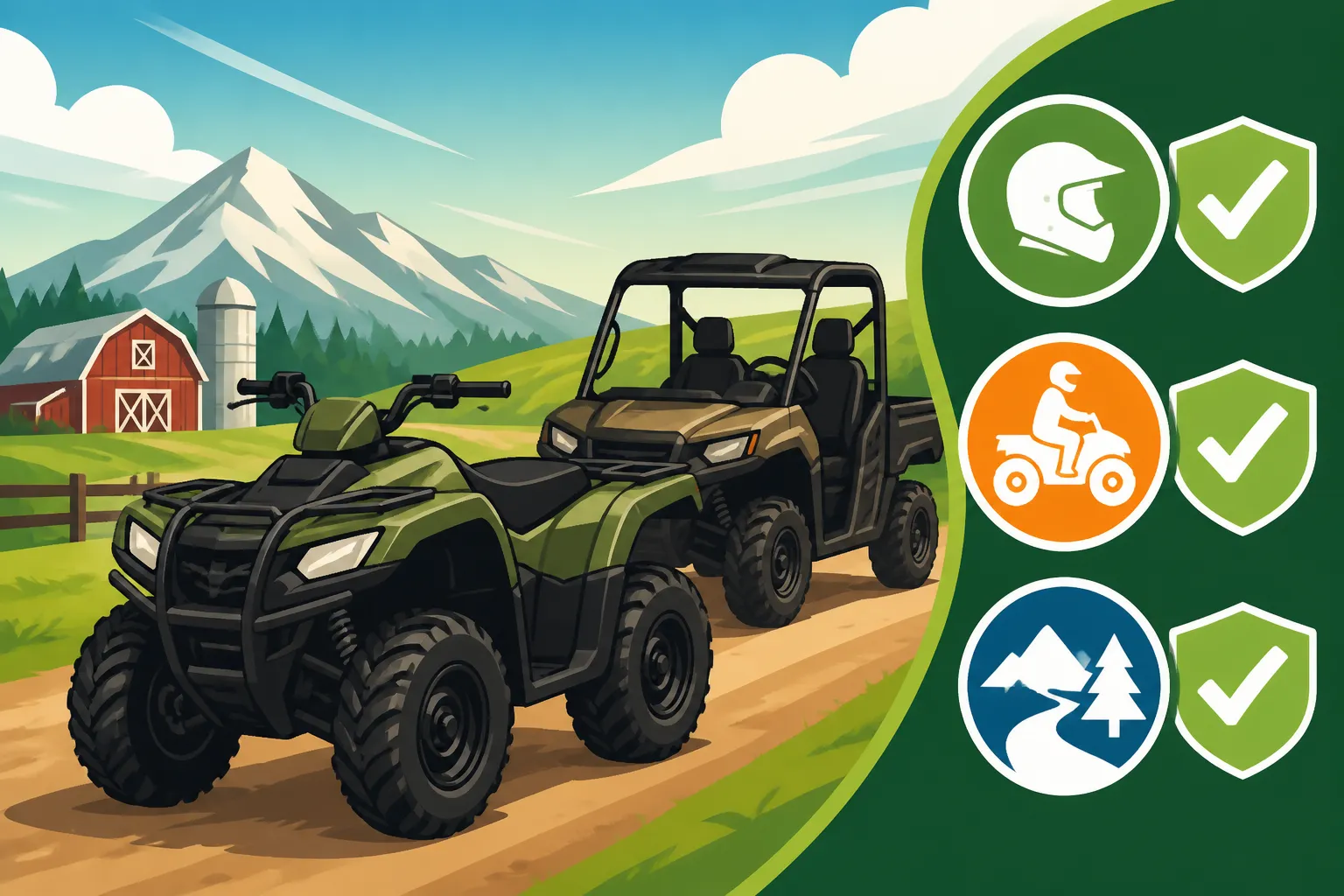
Oregon ATV Rules for a Farm Machine
It's incredibly frustrating when you're just trying to get work done on the farm, using your ATV or UTV for practical tasks, and you're left wondering if all those recreational rules apply to you. You might think, "This is a tool, not a toy!" and feel a pang of annoyance at the thought of jumping through hoops. This guide will clarify Oregon's rules specifically for ATVs and UTVs used in agricultural settings, cutting through the confusion so you can focus on your chores.
Does My Farm ATV Need an Oregon Permit?
This is usually the very first question that pops into a farm owner's mind, and it's a good one because the answer isn't a simple yes or no. The core of Oregon's ATV permitting system revolves around where you ride, not necessarily what you ride or why you ride it. If your farm machine, whether it's a trusty old quad or a newer side-by-side, never leaves your private property, then generally, no, you do not need an Oregon ATV operating permit. This is often a huge relief for farmers who have machines strictly confined to their fields, pastures, and private access roads. The state understands that using a utility vehicle for fencing, hauling feed, or checking irrigation lines on your own land isn't the same as tearing up the dunes.
However, the moment your farm machine touches public land or public roads, even briefly, the rules change pretty dramatically. This includes crossing a public road to get from one part of your farm to another, using a county road to access a remote pasture, or even driving onto a designated public OHV trail that happens to border your property. In these scenarios, your "farm machine" transforms, in the eyes of Oregon law, into an off-highway vehicle (OHV) operating on public accessways, and it will require an [Oregon ATV Operating Permit]. This permit is essentially a user fee that contributes to the maintenance and development of OHV riding areas and trails throughout the state. It's not about proving ownership or roadworthiness, but about contributing to the system when you utilize public resources.
Consider a scenario: you have a sprawling farm near Bend, and you need to move hay from one field to another, separated by a county gravel road. Even if it's just a 50-yard hop across that road, your side-by-side, loaded with hay bales, needs that current permit decal displayed. Without it, you could be cited for operating an unpermitted vehicle on a public road, even if your intent is purely agricultural. The spirit of the law here is that if you're using public infrastructure, even minimally, you're expected to contribute.
Oregon's Agricultural Road Use Exemption and Its Limits
Oregon does offer a specific exemption for ATVs used in agriculture, but it's vital to understand its precise scope. The exemption, commonly referred to as "agricultural road use," typically allows the use of an ATV or UTV on public roads adjacent to or within a farm for agricultural purposes without being fully registered as a street-legal vehicle. This is a critical distinction, as most ATVs and UTVs are generally not street-legal in Oregon. The key here is "agricultural purposes" and "adjacent to or within a farm." This isn't a blanket pass to drive your farm machine into town for groceries.
What does "agricultural purposes" actually mean? It usually involves tasks directly related to the operation and maintenance of a farm. This could include things like transporting tools, feed, or equipment; moving livestock; accessing irrigation systems; or performing property maintenance. It does not typically extend to recreational riding, even if that recreational riding occurs on your farm property or adjacent public lands. If you finish your chores and decide to take a joyride on the county road, that's no longer "agricultural road use" and falls back under general OHV rules, requiring a permit.
The biggest misunderstanding often comes with the "adjacent to or within a farm" part. This is not interpreted as "anywhere I need to go that's kind of near my farm." It means roads that are directly bordering or running through your agricultural operation, enabling you to move between different parcels or sections of your farm that are actively used for agriculture. If your farm is near a popular riding area like Millican Valley, and you're thinking of using the agricultural exemption to drive your side-by-side to a trailhead for a recreational ride, that won't fly. The exemption is very narrowly focused on the functional needs of farming.
It's also important to remember that while the agricultural exemption might bypass the need for full street registration, it does not exempt you from other critical rules. For example, you would still need appropriate lighting if operating at night, and your machine would still be subject to [Oregon Spark Arrester Requirement] and sound limits, especially if operating near residential areas or public lands where sound restrictions are enforced. The exemption is specific to the purpose of the ride on public roads, not a complete override of all safety and environmental regulations.
Titling, Classes, and Other Requirements for Farm Machines
Beyond the operating permit, many farmers also wonder about titling their machines. In Oregon, [Titling an ATV in Oregon Is Optional] for all off-highway vehicles, including those used exclusively for farm work. This means you don't have to get a title from the DMV, but it can be incredibly beneficial. A title serves as official proof of ownership, which can be invaluable if your machine is ever stolen, or if you decide to sell it down the line. Even for machines that stay solely on private land, having that paperwork can prevent headaches. If you're ever in a situation where you need to prove ownership – say, for an insurance claim or a dispute – a title is far more definitive than a bill of sale alone. When buying or selling a farm machine, you might consider using a reputable service like LawDepot to generate a solid bill of sale, even if you opt not to pursue a state title immediately.
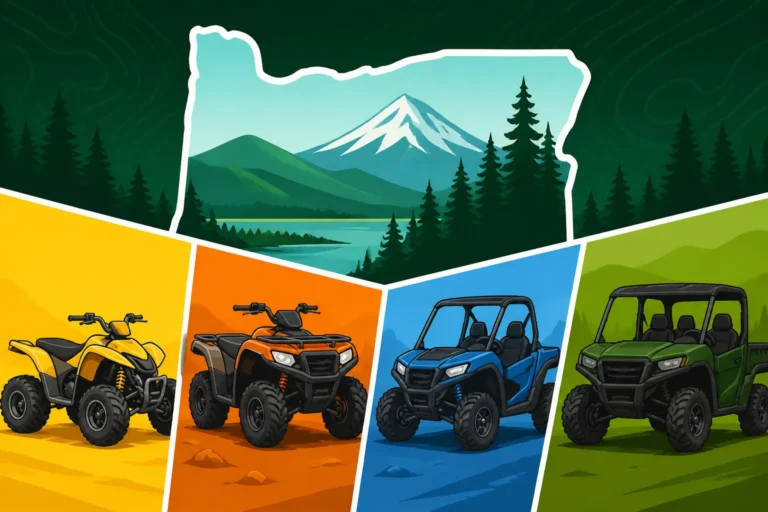
Every ATV and UTV in Oregon falls into one of [Oregon's Four ATV Classes Explained], regardless of its intended use. These classes are based on factors like width, weight, and seating. For farm machines, this mostly determines how it's categorized and what specific safety gear (like helmets for certain classes) or operational rules might apply on public lands. A typical farm quad would likely be a Class I, while a larger utility side-by-side would probably be a Class IV. Understanding which class your machine falls into is important for safety and compliance, especially if you ever need to operate it off your property.
Here's a quick overview of how classes might apply to common farm machines:
| Machine Type | Oregon ATV Class | Key Characteristics | Typical Farm Use | Permit Required on Public Land/Roads? |
|---|---|---|---|---|
| Standard ATV/Quad | Class I | Under 50" wide, straddle seat | Fencing, checking crops, light hauling | Yes |
| Utility UTV/Side-by-Side | Class IV | Over 50" wide, bench/bucket seats | Hauling hay, equipment, spraying | Yes |
| Dirt Bike/Off-Road Motorcycle | Class III | Two-wheeled, straddle seat | Accessing remote areas, quick checks | Yes |
| Street-Legal ATV/UTV | Class II | Converted, road-legal | Limited road travel for specific tasks | Yes (and full street registration/insurance) |
Beyond titling and classification, there are safety education requirements. [Oregon's ATV Safety Education Card] is mandatory for all operators of Class I, III, and IV ATVs, regardless of age, when operating on public lands or roads open to OHV use. So, even if you're a seasoned farmer who's been riding for decades, if you're taking your quad across that county road, you'll need this card. This is a common point of confusion and frustration, but it's a non-negotiable safety measure Oregon enforces.
Practical Tips for Farm ATV Owners in Oregon
Navigating these rules can feel like a maze, especially when your priority is getting farm work done, not memorizing state regulations. Here are some practical tips to help Oregon farm ATV owners stay compliant and avoid unnecessary fines:
1. Know Where Your Property Ends: This sounds simple, but it's crucial. Be absolutely clear on your property boundaries, especially where they meet public roads or public land. Many citations for unpermitted vehicles happen because a farmer unknowingly crossed a property line onto a public easement or county road. Carrying a GPS with your property lines or a detailed map can save you a lot of grief.
2. Get the Permit if There's Any Doubt: If you anticipate even occasional use on public roads or public land for agricultural purposes, it's far easier and cheaper to simply get the [Oregon ATV Permit Cost]. It lasts for [How Long an Oregon ATV Permit Lasts], two years from the month of purchase, and covers all classes for one price. You can easily purchase it online or from one of [Oregon's Ninety-Five Permit Agents] across the state. Think of it as a small insurance policy against a much larger fine.
3. Carry Your Paperwork (Safely): If your machine needs a permit or you have an Oregon Safety Card, make sure you have proof with you when operating on public accessways. While the decal is visible, a ranger or trooper might ask for your safety card or temporary permit proof. Invest in a waterproof document holder or a small dry bag to keep your permit card and safety card protected from the elements, especially given Oregon's often wet climate.
4. Understand the "Agricultural Use" Line: Be honest with yourself about the primary purpose of your ride. If you're genuinely moving equipment or checking fences, you're likely within the spirit of the agricultural exemption. If you're just cruising around for fun after work, even on a county road bordering your property, that's recreational use, and you need to ensure you're fully compliant with all OHV rules, including the permit and safety card.
5. Consider Titling for Proof of Ownership: While optional, a title provides indisputable proof of ownership. This is particularly important if you're purchasing a used farm machine. Always ensure you get a solid bill of sale, and if possible, cross-reference the VIN with known theft databases. For formalizing a sale or purchase, especially if a title isn't being issued, a reliable, templated bill of sale from a service like LawDepot can provide much-needed clarity and protection for both parties. [Buying a Used Quad in Oregon] often involves these considerations, whether it's for farm use or recreation.
6. Safety First, Always: Regardless of exemptions or permits, always prioritize safety. Wear appropriate personal protective equipment, understand the limits of your machine, and be aware of your surroundings. Even on your own land, accidents can happen quickly, and the severity can be reduced with proper precautions. This is especially true when mixing farm duties with vehicle operation.
Remember, Oregon's goal is to keep everyone safe and to manage its natural resources effectively. By understanding and adhering to these rules, you can ensure your farm machine remains a productive asset without leading to unexpected legal hassles.
Disclaimer
This article is for general informational purposes only and does not constitute professional advice. Laws, prices and regulations vary by location and change over time. Consult a qualified professional for guidance on your specific situation.