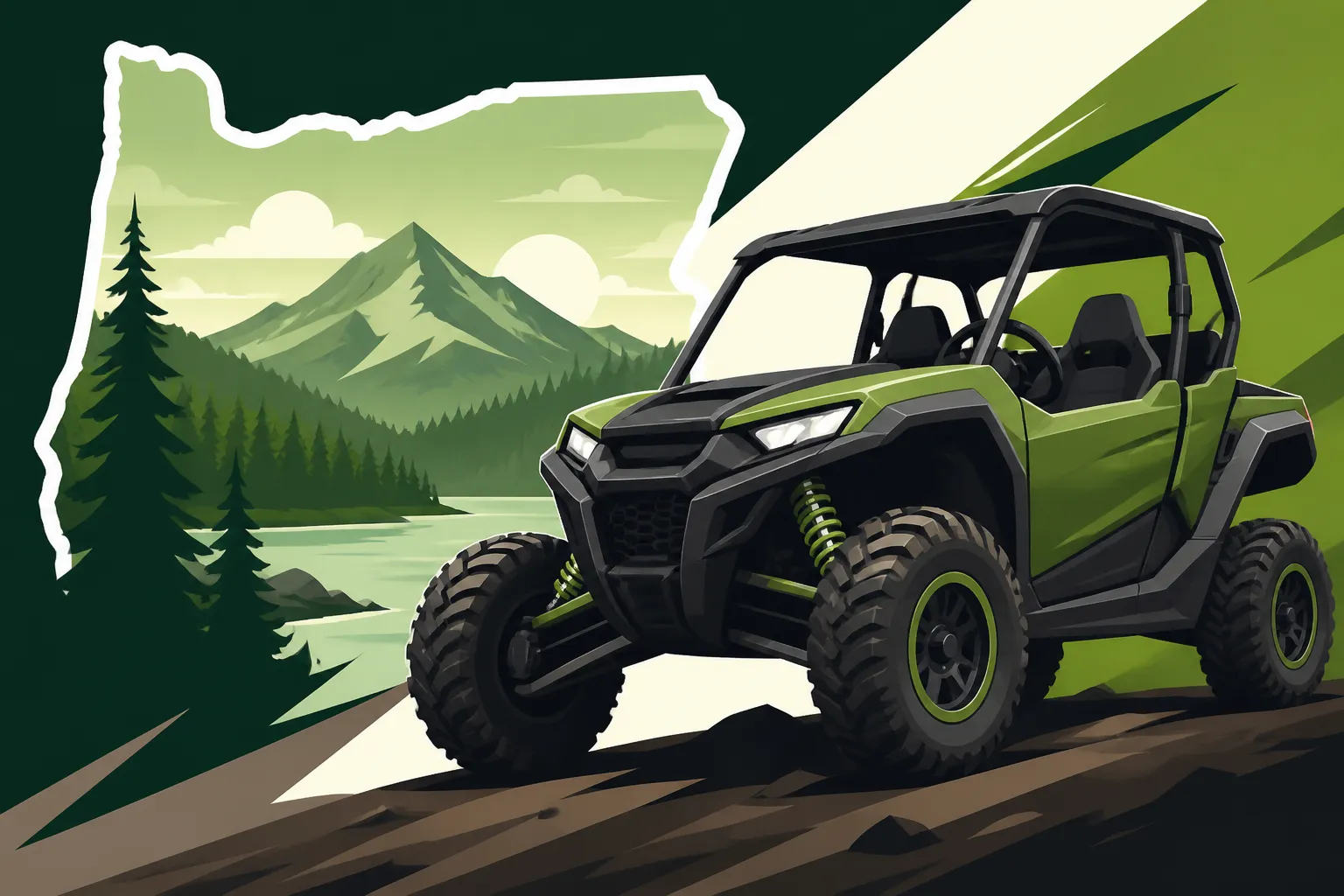
Oregon’s Class IV Side-by-Sides Under 75 Inches
Many people who are new to the world of off-road vehicles in Oregon, especially those drawn to the versatility and fun of side-by-sides, often find themselves scratching their heads over classifications. You’ve got this fantastic machine, ready for adventure, but navigating the state’s specific "ATV" categories and understanding where your side-by-side fits, particularly if it’s under 75 inches wide, can feel like trying to read a map in the dark. This guide is here to shine a light on Oregon’s Class IV definition, breaking down exactly what it means for your side-by-side, from permitting to safety and where you can legally ride.
Understanding Oregon's Class IV ATV Definition for Side-by-Sides
The term "ATV" in Oregon's legal framework is quite broad, encompassing a variety of off-highway vehicles. When we talk about Class IV, we're zeroing in on the vehicles that most people recognize as side-by-sides or UTVs. This classification is vital because it directly impacts everything from the permits you need to the rules you must follow when exploring Oregon’s diverse landscapes.
The Specifics of the "Under 75 Inches" Rule
For a machine to be designated a Class IV ATV in Oregon, its width is the primary defining characteristic. Specifically, it must be 75 inches or less in overall width (as defined by ORS 801.194). This isn't just a guideline; it's a legal demarcation that distinguishes it from other vehicle types and classes. It’s a crucial dimension that will determine whether your vehicle qualifies for specific trails and adheres to state regulations.
Imagine you're at a dealership, comparing different side-by-side models, or perhaps you've found a great deal on a used one from a private seller. Before you get too excited about hitting the sand or forest, pull out a measuring tape or meticulously check the manufacturer's specifications for the machine’s maximum width. If a side-by-side is, say, 76 inches wide, it simply won't fall into Oregon's Class IV category. This seemingly small difference can have considerable implications for everything from requiring different permits, to determining which trails you can legally access, and even how it might be treated for insurance purposes. Don't skip this measurement!
This width restriction is more than just bureaucracy; it's a practical measure for managing our riding areas. Many trails, bridges, and staging areas are designed with specific vehicle dimensions in mind. Operating an oversized vehicle on an unsuitable trail can lead to damage to the trail itself, create safety hazards for other users, and potentially damage your own machine. A solid understanding of [Oregon's Four ATV Classes Explained] will help you avoid these pitfalls.
Bench Seats, Steering Wheels, and Other Class IV Hallmarks
Beyond the critical width measurement, Class IV ATVs typically exhibit several other distinguishing features that set them apart from other off-highway vehicles. Most notably, they usually incorporate non-straddle seating, meaning the occupants sit side-by-side in seats that resemble those found in a car, often a bench seat or individual bucket seats. This is a stark contrast to traditional Class I ATVs (quads), where the rider straddles the machine.
Another hallmark of a Class IV side-by-side is the use of a steering wheel for control, rather than handlebars. This familiar control input, combined with seat belts and often a robust roll cage, gives the driving experience a feel much closer to that of a compact utility vehicle than a motorcycle or traditional ATV. These design choices contribute to their popularity for group rides, family outings, and carrying gear, as they are generally built to accommodate multiple passengers comfortably and safely.
The design philosophy behind these machines also influences how they are regulated in Oregon. Their car-like attributes mean different rules often apply regarding passenger capacity, specific safety gear, and even the very limited opportunities for road access. Understanding these design differences is key to complying with all state regulations. For a clearer picture of these distinctions, check out [Straddle Seat Versus Bench Seat in Oregon's ATV Classes].
Differentiating Class IV from Other Oregon ATV Classes
With multiple categories falling under the "ATV" umbrella in Oregon, it's easy for confusion to arise. Properly identifying your side-by-side as a Class IV machine is crucial for staying compliant and ensuring you’re using it appropriately. This means understanding how it differs from single-rider quads (Class I), off-road motorcycles (Class III), and especially the more versatile Class II vehicles.
Class IV Versus Class I Quads and Class III Dirt Bikes
The most frequent point of comparison and potential confusion often lies between Class IV side-by-sides and Class I quads. A Class I ATV, as defined by Oregon statute, is typically 50 inches or less in width, has a dry weight of 800 pounds or less, and, crucially, is designed for a single rider who straddles the machine and controls it with handlebars. These are the classic four-wheelers many riders started on. The differences in their design, operational characteristics, and intended use are quite pronounced, even if both are "ATVs." While Class I machines are often favored for agile, solo trail riding, Class IV side-by-sides excel at carrying multiple occupants and gear over various terrains, offering a more stable and social riding experience.
Class III, on the other hand, consists entirely of off-road motorcycles, commonly known as dirt bikes, enduros, or trials bikes. These are two-wheeled vehicles specifically designed for off-road use, often on singletrack trails. Their operational rules, including requirements for safety gear and rider age, align more closely with traditional motorcycle regulations, even though they are grouped under Oregon's broader ATV definition. So, if you're piloting a side-by-side, you can rest assured you're not dealing with the regulations that apply to Class I or Class III machines. A deeper dive into these fundamental differences can be found in [Oregon Class I Versus Class IV].
When a Side-by-Side Becomes a Class II or Exceeds Class IV
This is where the nuances of Oregon's ATV classification system become particularly important and where some riders might inadvertently find themselves outside the lines. A Class II ATV in Oregon is a catch-all category for vehicles that are not Class I, III, or IV, but are still considered ATVs. Critically, Class II vehicles must be capable of traveling on highways, have a dry weight of 8,000 pounds or less, and typically use a steering wheel for control. This category often includes larger, highly modified off-road vehicles like dune buggies, sand rails, and certain custom-built Jeeps that can be made street-legal and registered for highway use.
Now, consider a side-by-side that exceeds the 75-inch width limit for Class IV. If such a machine is also designed for highway travel and meets the other Class II criteria, it might fall into the Class II category. However, many wider, purpose-built UTVs or specialty off-road vehicles that exceed 75 inches in width are not designed for highway use. These machines might not fit neatly into any of Oregon's defined ATV classes if they fall outside the Class IV width and lack highway capability. This ambiguity can lead to significant riding restrictions, as such vehicles may be prohibited from designated OHV areas that strictly permit only Class I, III, or IV machines. This is precisely why it's critical to verify your machine's exact dimensions and capabilities against Oregon's definitions. If your vehicle is pushing the boundaries of Class IV, exploring [Oregon's Class II Under ORS 801.193] is highly recommended.
Permitting and Decal Requirements for Your Class IV Side-by-Side
Once you've confidently determined that your side-by-side is a Class IV machine under 75 inches in width, the next vital step is to ensure it is properly permitted for operation on Oregon's public lands. The state has an accessible, unified permit system, but understanding the specific placement requirements for your Class IV vehicle's decal is key to compliance. Almost all public land riding requires this permit.
The Universal Oregon ATV Operating Permit
One of the more user-friendly aspects of off-highway vehicle regulations in Oregon is the statewide, universal operating permit that applies to all ATV classes. This means whether you own a Class I quad, a Class III dirt bike, or your Class IV side-by-side, you will purchase the exact same permit. This system greatly simplifies the process, eliminating the need to decipher different permit types for different machines. Each permit is valid for two years, providing ample time for riding before a renewal is necessary.
This permit is far more than just a regulatory formality; it's a direct investment in the very trails and facilities we all use. A significant portion of the permit fees is allocated to the [Oregon ATV Grant Program Explained], which actively supports the maintenance, improvement, and development of OHV riding opportunities across the state. By purchasing your permit, you are directly contributing to the sustainability and expansion of Oregon's off-highway riding infrastructure, ensuring that these areas remain accessible and enjoyable for future generations. For a detailed breakdown of the permit itself, refer to [Oregon's ATV Operating Permit].
Where to Purchase and How to Display Your Class IV Decal
Acquiring your Oregon ATV operating permit is designed to be convenient, with several options available to riders. Many find the simplest method is to purchase them [Buying an Oregon Permit Online] directly through the Oregon Parks and Recreation Department (OPRD) website. Alternatively, you can purchase one in person at any of the [Oregon Permit Agents You Can Walk Into], which include a wide array of powersports dealerships, sporting goods stores, and even some government offices throughout the state. Regardless of how you purchase it, you will receive a durable permit card and a distinctive decal that must be securely affixed to your machine.
For a Class IV side-by-side, the placement of this decal is subject to specific requirements to ensure it is clearly visible to law enforcement and park rangers. The decal must be mounted on the right side of the machine, ideally on a permanent and prominent structure like the frame, a fender, or a roll bar, where it is free from obstruction and easily readable. It’s important to ensure the surface is clean before application to guarantee good adhesion. Improper placement or a decal that is obscured or not securely attached can result in a citation, even if you’ve legitimately purchased the permit. For visual instructions and more details, consult [Decal Placement on a Class IV Machine].
Titling Your Class IV Side-by-Side in Oregon
While an operating permit is a mandatory prerequisite for riding your Class IV side-by-side on public lands, the process of titling your machine in Oregon introduces a distinct scenario. Unlike traditional road vehicles, titling for off-highway vehicles in the state is not always a compulsory step, though it is highly recommended for savvy owners.
The Optional Nature of Oregon ATV Titling
One aspect that frequently catches new side-by-side owners in Oregon by surprise is that obtaining a title for their machine is optional. That's right—the Oregon Department of Motor Vehicles (DMV) does not mandate registration or titling for most off-highway vehicles in the same way it does for cars, trucks, or street-legal motorcycles. This means you are not legally compelled to secure an Oregon title for your Class IV side-by-side solely for the purpose of operating it off-road within the state. This policy diverges from many other states where a title is an absolute requirement for proving ownership and registering a vehicle, regardless of its intended use. You can delve deeper into the reasons behind this policy by reading [Titling an ATV in Oregon Is Optional].
This optionality largely stems from the fact that these machines are primarily intended for recreational use away from public highways. The state’s regulatory focus is on managing responsible land use through its permit system, rather than on the traditional vehicle registration process. While this might appear to be a convenient omission, it places a greater onus on both buyers and sellers to ensure clear and documented transfers of ownership, as the standard title transfer mechanism is not universally enforced.
Why a Title Still Offers Crucial Protection for Class IV Owners
Despite titling being optional, I cannot stress enough how strongly I advise almost every Class IV side-by-side owner to get an Oregon title anyway. The reason is simple: a title is, unequivocally, the most robust and universally recognized proof of ownership you can possess. Without it, you could face significant difficulties if your machine is ever stolen, if an ownership dispute arises, or, most commonly, when you eventually decide to sell it. Attempting to sell a substantial investment like a side-by-side without an official title can dramatically complicate the transaction, raise red flags for potential buyers, and potentially diminish its market value.
Consider a common scenario: you purchased your side-by-side used with just a basic bill of sale. Years later, when you’re ready to upgrade, a prospective buyer requests the title, and you realize you don't have one. Suddenly, proving your rightful ownership becomes a much more arduous task, especially if the original bill of sale has been lost or was poorly documented. An official, state-issued title simplifies this process immensely by providing a clear, indisputable chain of ownership that is recognized everywhere. For more compelling reasons why this step is worth taking, read [Why an Oregon Title Is Worth Having Anyway].
When you do opt to title your machine, or even when you're purchasing a used side-by-side that doesn't come with one, a comprehensive Bill of Sale becomes an indispensable document. This is an area where valuable resources like LawDepot can be incredibly helpful. A professionally drafted, detailed bill of sale from LawDepot can solidify the transfer of ownership, meticulously recording all pertinent information such as the Vehicle Identification Number (VIN), make, model, year, agreed-upon price, and full contact details for both buyer and seller. This document serves as a crucial paper trail, bridging any gaps in proving ownership, even if you eventually proceed with obtaining a state title.
The Role of a Robust Bill of Sale in Lieu of a Title
Because titling an ATV is optional in Oregon, a meticulously crafted bill of sale becomes an absolutely vital document, particularly for transactions between private parties. This legal document serves to formally transfer ownership from the seller to the buyer and should contain specific details to safeguard the interests of both individuals. Relying on a hastily written note or a verbal agreement simply isn't sufficient for a significant asset like a Class IV side-by-side.
A comprehensive bill of sale must clearly identify the vehicle in question, including its make, model, year, and its unique Vehicle Identification Number (VIN). It also needs to state the agreed-upon purchase price, the exact date of the sale, and the complete names and addresses of both the buyer and the seller. It’s also wise to include language clarifying that the vehicle is being sold "as-is," if that is the agreed condition, and a statement from the seller confirming their clear ownership and that there are no outstanding liens on the machine. For individuals who are uncertain about how to draft such a detailed document, online platforms like LawDepot offer customizable bill of sale templates that can be specifically adapted for an ATV transaction. These templates help ensure that all necessary legal provisions are addressed. This robust documentation creates an indispensable paper trail, which is critical should you ever need to formally prove ownership or resolve any discrepancies, even if you decide to pursue a state title later. Always keep both a physical and digital copy of this document securely stored.
When you're buying a machine from a private seller, always take the extra step to verify the VIN against any available paperwork and, if possible, conduct a lien search, even if an official title isn't provided. The initial diligence of using a reliable bill of sale, perhaps even having it witnessed or notarized with the help of services suggested by LawDepot, can prevent untold headaches and legal complications down the road. This thoroughness is particularly important when considering [Buying a Used Quad in Oregon], where the history of a machine might not always be transparent.
Safety Regulations and Operational Rules for Class IV Machines
Operating a Class IV side-by-side involves more than just having the correct permit; it absolutely requires a deep understanding and strict adherence to specific safety regulations. These rules are designed to protect you, your passengers, and every other enthusiast sharing the trails. Given the enclosed nature of many side-by-sides with their roll cages and seat belts, some riders mistakenly assume certain rules, such as helmet laws, might not apply. This section aims to dispel those myths and clarify these crucial safety aspects.
Oregon's ATV Safety Education Card Requirements
Oregon has a firm mandate: almost all ATV operators and certain passengers are required to complete an approved ATV safety education course and carry an [Oregon's ATV Safety Education Card] while riding. This isn’t a rule solely for younger riders; it applies equally to adults, regardless of age or prior experience. There are extremely limited exemptions, such as holding a valid driver's license and operating a Class IV machine only on a designated highway access route—a rare scenario for most Class IV use. For the vast majority of Class IV side-by-side riding on public lands, both you and anyone else driving the machine will need this card.
The core purpose of the safety card requirement is to ensure that riders possess a fundamental understanding of safe operational practices, principles of environmental stewardship, and the specific rules that govern trail use. The course typically covers essential topics such as proper driving techniques, navigating diverse terrain, interpreting trail signage, and responsible interaction with natural environments. This comprehensive education is instrumental in preventing accidents, minimizing environmental impact, and fostering a culture of safety within the OHV community. Riders under the age of 16 face additional, stricter requirements, often needing both the safety card and direct adult supervision. Even if you consider yourself a seasoned off-road enthusiast, completing the Oregon course can refresh your knowledge and ensure you are fully up-to-date on all state-specific regulations. This free online course is an invaluable resource, and you can find more details in [Oregon ATV Safety Card Requirements].
Helmet Laws and the Role of Roll Cages in Class IV Side-by-Sides
This particular aspect of side-by-side safety in Oregon is frequently misunderstood. Many operators assume that because a Class IV side-by-side comes equipped with a sturdy roll cage and seat belts, helmets become optional. However, Oregon’s helmet law (ORS 821.180) is quite explicit: all ATV operators and passengers who are under 18 years of age are legally required to wear an approved safety helmet, irrespective of whether the machine has a roll cage or not. For adults aged 18 and older, while helmets are highly recommended for optimal safety, they are not legally mandated unless the vehicle is being operated on one of the very rare designated ATV highway access routes.
Therefore, while the robust roll cage in your side-by-side offers significant protection in the event of a rollover or impact, it does not automatically exempt younger riders from the mandatory helmet requirement. It is always considered best practice for everyone, regardless of age, to wear a DOT or Snell-approved helmet whenever operating or riding in a side-by-side. Head injuries can be catastrophic, and a helmet provides a critical layer of protection that a roll cage alone cannot. Always ensure your helmet is correctly fitted and its chin strap is securely fastened before heading out. For more in-depth information, refer to [Oregon Helmets for Every Rider Under 18] and [DOT and Snell Helmets in Oregon].
Passenger Rules and the "Manufacturer's Design" Principle
One of the major attractions of Class IV side-by-sides is their capacity to carry passengers, making them ideal for shared adventures. However, Oregon law has precise rules regarding how many passengers can be carried and where they must be seated. The fundamental principle is that you must not exceed the number of passengers for which the machine was originally designed by the manufacturer. If your side-by-side is equipped with two individual bucket seats, you are permitted one passenger. If it features a bench seat specifically designed to accommodate three individuals, you may carry two passengers.
Furthermore, it is a legal requirement that all passengers must be able to comfortably keep their feet on the designated footrests or floorboards designed for passengers. This means absolutely no riding in the operator’s lap or with feet dangling outside the machine. For very young children, appropriate booster seats or specialized restraints might be necessary to meet this safety and legal requirement. Additionally, every passenger, particularly those under 18, must be securely buckled into their seatbelt and wearing an approved helmet. Adhering to these regulations is not merely about avoiding potential fines; it is fundamentally about ensuring the highest level of safety for everyone riding with you. More detailed guidance can be found in [Oregon Passenger Rules in a Side-by-Side].
Where to Ride Your Class IV Side-by-Side in Oregon
Oregon boasts an incredibly diverse array of terrain perfectly suited for off-highway vehicle enthusiasts, ranging from the dramatic coastal dunes to expansive high-desert trails and lush, dense forest systems. Knowing precisely where you can legally and safely operate your Class IV side-by-side is just as crucial as securing the right permits and understanding the applicable safety regulations.
Navigating Oregon's Premier OHV Destinations
For owners of Class IV side-by-sides, the riding opportunities in Oregon are both abundant and exhilarating. The Oregon Dunes National Recreation Area stands out as arguably the state's most iconic OHV destination, offering vast sand bowls, challenging razorbacks, and miles of open riding expanse. Well-known staging areas such as Spinreel, Hauser, and Umpqua provide convenient access to this unparalleled environment. Side-by-sides are exceptionally well-suited for the unique demands of dune riding, providing a thrilling and social experience for operators and passengers alike. However, it is imperative to remember that specific zones within the dunes are subject to seasonal closures to protect sensitive wildlife, and strict regulations regarding sound limits and flag requirements are rigorously enforced. Everything you need to know about this iconic location is covered in [Oregon Dunes National Recreation Area].
Moving away from the coast, central Oregon presents the Millican Valley OHV Area near Bend, which offers an extensive network of diverse trails winding through picturesque ponderosa pine forests and over ancient volcanic rock formations. This area caters to a broad spectrum of skill levels and is an excellent choice for side-by-sides seeking a different kind of off-road adventure. Further to the east, the Christmas Valley Sand Dunes provide another option for inland dune riding, often with fewer crowds than the coastal areas.
Within the Coast Range, the Tillamook State Forest boasts an extensive system of trails. However, riders should be aware that some of these trails can be narrower and more technically challenging, potentially posing difficulties for wider side-by-sides. Always consult current trail maps and descriptions to ensure the chosen route is suitable for your Class IV machine. The sheer diversity of these locations guarantees that every weekend can bring a new and exciting adventure. For a broader overview of the state's vast riding opportunities, explore [Best Places to Ride an ATV in Oregon].
Limited Road Access and Designated Routes for Class IV Machines
This point is absolutely critical for all Class IV side-by-side owners: as a general rule, your machine is not considered street-legal and is prohibited from being operated on paved public roads in Oregon. The very limited exceptions to this rule apply only to specific, designated ATV highway access routes found in just a handful of towns, notably [Oregon's Only Two Designated ATV Routes: Lakeside and Sumpter]. Even on these rare designated routes, very specific regulations apply, including driver's license requirements and, as previously mentioned, mandatory helmets for all riders under 18.
For the vast majority of cases, your Class IV side-by-side should be considered an off-highway vehicle exclusively. This means that you will almost always need to trailer your machine to and from designated staging areas and riding locations. While you may encounter some gravel county roads or Forest Service roads that are explicitly open to OHVs, these are distinctly different from paved public highways. Always operate under the assumption that paved roads are off-limits unless you see clear, official signage explicitly designating them as an approved ATV route. Ignorance of this rule can lead to substantial fines, citations, and even the impoundment of your vehicle. It is imperative to always consult local ordinances and up-to-date maps before attempting to ride your side-by-side on any road. To help visualize the extremely limited options, refer to the [Oregon ATV Highway Access Route Map].
Environmental Stewardship and Trail Closures
Responsible riding is not just a suggestion; it is a paramount responsibility for all OHV enthusiasts in Oregon. This means diligently respecting all posted trail closures, understanding and complying with fire season restrictions, and actively doing your part to protect the state's invaluable natural environment. Many areas, particularly within the sensitive Oregon Dunes, contain critical habitats and are subject to seasonal closures implemented to protect endangered species such as the Western Snowy Plover. Riding in these designated closed areas not only carries severe legal penalties and hefty fines but also directly contributes to the destruction of fragile ecosystems.
Before every single ride, make it a habit to check the Oregon Parks and Recreation Department (OPRD) website or the website of the specific land manager (e.g., Forest Service, Bureau of Land Management) for the most current conditions, active closures, and any fire restrictions. These conditions can change rapidly due to factors like severe weather, wildfires, or other environmental considerations. Carrying reliable [Oregon Trail Maps Worth Carrying] and meticulously paying attention to all signage at trailheads are non-negotiable practices for safe and legal riding. Always pack out everything you pack in, commit to staying on designated trails, and ride respectfully to ensure that these incredible natural areas remain open and accessible for enjoyment by future generations of riders.
Disclaimer
This article is for general informational purposes only and does not constitute professional advice. Laws, prices and regulations vary by location and change over time. Consult a qualified professional for guidance on your specific situation.