Where a Trials Bike Fits
Figuring out where your unique off-road machine fits into Oregon's ATV classification system can feel like trying to fit a square peg in a round hole, especially when you have something as specialized as a trials bike. You know it's not a typical dirt bike, and it's certainly not a quad or a side-by-side, which can make understanding the rules incredibly frustrating. This guide is here to cut through that confusion, clearly explaining how Oregon's rules apply to trials bikes and ensuring you're fully prepared to hit the trails legally and safely.
Understanding Oregon's ATV Classification System
Oregon's system for classifying off-highway vehicles (OHVs) might seem a bit dense at first glance, but it's really designed to help everyone understand where their machine belongs and what rules apply. The state groups machines into four main classes, primarily based on their design, size, and intended use. This isn't just bureaucratic red tape; it's about safety, trail management, and making sure everyone has a clear understanding of their responsibilities when riding public lands.
Why Classifications Matter for Riders
For us riders, understanding these classifications is absolutely crucial. Your machine's class determines things like what kind of permit you need, where you're legally allowed to ride, and even specific equipment requirements. For example, a wide side-by-side (Class IV) might be restricted from certain narrow trails that are perfectly fine for a standard dirt bike (Class III) or a quad (Class I). Trying to ride a Class IV machine on a Class I-only trail isn't just inconsiderate; it can lead to fines and put you and others at risk. It also dictates what kind of safety education card might apply in certain scenarios, although generally, everyone needs one. This system ensures that our diverse range of machines can coexist on Oregon's incredible network of trails and open riding areas.
The Four Official ATV Classes
Oregon officially recognizes four distinct classes of ATVs, although the term "ATV" in this context is often used broadly to mean "off-highway vehicle." Each class has specific characteristics that define it:
- Class I: These are your traditional quads or three-wheelers, designed to be ridden by straddling the seat, with handlebars for steering. They typically have a dry weight of 1,200 pounds or less and are 50 inches or less in width. Think of most recreational four-wheelers you see tearing up the dunes. You can learn more about [The 50-Inch Limit That Defines a Class I].
- Class II: This class is a bit unique. It covers off-road vehicles that are not Class I, III, or IV, but can be made street-legal. This might include larger dune buggies, some custom-built off-road vehicles, or even some Jeeps that meet specific criteria for off-road use but are also registered for public roads. These vehicles often have steering wheels and automotive-style controls.
- Class III: This is where most traditional off-road motorcycles, or dirt bikes, fall. These are two-wheeled vehicles designed for off-highway use, ridden by straddling a seat, and steered with handlebars. They have specific engine displacement limits and don't fit into the street-legal Class II category unless specially modified and registered.
- Class IV: This class encompasses what many people call "side-by-sides," "UTVs," or "ROVs." These are vehicles with a steering wheel, non-straddle seating (like bucket seats or a bench seat), and usually come with a roll bar or cage. They are typically wider than Class I ATVs, with a dry weight often up to 3,500 pounds and a width up to 75 inches.
The key takeaway here is that each class has distinct features and intended uses, which then inform the specific rules and regulations that apply to them. You can dive deeper into [Oregon's Four ATV Classes Explained] to get a full picture.
What Exactly Is a Trials Bike?
Before we can accurately place a trials bike within Oregon's classification system, it's helpful to clearly define what one is. If you've ever seen a trials competition, you know these machines are a breed apart, designed for a very specific purpose. They are not built for speed or long-distance trail riding, but for precision, balance, and navigating seemingly impossible obstacles.
Key Characteristics of a Trials Bike
Trials bikes are instantly recognizable by their minimalist design and unique features, all geared towards their specialized function:
- Extremely Lightweight: They are engineered to be as light as possible, making them agile and easy for the rider to maneuver, lift, and balance. This lightness is crucial for hopping over rocks or navigating tight turns.
- Minimal or No Seat: This is often the most striking feature. Unlike a traditional dirt bike with a long, padded seat, a trials bike usually has a tiny, hard perch that's barely functional, or sometimes no seat at all, simply a small fender for the rider to stand on. Riders spend almost all their time standing on the foot pegs, using their body weight for balance and control.
- Specialized Tires: Trials bikes are fitted with soft, sticky, often tubeless tires that run at very low pressures. This provides maximum grip on wet rocks, roots, and other slick surfaces, allowing the bike to "stick" to obstacles.
- Unique Gearing and Engine Characteristics: The engines are typically small, two-stroke or four-stroke, designed for low-end torque and immediate power delivery, rather than high horsepower. Gearing is set up for extremely slow speeds and precise throttle control.
- Minimal Suspension Travel: While they do have suspension, it's usually designed for absorbing impacts from small drops and maintaining traction, not for soaking up big jumps or high-speed bumps.
- No Fuel Tank (or Tiny One) for Range: Range isn't a concern for a trials bike; agility is. Fuel tanks are tiny, often just enough for a few hours of intense riding in a compact area.
These characteristics make a trials bike incredibly capable in its specific niche, but also quite different from most other off-road machines.
How Trials Bikes Differ from Traditional Dirt Bikes
While both trials bikes and traditional dirt bikes (like motocross or enduro bikes) are two-wheeled, off-road motorcycles, their design philosophies diverge significantly:
- Purpose: Dirt bikes are built for speed, jumping, covering varied terrain quickly, and aggressive riding. Trials bikes are built for slow, controlled, technical navigation, where the goal is often to clear an obstacle without touching a foot to the ground.
- Seating Position: Dirt bike riders primarily sit, especially on straights, using the seat for stability and leverage. Trials riders are almost exclusively standing, using their legs as primary suspension and their body for dynamic balance.
- Power Delivery: Dirt bikes prioritize horsepower and top-end speed. Trials bikes focus on smooth, tractable low-end torque for precise control at near-zero speeds.
- Suspension: Dirt bikes have long-travel, robust suspension systems designed for high-speed impacts and jumps. Trials bike suspension is much shorter and tuned for small, precise movements and traction.
- Weight: Dirt bikes are heavier and more robustly built to handle abuse at speed. Trials bikes are feather-light, prioritizing agility and flickability over brute strength.
So, while they share the "motorcycle" label, their practical application and design are worlds apart. Understanding this distinction is key when we look at how Oregon's laws classify them.
Fitting a Trials Bike into Oregon's Class System
This is the million-dollar question for many trials bike enthusiasts: where do these specialized machines actually fit? Given their unique design, it's easy to assume they might be in a category all their own, but Oregon's laws are designed to be comprehensive.
Oregon's Definition of a Class III Off-Road Motorcycle
Oregon Revised Statute (ORS) 801.192 specifically defines a Class III all-terrain vehicle as an "off-road motorcycle." The key elements of this definition are:
- Two Wheels: A trials bike unequivocally has two wheels.
- Ridden by Straddling a Seat: This is where the confusion often arises due to the minimal seat. However, the legal definition focuses on the method of riding rather than the comfort or size of the seat. Even with a tiny perch or no traditional seat, a rider on a trials bike straddles the frame and uses the foot pegs, much like a traditional dirt bike. The rider's legs are on either side of the machine, as opposed to sitting within a cab or on a bench like a side-by-side.
- Steered with Handlebars: Again, trials bikes are steered with handlebars, just like any other motorcycle.
- Designed for Off-Highway Use: This is certainly true for a trials bike; it's purpose-built for navigating extreme off-road terrain.
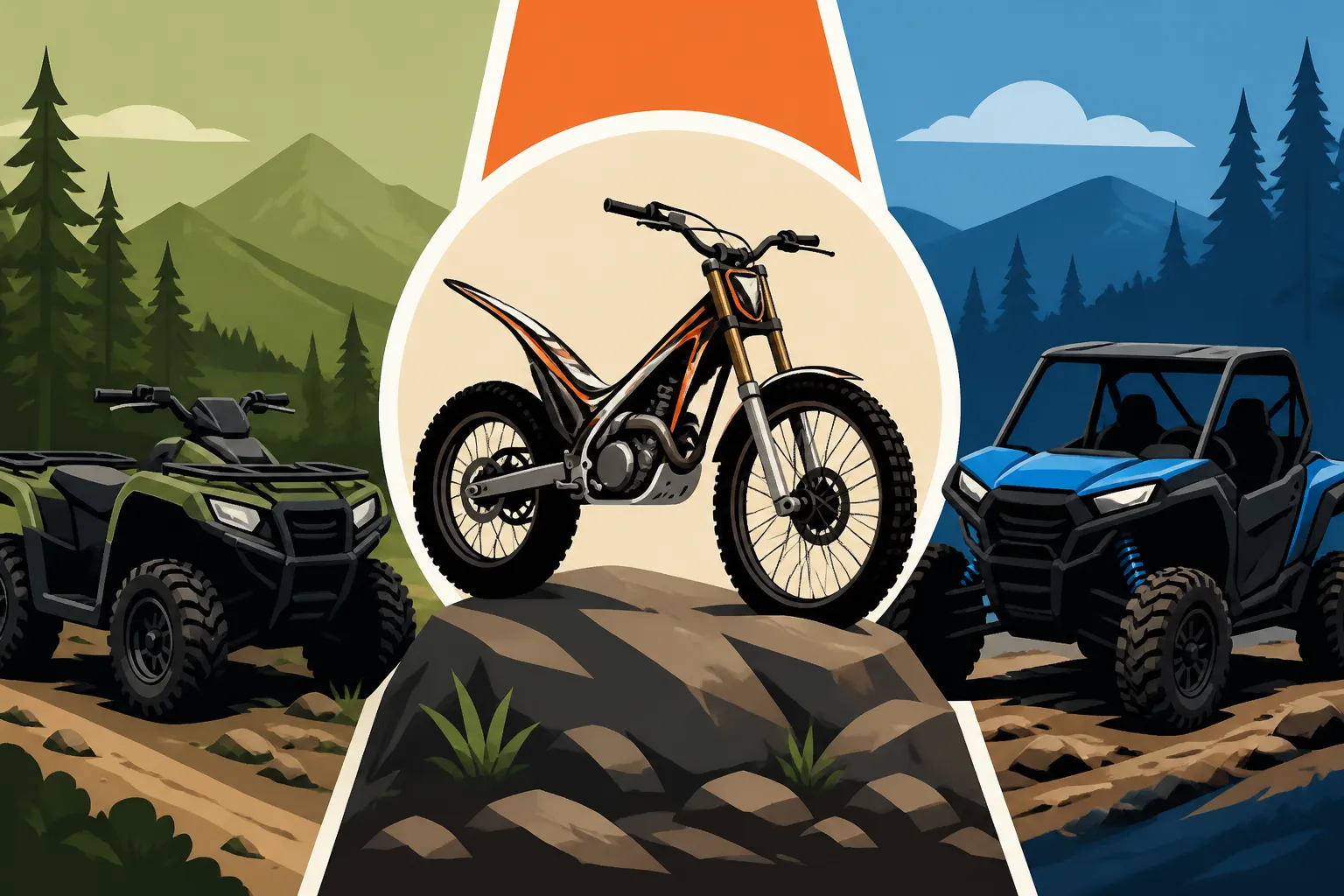
Given these criteria, a trials bike fits squarely into the definition of a Class III off-road motorcycle under Oregon law. It might not look like a typical motocross bike, but its fundamental operational design aligns with the Class III classification. This means when you head out to locations like the Tillamook State Forest or Millican Valley, your trials bike will be treated the same as any other dirt bike in terms of permitting and rules. You can find more specific details on [Class III Off-Road Motorcycles in Oregon].
Addressing the "No Seat" or Minimal Seat Conundrum
The most common point of confusion for trials bikes is their lack of a traditional, full-sized seat. Many riders understandably wonder how a machine you almost exclusively stand on can be considered to have a "seat." However, from a legal perspective, the intent of the design and the rider's physical posture are more important than the presence of a plush saddle.
The "straddle" aspect is critical. Even without a comfortable seating surface, the rider's legs are positioned on either side of the bike, just as they would be on a conventional motorcycle. The small perch or fender serves as a rudimentary seat or a point of contact, fulfilling the spirit of the "straddle seat" requirement even if it's rarely used for actual sitting. The alternative classifications simply don't make sense: a trials bike isn't a quad (Class I), a vehicle with a steering wheel and bucket seats (Class IV), or a street-legal custom vehicle (Class II). Therefore, the Class III "off-road motorcycle" definition is the most appropriate and legally sound fit. If you're ever drafting legal documents, such as a bill of sale for your trials bike, services like LawDepot can help ensure you use precise language that aligns with these classifications, even for niche vehicles.
What About Other Classes?
Let's quickly rule out why a trials bike doesn't fit into the other Oregon ATV classes:
- Not Class I: Class I vehicles are primarily quads and three-wheelers, characterized by four (or three) wheels, straddle seating, and handlebars. A trials bike has only two wheels, immediately ruling it out.
- Not Class II: Class II machines are diverse but generally encompass larger off-road vehicles that can be made street-legal, often featuring steering wheels and enclosed cabins or significant weight/width. A trials bike is none of these things, nor is it typically registered for road use.
- Not Class IV: Class IV machines, or side-by-sides, are defined by having a steering wheel, non-straddle seating (like bench or bucket seats), and often a roll cage. A trials bike clearly does not fit this description, lacking a steering wheel and having straddle-style riding.
So, despite its unique aesthetic and purpose, a trials bike is firmly categorized as a Class III off-road motorcycle under Oregon's regulations.
Practical Implications for Trials Bike Riders in Oregon
Knowing your trials bike is a Class III off-road motorcycle has direct implications for how you operate it in Oregon. It's not enough to just know the classification; you need to understand what responsibilities come with it.
The Mandatory Oregon ATV Operating Permit
Just like any other off-highway vehicle using public lands in Oregon, your trials bike requires an [Oregon's ATV Operating Permit]. This permit is essentially your permission slip to ride on designated OHV trails and areas across the state. It's a two-year permit that needs to be renewed, and a decal must be affixed to your machine. For a trials bike, which falls under the "dirt bike" umbrella for permitting purposes, the decal placement will typically be on the right side of the machine, visible from the side. You can purchase these permits from various vendors, including online or from authorized agents throughout the state. Remember, even if you're just putting around a local off-road park, if it's public land, that permit is non-negotiable. Many riders buy their permits [Buying an Oregon Permit Online] before they even leave the house.
Safety Education Card Requirements
Oregon takes rider safety very seriously, which is why almost every OHV operator needs an [Oregon's ATV Safety Education Card]. This card demonstrates that you understand the basic rules of the trail, safe riding practices, and how to operate your machine responsibly. For Class III machines, all riders, regardless of age, need a safety card. There are a few exceptions for very specific scenarios (like riding on private land that you own, or with an instructional permit under supervision), but if you're hitting the public trails, plan on needing this card. It's a free, online course that you can take at your own pace, and it's invaluable for ensuring everyone shares the trails safely. Even experienced riders benefit from a refresher on local rules.
Where You Can Ride Your Trials Bike
As a Class III off-road motorcycle, your trials bike has access to the vast majority of Oregon's designated OHV trails and areas that are open to dirt bikes. This includes:
- Designated OHV Parks and Trail Systems: Areas like the Tillamook State Forest (e.g., Browns Camp), Millican Valley outside Bend, and Prospect OHV area near Crater Lake all have extensive trail networks where Class III machines are welcome.
- Forest Service and BLM Roads: Many unpaved forest service roads and Bureau of Land Management (BLM) roads are open to OHV use. However, always check local signage and maps, as closures and restrictions can apply, especially during fire season or for wildlife habitat protection.
- Oregon Dunes National Recreation Area: While famous for quads and side-by-sides, dirt bikes (including trials bikes) are permitted in designated riding areas of the Oregon Dunes. Keep in mind that the soft sand presents a different challenge than rocky trials terrain.
It's crucial to always ride on marked, open trails and avoid going off-trail, as this can damage sensitive ecosystems and lead to citations. Trail signage will usually indicate which classes are allowed, but generally, if a trail is open to dirt bikes, your trials bike will be permitted. You might find some very restrictive single-track trails that are a perfect fit for a trials bike's agility, whereas a wider side-by-side would simply not be able to pass.
Spark Arresters and Sound Limits
Every off-road vehicle operating on public land in Oregon must be equipped with a U.S. Forest Service-approved spark arrester. This is non-negotiable. Trials bikes, like all other OHVs, need one to prevent wildfires. Given the minimal exhaust systems on trials bikes, it's essential to ensure yours meets the standard. You don't want to be the cause of a wildfire, and rangers actively check for these.
Additionally, Oregon enforces sound limits for OHVs. While trials bikes typically have smaller engines and are not known for being excessively loud like some modified dirt bikes, it's still something to be aware of. Aftermarket exhausts that exceed decibel limits can result in fines. Always check that your exhaust system is in good repair and meets regulatory standards for [Oregon Spark Arrester Requirement] and [Oregon Sound Limits for ATVs].
Oregon ATV Classification Overview
To help visualize how trials bikes fit, here's a quick comparison of key attributes:
| Feature | Trials Bike (Class III) | Typical Dirt Bike (Class III) | Quad (Class I) | Side-by-Side (Class IV) |
|---|---|---|---|---|
| Wheels | 2 | 2 | 4 (or 3) | 4+ |
| Seating Type | Straddle (minimal/none) | Straddle (long seat) | Straddle | Bench/Bucket (non-straddle) |
| Steering | Handlebars | Handlebars | Handlebars | Steering Wheel |
| Primary Use | Technical Obstacle/Precision | Speed/Trail/Race | Recreation/Trail/Utility | Recreation/Utility/Adventure |
| Typical Weight | Very Light | Moderate | Moderate | Heavy |
| Street Legal? | No | No | No | Some (Class II specific) |
| Permit Req. | Yes | Yes | Yes | Yes |
| Safety Card | Yes (all ages) | Yes (all ages) | Yes (all ages) | Yes (under 16 for drivers) |
As you can see, the trials bike aligns perfectly with the Class III designation in all critical aspects from Oregon's legal standpoint.
So, while your trials bike might be a marvel of minimalist design and technical prowess, Oregon sees it as a Class III off-road motorcycle. This simplifies things greatly: you'll need an [Oregon's ATV Operating Permit], a safety education card, and you'll abide by the same rules regarding spark arresters, sound limits, and designated riding areas as any other dirt bike. Always carry your permit card and safety card (physical or digital) when riding, and you'll be all set to enjoy Oregon's incredible trails. For understanding any associated legal forms, such as custom bills of sale or liability waivers you might draft, remember that resources like LawDepot exist to help ensure your personal documents reflect current legal definitions.
Disclaimer
This article is for general informational purposes only and does not constitute professional advice. Laws, prices and regulations vary by location and change over time. Consult a qualified professional for guidance on your specific situation.