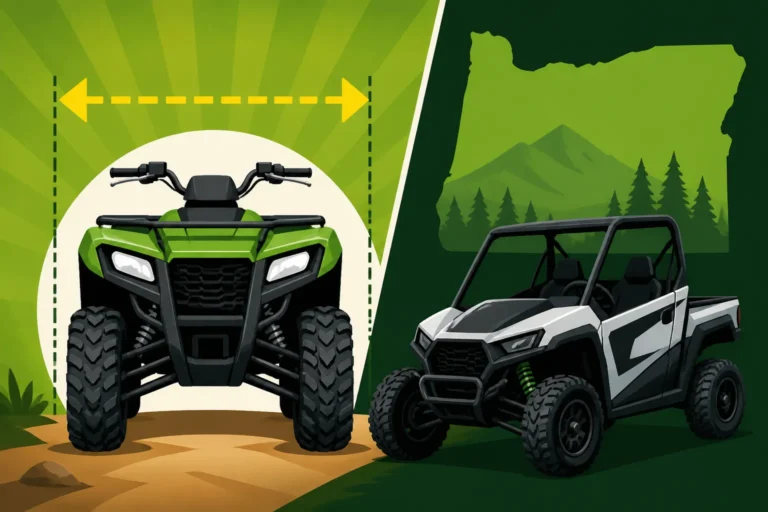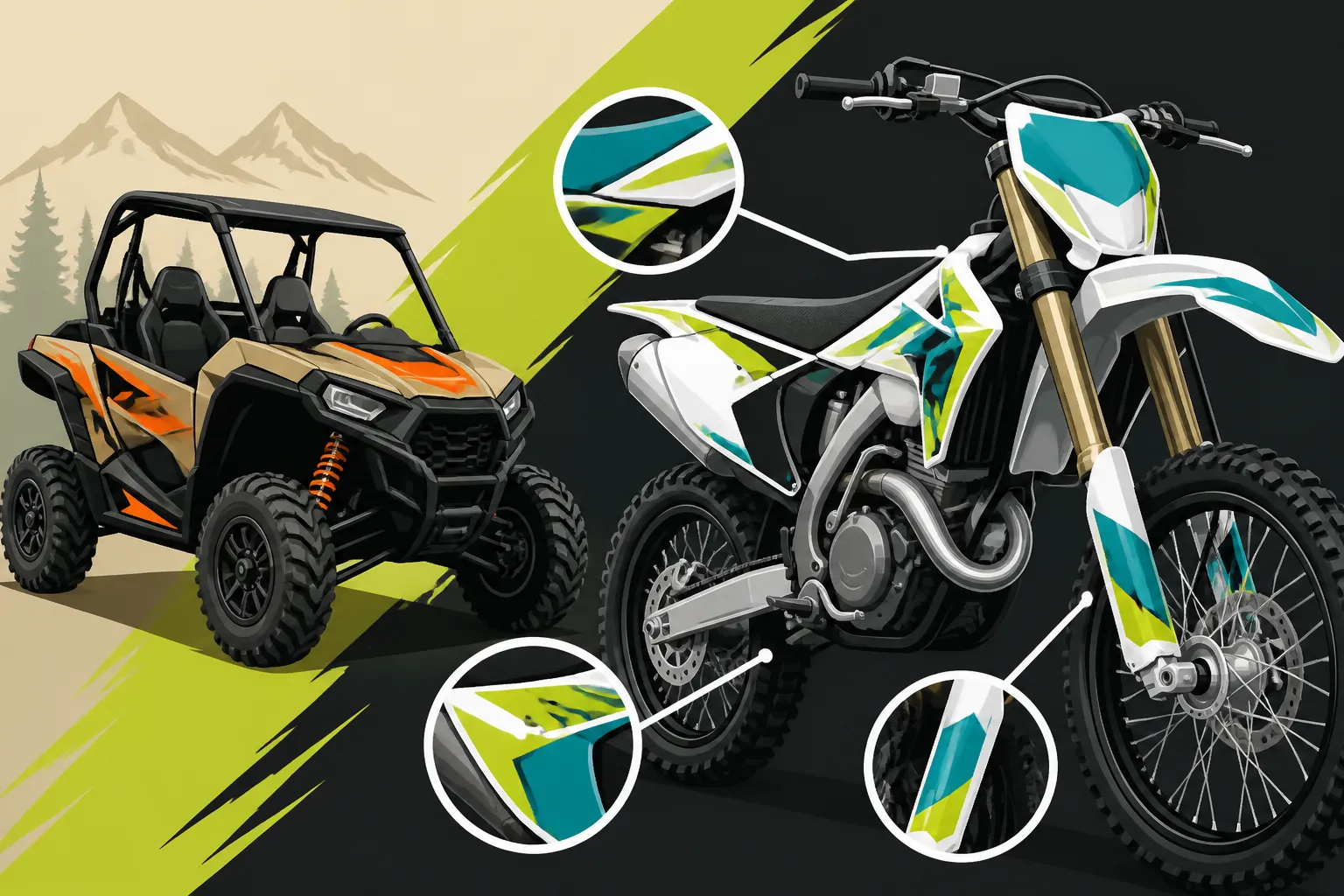
Decal Placement on an Off-Road Motorcycle
If you've ever found yourself squinting at that new Oregon ATV operating permit decal, wondering exactly where it's supposed to stick on your off-road motorcycle without looking like a slapped-on afterthought – or worse, risking a fine – you're definitely not alone. It can feel like a small detail, but in Oregon, proper decal placement is a big deal for keeping your adventures legal and hassle-free. This guide is here to cut through the confusion and give you the clear, practical information you need to get that decal exactly where it belongs on your dirt bike.
Understanding Oregon's ATV Permit Decal System
Oregon's system for off-highway vehicles (OHVs) might seem like a maze at first glance, but at its heart, it's designed to keep our incredible riding areas funded and managed, and to ensure everyone is operating safely and responsibly. Your little permit decal plays a crucial role in that.
Why Oregon Requires Permits for Off-Road Motorcycles
It might surprise some newer riders, but even your nimble dirt bike, often referred to as a Class III off-road motorcycle in Oregon, needs an operating permit if you're planning to ride on any public lands. This isn't just about collecting fees; it's a vital piece of the puzzle that funds the very trails and staging areas we all love to use. Think of that small sticker as your contribution to maintaining access to places like the Tillamook State Forest or Millican Valley. [Where Oregon ATV Permit Money Goes] is often a question many riders have, and the answer is usually right back into the OHV program, ensuring facilities are kept up, and new trails can be developed. Without these permits, those amazing riding experiences would simply cease to exist.
The Oregon Parks and Recreation Department (OPRD) oversees this program, and they rely on the revenue from these permits to manage the vast network of OHV trails and facilities across the state. Every time you buy a permit, you're directly supporting the maintenance of those gravel roads, the upkeep of vault toilets at staging areas, and even enforcement efforts that keep everyone safe. It’s a collective effort, and your permit is your ticket to being a part of it.
The Importance of Correct Decal Placement
You might think, "It's just a sticker, who cares where it goes?" But trust me, OPRD rangers and other law enforcement officials definitely care. Incorrect decal placement can lead to a roadside chat you'd rather avoid, and potentially even a citation. We all want to spend our time riding, not explaining why our decal is tucked away out of sight. [Oregon's Class C Traffic Violation for No Permit] isn't something anyone wants to receive on a weekend outing. The decal isn't just proof you paid; it's also a quick visual identifier that you're legal to ride.
When you roll into a staging area, especially a popular one like Spinreel or Hauser on the Oregon Coast, rangers are often doing quick checks. They're looking for those bright, visible decals. If yours isn't where it's supposed to be, or if it's obscured by mud, they'll likely stop you to verify your compliance. This can put a real damper on your day. Proper placement means the decal is easily seen and read by an official from a reasonable distance, ensuring you don't get stopped unnecessarily. It makes their job easier, and it definitely makes your day better.
Identifying Your Off-Road Motorcycle's Class in Oregon
Before we dive into exactly where the decal goes, it's helpful to understand how Oregon categorizes off-road motorcycles. This ensures you're applying the correct rules to your specific machine.
Class III Off-Road Motorcycles Defined
In Oregon, off-road motorcycles fall under a specific category: Class III. These are, essentially, your dirt bikes, trials bikes, and other two-wheeled motorized vehicles designed for off-highway use. They are distinct from the wider ATVs (Class I), street-legal vehicles like Jeeps or buggies (Class II), or side-by-sides (Class IV). [Class III Off-Road Motorcycles in Oregon] are characterized by their single-track design, handlebars for steering, and a seat that requires the operator to straddle the engine. They're built for agility and navigating narrower trails, often where other OHV types can't go.
It's important to know your machine's class not just for decal placement, but for understanding other regulations too, like where you can ride and what safety gear is required. While most riders know their dirt bike is a dirt bike, Oregon's official definitions are what matter when you're out on public lands. Understanding these distinctions helps clarify why certain rules apply to your machine versus, say, your friend's side-by-side.
How Class Affects Decal Rules (or Doesn't for Placement)
The good news is that while Oregon has [Oregon's Four ATV Classes Explained], the general principle for decal placement — being visible and securely attached — largely remains consistent across all OHV types that require a permit. The type of machine determines if it needs a permit and what kind of permit it is, but the placement guidance for visibility is pretty universal. Whether you're riding a Class I quad or a Class IV side-by-side, the decal needs to be easily seen by law enforcement.
For off-road motorcycles, the challenge often isn't ambiguity about the rule itself, but the practical application due to the bike's design. Dirt bikes have fewer large, flat surfaces compared to a side-by-side with a roll cage or a quad with ample fender space. This is where riders can get tripped up, trying to find that perfect spot that meets the visibility requirements while also being secure and not interfering with the bike's operation or rider movement.
The Official Word: Where Your Decal Must Go
Let's get down to the brass tacks. Oregon's rules are quite specific about where that decal needs to live on your off-road motorcycle. It's not just about slapping it on; it's about strategic visibility.
Front and Right Side Visibility: The Golden Rule
For off-road motorcycles (Class III), Oregon's regulations are crystal clear: the permit decal must be permanently affixed and "readily visible from the front and the right side of the vehicle." This isn't a suggestion; it's a rule. Decal Placement on an Off-Road Motorcycle specifically emphasizes this dual visibility. Why the front and right side? It's largely about ease of identification for rangers and law enforcement. When an officer approaches your parked bike, or if they're observing riders on a trail or in a staging area, they need to be able to quickly see that you're permitted without having to walk all the way around your machine or ask you to move it.
Imagine a ranger making their rounds at a busy spot like Millican Valley. They're quickly scanning machines, and if your decal is on the left side, or tucked away under a fender, they might miss it, prompting them to approach you for a closer look. Placing it correctly avoids these interruptions. The "permanently affixed" part means it needs to be stuck directly to the machine, not simply laid under a bungee cord or carried in your pocket. It’s part of your bike's identity for its operating life on public land.
Practical Placement on Common Off-Road Motorcycle Parts
Given the "front and right side" rule, you have a few solid options on a typical off-road motorcycle. The key is finding a flat, clean surface that won't get obscured.
- Front Fork Tube (Right Side): This is a popular and often effective spot. The right-side fork tube, especially near the triple clamp or just below it, offers good front and right-side visibility. Ensure it's not going to be covered by brake lines, cables, or your handguards.
- Front Number Plate (Right Side/Lower Edge): Many dirt bikes have a large front number plate. Placing the decal on the lower right corner or edge of this plate can work well, ensuring it's visible from the front and easily seen when looking at the right side of the bike.
- Right Side Panel/Fender: On some bikes, there might be a small, relatively flat section on the right-side fender or side panel, perhaps near the airbox cover or exhaust. This can also provide good right-side visibility, and depending on the angle, some front visibility. However, be mindful of exhaust heat or areas prone to heavy mud accumulation.
- Frame Spar (Right Side): A less common, but sometimes viable, option is a clean section of the frame spar on the right side, especially near the steering head. This can offer good forward-leaning right-side visibility.
Before sticking it down, always do a "visual check." Walk around your bike, crouch down, and imagine you're a ranger. Can you clearly see the decal from the front? Can you clearly see it from the right side? Is it unobstructed? This simple exercise can save you a lot of grief. Remember, the goal is for it to be immediately obvious.
| Placement Area | Pros | Cons | Visibility (Front/Right) | Durability Considerations |
|---|---|---|---|---|
| Right Fork Tube | Excellent dual visibility, prominent. | Can be obscured by cables/handguards. | High | Exposed to roost/debris, cleaning. |
| Front Number Plate | Clear front visibility, often flat. | Might not be perfectly visible from direct right. | Good | Vulnerable to impacts, mud. |
| Right Side Panel/Fender | Good right-side visibility. | Can be obscured by rider's leg, mud. | Moderate | Prone to mud, exhaust heat (if nearby). |
| Right Frame Spar | Secure, less exposed to roost. | Limited flat surface, can be subtle. | Moderate | Less exposure to direct impact. |
Common Challenges and Troubleshooting Decal Placement
Even with clear rules, off-road motorcycles present some unique challenges for decal placement. Modern dirt bikes often have sleek, contoured plastics and minimal flat areas, making that perfect spot elusive.
Dealing with Limited Flat Surfaces
This is a real head-scratcher for many dirt bike owners. Unlike a flat-fendered quad or a side-by-side with a large door panel, your off-road motorcycle's plastics are designed for ergonomics and aesthetics, not necessarily for sticking a rectangular decal. The key here is not to force it onto a severely curved surface, as it will inevitably peel. When [Oregon ATV Permit Decal Falling Off] happens, it's not just annoying; it means you're technically riding without a valid, visible permit.
If you find that your bike simply doesn't have an ideal flat spot on the right side of the front or near the front, you might need to get a little creative. Some riders opt for the flatter part of the right-side fork guard, though this area can be heavily impacted by roost and mud. The most important thing is to prioritize visibility and adhesion. If a specific spot seems too curved, it likely is. Sometimes, applying the decal to a very clean, flat section of the frame itself, even if smaller, can be more effective than trying to contort it onto a rounded plastic. Always make sure the surface is absolutely clean and dry before applying – rubbing alcohol is your friend here to remove any oils or residues.
Ensuring Durability and Readability
Once your decal is on, the next challenge is keeping it there and keeping it readable. Dirt bikes live a tough life! They get caked in mud, blasted with roost, and pressure-washed after every ride. This environment is brutal on decals. To give your decal the best chance:
- Cleanliness is Key: Before applying, vigorously clean the surface with rubbing alcohol. This removes all dirt, grease, and wax, creating the best bond.
- Smooth Application: Apply slowly, pressing out any air bubbles. Bubbles create weak spots where water and dirt can get in and cause peeling.
- Strategic Protection: Consider a layer of clear protective film over the decal (like a piece of clear bra material, often used for car paint protection). This can help shield it from abrasion, mud, and power washers, extending its life significantly. Just ensure the film itself doesn't obscure the decal's readability.
- Regular Checks: Before each ride, do a quick visual check. Is the decal still securely attached? Is it readable? If it's caked in mud, give it a quick wipe. An unreadable decal is as good as no decal in the eyes of an enforcement officer. [Keeping a Decal Readable After a Season] involves consistent care and possibly that protective layer. If your decal does peel or get lost, remember that you'll need to obtain a replacement to remain compliant.
The Bigger Picture: Your Oregon ATV Permit and Safety Card
While we're focusing on decal placement, it's crucial to remember that the decal is just one piece of the puzzle. There are other important aspects to being a responsible and legal off-road motorcycle rider in Oregon.
How to Get Your Oregon ATV Permit
Getting your actual permit is the first step before you even worry about decal placement. Oregon makes it relatively easy to obtain these. You can either purchase them online through the Oregon Parks and Recreation Department website or visit one of the many authorized permit agents across the state. [Where Oregon Sells ATV Permits] provides a comprehensive list of these locations, which often include dealerships, powersports shops, and even some county offices.
If you choose [Buying an Oregon Permit Online], you'll typically receive a temporary permit via email that you can print and carry with you immediately, allowing you to ride while you wait for the physical decal to arrive in the mail. For those who prefer to walk in and get everything done in person, [Oregon Permit Agents You Can Walk Into] can issue the permit card and decal on the spot. Remember that the permit is valid for two years from the month of purchase, so you'll enjoy plenty of riding before it's time to think about [Renewing an Oregon ATV Permit]. It’s a pretty straightforward process, and one of the most critical steps to ensuring your off-road motorcycle is legal on Oregon's public lands. If you're documenting the sale of a used motorcycle, using a reliable template from a service like LawDepot for your bill of sale can provide clear proof of ownership, which is essential when you go to apply for your permit.
The Oregon ATV Safety Card: A Separate Requirement
Beyond the machine's permit decal, every rider in Oregon who operates an OHV on public land needs an Oregon ATV Safety Education Card. This is a common point of confusion: the decal is for the machine, and the safety card is for the operator. Even if you're an experienced rider, you'll need this card. [Oregon's ATV Safety Education Card] is a mandatory requirement for all ages. There's no age exemption.
The good news is that the online safety course is free and can be completed at your own pace. Whether you're looking for [Oregon Safety Card for Adults] or [Oregon Safety Card for Children], the process is generally the same. While some states have reciprocity agreements for permits, Oregon's safety card requirements are fairly strict. Always carry your safety card with you when you ride, either the physical card or a photo of it on your phone. It's just as important as your decal for proving you're legally allowed to operate your off-road motorcycle on public lands throughout Oregon. A well-documented sale, perhaps using a template from LawDepot, ensures that when you sell your machine, the new owner is aware of their responsibility to get both a permit and a safety card. If you're looking to sell your off-road motorcycle in Oregon, providing a comprehensive bill of sale, easily created with services like LawDepot, can smooth the transaction and ensure you have proper records.
Disclaimer
This article is for general informational purposes only and does not constitute professional advice. Laws, prices and regulations vary by location and change over time. Consult a qualified professional for guidance on your specific situation.