Oregon ATV Permit for a Sand Rail
It's incredibly common for owners of unique off-road machines like sand rails to feel a bit lost when trying to navigate Oregon's ATV permitting system. You've got this awesome vehicle, built for tearing up the dunes or trails, but it doesn't quite fit the mold of a traditional quad or side-by-side. The good news is, Oregon has a place for your sand rail, and getting the right operating permit is a straightforward process once you understand how your machine fits into the state's classification system. This guide will walk you through exactly what you need to know to get your sand rail legally permitted for the Oregon dunes and trails.
Understanding Sand Rails in Oregon's ATV Classification System
One of the biggest hurdles for sand rail owners is figuring out where their machine actually fits within Oregon's official ATV classification system. The state doesn't have a specific "sand rail" category, which can definitely lead to some head-scratching. Instead, these incredible machines typically fall into one of two main classes based on their design and specifications: Class II or, less commonly, Class IV. Understanding this distinction is absolutely key, not just for the permit itself, but for other regulations that might apply to your specific vehicle.
Where Sand Rails Fit Class II Versus Class IV
Most sand rails, with their open-frame construction, steering wheels, and often bench-style seating, are generally categorized as Class II All-Terrain Vehicles under Oregon law. The defining characteristics of a Class II machine often include a dry weight exceeding 800 pounds but not more than 3,500 pounds, a width of 80 inches or less, and typically a steering wheel and non-straddle seating. Think of them as open-air, off-road vehicles that are not street-legal unless specifically modified and registered for highway use, which is a whole other can of worms we'll briefly touch on.
However, some of the much larger, heavier sand rails or dune buggies, particularly those that are wider than 75 inches and have a dry weight exceeding 3,500 pounds, might actually find themselves classified as Class IV All-Terrain Vehicles. These are generally defined as side-by-side (SxS) vehicles or other similar utility-style off-road vehicles. While most sand rails are designed more for performance and recreation than utility, their sheer size and weight can sometimes push them into this category. It's crucial to consult the official definitions found in the [Oregon's Four ATV Classes Explained] to be absolutely sure. A good rule of thumb: if it has a steering wheel and a bench seat, and it's not a tiny quad, you're likely looking at a Class II or Class IV situation.
Why Classification Matters for Your Permit
While every single off-road machine used on public lands in Oregon needs an ATV Operating Permit – yes, every single one – knowing whether your sand rail is a Class II or Class IV does matter for other aspects of responsible riding. For instance, [Insurance and Oregon Class II Machines] is compulsory if you intend to operate a Class II ATV on any highway or road legally designated for ATV use, even if it's a limited-access route. While most sand rail owners aren't typically looking to make their rigs street legal for daily driving, there are those limited [Oregon's ATV Highway Access Routes] in places like Lakeside and Sumpter where this distinction becomes very important.
Beyond insurance, classification can subtly influence other rules like passenger capacity (though most sand rails are already clearly designed for specific passenger numbers) or even potential helmet requirements, though Oregon's helmet law broadly applies to many situations regardless of class, particularly for younger riders. Ultimately, the state wants to make sure that the right safety and operational standards are applied to the right kind of machine. So, don't just guess which class your sand rail falls into; take a moment to look at your machine's specifications and compare them to Oregon's definitions to truly understand [Which Oregon ATV Class Your Machine Falls Into].
Getting an Oregon ATV Permit for Your Sand Rail
Now that you've got a clearer picture of where your sand rail sits in Oregon's classification system, the next step is actually getting that all-important operating permit. This isn't a complex, DMV-style registration, but rather a simple process to ensure you're contributing to the upkeep and management of the very trails and dunes you love to ride.
The Universal Permit Requirement
Let's be crystal clear: if you plan to ride your sand rail on any public lands in Oregon, you absolutely need an Oregon ATV Operating Permit. This applies whether you're ripping through the Oregon Dunes National Recreation Area, exploring the designated trails in Millican Valley, or tackling the terrain in the Tillamook State Forest. There are no exceptions for specific vehicle types like sand rails, or for how often you ride. It's a fundamental requirement, and rangers regularly check for these decals at staging areas. It's truly a small price to pay for access to some of the most incredible riding opportunities anywhere. Think of it as your passport to adventure on Oregon's public OHV lands. The funds collected from these permits go directly back into the OHV program, supporting trail maintenance, enforcement, and safety education, which benefits all of us. You can read more about [Where Oregon ATV Permit Money Goes].
Where and How to Purchase Your Permit
The good news is that getting an Oregon ATV Operating Permit for your sand rail is incredibly convenient. You have a few options, designed to make it easy for both residents and visitors alike.
-
Online Purchase: For many, the easiest way to buy a permit is online through the Oregon Parks and Recreation Department's (OPRD) website. This allows you to purchase your permit from the comfort of your home, and you'll receive a temporary permit via email that you can print and use immediately. This is fantastic if you're planning a last-minute trip to the dunes or realized you forgot to renew your permit. The actual decal will then be mailed to you, typically arriving within a week or two. You can learn all about [Buying an Oregon Permit Online].
-
Authorized Permit Agents: Oregon has a wide network of authorized permit agents across the state. These are often dealerships, sporting goods stores, or other local businesses that process permits on the spot. This is a great option if you prefer to get your decal immediately or if you have questions you want to ask in person. Many riders find it convenient to grab their permit from an agent near their favorite riding area, or even from a dealer where they might be picking up parts or gear. The permit itself costs the same wherever you buy it, and these agents are often well-versed in the specifics of [Oregon's ATV Operating Permit]. If you need to produce a bill of sale for your sand rail as part of any ownership transfer, whether you're buying or selling, platforms like LawDepot can help you create professional, legally sound documents to ensure everything is above board. This kind of documentation can be critical if you ever need to prove ownership or address any disputes.
-
Oregon State Parks: Some Oregon State Parks also serve as permit agents, especially those located near popular riding destinations. If you're camping or visiting a park, it can be a convenient way to pick up your permit. Just be sure to check their operating hours before you go. The price for [Oregon ATV Permit Cost] is consistent across all purchase points.
Regardless of where you buy it, the permit is valid for two years from the month of purchase and costs the same for all classes of ATVs, including your sand rail.
Decal Placement and What Comes Next
Once you've secured your Oregon ATV Operating Permit, the next crucial step is ensuring it's properly displayed on your sand rail. This isn't just a suggestion; it's a requirement that allows rangers and law enforcement to easily verify that your machine is compliant.
Properly Displaying Your Sand Rail's Permit Decal
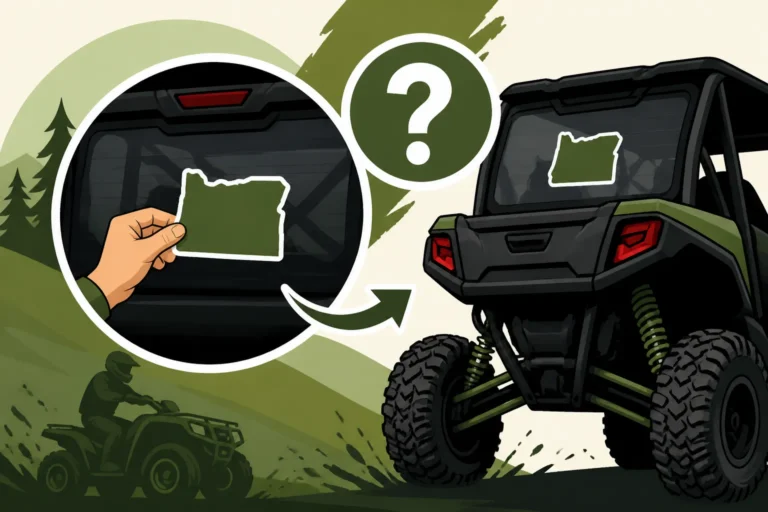
Given the unique, often minimalist, design of sand rails, finding the perfect spot for the permit decal can sometimes be a bit of a puzzle. Oregon regulations are clear: the decal must be permanently affixed and clearly visible on the right side of the machine. For a sand rail, this often means finding a flat, clean surface on the frame, a roll bar, or even a side panel if your machine has one.
Here are a few tips for optimal placement on a sand rail:
- Clean Surface: Before applying, thoroughly clean the area where the decal will go. Use rubbing alcohol to remove any grease or grime for a strong, lasting bond. A decal on a dirty surface will likely peel off quickly, leading to potential fines or the hassle of replacing a lost decal.
- Right Side Visibility: Ensure the decal is on the right side of the machine when viewed from the rear, and that it's not obscured by equipment, wiring, or other accessories. Rangers need to be able to see it quickly as they pass by.
- Permanent Location: Choose a spot where the decal is unlikely to be damaged by impacts, heat, or excessive mud. While it might be tempting to stick it on a removable panel, it needs to be on a fixed part of the vehicle itself to avoid issues if that panel comes off or is replaced.
- Smooth Application: Apply the decal slowly, pressing out any air bubbles as you go to ensure a smooth, flat adherence. This will prevent peeling and help the decal last for its full two-year validity.
Failing to properly display your decal can result in a citation, so take a few minutes to get this right. You can find more specific guidance on [Decal Placement on a Sand Rail].
Beyond the Permit Other Considerations for Sand Rail Owners
Getting your permit is a fantastic start, but there are a few other important considerations for sand rail owners in Oregon to keep in mind for a safe and legal ride.
- ATV Safety Education Card: Every rider operating an ATV on public land in Oregon, regardless of age, needs to carry an [Oregon ATV Safety Education Card]. This isn't about being new to riding; it's about ensuring everyone knows the rules of the trail and how to ride responsibly. While adults can often take an equivalency exam, younger riders typically need to complete a course.
- Titling Your Sand Rail: Unlike the operating permit, [Titling an ATV in Oregon Is Optional] for machines used exclusively off-road. However, getting an Oregon title provides clear proof of ownership, which can be invaluable. If you ever decide to sell your sand rail, having a title makes the transaction smoother and more secure for both parties. It helps prevent fraud and provides a record in case your machine is ever stolen. If you're buying a used sand rail, especially from a private seller, insisting on a title or a comprehensive bill of sale (which you could draft using a service like LawDepot) is a smart move to protect your investment and prove legal ownership.
- Insurance for Class II Machines: As mentioned earlier, if your sand rail is classified as a Class II ATV and you intend to operate it on any highway or designated route where ATVs are allowed, you must have liability insurance. Even if you don't plan on making it street legal, it's always wise to check your personal insurance policies to see if your sand rail is covered for off-road damage or liability. Better safe than sorry!
By understanding your sand rail's classification, obtaining the necessary permit, displaying the decal correctly, and addressing these additional considerations, you'll be all set to enjoy Oregon's fantastic off-road opportunities legally and safely.
| Feature | Class II All-Terrain Vehicle (Typical Sand Rail) | Class IV All-Terrain Vehicle (Some Larger Sand Rails) |
|---|---|---|
| Steering | Steering Wheel | Steering Wheel |
| Seating | Non-straddle (bench, bucket seats) | Non-straddle (bench, bucket seats) |
| Dry Weight | Over 800 lbs, up to 3,500 lbs | Over 3,500 lbs |
| Width | 80 inches or less | Greater than 75 inches (often up to 80 inches) |
| Primary Use | Recreation, performance | Recreation, utility |
| Permit Required? | YES (universal) | YES (universal) |
| Insurance Req.? | YES, if operated on designated road/highway | YES, if operated on designated road/highway |
| Titling? | Optional (recommended for ownership proof) | Optional (recommended for ownership proof) |
Disclaimer
This article is for general informational purposes only and does not constitute professional advice. Laws, prices and regulations vary by location and change over time. Consult a qualified professional for guidance on your specific situation.