Oregon ATV Permit for a Dune Buggy
It's an exciting feeling, isn't it? That rumble of the engine, the wind in your hair, the promise of carving through soft sand or kicking up dust on a forest trail. But before you unleash your "dune buggy" on Oregon's incredible landscapes, there's a vital piece of paperwork you need to sort out: the Oregon ATV Operating Permit. Many folks get tangled up in what exactly constitutes a "dune buggy" in the eyes of Oregon state law, and what that means for getting the right permit. This guide is here to clear up that confusion and walk you through everything you need to know to get your dune buggy permitted and ready for adventure.
What Even Is a "Dune Buggy" in Oregon's Eyes? Navigating the Class System
The term "dune buggy" conjures up images of a lightweight, open-air vehicle designed for sand. And while many machines fit that description, Oregon's official classification system for off-highway vehicles (OHVs) might categorize your specific "dune buggy" in a way that's different from what you expect. Understanding this distinction is absolutely crucial, not just for permitting, but for knowing what rules apply to your machine on Oregon's trails and roads.
The Importance of a Steering Wheel and Bench Seat
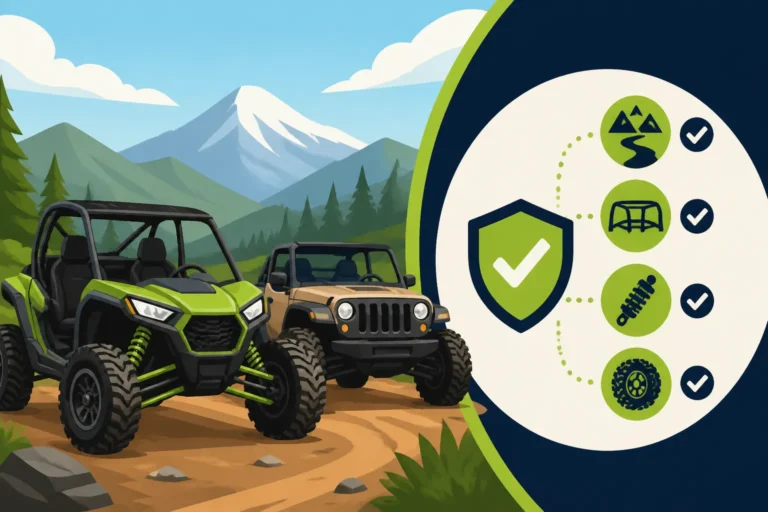
Here's where the rubber meets the road, or rather, the tires meet the sand. When Oregon looks at your "dune buggy," it’s often looking for key design elements. Does it have handlebars and a straddle seat, like a traditional ATV or dirt bike? Or does it have a steering wheel and a bench seat (or multiple bucket seats)? For most vehicles that people affectionately call "dune buggies," especially those with a roll cage and multiple seats, you're likely looking at two specific classes in Oregon: Class II or Class IV.
A traditional quad with handlebars and a straddle seat falls into Class I, while dirt bikes are Class III. But if your machine has a steering wheel and side-by-side seating, it's generally going to be a [Oregon's Class IV Side-by-Sides Under 75 Inches]. These are your modern UTVs, or Side-by-Sides, and they've become incredibly popular. If your "dune buggy" is more of a purpose-built, often street-legal capable, open-air vehicle that's essentially a modified automobile chassis, it might very well fall under [Oregon's Class II Under ORS 801.193]. These Class II vehicles are a bit unique because they often started life as something road-legal and were then modified for off-road use, or they are custom-built vehicles that meet specific criteria for things like weight and width.
The key takeaway? Don't get too hung up on the informal name "dune buggy." Focus on its physical characteristics: steering wheel, seat type, and overall design. This will help you determine its official Oregon OHV class, which dictates more than just the permit.
Why Class Matters for Your Permit
You might be thinking, "Who cares about the class if the permit price is the same for everyone?" And it's true, Oregon charges one flat fee for an ATV operating permit, regardless of whether you're riding a tiny youth quad or a massive side-by-side. So, [One Oregon Permit Price for Every Class] is something you can count on. However, the class of your machine can profoundly impact other aspects of your riding experience, specifically regarding insurance requirements and whether your machine has any potential to be street-legal.
For example, Class II machines, which many custom or highly modified "dune buggies" often are, have mandatory liability insurance requirements if you ever intend to ride them on paved roads or designated highway access routes. This isn't the case for Class I, III, or IV machines. Knowing your vehicle's class from the start prevents surprises down the line, especially if you ever consider taking your buggy beyond the dirt trails. It's about being prepared for all the rules that apply to your specific type of adventure, not just whether you have a sticker on it.
Securing Your Oregon ATV Permit for Your "Dune Buggy"
Once you've wrapped your head around how Oregon might classify your beloved "dune buggy," the next step is straightforward: getting that all-important operating permit. This permit is your golden ticket to riding on any public land in Oregon where OHVs are allowed. Without it, you're not just risking a fine; you're missing out on some of the best riding experiences the state has to offer.
Where and How to Purchase Your Permit
Oregon makes it pretty easy to get your ATV permit, and thankfully, the process is the same whether you're permitting a quad, a dirt bike, or your custom dune buggy. You have a few convenient options, so you can choose what works best for your schedule and location.
The quickest and often most convenient method for many is [Buying an Oregon Permit Online]. You can do this from the comfort of your home, and here's a neat perk: you'll receive a temporary 30-day permit immediately via email. This means you can purchase your permit and literally be riding the same day, assuming you have access to a printer. No waiting for mail, no extra trips. For those who prefer a face-to-face transaction or need a permit right before heading to a staging area, Oregon has [Oregon's Ninety-Five Permit Agents] scattered across the state. These agents are often OHV dealerships, sporting goods stores, or small businesses near popular riding areas. It's a great option if you're passing through a town on your way to the dunes or a trail system and realize you forgot to get your permit. You can also sometimes buy them at [Buying a Permit at an Oregon State Park] that manages OHV areas, though this isn't always available at every park. No matter where you purchase it, the permit is processed through the Oregon Parks and Recreation Department (OPRD), which oversees the state's OHV program.
The Permit Cost and Its Validity
One of the most user-friendly aspects of Oregon's ATV permit system is its simplicity when it comes to cost and duration. As mentioned, the [Oregon ATV Permit Cost] is a flat fee for every class of machine. This means you don't have to worry about paying more just because your "dune buggy" is a larger or more complex vehicle than a child's ATV. It's truly a one-price-fits-all situation, which riders genuinely appreciate.
Even better, the permit is valid for a generous two years from the month of purchase. So, if you buy it in July 2024, it's good until July 2026. This [How Long an Oregon ATV Permit Lasts] saves you the hassle of annual renewals and provides excellent value. When you consider all the maintenance, fuel, and other gear that goes into enjoying OHV riding, knowing your permit fee is locked in for two years is a small but significant relief. Just remember to mark your calendar for when it's time for [Renewing an Oregon ATV Permit]!
Understanding the Decal: Placement and Importance
Once you've purchased your permit, you'll receive a physical decal along with a permit card. This decal is more than just a sticker; it's visible proof that your "dune buggy" is legally permitted to ride on Oregon's public OHV lands. Correct placement of this decal is not just a suggestion – it's a requirement.
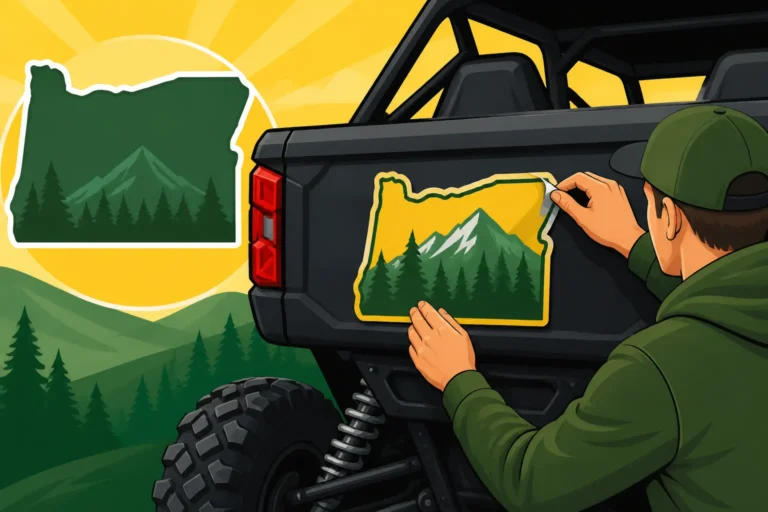
[Oregon Permit Decals and Where They Go] depends slightly on the type of machine, but for most "dune buggies" which likely fall into Class II or Class IV, the decal needs to be prominently displayed on the right side of the vehicle. This means the right side as if you are sitting in the driver's seat. For a Class IV side-by-side or a sand rail (often a type of dune buggy), this typically means mounting it on a visible, permanent component like a roll bar, fender, or body panel. The key is that it must be visible and securely affixed to the machine itself. You don't want to place it on a removable cooler, a flag pole, or your tow rig's bumper, as rangers need to quickly identify that the machine itself is permitted. Failing to properly display the decal can lead to a citation for [Oregon's Class C Traffic Violation for No Permit], even if you technically bought one. So, take the extra minute to get it right, ensuring it's in a spot that will stand up to the elements and remain clearly readable.
Essential Rules and Considerations for Dune Buggy Owners in Oregon
Getting your permit is a huge step, but it’s just the beginning. Owning and operating a "dune buggy" in Oregon comes with a few more layers of understanding, especially concerning ownership, insurance, and where you can actually take your machine. Don't let these details catch you off guard; being informed makes for a much smoother and more enjoyable experience.
Titling Versus Permitting: Clearing Up the Confusion
This is a point of frequent misunderstanding for many OHV owners in Oregon. While getting an ATV Operating Permit is mandatory for riding on public land, [Titling an ATV in Oregon Is Optional]. Yes, you read that right – optional. Oregon's DMV does not register ATVs, only the Parks and Recreation Department permits them. This unique arrangement often leaves owners wondering if they really need a title at all.
However, just because it's optional doesn't mean it's not a good idea. Having an Oregon title for your dune buggy provides indisputable proof of ownership. This can be incredibly valuable if your machine is ever stolen, or if you decide to sell it down the road. Imagine trying to prove a machine is yours without any official paperwork, especially if you bought it from a private seller who also didn't title it. A title makes the process of buying and selling much cleaner and more secure, protecting both the buyer and the seller. While you might not need it for riding, a title adds a layer of legal security that can be invaluable. For situations like buying from a seller who kept no records or proving ownership without a title, having that official document through the DMV is a major plus. Even if you're just buying or selling privately, having a clearly drafted bill of sale is crucial for your own protection and to prove legitimate ownership. Online resources like LawDepot can provide templates that make this process straightforward.
Insurance Requirements for Caged Machines
Here's another critical area where your "dune buggy's" classification (likely Class II or Class IV) can really impact you. While most Class I, III, and IV OHVs do not require liability insurance for off-road use, [Insurance and Oregon Class II Machines] are different. If your dune buggy is classified as a Class II machine, you must carry liability insurance. This is particularly relevant if your vehicle is street-legal or capable of using Oregon's limited highway access routes.
Even if your dune buggy is a Class IV side-by-side, which generally doesn't require liability insurance for off-road trails, many owners choose to carry it anyway. Why? Because accidents happen. A moment of inattention can lead to damage to another person's property or even injury. Having liability coverage can protect you financially from the unforeseen. Check with your insurance provider to understand your specific needs, and don't assume that just because you're "off-road" you're entirely immune from financial responsibility. For complex scenarios, like co-ownership agreements or even a simple lien agreement if you're selling your buggy to a friend on payments, services like LawDepot offer customizable legal document templates that can really simplify things.
Navigating Oregon's Street-Legal Maze
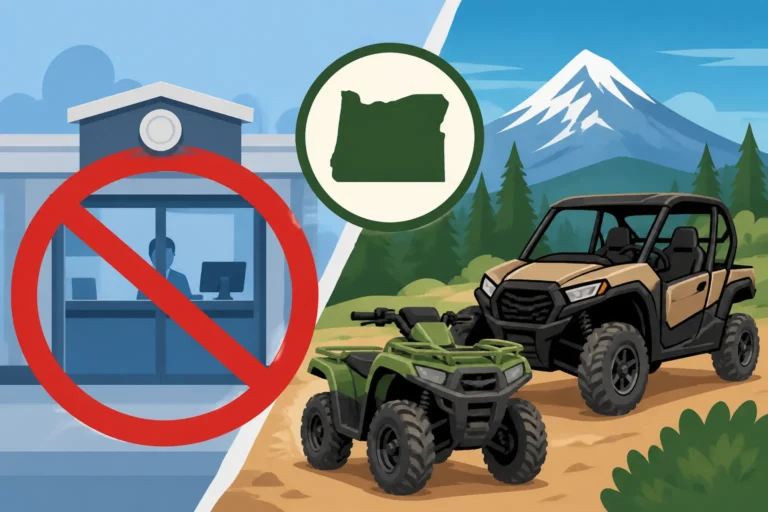
This is often the dream for "dune buggy" owners: being able to drive their machine from home to the trailhead, or even cruise through town. However, making an OHV street-legal in Oregon is generally very difficult, and for many vehicles, it's simply not an option. [Are ATVs Street Legal in Oregon?] The short answer for most quads and side-by-sides (Class I, III, and IV) is a resounding no. Oregon does not allow these vehicles to be registered and plated for general street use.
There is a very limited [Oregon's Class II Street-Legal Exception], which might apply to some custom-built "dune buggies" if they meet all the stringent requirements for a highway vehicle. Even then, general street legal access is restricted. The state has created very specific [Oregon's Only Two Designated ATV Routes: Lakeside and Sumpter] where certain OHVs are allowed on public roads within those towns for direct access to riding areas. These are rare exceptions, not the rule. If your "dune buggy" falls into Class II, it might have a path to full street-legal registration, but it's a complicated journey involving lights, turn signals, windshields, and often a title history as a road-going vehicle. It's a path few off-road vehicles take, so don't plan on cruising your typical dune buggy down the highway unless it's on a trailer.
Ownership Documentation and Sales
Whether you're buying a new-to-you dune buggy or planning to sell yours, proper documentation is key. This is where the optional titling becomes really important, but even without a title, a solid bill of sale is indispensable.
When buying a used dune buggy, always ask for a bill of sale, and ideally, a title. Verify the Vehicle Identification Number (VIN) on the paperwork matches the machine itself. You can even check the VIN to see if the machine has been reported stolen. This diligence protects you from inadvertently purchasing a stolen vehicle and facing serious legal headaches down the road. If you opt out of titling, having a well-documented bill of sale, perhaps from a platform like LawDepot, becomes even more critical for proving your legitimate ownership. Similarly, when selling your dune buggy, provide a comprehensive bill of sale, especially if you don't have a title. This document should include the VIN, make, model, year, sale price, date of sale, and signatures of both buyer and seller. Keep a copy for your records. It's your proof that ownership has been transferred and can protect you from future liability if the new owner gets into trouble. Even for just a casual sale between friends, it’s always best to formalize the agreement with proper documentation.
| Oregon OHV Classification | Common "Dune Buggy" Fit | Key Characteristics | Permit Required? | Mandatory Insurance? | Street-Legal Potential? |
|---|---|---|---|---|---|
| Class I (ATV) | Unlikely | Straddle seat, handlebars, <50" wide | Yes | No | No |
| Class II (Highway-Capable) | Possible (custom, modified car) | Steering wheel, bench/bucket seats, often modified from road vehicle | Yes | Yes (if road-used) | Very limited (specific routes) |
| Class III (Motorcycle) | No | Two wheels, straddle seat | Yes | No | No |
| Class IV (Side-by-Side) | Most Common | Steering wheel, bench/bucket seats, <=75" wide | Yes | No | No |
Disclaimer: This article is for general informational purposes only and does not constitute professional advice. Laws, prices and regulations vary by location and change over time. Consult a qualified professional for guidance on your specific situation.