Oregon Bill of Sale for an ATV
Selling or buying a used ATV here in Oregon can feel like navigating a maze, especially when you're trying to figure out what paperwork you really need to make the transaction legitimate and protect yourself. One of the biggest confusions often revolves around whether you need an official bill of sale. This guide is here to untangle all that, showing you why a comprehensive Oregon ATV bill of sale is your absolute best friend, whether you're handing over the keys or getting ready for your next adventure.
Why an Oregon ATV Bill of Sale Is Absolutely Essential
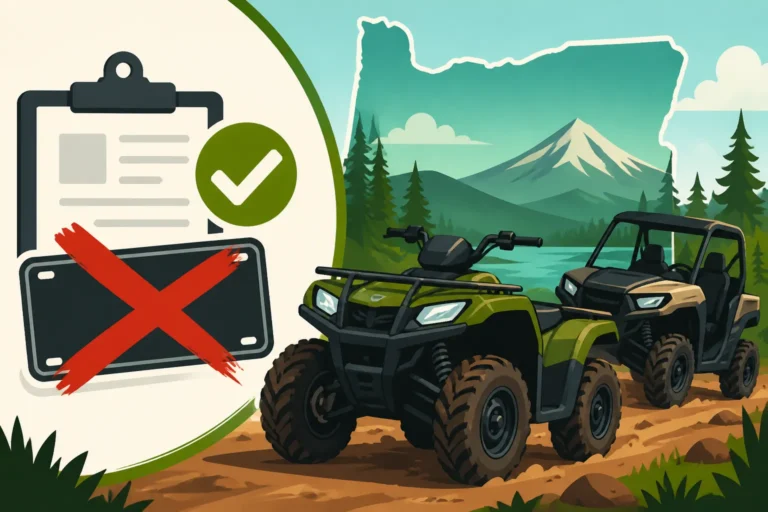
You might have heard that titling an ATV in Oregon is optional, which can lead some folks to believe that formal paperwork isn't a big deal. Oh, but it is! While it's true that the Oregon DMV doesn't handle ATV registration or mandatory titling for off-road use, a well-drafted bill of sale is the bedrock of any private ATV transaction. Skipping it is like building a house without a foundation – it might stand for a bit, but it's risky.
Proving Ownership and Protecting Your Investment
Imagine buying a sweet side-by-side, riding it for a year, and then deciding to sell it. Without a bill of sale from your purchase, how do you definitively prove that you were the rightful owner when you want to pass it on? Or worse, what if there's a dispute about the sale later? A bill of sale is your legal proof that the machine changed hands, from whom, and when. It clearly establishes your ownership, which is crucial for things like insurance claims, permitting, or even just showing a curious ranger at a staging area like Sand Lake or Millican Valley that you didn't just 'find' your machine. This document acts as a clear record, protecting both the buyer and the seller from future headaches. It’s your undeniable paper trail.
Beyond Titling: Why It Matters for Permits and More
Even though Oregon doesn't require a title for an ATV, you absolutely need an [Oregon's ATV Operating Permit] to ride on designated public lands. When you go to purchase that permit, you'll need to demonstrate ownership, and a bill of sale is a perfect way to do that, especially if the previous owner didn't have an Oregon title. Without one, you might find yourself in a sticky situation trying to prove you're the legitimate owner when the Oregon Parks and Recreation Department asks questions. Furthermore, if you ever need to involve law enforcement because your machine was stolen, a detailed bill of sale is critical evidence. It contains all the identifying information about your ATV, making it much easier for authorities to track and recover. Think of it as your machine's birth certificate and deed rolled into one.
What Your Oregon ATV Bill of Sale Needs to Include
A good bill of sale isn't just a scribble on a napkin. It needs specific, accurate information to be truly effective. The more detail, the better. This isn't the time to be vague or cut corners; precision here saves you grief later.
Essential Information for Both Parties
First and foremost, your bill of sale must clearly identify both the buyer and the seller. This means full legal names, current addresses, and contact phone numbers for everyone involved. For the seller, it's often a good idea to include their driver's license number as well, adding another layer of verification. This information proves exactly who participated in the transaction. You don't want any ambiguity if there's ever a question about the sale months or even years down the road. It ensures that both parties are clearly on record, leaving no room for "who was that guy?" scenarios.
Detailed Machine Description and Condition
This is where you get granular about the ATV itself. Include the make, model, year, and — most critically — the full Vehicle Identification Number (VIN). The VIN is your ATV's unique fingerprint, so double-check it against the machine's frame and any existing ownership documents. You should also note the engine size and color. Beyond those basics, a comprehensive bill of sale will include a statement about the machine's condition at the time of sale. Is it "as-is, where-is"? Are there any known issues, or is it in perfect working order? Being honest and upfront here protects both parties. For example, if you're buying a used quad that has a known cosmetic dent, explicitly listing that helps prevent arguments later. You could even note down things like the hour meter reading if the machine has one. For a clear, legally sound document, you might consider using a reputable template service like LawDepot, which guides you through adding all these necessary details systematically.
The Financial Details and Signatures
Of course, a bill of sale needs to state the agreed-upon purchase price in both numerical and written form (e.g., "$5,000.00 – Five Thousand and 00/100 Dollars"). It's also wise to note the date and time of the transaction. This can be important for things like insurance coverage or if there are any immediate post-sale incidents. Finally, and perhaps most crucially, both the buyer and the seller must sign and date the document. For an added layer of authenticity, consider having a third, neutral party witness the signatures and sign as well. This isn't always strictly required by Oregon law for ATVs, but it definitely strengthens the document's legal standing in case of a future dispute. A notary public is another excellent, though not always convenient, option for official verification.
The Process: Using and Storing Your Oregon ATV Bill of Sale
Once you've filled out and signed your bill of sale, the journey isn't over. Proper handling and storage are just as vital as accurate completion. Don't let this important document get lost in a pile of papers in your garage!
Completing the Transaction Safely
Before any money changes hands, make sure you've inspected the ATV thoroughly. As a buyer, ensure the VIN on the bill of sale matches the VIN on the machine. As a seller, ensure all payment is received and cleared before handing over the keys. It’s also a good idea for the buyer to check for any liens against the ATV, especially if [Titling an ATV in Oregon Is Optional] was truly utilized and no official title was transferred. A quick online search with the VIN can sometimes reveal this. Once everything is confirmed, and the document is signed by all parties, each person should receive an original copy. Yes, two originals – one for the buyer, one for the seller. Don't settle for a photocopy; having an original provides the strongest legal proof.
Secure Storage and When You'll Need It
Both the buyer and seller should keep their original bill of sale in a safe, accessible place. For buyers, this might be with your other important vehicle documents, perhaps in a fireproof safe or a secure digital backup. You'll need it when you apply for your [Oregon's ATV Operating Permit], for insurance purposes, or if you ever decide to sell the machine yourself. For sellers, keeping your copy proves that you no longer own the machine, which is critical if the new owner causes an accident or gets a citation. You don't want to be held responsible for something that's no longer yours. Always keep it for at least several years, just in case. Consider creating a digital scan of your original document and storing it in a cloud service or on an external hard drive, in addition to keeping the physical paper. Services like LawDepot often provide digital copies you can save.
Here’s a quick overview of essential and recommended items for your Oregon ATV bill of sale:
| Category | Essential Information | Recommended Additions |
|---|---|---|
| Parties | Full legal name & address of buyer | Buyer's & Seller's Driver's License Numbers |
| Full legal name & address of seller | ||
| Machine | Make, Model, Year, VIN | Engine Size, Color, Hour Meter Reading |
| Statement of condition (e.g., "as-is") | Detailed list of known flaws or recent repairs | |
| Transaction | Purchase price (numeric and written) | Date and time of sale |
| Signatures of buyer and seller | Signature of a witness or notary public | |
| Post-Sale | Confirmation of original copies for both parties | Digital copy stored securely |
Avoiding Common Pitfalls with Your ATV Bill of Sale
Even with the best intentions, mistakes can happen. Being aware of common pitfalls can help ensure your ATV transaction in Oregon goes smoothly and is legally sound.
The Dangers of Incomplete or Vague Documents
One of the biggest mistakes is not including enough detail. A bill of sale that simply says "ATV sold for X amount" is barely better than a handshake. It leaves too much open to interpretation and provides little protection if a dispute arises. Always include the full VIN, accurate names, and a clear description of the machine's condition. For instance, if you're buying a machine that's been modified, noting those modifications can be helpful. Vague descriptions can make it incredibly difficult to prove the specific machine was sold, especially if there are multiple similar models out there. Remember, the more precise, the more bulletproof your document will be.
Verbal Agreements vs. Written Proof
In the excitement of a new purchase or the relief of a sale, it can be tempting to rely on verbal agreements. "Oh, the seller said they'd fix that headlight after I paid," or "The buyer promised to pick it up next week." While trust is great, when it comes to legal transactions, verbal agreements are notoriously difficult to prove and enforce. Any promises, contingencies, or specific understandings should be written directly into the bill of sale or an accompanying addendum, signed by both parties. If it's not in writing, it essentially doesn't exist from a legal standpoint. This is especially true for things like "return policies" or guarantees on a used machine.
Verifying Ownership and Machine History
As a buyer, you have a responsibility to do your due diligence. Beyond ensuring the bill of sale is complete, you should also take steps to verify the seller's ownership and the machine's history. Ask the seller for any previous ownership documents, even if [Titling an ATV in Oregon Is Optional]. If they have an old registration card or a bill of sale from when they bought it, that's a good sign. Perform a [Stolen Machine Checks Before a Sale] using the VIN. There are online services that can help with this. While Oregon doesn't require a title for off-road ATVs, many states do, so if the machine came from out-of-state, there might be a title history worth investigating. A seller who is unwilling to provide a detailed bill of sale or let you check the VIN should raise a major red flag. Protect yourself by insisting on clear documentation and performing your own checks, every single time. This vigilance can save you from unknowingly purchasing a stolen machine or one with hidden legal issues.
Disclaimer
This article is for general informational purposes only and does not constitute professional advice. Laws, prices and regulations vary by location and change over time. Consult a qualified professional for guidance on your specific situation.