Oregon Paperwork for a Machine Bought Out of State
Bringing home a shiny new-to-you ATV or UTV that you purchased in another state can feel like a huge win, but then the reality hits: different states have different rules, and figuring out Oregon's specific paperwork requirements can quickly turn that excitement into a headache. Many riders find themselves scratching their heads, wondering if their out-of-state title is valid, or if they even need one here. This guide will walk you through exactly what you need to do to get your off-highway vehicle (OHV) legal and ready for Oregon's incredible trails and dunes, clarifying the process for permits, ownership proof, and optional titling.
Understanding Oregon's ATV Operating Permit for Out-of-State Purchases
Oregon has a unique system for off-highway vehicles, and it often catches new residents or visitors off guard. Unlike many states where you "register" your ATV or UTV, Oregon uses an "operating permit" system that is managed by the Oregon Parks and Recreation Department (OPRD), not the DMV. This distinction is crucial, especially when you're bringing in a machine from a state with a traditional registration process.
Why the Oregon Permit Is Different from Registration
When you buy an ATV in a state like Washington or California, you might receive a traditional vehicle registration card and license plate for your off-road machine, or perhaps a different type of sticker. You're used to going to their equivalent of the DMV. Here in Oregon, things are handled differently. We don't have plates for ATVs and UTVs for off-road use, and the Department of Motor Vehicles (DMV) isn't involved in issuing permits for off-road machines. Instead, the focus is purely on proving you've paid your fair share to help maintain our incredible trail systems and riding areas. Think of it less as a legal "registration" for road use and more as a user fee that allows you to operate on public lands. This can be a relief, as it often means less red tape than traditional vehicle registration, but it still requires understanding the specific steps.
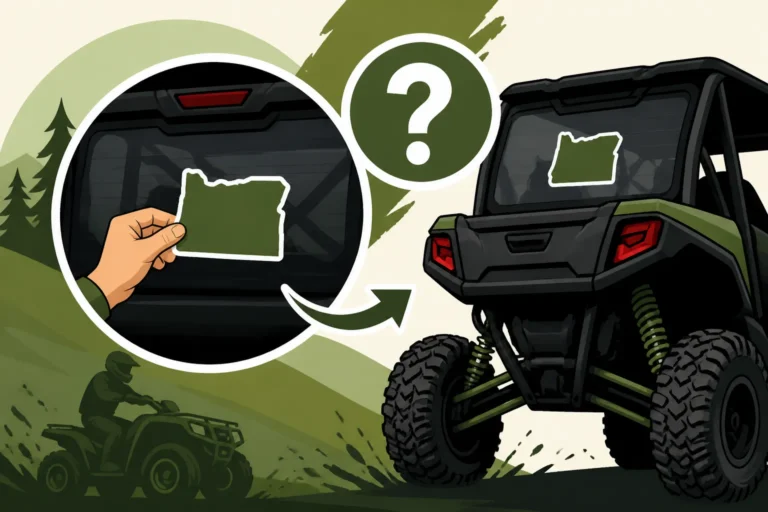
The Oregon ATV Operating Permit is essentially a decal that you display on your machine. This decal signals to rangers and fellow riders that you've contributed to the fund that supports OHV recreation across the state. It's a two-year permit, and the cost is the same regardless of your machine's class or size, which simplifies things considerably. You're simply buying the right to ride, not registering the vehicle itself in a way that implies road legality. If you're curious about the specifics of what this permit entails, check out [Oregon's ATV Operating Permit].
Reciprocity and the 60-Day Rule for Visitors
Now, what if you're not moving to Oregon, but just visiting from another state with your recently purchased machine? Oregon does offer a grace period and reciprocity for out-of-state OHV registrations or permits. If your ATV or UTV is legally registered or permitted in your home state, you generally don't need an Oregon permit for the first 60 consecutive days you operate it in Oregon. This is fantastic news for riders who live just over the border in places like Washington or California and want to come explore the Oregon Dunes or the Tillamook State Forest for a weekend or a longer vacation.
However, that "60 consecutive days" part is important. It means if you come to Oregon with your machine on June 1st and ride it for 30 days, leave, and then come back on August 1st for another 30 days, those days count towards your 60. It's not 60 days per trip, but 60 total days of operation within the state. After that 60-day window, you'll need to purchase an Oregon ATV Operating Permit, just like a resident. It's really designed to welcome visitors without burdening them with immediate paperwork, but also to ensure that those who spend significant time riding here contribute to the local OHV programs. Make sure you understand [Oregon Rules for an Out-of-State Machine] if you plan on being here for an extended period.
How to Get Your Oregon ATV Operating Permit
Getting your Oregon ATV Operating Permit is quite straightforward, even for a machine you've just bought out of state. You won't need an Oregon title or any proof of local registration to get this permit. The permit is tied to the machine itself, not necessarily to the owner's Oregon residency or title. So, if you've just driven your new-to-Oregon side-by-side home from Idaho, you can walk into a permit agent and get a decal for it right away.
You have a few options for purchasing the permit. The most common is online through the Oregon Parks and Recreation Department's website, which is convenient because you can do it from anywhere. You'll simply enter your machine's Vehicle Identification Number (VIN), pay the fee, and they'll mail you the decal. You can also purchase them in person at one of the many authorized permit agents located throughout the state, often found in ATV dealerships, sporting goods stores, or even some state park offices. These agents can often issue you a temporary paper permit on the spot, allowing you to ride legally while you wait for your official decal to arrive in the mail. This can be a lifesaver if you're planning a trip to the dunes next weekend and just realized you need a permit. For more information on where to buy, check out [Where Oregon Sells ATV Permits].
Navigating Ownership Proof for Your New-to-Oregon Machine
While getting an Oregon operating permit doesn't require extensive ownership documentation, proving you actually own the machine is critical for your own protection and for optional titling. This is where paperwork from your out-of-state purchase truly matters.
The Importance of a Bill of Sale
Regardless of whether the machine came with an out-of-state title or not, a comprehensive bill of sale is your absolute best friend when purchasing an ATV or UTV from another state. This document serves as your primary proof of ownership. It should clearly identify both the buyer and seller, include the date of sale, the purchase price, and most importantly, the full Vehicle Identification Number (VIN) of the machine. Without a solid bill of sale, you could encounter significant hurdles down the road if there's ever a question about ownership, or if you decide to sell the machine yourself later on. It’s also crucial for determining your [Oregon ATV Title Cost] if you decide to go that route.
When dealing with a private party seller, especially one out of state, it’s imperative to create your own detailed bill of sale if they don't provide one. You can find templates online through services like LawDepot, which allows you to customize a bill of sale to include all the necessary information, protecting both you and the seller. This ensures all critical details are captured, preventing future disputes. This document becomes foundational for any future transaction or ownership proof you might need in Oregon. Even if the machine had an out-of-state registration but no title, a properly executed bill of sale transfers ownership in the eyes of Oregon law for a non-titled vehicle. You can learn more by reading [Oregon Bill of Sale for an ATV].
Dealing with Out-of-State Titles
If the ATV or UTV you purchased out of state came with a title, that's excellent news! Even though Oregon's titling is optional for most off-road machines, having a title from another state provides clear, undeniable proof of ownership. When you bring this titled machine to Oregon, you'll want to carefully review the title document. Ensure it's signed over correctly by the previous owner, just as you would with a car.
Oregon's system for OHVs is somewhat unique in that it offers [Titling an ATV in Oregon Is Optional]. However, if you've purchased a machine that was titled in another state, you can apply for an Oregon title. The process will involve submitting your out-of-state title, along with a completed application and any required fees, to the Oregon DMV (even though they don't handle the operating permits, they do handle titles). The DMV will review the documentation and, if everything is in order, issue you an Oregon title. This title will then be your definitive proof of ownership in Oregon, and it can be invaluable for resale or proving legal possession, especially if the original out-of-state title gets lost or damaged.
What to Do If the Seller Has No Paperwork
This is where things can get tricky, and it's a situation many buyers unfortunately find themselves in, especially with older machines or private sales in states with less stringent titling requirements. If the seller you bought from out of state has no title, no registration, and perhaps only a handwritten receipt, you’ll need to be extra diligent. Your priority in this scenario is still a detailed bill of sale. If you're dealing with a private seller, and they don't have a formal bill of sale, use a template from a reputable source like LawDepot to create one that they can sign. This ensures that at least you have a document clearly transferring possession from them to you, with their identifying information and the machine's VIN.
Beyond the bill of sale, if the machine has no prior ownership records at all, you might face some challenges if you wish to title it in Oregon. The DMV requires a clear chain of ownership to issue a title. Without a previous title or registration document, you might need to explore options like a "bonded title" if Oregon offers such a process for OHVs (always check current DMV rules). This often involves a surety bond to protect against claims from a previous owner, and it's typically a more complex and costly process. It is absolutely crucial to perform a VIN check before buying any machine, especially one without clear paperwork, to ensure it's not stolen. You can learn more about this by researching [Checking a VIN Before Buying Used]. Skipping this step could lead to you unknowingly purchasing a stolen vehicle, resulting in significant legal and financial consequences.
Titling Your Out-of-State ATV or UTV in Oregon
As mentioned, Oregon has an optional titling system for most off-road vehicles. This means you don't have to get an Oregon title to obtain an operating permit or ride legally. However, many riders still choose to do so, especially when bringing a machine in from another state.
Why Titling Is Optional But Often Recommended
The optional nature of titling in Oregon can be confusing. Why would it be optional, and why would anyone bother if they don't have to? The primary reason Oregon made titling optional for off-road machines is to reduce bureaucracy for riders who might only use their ATV or UTV on private land or exclusively in designated OHV areas, where a title isn't typically checked. It keeps things simpler for casual riders.
However, for a machine purchased out of state, securing an Oregon title is often highly recommended. A title is the definitive proof of ownership. It makes selling the machine in the future much easier, as most buyers prefer a clear title. It also provides strong legal protection against theft or ownership disputes. Imagine buying a machine out of state, riding it for a few years, and then having to prove to a future buyer that you truly own it without an official state title. It’s far more difficult than simply signing over an Oregon title. If you're wondering about the legal intricacies, delve into [Oregon ATV Title Requirements].
Steps to Obtain an Oregon Title
If you decide to title your out-of-state ATV or UTV in Oregon, you'll need to work with the Oregon Department of Motor Vehicles (DMV). Here's a general outline of the steps:
- Gather Your Documents: You'll need your out-of-state title (if applicable), a completed and signed bill of sale, and potentially other ownership transfer documents like a lien release if there was a loan on the machine. Make sure any out-of-state title is properly signed off by the previous owner. If you used a service like LawDepot for your bill of sale, ensure you have the final signed version.
- Complete the Oregon Title Application: You'll need to fill out the Oregon Application for Title and Registration form (Form 735-226). This form asks for details about the vehicle, the owner, and any lienholders.
- Provide a Vehicle Identification Number (VIN) Inspection: For out-of-state vehicles, the DMV often requires a VIN inspection. This is to verify that the VIN on your paperwork matches the VIN on the actual machine and that it hasn't been tampered with. This inspection can typically be done by an Oregon DMV employee or a law enforcement officer.
- Pay the Fees: There will be a titling fee. Remember, do not expect to pay specific amounts mentioned online; always check the official Oregon DMV website for current fees.
- Submit Your Application: Take all your completed forms, original title (if you have one), bill of sale, and payment to an Oregon DMV office.
Once processed, the DMV will mail you your official Oregon Certificate of Title. This will be your long-term record of ownership for the machine in Oregon.
The Role of Your VIN and Odometer Statement
When dealing with out-of-state purchases, the Vehicle Identification Number (VIN) is paramount. It's the unique identifier for your ATV or UTV, and it's how the state tracks its history, ownership, and any potential issues like theft. Ensure the VIN on your bill of sale and any title documents exactly matches the VIN physically stamped on the frame of your machine. Any discrepancies can cause significant delays or even prevent you from titling the vehicle.
While odometer statements are standard for street-legal vehicles and are often included on titles, for off-highway vehicles, especially ATVs and UTVs, they might not be as universally required or even present. Many off-road machines don't have odometers, or they might not be considered reliable indicators of usage in the same way a car's odometer is. However, if your out-of-state title or bill of sale includes an odometer reading, make sure it’s accurately transcribed onto any Oregon forms. If your machine does have an odometer, and the forms request it, provide the current reading. The VIN, however, is always crucial and will be thoroughly checked during any titling process. It’s a key piece of information you'll need for your [Oregon ATV Permit for a Nonresident] if you're just visiting, too.
What Oregon Requires After an Out-of-State Purchase
Bringing an OHV into Oregon isn't just about permits and titles; there are other considerations to ensure you're riding legally and safely in the Beaver State.
| Document/Requirement | Purpose | Key Action for Out-of-State Purchase |
|---|---|---|
| Oregon ATV Operating Permit | Allows legal operation on public lands. | Required after 60 days of operation in OR (if out-of-state permit exists), or immediately otherwise. |
| Bill of Sale | Proof of ownership, especially from private sellers. | Obtain a detailed one from the seller, or create one using a template (e.g., LawDepot). |
| Out-of-State Title | Definitive proof of prior ownership. | Keep original, properly signed by seller. Used to apply for optional Oregon title. |
| VIN Inspection | Verifies VIN for optional Oregon title application. | Typically required for out-of-state vehicles when applying for an Oregon title. |
| Oregon ATV Safety Card | Required for all riders, regardless of age. | All riders, including out-of-state visitors, need one (or recognized equivalent). |
| Spark Arrester | Prevents wildfires. | Mandatory for all OHVs operating in Oregon. |
| Sound Limit Compliance | Reduces noise pollution. | Your machine must meet Oregon's sound limits. |
Oregon's ATV Safety Education Card
One of the most important requirements in Oregon for all ATV and UTV riders, regardless of age or whether you're a resident or visitor, is the Oregon ATV Safety Education Card. This isn't just for kids; even experienced adult riders need to complete an approved safety course and obtain this card. The good news is that the online course for the card is free, and it covers crucial information about safe riding practices, environmental protection, and Oregon's specific OHV laws.
If you're bringing a machine from out of state, ensure that anyone who will be operating it has either an Oregon Safety Card or a safety certification that Oregon recognizes through its reciprocity agreements. Oregon has two different reciprocity lists: one for permits and one for safety cards, and they are not identical. Check the official OPRD website to see if your home state's safety course is honored. If not, getting an Oregon card is a simple and free process online. This requirement is strictly enforced, and you don't want your long-awaited ride to be cut short by a ranger check because you missed this step. Understand the full details at [Oregon's ATV Safety Education Card].
Spark Arresters and Sound Limits
Oregon is serious about protecting its natural environment, and that includes regulations designed to prevent wildfires and reduce noise pollution. Every ATV and UTV operated on public lands in Oregon must be equipped with a U.S. Forest Service-approved spark arrester. This device is crucial for preventing hot carbon particles from escaping your exhaust and potentially igniting dry vegetation, which is a significant concern in our forests and high desert areas, especially during fire season. Make sure your machine, fresh from another state, meets this requirement. Most factory exhausts come with one, but if you have an aftermarket exhaust, double-check its compliance.
Additionally, Oregon enforces strict sound limits for OHVs. Excessive noise can disturb wildlife and impact the experience of other outdoor enthusiasts. Your machine must not exceed specific decibel levels, typically measured at 99 dB(A) or less, depending on the test procedure. If your out-of-state purchase has a loud aftermarket exhaust, you might need to make modifications to comply with Oregon's sound limits. Rangers at popular riding areas like the Oregon Dunes or Tillamook State Forest frequently conduct checks, and a citation for non-compliance can quickly put a damper on your ride.
Insurance for Class II Machines
Most ATVs and UTVs used exclusively off-road in Oregon do not have a mandatory insurance requirement. However, there's a significant exception: Class II ATVs. These are primarily machines that, while designed for off-road use, can be made street-legal and include vehicles like dune buggies, sand rails, and certain larger UTVs. If your out-of-state purchase falls into Oregon's Class II category and you intend to operate it on any public road open to the public – even designated OHV highway access routes like those in Lakeside or Sumpter – you are legally required to carry liability insurance.
This is a critical point to verify, as the classification systems for OHVs can vary from state to state. Make sure you understand [Which Oregon ATV Class Your Machine Falls Into] to determine if your newly acquired machine fits the Class II definition. If it does, contact your insurance provider to ensure you have adequate coverage before hitting any pavement. Even a short ride down a county road to connect trails requires compliance with this rule, and driving uninsured on a public road can lead to hefty fines and penalties.
Disclaimer
This article is for general informational purposes only and does not constitute professional advice. Laws, prices and regulations vary by location and change over time. Consult a qualified professional for guidance on your specific situation.