Inheriting a Quad in Oregon
Losing a loved one is incredibly difficult, and sorting through their estate can feel like an overwhelming second wave of grief and stress. When that estate includes recreational vehicles like an ATV or UTV, it can add a layer of confusion to an already complex situation, especially if you're not familiar with the specifics of how Oregon handles these machines. This guide is here to walk you through the process of legally and practically taking ownership of an inherited quad or side-by-side in Oregon, helping you navigate the paperwork and prepare the machine for the trails.
Understanding Oregon's Unique ATV Ownership Rules
Before you even think about hitting the dunes or forest trails with an inherited quad, it's crucial to understand how Oregon treats ATV and UTV ownership. Many people assume it's like a car or truck, but in our beautiful state, it's quite different. This distinction can sometimes make things simpler, but also throws a curveball if you're expecting a standard DMV process.
Oregon doesn't require ATVs or UTVs to be registered with the Department of Motor Vehicles (DMV) in the same way it does for street-legal vehicles. This is a common point of confusion for new owners. Instead, the focus is on operating permits and titles that establish ownership without tying them to on-road registration. You won't be dealing with license plates or annual registration fees from the DMV for an off-road-only machine.
However, just because it's not a DMV registration doesn't mean there's no official record. The Oregon Parks and Recreation Department (OPRD) issues the mandatory [Oregon's ATV Operating Permit] decals that allow you to ride on designated public lands. This permit is entirely separate from ownership documents, though you'll need to be the legal owner to get one for your machine. Think of the permit as your permission to ride, while the title is your proof you own the machine.
The Role of an Oregon ATV Title
While many states mandate titles for ATVs, Oregon takes a more flexible approach: [Titling an ATV in Oregon Is Optional]. Yes, you read that right. You aren't legally required to obtain an Oregon title for an ATV or UTV that's used solely off-road. For some, this might seem like a relief, one less piece of paperwork to worry about during a difficult time.
However, optional doesn't mean unnecessary, especially when you're inheriting a machine. A title is the strongest legal proof of ownership you can have. It establishes a clear chain of custody, which is incredibly important for selling the machine later, proving it's yours if it's ever stolen, or even simply settling disputes among heirs. Without a title, proving ownership can become a tangled mess, relying on bills of sale, past registration records, or even just sworn affidavits.
When you're dealing with an inherited quad, obtaining a title in your name, even if it's optional, is often a wise decision. It solidifies your ownership and removes any ambiguity. Think of it as peace of mind – you'll have an official document stating that this machine legally belongs to you, which can save a lot of headaches down the road.
Why Oregon's DMV Does Not Handle ATV Registration
You might be wondering why Oregon's DMV isn't involved in ATV registration. The reason is rooted in how Oregon classifies and regulates off-highway vehicles (OHVs). The DMV's primary function is to title and register vehicles that operate on public roads and highways. Since most ATVs and UTVs are designed and primarily used off-road, the state decided that a different agency, the Oregon Parks and Recreation Department (OPRD), was better suited to manage the permit system for off-road use.
This distinction means that when you inherit a quad, you won't be visiting a DMV office to transfer its "registration" into your name. Instead, you'll be focused on either transferring an existing title or applying for a new one through the OPRD's off-highway vehicle program or by simply holding sufficient proof of ownership if you choose not to title. It's a system designed to streamline access to riding areas while separating off-road machines from the on-road vehicle bureaucracy.
The Legal Process for Claiming an Inherited Quad
Inheriting an ATV isn't just about finding the keys; it's about navigating the legal framework of an estate. The steps you'll need to take will largely depend on whether the deceased had a will, the overall size of their estate, and how cleanly the ATV's ownership was documented. This can range from a relatively simple title transfer to a more involved probate process.
If There's a Will and the Estate Goes Through Probate
If the deceased had a will and their estate is complex or large enough to go through probate court, the process for the ATV will be handled as part of the overall estate settlement. The executor named in the will is responsible for gathering all assets, including the ATV, and distributing them according to the will's instructions and state law.
In this scenario, the executor will need to identify the ATV as an asset of the estate. If there's an existing title for the machine, it will be listed among the deceased's personal property. Once the probate court has authorized the distribution of assets, the executor can then sign over the existing title to the heir designated in the will, or to the person who purchases it from the estate. If the title is lost, the executor can apply for a duplicate title on behalf of the estate. The key here is the legal authority granted by the court to the executor to act on behalf of the deceased's property.
Small Estate Affidavits and Affidavits of Heirship
Not every estate needs to go through a full probate process. Oregon has provisions for "small estates," which can often be settled with less formal procedures, like a Small Estate Affidavit. The specific thresholds for what qualifies as a "small estate" change, so it's always best to check the current Oregon statutes. If the total value of the estate falls below these limits, you might be able to use a Small Estate Affidavit to transfer ownership of assets, including an ATV. This document is sworn under oath and filed with the court, essentially stating that you are the rightful heir or that the estate qualifies for this simplified process.
Even if a formal small estate affidavit isn't used, an Affidavit of Heirship can be incredibly valuable, especially if there's no will or the existing title is missing. This is a legal document, signed by one or more people who know the deceased and their family history, confirming who the legal heirs are. It's not usually filed with a court directly for transfer of title, but it serves as strong supporting evidence for OPRD when you're trying to obtain a new title in your name without a direct sign-off from a previous owner. Resources like LawDepot can provide templates for these types of affidavits, which can be customized to your specific situation and then notarized.
Transferring the Title to Your Name
Once you have the legal authority to claim the ATV (whether through a signed-over title from the executor, a small estate affidavit, or a notarized bill of sale from the estate), you'll need to get the title into your name if you wish to have one. Remember, [Oregon ATV Title Requirements] allow you to apply for a title directly through the Oregon Parks and Recreation Department.
You'll need the original (or a duplicate) title signed by the deceased's personal representative (executor) or administrator, along with proof of their authority to sign (like a court order or letters of administration). If the title is lost and you're using a small estate affidavit or other heirship document, you'll apply for a new title, providing the necessary documentation. This usually involves a completed OPRD Title Application, the appropriate fee, and your proof of heirship. The OPRD will review your application and, if everything is in order, issue a new title with your name as the owner.
Here's a simplified look at what you might need for title transfer:
| Scenario | Required Documents for New Title | Where to Submit |
|---|---|---|
| With Existing Title & Will | Signed Title from Executor, Letters of Testamentary/Court Order | Oregon Parks & Recreation |
| No Will, Small Estate | Small Estate Affidavit, Completed OPRD Title Application | Oregon Parks & Recreation |
| Lost Title, Clear Heirship | Affidavit of Heirship, Bill of Sale from Estate, OPRD Title Application | Oregon Parks & Recreation |
| Lost Title, No Will/Affidavit | Court Order, OPRD Title Application, Proof of Estate Administration | Oregon Parks & Recreation |
What if There's No Paperwork?
This is a common frustration: you've inherited a quad, but there's no title, no bill of sale, and perhaps no clear documentation of its ownership history. Don't despair; it's a solvable problem, though it might require a bit more legwork.
First, try to locate any possible paperwork. Check glove boxes on the machine, old filing cabinets, or safe deposit boxes. Sometimes a faded bill of sale or an old registration stub can provide a crucial VIN. If you can find the Vehicle Identification Number (VIN) on the machine itself (it's usually stamped on the frame), that's your starting point. You can then try to run a VIN check to see if any past ownership records or titles show up in other states, though Oregon's system is less centralized for ATVs. [Checking a VIN Before Buying Used] is good advice even when inheriting, just to confirm the machine isn't reported stolen.
If you have absolutely no formal paperwork from the deceased, you'll need to prove to the Oregon Parks and Recreation Department that you are the rightful heir and now the owner. This is where a formal [Oregon Bill of Sale for an ATV] from the estate (signed by the executor or all heirs if no executor) coupled with an Affidavit of Heirship can be critical. You're essentially creating a new paper trail to establish ownership. The OPRD has forms and procedures for applying for a title without a previous one, often involving submitting sworn statements and other supporting documentation to demonstrate your claim. It's definitely more involved than a simple title transfer, but it's designed to help legitimate owners obtain proper documentation.
Getting the Inherited ATV Ready for the Trails
Once you've navigated the legal hurdles of ownership, the next step is getting that quad or side-by-side ready for its new life on the trails. This involves more than just gassing it up; you'll need to make sure it's legally permitted to ride and safe for operation.
Obtaining an Oregon ATV Operating Permit
Before you can legally ride your inherited ATV on any designated public lands in Oregon, you'll need to purchase an [Oregon's ATV Operating Permit]. This decal must be affixed to the machine and is your proof that you've paid the necessary fees to access Oregon's fantastic riding areas. The permit is issued by the Oregon Parks and Recreation Department and is valid for two years from the date of purchase.
You can purchase these permits online through the OPRD website or in person from one of the many [Oregon Permit Agents You Can Walk Into] located across the state. These agents often include ATV dealerships, sporting goods stores, and even some state parks. Be sure to have your machine's VIN handy when you purchase the permit. The cost is the same for all classes of ATVs and UTVs, making it straightforward. Getting this permit is non-negotiable for riding on public land, so make it one of your first practical steps.
Securing Your Oregon ATV Safety Education Card
In Oregon, nearly all riders of off-highway vehicles need an [Oregon's ATV Safety Education Card]. This isn't just a suggestion; it's a legal requirement, regardless of your age or experience level. The only common exception is for drivers of Class IV (side-by-side) machines who possess a valid driver's license, though even then, if you're under 16, the card is still mandatory.
The good news is that the online safety course and card are generally free to obtain. You can complete the course at your own pace, often from the comfort of your home. It covers essential safety practices, Oregon's specific rules and regulations, and environmental ethics. Once you pass the exam, you'll receive a printable card that you should carry with you whenever you ride. Even if you've been riding for decades, this card is a must. If you're planning to ride with family members, ensure everyone who needs one has their safety card, especially [Oregon Rules for Riders Under 16].
Mechanical Inspection and Maintenance
After the paperwork is sorted and permits are in hand, it's time to focus on the machine itself. An inherited quad might have been sitting for a while, or its maintenance history might be unknown. A thorough mechanical inspection is paramount for both safety and reliability.
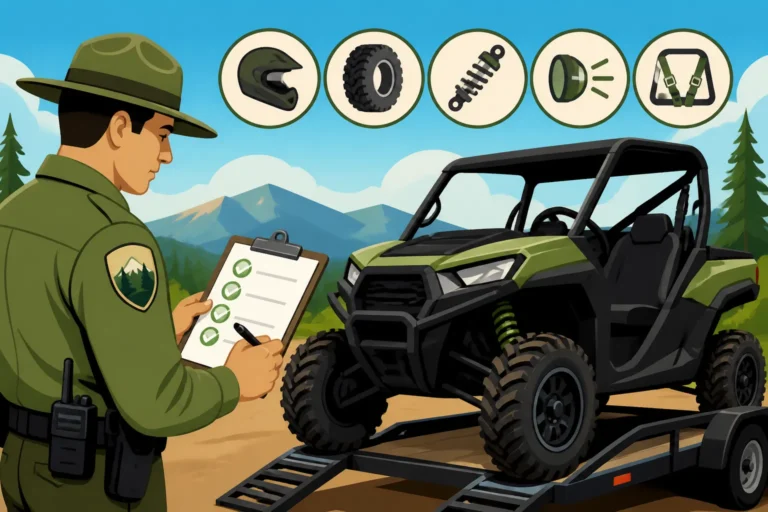
Start with the basics: check the tires for dry rot and proper inflation, test the brakes (front and rear), ensure all lights are working (headlights, taillights, brake lights), and inspect the steering for any play or stiffness. Change the oil and oil filter, check the air filter, and replace the spark plug. If the machine has been sitting for an extended period, the fuel system might need attention; old fuel can gum up carburetors or fuel injectors, so draining the old fuel and adding fresh gas is a good idea. Also, inspect the battery and charge it if necessary, or consider replacing it if it's old. A quick check of the suspension, drive chain (if applicable), and all fluid levels will help ensure your inherited quad is safe and ready for your first adventure.
What to Do With the Inherited Quad
Once you've taken legal ownership and prepared the machine, you have a few options for its future. Will you keep it for your own adventures, or does it make more sense to sell it?
Keeping the ATV for Personal Use
If you decide to keep the inherited ATV, congratulations! You now have a fantastic machine to explore Oregon's diverse riding terrain, from the coastal dunes to the high desert trails. With your permit decal affixed and your safety card in your wallet, you're all set to ride. Remember to always check local regulations for the specific riding area you plan to visit, as rules can vary by season or location. For instance, some areas have specific spark arrester requirements or sound limits.
Embrace the joy of off-roading, but always prioritize safety. Wear appropriate gear, ride within your skill level, and be mindful of other riders and the environment. Consider joining local ATV clubs; they're a great way to meet other enthusiasts, discover new trails, and learn more about responsible riding.
Selling the Inherited Quad
Perhaps an ATV isn't something you plan to use, or the estate needs to liquidate assets. In that case, selling the inherited quad might be your best option. Having the title in your name will make this process significantly smoother, as it provides clear proof of ownership to potential buyers.
When selling, you'll transfer the title to the new owner, just as you would for any titled vehicle. If you chose not to title it in your name, but have a solid paper trail (like a notarized bill of sale from the estate and an affidavit of heirship), you can still sell it. In this situation, it's often best to provide the buyer with all the documentation you have, including the original estate documents, to assure them of a clear chain of ownership. Drawing up a new [Oregon Bill of Sale for an ATV] between you and the buyer is also a crucial step to document the transaction and protect both parties. Be transparent about the machine's condition and history, and make sure the buyer understands Oregon's permit and safety card requirements.
Disclaimer
This article is for general informational purposes only and does not constitute professional advice. Laws, prices and regulations vary by location and change over time. Consult a qualified professional for guidance on your specific situation.