What a Ranger Checks at an Oregon Staging Area
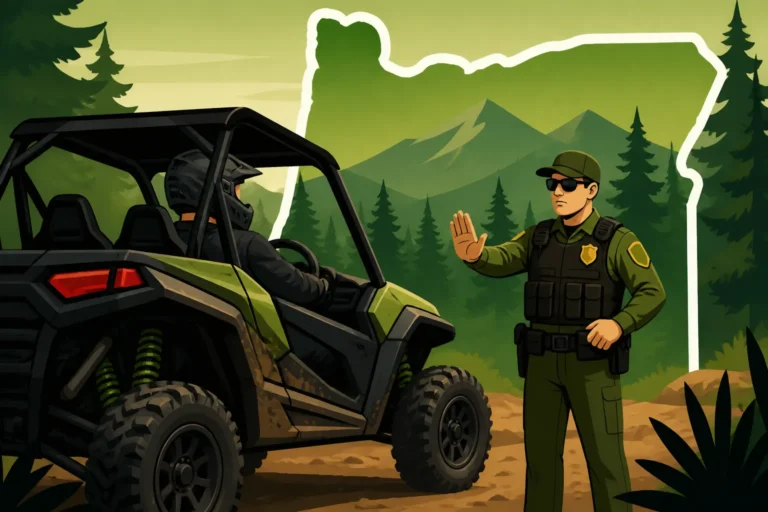
You've packed the cooler, fueled up the quad, and you're finally pulling into a popular Oregon staging area like Spinreel or Browns Camp. Then you see it – a ranger or a sheriff's deputy. Immediately, your heart might do a little flutter. What are they looking for? It's a common and completely valid concern for any rider. The last thing you want is a fine or a spoiled day on the trails because of a technicality. This guide will walk you through the common checks Oregon park rangers and other law enforcement personnel conduct at OHV staging areas and sometimes even out on the trails, so you can ride with confidence, knowing you're prepared for anything.
The Essential Paperwork Check: Permit and Safety Card
One of the first things an Oregon park ranger or sheriff's deputy will likely look for when you're at an OHV staging area is your documentation. This isn't about being nosy; it's about ensuring everyone is riding legally and safely, which in turn helps fund and maintain the very trails you're there to enjoy.
Your Oregon ATV Operating Permit
Every ATV, UTV, dirt bike, or sand rail that uses Oregon's designated OHV trails and riding areas needs a valid Oregon ATV Operating Permit. This is a crucial piece of paper, or rather, a decal, that proves your machine is allowed to be there. Rangers are checking for a few key things:
First, they'll verify that your permit decal is present and correctly placed on your machine. For most quads and side-by-sides, this means it should be clearly visible on the right rear fender or a permanent component of the machine, as detailed in [Oregon Permit Decals and Where They Go]. For dirt bikes, it might be on the right fork leg. If it's tucked away or not easily readable, it can raise questions.
Second, they're looking at the expiration date. Oregon's permits are good for two years from the month you purchase them, but it’s easy to lose track. A lapsed permit is just like having no permit at all, and that can lead to a Class C traffic violation. You don't want to get all the way out to Millican Valley or the Oregon Dunes, only to be turned around or ticketed because your permit expired last month. This check is also how Oregon Parks and Recreation Department tracks how many machines are using the system, which directly impacts funding for trail maintenance and expansion.
If you arrive at a staging area and realize your permit is expired or missing, your options can be limited. While some larger staging areas might have a nearby permit agent, like the ones near the Oregon Dunes, it's never a guarantee. It's always best to check before you leave home. If you're caught without one, the fines can quickly add up, making a day of riding a very expensive mistake, as outlined in [Oregon Fines for Riding Without a Permit]. Always make sure your [Oregon's ATV Operating Permit] is current and properly displayed.
The Oregon ATV Safety Education Card
Beyond the machine's permit, rangers will also be checking for rider credentials, specifically the Oregon ATV Safety Education Card. This card signifies that you've completed a safety course and understand the rules of the trail. While an adult driver's license or instruction permit can satisfy the requirement for some riders, many still need this dedicated safety card.
The requirement applies to virtually all riders. If you're 16 years old or older and operating a Class I or Class III ATV (that's your typical quad or dirt bike), you need either an Oregon-issued driver's license or your safety education card. For those under 16, the safety card is mandatory regardless of machine class, and they must be under direct supervision by an adult with a valid safety card. Even adults operating a Class IV side-by-side (UTV) need a card if they're under 16. It can get a little nuanced, so it’s always best to be clear on [Oregon ATV Safety Card Requirements] for your specific situation.
A ranger will ask to see your physical card or a digital version on your phone. They'll confirm it's valid and matches the rider's identity. If you're an out-of-state visitor, Oregon has reciprocity agreements with many other states, but it's not universal. You'll need to know if [Does Oregon Accept an Out-of-State Safety Card?] applies to your home state's certification. The goal here is simple: to ensure everyone on the trail has a foundational understanding of safe OHV operation, reducing accidents and promoting responsible recreation.
Being caught without a valid safety education card can also result in a fine. Imagine pulling into a popular spot like Browns Camp for a weekend of riding with friends, only to be sidelined because your teenager doesn't have their card. It's a preventable situation, and a quick check of the requirements before you head out can save a lot of grief. The [Oregon Safety Card for Adults] and [Oregon Safety Card for Children] are both essential for a smooth riding experience.
Machine Compliance: Decals, Spark Arresters, and Sound Limits
Once your paperwork is in order, a ranger's attention will often shift to the machine itself. Oregon has specific requirements for how ATVs and UTVs should be equipped and maintained, largely focusing on environmental protection, fire safety, and minimizing noise impact on other users and nearby communities.
Proper Decal Placement and Condition
We already touched on the permit decal, but it's worth reiterating its importance for machine compliance. Beyond just having the decal, its placement and condition are key. The decal needs to be firmly affixed and clearly visible on the right side of the machine, usually on the rear fender for quads or the right rear quarter panel for side-by-sides. This makes it easy for rangers to see as you enter or exit staging areas, or even if they're passing you on a trail.
What does a ranger check? They're looking for a decal that isn't excessively faded, peeling off, or obscured by mud or accessories. If your decal is barely hanging on or has been painted over, it effectively makes it unreadable and could be treated as if you don't have one. While this isn't usually the primary focus of a stop, it can definitely be an issue if they can't clearly identify your permit. For instance, [Decal Placement on a Class IV Machine] outlines specific requirements for larger side-by-sides, ensuring visibility even on bigger rigs. Similarly, [Decal Placement on an Off-Road Motorcycle] details where dirt bike riders should place theirs.
The logic here is simple: clear identification helps law enforcement quickly verify compliance and ensures that the funds from your permit are accurately associated with the machines using the trails. A well-placed, visible decal saves everyone time and hassle.
Spark Arresters and Sound Standards
These two checks are paramount for environmental responsibility and community relations, especially in Oregon's forested and residential interface areas. A ranger will almost always verify that your machine has a U.S. Forest Service (USFS) approved spark arrester and will often do a quick assessment of its sound level.
Spark Arresters: Oregon's dry summers make fire prevention a top priority in all off-road recreation areas. A spark arrester is a device that prevents incandescent carbon particles from exiting your exhaust system and potentially igniting dry grass, leaves, or forest debris. Every OHV operating on public land in Oregon must be equipped with a USFS-approved spark arrester.
A ranger will typically perform a visual check, looking for the stamp or label indicating USFS approval. They'll also be looking to see if it's functional and not bypassed or modified. If you've got an aftermarket exhaust, make sure it still incorporates a USFS-approved spark arrester. Trying to run without one, or with a modified exhaust that removes the arrester, is a serious violation that carries significant fines and could lead to your riding privileges being suspended. It's not just about a ticket; it's about protecting the beautiful Oregon landscape we all love to ride in, as highlighted in [Oregon Spark Arrester Requirement].
Sound Limits: Noise pollution is another big concern, particularly for communities living near riding areas like the Oregon Dunes or some of the smaller, quieter forest trails. Oregon has specific sound limits for OHVs, which are designed to keep the noise levels acceptable and prevent conflicts with residents and other forms of outdoor recreation. While rangers don't always carry sound meters, they are trained to recognize excessively loud machines.
What does this mean for you? If your aftermarket exhaust is roaring like a jet engine, you're likely to attract attention. The standard is typically 99 dB(A) for most machines, measured from 20 inches away at a 45-degree angle from the exhaust outlet with the engine at half of its maximum RPM. However, some areas might have stricter local ordinances. If a ranger suspects your machine is too loud, they can issue a citation. It's a common reason people get stopped at places like Spinreel or Browns Camp before even hitting the dirt. Keeping your exhaust system stock or ensuring any aftermarket system complies with [Oregon Sound Limits for ATVs] and [Oregon Rules for an Aftermarket Exhaust] is critical for a pleasant riding experience for everyone.
Rider Safety Gear and Passenger Rules
Safety is always a top priority for rangers, and they'll pay close attention to what you and your passengers are wearing, particularly when it comes to helmets and adherence to passenger limits. These rules are in place not to restrict your fun, but to protect you and your loved ones from serious injury.
Helmet Requirements and Other Safety Gear
Oregon has clear and strict helmet laws for OHV riders, which rangers enforce diligently. The most important rule to remember is that all riders under the age of 18, regardless of machine class, must wear a DOT or Snell-certified helmet that is properly secured with a chin strap. This is non-negotiable and applies even if they are passengers in a side-by-side with a roll cage and seatbelts.
For adults 18 and over, the rule is a little different. If you are operating a Class I (quad) or Class III (dirt bike) ATV, you are also required to wear a DOT or Snell-certified helmet. However, if you're operating a Class II or Class IV machine (which includes many side-by-sides, dune buggies, or larger off-road vehicles with roll cages), and the vehicle is equipped with a roof and seatbelts, adults are generally exempt from wearing a helmet while in the vehicle.
What will a ranger check? They'll look to see that helmets are present and properly worn by those required to wear them. They'll also visually inspect the helmet for the DOT or Snell certification sticker. For example, if you're riding a quad at the Oregon Dunes, you and any minor passengers must have a helmet. If a teenager is driving a side-by-side, they must also have a helmet, even with a roll cage. For comprehensive details, review [Helmet Rules for Oregon Riders] and [DOT and Snell Helmets in Oregon].
Beyond helmets, while not always strictly enforced with citations, rangers often promote other safety gear. This includes eye protection (goggles or a visor), gloves, long pants, and sturdy footwear. While not legally mandatory for all, these items significantly reduce the risk of injury from debris, branches, or a fall. Rangers want to see riders being responsible and taking precautions.
Passenger Rules and Capacity
The number of people on an ATV or UTV is another critical safety check. These machines are designed with specific seating capacities for stability and safe operation. Overloading a machine can drastically affect its handling, increasing the risk of rollovers and accidents.
A ranger will assess your machine's manufacturer-designated seating capacity. Most standard ATVs (Class I quads) are designed for a single operator. Unless your quad is specifically manufactured and designated by the manufacturer for two riders (e.g., a "two-up" model with an extended seat and separate footrests), carrying a passenger is illegal and extremely dangerous. You simply cannot have a child on your lap or another adult behind you on a single-rider quad. The instability this creates is a major hazard, especially on uneven terrain or during turns.
For side-by-sides (Class IV machines), the rules are generally based on the number of factory-installed seats and seatbelts. Each passenger must have their own designated seat and seatbelt. Additionally, children passengers must be able to reach the floorboards or designated footrests comfortably. If their feet are dangling, it can be a problem. Carrying more people than there are seats or seatbelts, or carrying a passenger who doesn't fit properly, will definitely catch a ranger's eye.
Understanding [Oregon Rules for Passengers on a Quad] is vital. These rules are in place for a reason: to prevent tragic accidents. No one wants to see a day of fun turn into an emergency. Following these simple capacity rules ensures the machine operates as intended, keeping everyone safer on the trails.
Navigating Specific Site Rules and Closures
Beyond the universal state laws, each riding area in Oregon often has its own set of unique rules, regulations, and potential closures. A ranger's job includes enforcing these local stipulations, which are designed to protect specific natural resources, manage user conflicts, and ensure the safety of all visitors.
Understanding Local Regulations and Posted Signs
When you pull into any staging area, whether it's Bull Run at the Oregon Dunes, Browns Camp in the Tillamook State Forest, or a smaller access point in Millican Valley, always take a moment to read the posted signs. These signs are your primary source of information for site-specific rules. Rangers are constantly checking to ensure riders are adhering to them.
What might these local regulations include?
- Speed Limits: Some staging areas or high-traffic zones within a riding area will have specific speed limits, often lower than general trail speeds.
- Directional Trails: Many trail systems, especially those with multiple loops or one-way sections, are designated for single-direction travel to prevent head-on collisions.
- Wildlife Protection Zones: Areas with sensitive wildlife habitat, like plover nesting sites on the coast, will have clearly marked boundaries you cannot cross. Ignoring these can result in hefty fines and damage to fragile ecosystems.
- Curfews and Night Riding Rules: Certain areas might have specific hours of operation or restrictions on night riding to minimize disturbance to wildlife or nearby residences. For example, some sections of the Oregon Dunes have a night curfew.
- Camping and Fire Restrictions: Staging areas often have rules regarding where you can camp, if campfires are allowed, and what type of firewood you can use.
Rangers are highly familiar with these local rules and will be on the lookout for violations. Claiming you "didn't see the sign" might not always work, especially if the signs are prominent and well-maintained. Always check [Oregon Trail Closures to Check First] before heading out, as conditions can change rapidly due to weather, fire season, or environmental concerns. Being informed about [Snowy Plover Season on the Oregon Coast] or [Oregon Fire Season and Trail Access] is critical for responsible riding and avoiding fines.
Proving Ownership and Identifying Your Machine
While not a routine check, a ranger might ask for proof of ownership in specific circumstances, such as if a machine appears abandoned, is involved in an accident, or if there's a report of a stolen machine matching its description. Oregon's titling laws for ATVs are unique, making this aspect a bit different from street vehicles.
In Oregon, titling an ATV is optional, not mandatory, for machines used exclusively off-road, as explained in [Titling an ATV in Oregon Is Optional]. This means many riders don't have a formal title for their quad or side-by-side. However, if a ranger needs to verify ownership, having some form of documentation is incredibly helpful.
What helps prove ownership if you don't have a title?
- A Bill of Sale: This is arguably the most important document for any private sale. A detailed bill of sale, especially one that includes the VIN, buyer and seller information, and date of sale, provides a clear chain of ownership. You can find customizable templates for such documents from resources like LawDepot, ensuring all necessary details are covered.
- Original Purchase Documents: If you bought the machine new, the sales invoice from the dealer is excellent proof.
- Registration Records: If the machine was previously registered in another state that requires registration, those records can help.
- Photos of the machine with you: While not definitive, it can add to the evidence.
Law enforcement officers may also run the Vehicle Identification Number (VIN) to check for stolen machines. It’s always a good idea to know where your VIN is located on your machine and to have it readily available, along with any relevant paperwork, especially if you've recently purchased the machine from a private seller, as discussed in [Checking a VIN Before Buying Used]. This isn't about guilt; it's about protecting you and ensuring the machine isn't illegally obtained.
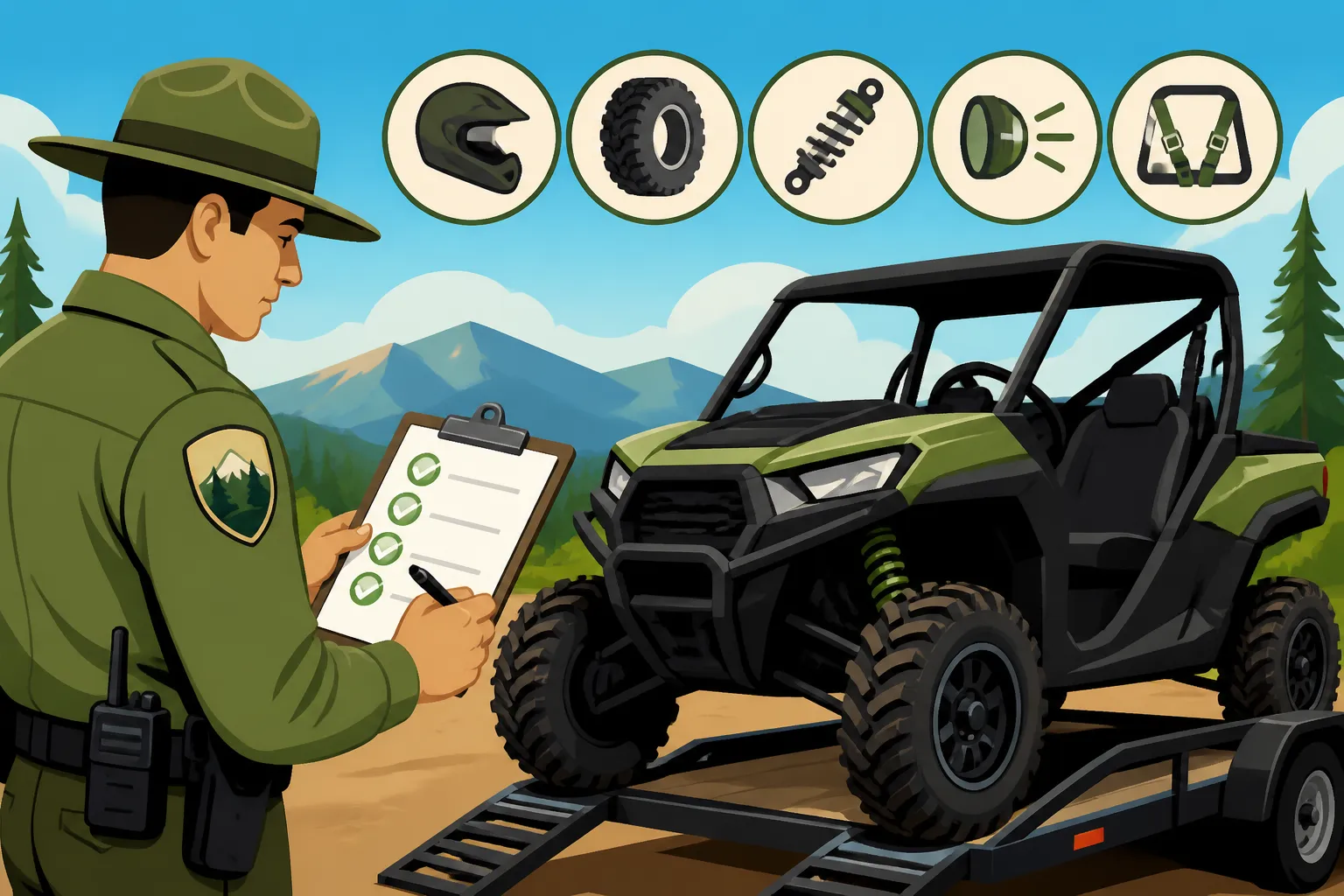
| Item Checked | What a Ranger Looks For | Why It Matters |
|---|---|---|
| ATV Operating Permit | Valid decal, proper placement, current expiration. | Legal access, funding OHV programs, compliance. |
| Safety Education Card | Valid card (digital or physical), driver's license if applicable. | Rider safety, legal requirement, skill verification. |
| Spark Arrester | USFS approved, functional, not modified or missing. | Fire prevention in dry forest environments. |
| Sound Level | Machine operating within decibel limits (often visual check, sometimes meter). | Noise pollution, trail etiquette, community relations. |
| Helmet | DOT/Snell approved, properly worn (especially for minors). | Head protection, mandatory safety for young riders. |
| Passenger Capacity | Manufacturer's seating capacity, proper footrests. | Machine stability, occupant safety, legal limits. |
| Site-Specific Rules | Adherence to posted signs, area closures, speed limits. | Environmental protection, user safety, conflict reduction. |
| Proof of Ownership (if needed) | Bill of sale (e.g., from LawDepot), original receipt, prior registration. | Verifies legal ownership, aids in stolen vehicle recovery. |
Disclaimer
This article is for general informational purposes only and does not constitute professional advice. Laws, prices and regulations vary by location and change over time. Consult a qualified professional for guidance on your specific situation.