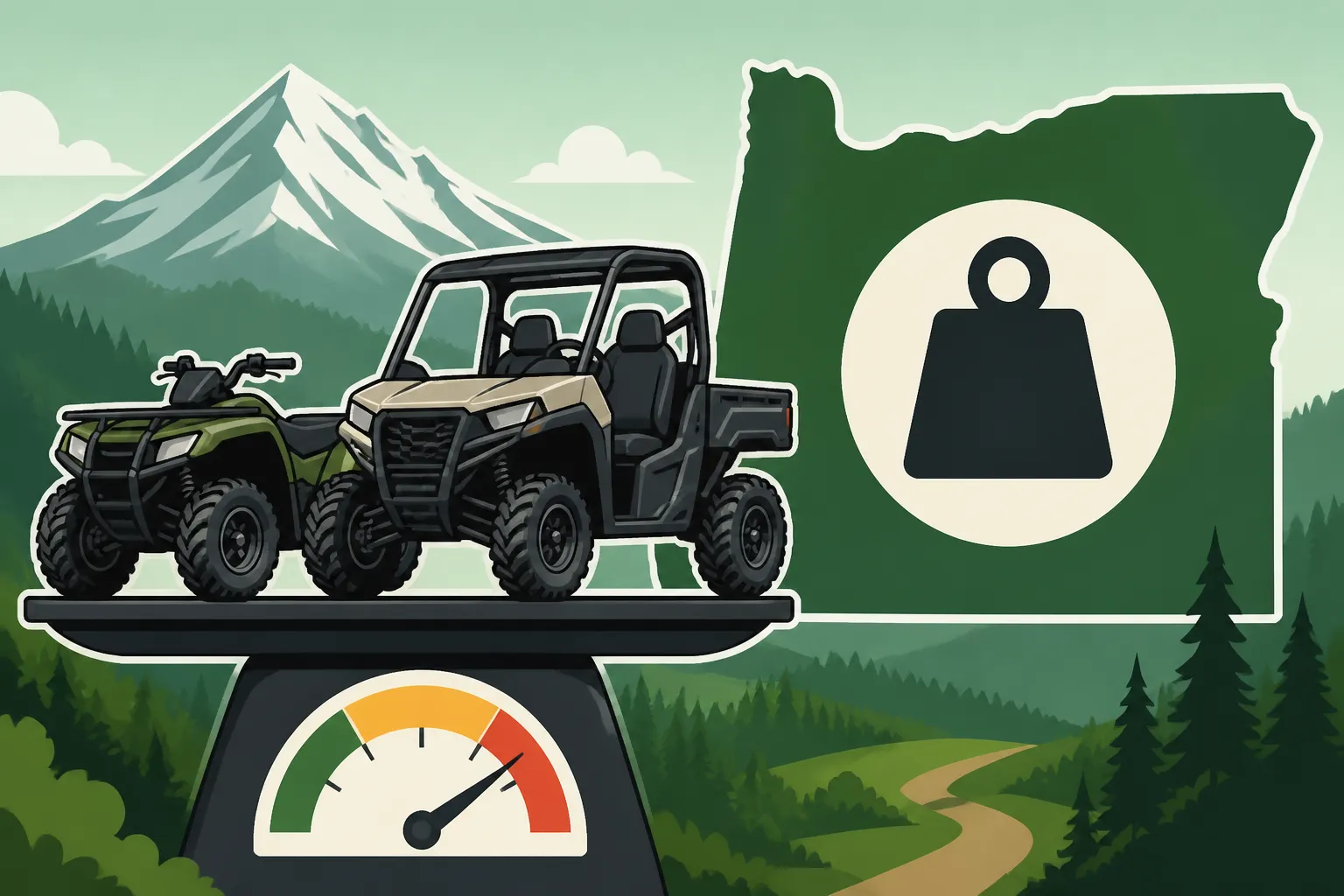
A 1,200-Pound Dry Weight Limit
It can be incredibly frustrating to feel like you're navigating a maze of rules and regulations just to enjoy your off-road machine in Oregon. Many riders stumble when trying to figure out which "class" their ATV or UTV falls into, and one of the biggest sticking points is often the dry weight limit. This guide will clarify Oregon's 1,200-pound dry weight limit, specifically for Class I ATVs, and help you understand why knowing your machine's weight is crucial for legal and safe riding in the Beaver State.
Understanding Oregon's 1,200-Pound Dry Weight Limit for ATVs
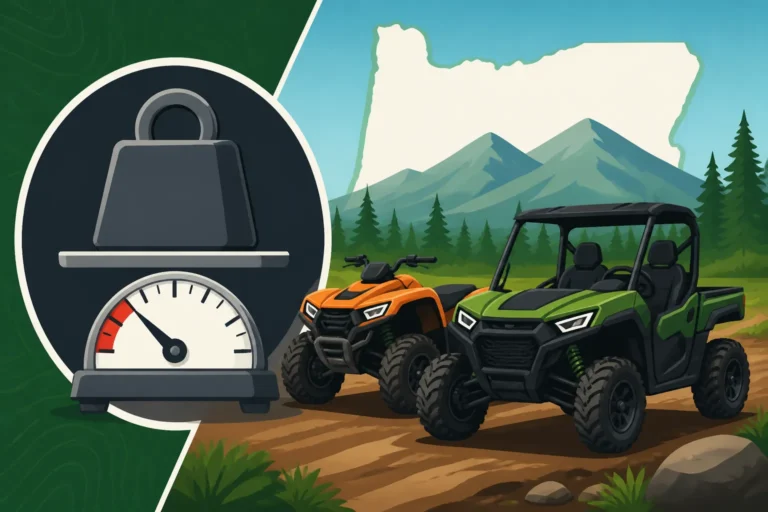
Let's get straight to the heart of the matter: in Oregon, the 1,200-pound dry weight limit is a defining characteristic for what the state considers a "Class I All-Terrain Vehicle." This isn't just a random number; it's a key part of how the Oregon Parks and Recreation Department (OPRD) categorizes ATVs, which then dictates how and where you can legally ride them.
When we talk about "dry weight," we're referring to the weight of your ATV without any fluids like fuel, engine oil, or coolant, and without any cargo or passengers. Think of it as the barebones weight of the machine right off the factory floor, before you've even had a chance to fill it up or load it down with your gear. This distinction is important because adding accessories, a full tank of gas, or your riding buddies can significantly increase the overall operating weight, but for classification purposes, Oregon focuses on that foundational dry weight. If your quad or three-wheeler has a dry weight exceeding 1,200 pounds, it simply doesn't fit into Oregon's Class I definition, and that has some pretty big implications for how you need to permit and operate it.
What "Dry Weight" Actually Means
The term "dry weight" can sometimes cause confusion, especially for new riders or those accustomed to other states' classifications. In the context of Oregon's ATV regulations, it's the manufacturer's stated weight of the vehicle, stripped down to its essential components. This means no gas sloshing in the tank, no oil in the crankcase, no coolant in the radiator, and certainly no riders, passengers, or extra gear like winches, spare tires, or toolboxes. It's the "curb weight" if you will, but without the fluids.
Why does Oregon use dry weight for this classification? It provides a consistent baseline. Fluids, gear, and passengers can vary wildly from ride to ride, making "wet weight" or "operating weight" an unreliable metric for defining a vehicle type. By focusing on dry weight, OPRD establishes a clear, unchanging standard that applies to the machine itself, regardless of how you load it up for a day on the dunes or trails. This helps both law enforcement and riders accurately identify a machine's class.
The Significance of This Limit for Class I ATVs
For an ATV to be legally classified as a Class I machine in Oregon, it must meet several criteria, and the dry weight limit of 1,200 pounds is one of the most prominent. Other characteristics include being 50 inches or less in width, having three or more pneumatic tires, and being designed for an operator to straddle the seat. But that 1,200-pound mark is often the first place riders look when they're unsure.
If your ATV fits these specifications, it's a Class I. This classification then informs everything from [Oregon's ATV Operating Permit] requirements to where you can ride. Class I machines are the traditional "quads" and three-wheelers many of us grew up riding. They are generally single-operator vehicles, though some are factory-designed for a passenger. Exceeding this dry weight means your machine isn't a Class I, even if it has handlebars and a straddle seat, and that can lead to headaches if you're not properly permitted or if you attempt to ride it in areas designated only for Class I machines.
Oregon's ATV Classes: Where Your Machine Fits Beyond Just Weight
Oregon has a fairly comprehensive system for classifying Off-Highway Vehicles (OHVs), and while the 1,200-pound dry weight limit is critical for Class I ATVs, it's helpful to understand the broader picture. Your machine's class dictates everything from the type of permit you need to helmet requirements for youth riders and even where you can legally access trails or roads.
The state defines four distinct classes, each with its own set of characteristics that go beyond just weight. It’s important not to confuse them, as each class has different rules of the road, or rather, the trail. Understanding these differences helps ensure you comply with all state regulations, preventing potential fines and ensuring your safety.
Breaking Down Oregon's Four ATV Classes
Oregon's system breaks down like this:
- Class I ATVs: These are typically your traditional quads or three-wheelers. They are defined as being 50 inches or less in width, having a dry weight of 1,200 pounds or less, and designed to be ridden by an operator straddling a seat. These are the machines often associated with dune riding and tighter forest trails. You can find more specific details in [Oregon's Class I Under ORS 801.190].
- Class II ATVs: This is where things get interesting, as Class II machines are essentially any motor vehicle not more than 80 inches in width, having a dry weight of 8,000 pounds or less, and capable of travel over natural terrain. This class includes street-legal vehicles that might venture off-road, like Jeeps, Land Cruisers, or even custom-built dune buggies. Weight plays a larger role here, but the primary differentiator from Class I and IV is their design for both on- and off-road use, sometimes even having a steering wheel and side-by-side seating. Learn more about this class in [Oregon's Class II Under ORS 801.193].
- Class III Off-Road Motorcycles: As the name suggests, these are motorcycles specifically designed for off-road use. They are two-wheeled vehicles with an engine displacement of 70 CCs or more. Weight isn't the primary defining characteristic here; rather, it's the two wheels and straddle seat.
- Class IV ATVs: This class typically refers to what many people call "Side-by-Sides" or UTVs. They are designed for use by an operator and one or more passengers, feature a steering wheel, non-straddle seating (like bench or bucket seats), and are generally over 50 inches wide but not more than 75 inches wide. They also have a dry weight of 3,500 pounds or less. This class has become incredibly popular, but its width and seating often differentiate it from a Class I. For more on these, check out [Oregon's Class IV Side-by-Sides Under 75 Inches].
The Role of Dry Weight in Each Class
While the 1,200-pound dry weight is paramount for Class I, weight limits are present across other classes, though they might not be the primary defining characteristic.
For example, Class IV machines (Side-by-Sides) have a significantly higher dry weight limit of 3,500 pounds. This makes sense, as they are larger, often carry multiple passengers, and are built with more robust frames. Imagine a Polaris RZR or a Can-Am Maverick; these machines are clearly going to weigh more than a traditional single-rider quad, and Oregon's classification system accounts for that difference. Meanwhile, Class II machines, which can include things like a modified Jeep, have an even higher dry weight limit of 8,000 pounds, reflecting their diverse nature and potential for on-road legality. Class III off-road motorcycles don't have a specific dry weight limit for classification, as their defining feature is the two-wheeled, straddle-seat design.
So, while "1,200 pounds" is the golden rule for Class I, remember it's just one piece of a larger, carefully constructed puzzle designed to keep everyone safe and on the right track (or trail!).
| Oregon ATV Class | Key Characteristics | Dry Weight Limit (Pounds) | Width Limit (Inches) | Seating Type |
|---|---|---|---|---|
| Class I | 3+ wheels, straddle seat, handlebars, traditional quad | 1,200 | 50 or less | Straddle |
| Class II | Any motor vehicle capable of off-road travel | 8,000 | 80 or less | Varied (often bucket |
| (e.g., Jeeps, dune buggies designed for on-road use) | or bench) | |||
| Class III | 2 wheels, straddle seat, handlebars, off-road motorcycle | Not specified | Not applicable | Straddle |
| Class IV | Steering wheel, non-straddle seats, side-by-side seating | 3,500 | Over 50, but 75 or less | Bucket or bench |
How to Verify Your Machine's Dry Weight
Knowing your ATV's dry weight isn't just a good idea; it's essential for proper classification and compliance with Oregon's regulations. Without this crucial piece of information, you might inadvertently misclassify your machine, leading to issues with permitting or even potential citations. Fortunately, finding this information is usually straightforward, though it sometimes requires a bit of digging. Don't just eyeball it or guess – take the time to confirm the official specifications.
Relying on assumptions or anecdotal evidence can land you in hot water. Imagine showing up at a popular staging area like Spinreel or Browns Camp, only to have a ranger question your machine's class because it looks too heavy for a Class I, and you have no documentation to prove otherwise. It's a situation you definitely want to avoid!
Checking Manufacturer Specifications
The most reliable place to find your ATV's dry weight is directly from the manufacturer. This information is typically found in several places:
- Owner's Manual: This is your first and best resource. The owner's manual provided with your ATV at the time of purchase almost always includes detailed specifications, including dry weight. Look for a section on "Technical Specifications," "Dimensions," or "Weights."
- Manufacturer's Website: If you've lost your manual or bought a used machine without one, the manufacturer's official website is an excellent next stop. Most major ATV brands (like Polaris, Can-Am, Honda, Yamaha, Kawasaki, Arctic Cat, Suzuki) have an archive section where you can download manuals or find spec sheets for past models. You'll typically need to know the year, make, and model of your ATV.
- Physical Decals or Plates: Some older machines, or even newer ones, might have a small decal or plate affixed to the frame, usually near the engine, on the chassis, or in a glove compartment, listing key specifications. While less common for dry weight specifically, it's worth a look.
Remember, aftermarket modifications like heavy-duty bumpers, winches, lift kits, or larger tires will add weight, but they don't change the dry weight as defined by the manufacturer for classification purposes. The classification hinges on that baseline factory dry weight.
What to Do If Manufacturer Specs Are Hard to Find
Occasionally, especially with older or less common models, finding precise manufacturer specifications can be a challenge. Don't despair! Here are a few alternative avenues:
- Online Forums and Enthusiast Communities: ATV-specific forums or social media groups dedicated to your particular make and model can be a treasure trove of information. Other owners might have the manual or have already researched these details. Just be sure to cross-reference information from multiple sources if possible, as user-generated content isn't always 100% accurate.
- Dealerships and Service Centers: Local ATV dealerships, especially those that sell your machine's brand, can sometimes help. Their service departments or parts counters might have access to old spec sheets or databases. Give them a call with your VIN (Vehicle Identification Number) and model details.
- Generic ATV Databases: Websites exist that compile specifications for various ATV models. While convenient, always try to verify the information with a primary source (like the manufacturer's site) if possible, as these databases can sometimes have errors or outdated information.
- Creating a Bill of Sale: When buying or selling a used machine, it's a good practice to include all known specifications, including dry weight, on the bill of sale. Tools like those offered by LawDepot can help you generate a comprehensive bill of sale that captures all the necessary details, offering a clear record for both parties. This helps ensure transparency about the machine's class.
Practical Implications and Avoiding Classification Pitfalls
Properly classifying your ATV according to its dry weight and other characteristics isn't just about following rules; it has tangible benefits for your riding experience and helps you avoid unnecessary trouble. Misclassifying your machine, whether intentionally or accidentally, can lead to frustration, fines, and even jeopardize your ability to ride in certain areas. Understanding these implications is key to being a responsible and prepared off-road enthusiast in Oregon.
Imagine planning a big weekend trip to the Oregon Dunes, only to find out your machine doesn't qualify for the permit you bought, or worse, you're stopped by a ranger. It's an easy way to ruin a good time and potentially incur penalties.
Why Accurate Classification Matters for Permits and Riding Areas
The most immediate impact of your ATV's classification is on the Oregon ATV Operating Permit you need. While all OHVs generally require an [Oregon ATV Permit Cost], the specific rules and requirements for where and how you ride can vary significantly between classes.
For instance, certain trails or riding areas might have restrictions on vehicle width or type, which implicitly relates to class. Forest Service roads, for example, might be open to narrower Class I machines but closed to wider Class IV UTVs or Class II vehicles. The 1,200-pound dry weight limit for Class I helps define what a "narrower" machine is in the state's eyes. If your ATV exceeds this limit, even if it looks like a traditional quad, it might technically fall into a different class or category that has different access rules.
Accurate classification also plays a role in safety education. While all riders in Oregon need an [Oregon ATV Safety Education Card], the specific hands-on training requirements can sometimes differ slightly based on machine type and rider age. Having a clear understanding of your vehicle's class ensures you meet all applicable safety standards.
Consequences of Misclassifying Your ATV
The repercussions of misclassifying your ATV can range from minor inconveniences to significant legal issues:
- Invalid Permit: If you purchased a permit thinking your oversized quad was a Class I, but it technically falls into another category, your permit might not be considered valid for that specific machine. This could be treated as riding without a proper permit, leading to fines.
- Restricted Access: You might be denied access to specific trails, staging areas, or entire riding zones if your machine doesn't meet the class requirements for that area. This is particularly common in sensitive habitats or areas with strict environmental regulations. Forest Service rangers or BLM officers actively check permits and can often visually identify machine types.
- Safety Concerns: Classifications are often tied to safety standards. A heavier, wider machine might handle differently than a lighter Class I. Riding it in areas designed for smaller machines could pose safety risks to yourself and others.
- Insurance Issues: While Oregon generally doesn't mandate insurance for all OHVs, if an incident occurs and your machine was misclassified or being operated in an unauthorized area, it could complicate any insurance claims you might try to make. If you do use a LawDepot bill of sale, ensure the machine's accurate classification is noted to avoid future disputes.
Important Considerations When Buying or Selling
Whether you're in the market for a new-to-you quad or looking to sell your current machine, proper classification is paramount.
- Buying: When purchasing a used ATV, always verify its make, model, year, and, crucially, its dry weight. Don't just take the seller's word for it. Ask for the owner's manual or look up the specs online using the VIN. This due diligence ensures you're buying a machine that fits the class you expect and can be legally permitted in Oregon without surprises. You'll want to review the process for [Buying a Used Quad in Oregon] carefully.
- Selling: As a seller, be transparent and accurate about your machine's specifications, including its dry weight and thus its Oregon class. Providing the buyer with the owner's manual or a link to the manufacturer's specs builds trust and prevents future disputes. A well-crafted bill of sale, which you can easily create using a service like LawDepot, should clearly state the machine's characteristics and its classification. This protects both you and the buyer and ensures the new owner understands what they're getting.
By taking the time to understand Oregon's 1,200-pound dry weight limit and its place within the broader ATV classification system, you're taking a vital step toward a safer, more enjoyable, and fully compliant off-road experience in this beautiful state. Knowing your machine is the first rule of the trail!
Disclaimer
This article is for general informational purposes only and does not constitute professional advice. Laws, prices and regulations vary by location and change over time. Consult a qualified professional for guidance on your specific situation.