Where a Sand Rail Fits in the Class System
You've just invested in a sleek, powerful sand rail, probably dreaming of carving up the Oregon Dunes or flying across a desert landscape east of the Cascades. Maybe you built it yourself, piece by glorious piece, or you scored a fantastic deal on a pre-loved machine. Either way, congratulations! But now you're faced with the often-confusing reality of getting it street-legal, or at least trail-legal, here in Oregon. It’s easy to feel lost in a sea of acronyms and classifications, wondering if your unique machine even has a place in the system. Many riders find themselves scratching their heads, asking, "Is my sand rail an ATV? A UTV? Or something else entirely?" This guide is here to clear up that confusion, explaining exactly where your sand rail fits within Oregon's OHV classification system, so you can get your permit, decal, and get out there to ride.
Oregon's OHV Class System: A Quick Overview
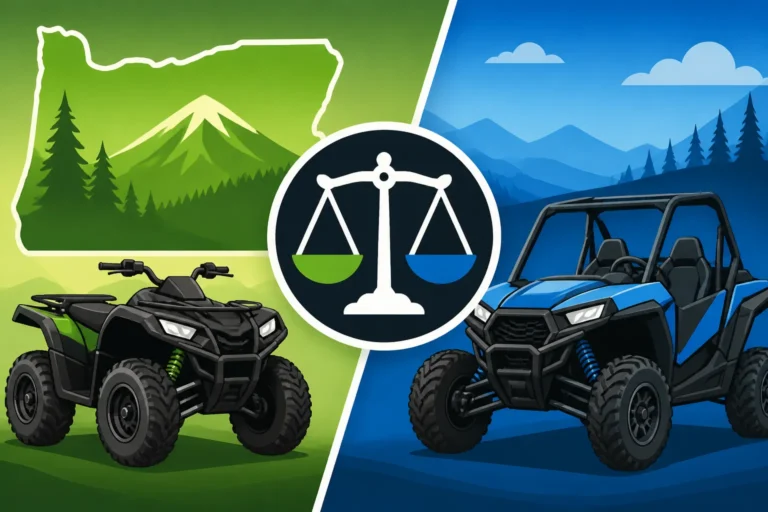
Before we zero in on sand rails, it’s helpful to understand that Oregon doesn't lump every off-highway vehicle (OHV) into one big category. The state has a detailed system with four distinct classes, and these classifications dictate everything from where you place your permit decal to potential road access rules and even specific safety requirements. It's not just about what you call your machine, but what its physical characteristics are according to Oregon law.
Why Classification Matters
This classification system isn't just bureaucratic red tape; it's designed to ensure clarity and safety on Oregon's diverse trails and riding areas. For example, a narrow quad designed for tight forest singletrack has different operational characteristics than a wide, multi-passenger dune buggy. The state needs a way to differentiate these machines for legal and regulatory purposes. Understanding which class your sand rail falls into is the first critical step toward obtaining your [Oregon ATV Operating Permit] and ensuring you're compliant with all the rules. It also helps you understand specific rules, such as those that might apply to passengers or certain road uses.
Key Defining Characteristics
Oregon looks at a few core characteristics to determine a machine's class. These include its width, its dry weight (meaning without fuel or fluids), its seating arrangement, and its steering mechanism. Is it a straddle seat or a bench seat? Does it have handlebars like a motorcycle or a steering wheel like a car? While the permit fee itself is [One Oregon Permit Price for Every Class], knowing your class is crucial for everything else. Keep these factors in mind as we delve into the specifics, because they are the legal differentiators that will ultimately define your sand rail’s place in the system. You'll quickly see why the common perception of an "ATV" as just a quad only scratches the surface of Oregon's detailed classifications.
Unpacking Class II: The Home of Many Sand Rails
Alright, let's get to the heart of the matter for most sand rail owners. The vast majority of sand rails you see tearing up the [Oregon Dunes National Recreation Area] or cruising around the Millican Valley OHV area will fall squarely into Oregon's Class II category. This is often where larger, typically caged, multi-wheeled off-highway vehicles that aren't traditional side-by-sides (Class IV) or quads (Class I) find their legal home.
Oregon's Class II Defined
Oregon Revised Statute (ORS) 801.193 specifically defines a Class II all-terrain vehicle. This is where your sand rail will likely fit. Generally, these are vehicles that are over 50 inches wide but not more than 75 inches in width. They also tend to have a dry weight limit that can go up to 3,500 pounds, accommodating many of the heavier, custom-built, or modified machines that wouldn't fit into the lighter Class I quad category. Critically, these vehicles typically have a steering wheel, not handlebars, and often feature side-by-side bench seating or individual bucket seats, rather than a straddle seat. This configuration clearly sets them apart from your typical ATV or dirt bike. Think of vehicles like many dune buggies, larger rock crawlers, and, yes, most sand rails when you think of Class II. If your machine fits these general specifications, you're almost certainly looking at a Class II classification.
What Makes a Sand Rail a Class II?
Consider the typical construction of a sand rail. It’s almost always wider than 50 inches; that wide stance is essential for stability on the dunes or rough terrain. Most popular designs, especially two-seater or smaller four-seater rails, will comfortably stay under the 75-inch width limit. The robust frame, powerful engine, and often heavier components mean they easily exceed the typical dry weight limits of a Class I quad, but generally stay under the 3,500-pound Class II cap. And, of course, a sand rail almost universally features a steering wheel and multiple seats, making the distinction from a quad or dirt bike immediately obvious.
Let's imagine you’ve got a two-seat rail, maybe a popular brand, with a relatively lightweight chassis but a powerful engine. It's 68 inches wide, weighs 1,800 pounds dry, and has a steering wheel with two bucket seats. This machine perfectly exemplifies what Oregon considers a Class II OHV. The combination of width, weight, and the car-like controls places it firmly in this category. You’ll find that getting your [Oregon ATV Permit for a Sand Rail] is a straightforward process once you understand this classification. Just make sure your machine meets the [Oregon ATV Width Limits by Class] and [Oregon ATV Weight Limits by Class] for Class II.
Mandatory Insurance for Class II Machines
One crucial distinction for Class II machines that sets them apart from other classes is the mandatory insurance requirement. Unlike Class I (quads), Class III (dirt bikes), or Class IV (side-by-sides), if your sand rail falls into Class II, it is legally required to carry liability insurance if it's operated on designated OHV trails or areas. This isn't just a recommendation; it's a rule outlined in Oregon law. So, as you plan your adventures, make sure to factor in acquiring the appropriate insurance coverage for your Class II sand rail. This is an important detail many owners overlook, assuming that because it's an off-road vehicle, insurance isn't needed. This is not the case for Class II machines, so always double-check your policy before heading out.
When a Sand Rail Might Be a Class IV (or something else)
While most sand rails will comfortably fit into Oregon's Class II, the world of custom-built off-road machines is vast and varied. It’s important to acknowledge that not every sand rail will be a Class II, especially if you're dealing with a highly customized build or a very specific, niche design. Understanding these exceptions is crucial for accurate classification and avoiding any legal headaches down the line.
The Class IV Crossover: Wider and Heavier Machines
Oregon's Class IV OHVs are generally described as side-by-side machines that are greater than 50 inches in width and are designed to transport more than one person, typically with a steering wheel and non-straddle seating. The primary differentiator for a sand rail moving from Class II to Class IV is often its width. While Class II has a maximum width of 75 inches, Class IV technically accommodates machines up to 80 inches wide, though some larger custom-built vehicles can exceed this. If your sand rail is an exceptionally wide custom build—perhaps a four-seater designed for serious desert racing or extreme rock crawling, pushing past the 75-inch mark—it might be classified as a Class IV. These vehicles also tend to have a higher dry weight limit, allowing for even more robust construction and passenger capacity.
Imagine a monster sand rail, custom-fabricated with a full cage, seating for four, and an impressive 78-inch width. This machine, while visually similar to a smaller sand rail, would likely fall under Class IV due to its sheer size. The legal implications for [Oregon's Class IV Side-by-Sides Under 75 Inches] (and especially those over that measurement) often align, though some local jurisdictions or riding areas might have specific rules for wider vehicles. Always measure your sand rail's width accurately to ensure you're placing it in the correct category. The differences might seem subtle, but they are clearly defined in Oregon statutes. The distinction is key for understanding [Oregon ATV Width Limits by Class].
Unlikely Candidates: Class I or III?
Could a sand rail ever be a Class I or Class III? In almost all practical scenarios, no. Class I vehicles are traditional quads, defined by a straddle seat, handlebars, and a width typically under 50 inches. Class III refers to off-road motorcycles (dirt bikes), also with a straddle seat and handlebars. Given the fundamental design of a sand rail – a steering wheel, multi-person seating, and a cage – it's virtually impossible for one to fit into either of these categories. If you somehow built a custom, single-seat, handlebar-steered, 4-wheel vehicle under 50 inches wide and called it a "micro sand rail," it would legally be a Class I ATV. But for the vast majority of machines recognized as sand rails, this scenario is purely hypothetical. The differences in [Straddle Seat Versus Bench Seat in Oregon's ATV Classes] and [Handlebars Versus a Steering Wheel] are fundamental.
It's really about the physical attributes of your machine that Oregon's laws consider. If it looks like a mini-car with a cage and steering wheel, it's either a Class II or a Class IV, depending on its specific dimensions and design. Don't try to force it into another class just because it feels "smaller" or "more open" than a typical side-by-side.
Permitting Your Sand Rail in Oregon
Once you've confidently determined whether your sand rail is a Class II or a Class IV, the next step is getting it properly permitted. The good news is that while the classification system is nuanced, the permitting process itself is quite streamlined, regardless of your sand rail's specific class. Oregon makes it relatively easy to get your machine legal, so you can focus on the fun part: riding!
Getting Your Universal Permit
Regardless of whether your sand rail falls into Class II or Class IV, the [Oregon ATV Permit Cost] is the same for all classes. This means you don't pay more or less based on your vehicle's size or complexity. The permit is good for two years from the month of purchase, giving you a good long run before needing to renew. This universal permit simplifies things greatly, as you don't need to worry about different applications or fees for different types of OHVs. The money from these permits goes directly back into the OHV program, funding trail maintenance, safety education, and enforcement, so your fee helps keep the trails open and safe for everyone.
You have a few convenient options for purchasing your permit. You can buy it online through the Oregon Parks and Recreation Department (OPRD) website, which is often the quickest method. Many riders find this especially useful if they're planning a last-minute trip or live far from a physical agent. The state also has a network of [Oregon Permit Agents You Can Walk Into], including powersports dealerships, marinas, and some retail stores across the state. These agents can issue your permit and decal on the spot, which is great if you prefer a face-to-face transaction or need it immediately. You can also purchase them at some Oregon State Parks that manage OHV riding areas. No matter which method you choose, the end result is the same: a valid permit and decal for your sand rail.
Decal Placement for Your Sand Rail
Once you have your permit, you'll receive a decal. This decal needs to be prominently displayed on your sand rail. For vehicles like sand rails, which often have an open, tubular chassis or roll cage, the rules state it should be placed on the right side of the machine, clearly visible. This often means finding a flat, relatively smooth surface on a frame member or body panel that won't be easily obscured by mud, dirt, or accessories.
Think about a typical sand rail with an exposed roll cage. A common and compliant spot might be on the right-side frame rail just behind the front wheel, or on a flat plate near the right-side passenger area, as long as it’s unobstructed. The key is visibility for enforcement officers. The decal is designed to withstand the elements, but putting it in a spot where it's less likely to get scraped or excessively covered in mud will help prolong its life and ensure it remains readable. The reference article on [Decal Placement on a Sand Rail] offers more specific guidance and visual examples for various types of machines.
Titling Your Sand Rail
Beyond the operating permit, you might also consider titling your sand rail in Oregon. While [Titling an ATV in Oregon Is Optional] for off-road-only machines, it's highly recommended. A title provides official proof of ownership, which can be invaluable for a variety of reasons. If you ever decide to sell your sand rail, a clear title makes the process much smoother and instills confidence in buyers. It also protects you in case of theft, as proving ownership without a title can be an uphill battle. For many custom-built sand rails, establishing that first title can be a critical step.
Even if you're certain your sand rail will only ever see dirt and sand, obtaining a title is a smart move. When you're dealing with legal paperwork, especially for proving ownership or creating a bill of sale, resources like LawDepot can be helpful for generating standardized documents quickly and easily. While they don't issue titles, they can provide templates for things like bills of sale or affidavits of ownership that complement your state-issued title. It’s always best to have all your ducks in a row when it comes to legal documentation for such a significant investment. Having a [Oregon Title for a Machine Used Only Off-Road] is a piece of mind investment.
Safety Education Card
Finally, don't forget the [Oregon ATV Safety Card Requirements]. While your sand rail’s classification determines some operational rules, the safety card is about rider education. Every operator of a Class I, II, III, or IV OHV in Oregon needs to carry an approved safety education card, regardless of age. If you already have one for another OHV, it covers your sand rail too. If not, obtaining one involves passing an online course and, for younger riders, a hands-on training component. This is a crucial step for ensuring you and your passengers are prepared for safe riding in Oregon.
| Class | Typical Vehicles | Width Limits (inches) | Dry Weight Limit (lbs) | Seating/Steering | Mandatory Insurance |
|---|---|---|---|---|---|
| I | Quads, ATVs | ≤ 50 | ≤ 1,200 | Straddle seat / Handlebars | No |
| II | Sand Rails, Dune Buggies, Rock Crawlers | > 50 to ≤ 75 | ≤ 3,500 | Bench/Bucket seats / Steering Wheel | Yes |
| III | Off-Road Motorcycles, Dirt Bikes | N/A | N/A | Straddle seat / Handlebars | No |
| IV | Side-by-Sides, UTVs (some larger sand rails) | > 50 | > 3,500 (often) | Bench/Bucket seats / Steering Wheel | No |
This table provides a quick reference to help solidify your understanding of Oregon's OHV classifications. Most sand rails will clearly fit within the Class II parameters, but remember to measure your specific machine carefully to confirm its exact classification, especially if it's a unique or custom build.
Disclaimer
This article is for general informational purposes only and does not constitute professional advice. Laws, prices and regulations vary by location and change over time. Consult a qualified professional for guidance on your specific situation.