Bringing a Machine From Nevada
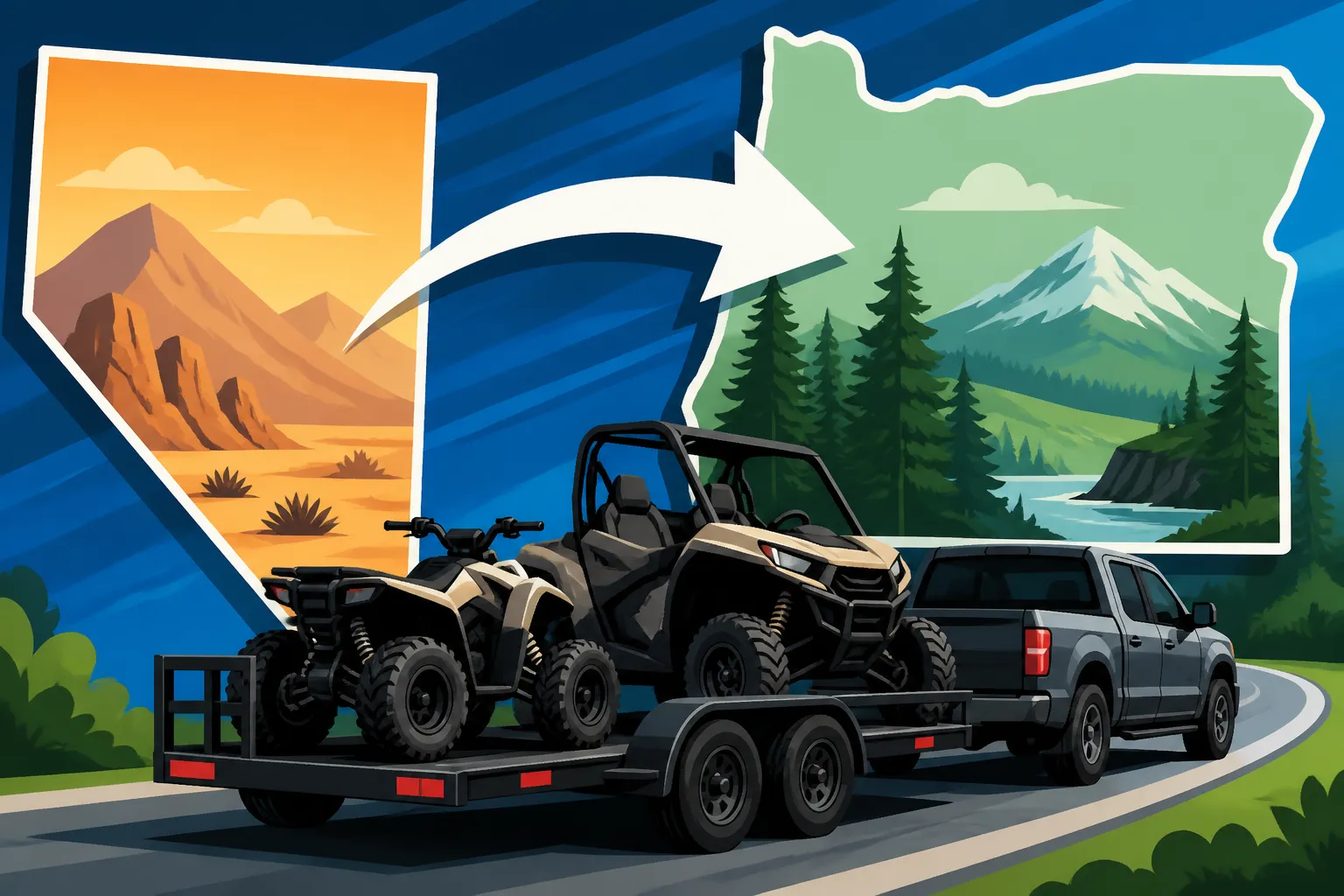
So you've found the perfect ATV or UTV in Nevada, or perhaps you're packing up your life and moving your beloved machine to the stunning Pacific Northwest. Either way, you're probably wondering how to get your Nevada-registered off-road vehicle legal to ride on Oregon's fantastic trails and dunes. It's not as straightforward as just transferring a title, and the differences between states can be a real head-scratcher. This guide is designed to cut through the confusion and give you a clear path forward for bringing your machine from Nevada to Oregon, ensuring you're ready to hit the dirt legally and safely.
Oregon's Distinct Approach to Off-Highway Vehicle Permits
One of the biggest differences you'll encounter when moving an off-road vehicle from Nevada to Oregon is how the states categorize and regulate these machines. Nevada, like many states, often has a more traditional "registration" system for off-highway vehicles (OHVs), sometimes involving the DMV or a similar state agency. Oregon, however, has carved its own path, which can initially be quite bewildering if you're used to a different system.
Not a "Registration" State in the Traditional Sense
In Oregon, when we talk about legalizing an ATV or UTV for off-road use, we're almost always talking about an "Operating Permit," not a "registration" in the way you might register a car or even an ATV in Nevada. This permit is issued by the Oregon Parks and Recreation Department (OPRD), not the Department of Motor Vehicles (DMV). It's a critical distinction because it means the usual process of going to the DMV, showing your title, and getting a license plate or traditional registration sticker simply doesn't apply to dedicated off-road machines here.
For riders bringing a machine from a state like Nevada, where they might have a registration card and a small license plate or sticker issued by their state's DMV or equivalent, this can be a significant shift. You're essentially moving from one type of legal framework to another. Your Nevada registration, while valid in its home state, won't directly translate into an Oregon operating permit. Think of the Oregon permit more like a user fee that grants you access to designated riding areas, rather than a full vehicle registration that ties into the state's motor vehicle database in the same way a car does. This is why it's so important to understand [Oregon's ATV Operating Permit] from the get-go.
Why the DMV Isn't Involved for OHVs
It's common for new Oregon residents or those purchasing a machine out of state to automatically think "DMV" when it comes to any vehicle. However, as mentioned, the Oregon DMV's primary role is to handle on-road vehicles: cars, trucks, motorcycles that are street-legal, and even street-legal Class II ATVs (which are a very specific exception). For the vast majority of ATVs, UTVs, dirt bikes, and sand rails that are strictly off-road machines, the DMV has no jurisdiction regarding their permitting or operation.
This separation of duties can be frustrating for people who are used to a single agency handling all vehicle-related matters. You might call the DMV, wait on hold, and then be told they can't help you with an off-road vehicle permit, which feels like a bureaucratic runaround. But it's simply how the system is structured in Oregon. The Oregon Parks and Recreation Department is tasked with managing the state's extensive network of OHV trails and riding areas, and as such, they also administer the permit system that funds these efforts. Understanding [Why Oregon's DMV Does Not Register ATVs] helps clarify this foundational difference. It means you'll be interacting with OPRD or one of its authorized agents, not the folks who process driver's licenses and car titles.
Getting Your Nevada Machine Permitted in Oregon
Once you understand that Oregon operates on a permit system for OHVs rather than a registration system, the next step is to figure out how to get that all-important permit for your Nevada machine. This is a mandatory step if you plan to ride on any public lands or designated OHV areas within Oregon, whether you're a long-time resident or just moved here.
The All-Important Oregon ATV Operating Permit
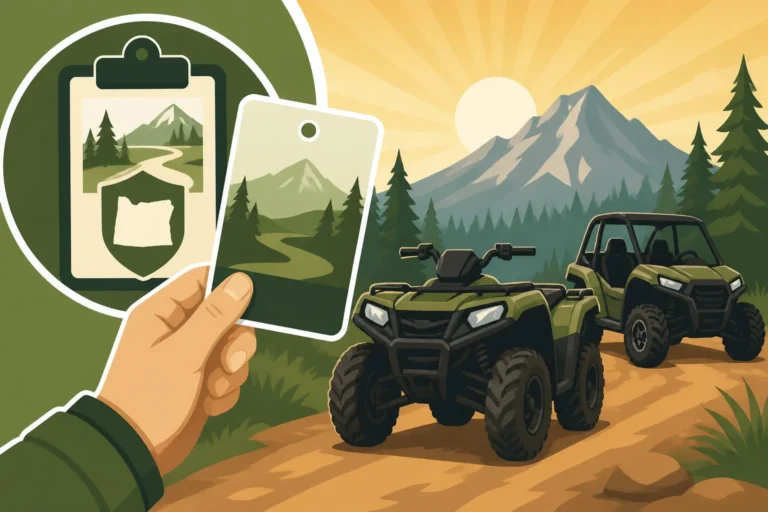
The core requirement for riding your ATV or UTV from Nevada in Oregon is obtaining an Oregon ATV Operating Permit. This permit comes in the form of a sticky decal that you affix to your machine, along with a corresponding permit card that you should carry with you while riding. The permit is valid for two years from the month of purchase, giving you a good amount of time before you need to renew it.
It's crucial to understand that your Nevada registration doesn't serve as a substitute for an Oregon permit if you're moving here. While Oregon does have some reciprocity for visitors, that's typically for a limited time and doesn't apply if you're making Oregon your permanent home. You need to obtain an Oregon permit regardless of your previous state's registration status. The permit fee is the same for all classes of ATVs and UTVs, simplifying the process somewhat. Make sure you know [Oregon Permit Decals and Where They Go] so you can display it correctly once you get it.
Where to Buy Your Oregon Permit
Getting an Oregon ATV Operating Permit is relatively straightforward, with several convenient options available. The most common ways to purchase your permit include:
- Online: This is often the quickest method. You can purchase your permit through the Oregon Parks and Recreation Department's website. When you buy online, you typically receive a temporary permit via email almost instantly, which you can print out and carry with you. This allows you to ride legally while you wait for the physical decal and card to arrive in the mail. This is a great option if you've just arrived and are eager to hit the trails. You can learn more about [Buying an Oregon Permit Online].
- Authorized Vendors: Across Oregon, there are numerous authorized permit agents. These are often ATV dealerships, sporting goods stores, or other businesses that are part of the OPRD's network. Buying from an agent means you get the physical decal and permit card right on the spot, so there's no waiting for mail. It's often helpful to look up [Where Oregon Sells ATV Permits] to find a location near you, especially if you prefer to handle things in person.
- Oregon State Parks: Some Oregon State Parks with OHV access areas also sell permits. This can be a convenient option if you're already at a riding destination and realize your permit has expired or you need to get one for a newly acquired machine.
No matter where you purchase it, the process is generally simple. You'll provide basic information about yourself and your machine, pay the fee, and you'll be on your way to legally exploring Oregon's vast OHV opportunities.
Reciprocity for Visitors vs. Residents
Oregon does have a reciprocity agreement with some states, meaning if you're just visiting Oregon and have a valid OHV registration or permit from your home state, you might be able to ride here for a limited period without an Oregon permit. However, this is key: your Nevada registration generally does not fall into Oregon's reciprocity list for OHV permits, meaning if you're bringing a machine from Nevada, even as a visitor, you will need an Oregon OHV permit to ride on public lands. It's important to clarify this, as the rules can be confusing.
More importantly, if you're moving to Oregon permanently, that limited reciprocity doesn't apply to you. Once you establish residency in Oregon, you are expected to obtain an Oregon ATV Operating Permit for your machine promptly. There isn't a long grace period. The intention behind the permit system is that those who use Oregon's OHV trails contribute to their maintenance and management through the permit fees. So, while [Oregon Rules for an Out-of-State Machine] exist, they often don't waive the permit requirement for Nevada visitors, and certainly not for new residents. It's best to plan on getting your Oregon permit as soon as you're settled. If you've just moved here, reading up on [Oregon ATV Permit After Moving to the State] will give you specific details.
Understanding Optional Titling and Ownership in Oregon
Beyond the mandatory operating permit, there's another piece of the puzzle that often causes confusion, especially for those coming from states like Nevada where titling is usually a standard part of vehicle ownership: Oregon's optional ATV titling system. While you must have an operating permit to ride, whether or not you get an Oregon title for your off-road machine is generally up to you.
Oregon's Optional ATV Titling Explained
For most off-highway vehicles, Oregon has made titling an optional process. This means that unlike a car or truck, you are not legally required to obtain an Oregon title for your ATV, UTV, or dirt bike if it's strictly used off-road. The idea behind this is to simplify the process and reduce bureaucracy for vehicles that don't operate on public roads. Many riders appreciate this flexibility, as it's one less piece of paperwork to worry about.
However, "optional" doesn't mean "unnecessary." While the state won't force you to get a title, there are very compelling reasons why you should strongly consider doing so, especially when bringing a machine from out of state or purchasing a used one. It's a trade-off between convenience and security. For a deeper dive into this, you can check out [Titling an ATV in Oregon Is Optional]. This article breaks down the rationale behind the optional system.
Why a Title Is Still a Good Idea for an Out-of-State Machine
Even though it's optional, getting an Oregon title for your ATV or UTV that originated in Nevada is a highly recommended step, especially if you plan to keep the machine for a long time or eventually sell it. Here's why:
- Proof of Ownership: The most significant benefit of a title is that it provides indisputable proof of ownership. Imagine you've just bought a used quad in Las Vegas, brought it to Oregon, and have only a bill of sale. If that bill of sale gets lost, or if there's ever a question about who legally owns the machine (perhaps it's stolen, or there's a dispute), an official state title is your strongest defense. Without it, proving you own the machine can become a frustrating, uphill battle.
- Theft Deterrent and Recovery: A titled machine is generally harder for thieves to resell, and if it is stolen, having an official title registered with the state aids law enforcement significantly in its recovery. It provides a clear paper trail that traces the vehicle back to you.
- Resale Value and Process: When you eventually decide to sell your ATV or UTV, having an Oregon title will make the process much smoother. Buyers are often wary of purchasing vehicles without titles, as it can suggest potential issues or make them nervous about the chain of ownership. A clear title adds value and instills confidence in potential buyers, making your machine more attractive on the market. It shows you've been thorough and responsible with your paperwork.
- Future Transactions: If you ever need to use your ATV as collateral, or if it's involved in an insurance claim, a title provides the necessary legal documentation to facilitate these processes. For more details on what's required, consult [Oregon ATV Title Requirements].
Essential Ownership Documents for a Nevada Machine
Even without a mandatory title, you need robust documentation to prove you own your ATV or UTV, especially when transferring it from Nevada. This is where a comprehensive bill of sale becomes your absolute best friend.
-
The Bill of Sale: If you purchased your machine from a private seller in Nevada, a detailed bill of sale is paramount. This document should include:
- The full names and addresses of both the buyer and the seller.
- A complete description of the ATV/UTV, including make, model, year, and crucially, the full Vehicle Identification Number (VIN).
- The purchase price and date of sale.
- Signatures of both parties, ideally with a witness.
Creating a thorough bill of sale doesn't have to be complicated. Services like LawDepot offer easy-to-use templates for various legal documents, including bills of sale. Utilizing such a resource can ensure you don't miss any critical details that could save you headaches down the road. Even if you're just moving your own machine, keeping your original proof of purchase – whether it's a dealer invoice or a private party bill of sale – is vital.
-
Manufacturer's Statement of Origin (MSO) / Manufacturer's Certificate of Origin (MCO): If your machine is brand new and you bought it from a dealer in Nevada (and it hasn't been titled there yet), you'll receive an MSO or MCO. This document essentially acts as the "birth certificate" for the vehicle and is what you would use to obtain the first title, should you choose to title it in Oregon. Keep this document safe, as it's a crucial piece of the ownership puzzle.
Remember, for out-of-state purchases, especially from private sellers, a well-executed bill of sale helps establish your legal ownership in Oregon. It’s the cornerstone of proving your claim to the machine. For insights into what makes a good bill of sale in Oregon, explore [Oregon Bill of Sale for an ATV].
Key Paperwork and Checks When Bringing It Over
Bringing an ATV or UTV across state lines, even from a neighboring state like Nevada, involves more than just loading it onto a trailer. You need to ensure you have all your ducks in a row regarding ownership, safety, and legal operation in Oregon. Ignoring these steps can lead to frustrating delays, fines, or even the unfortunate discovery that your machine has a problematic history.
The Bill of Sale: Your Foundation of Ownership
We touched on this earlier, but it truly cannot be stressed enough: the bill of sale is your primary document for proving ownership when you bring an off-road vehicle from Nevada to Oregon, especially if you opt not to get an Oregon title. If you bought your machine from a private seller, this document is essentially your receipt and legal declaration of the transaction. It needs to be clear, complete, and legible.
Think of it this way: if a law enforcement officer asks you to prove ownership of your ATV, and you don't have an Oregon title, your comprehensive bill of sale is what you'll present. It should clearly list the full VIN, the purchase price, the date of sale, and the contact information for both you and the seller. A generic handwritten note might not suffice; it's always better to use a structured form. This is another instance where resources like LawDepot can be incredibly helpful. Their templates guide you to include all the legally relevant information, ensuring your ownership claim is solid. Without sufficient proof of ownership, you could face difficulties down the line, even for things like proving your claim if the machine were stolen. For more on this, you can refer to [Proving Ownership Without a Title].
VIN Verification and Stolen Machine Checks
Before you finalize any purchase, especially from a private party in Nevada, or even if you're just moving your own machine, performing a Vehicle Identification Number (VIN) check is an absolute must. This step is crucial for several reasons:
- Verifying Legitimacy: The VIN is the unique identifier for your machine. It confirms the make, model, and year, and helps ensure the machine is what the seller claims it is.
- Stolen Vehicle Check: Far too many people unknowingly purchase stolen vehicles, leading to heartache and financial loss. By checking the VIN against national databases (often accessible through online services, though official law enforcement checks are best), you can confirm the machine hasn't been reported stolen. This is a vital preventative measure that protects you from legal trouble and ensures you're not inadvertently contributing to theft.
- Lien Check: A VIN check can also reveal if there are any outstanding liens on the vehicle. If the previous owner still owes money on the ATV, that lien could potentially transfer to you, making you responsible for the debt.
While Oregon doesn't require a formal VIN inspection for an OHV permit or optional title, performing these checks proactively when buying from Nevada gives you peace of mind. It’s an investment in your security. Learn more about the importance of [Checking a VIN Before Buying Used].
Bringing a Machine from Another State – What Oregon Requires
When you sum it all up, here's what Oregon generally requires and expects when you bring an ATV or UTV from Nevada:
- Oregon ATV Operating Permit: This is non-negotiable for riding on public lands. Your Nevada registration does not typically provide reciprocity for residents or most visitors. You'll need the Oregon decal and permit card.
- Oregon ATV Safety Education Card: Every OHV operator in Oregon, regardless of age, must carry an ATV Safety Education Card. If you don't have one, you'll need to take the free online course provided by OPRD. This is a separate requirement from the operating permit.
- Proof of Ownership: While an Oregon title is optional, having strong documentation like your Nevada title (if it had one) or, more commonly, a thorough bill of sale (perhaps a LawDepot template) is essential. Keep these documents safe.
- Compliance with Oregon's Machine Requirements: Ensure your ATV or UTV meets Oregon's equipment requirements, such as a U.S. Forest Service approved spark arrester and any sound limit regulations.
By understanding these points, you can avoid common pitfalls and ensure your Nevada machine is ready for all the adventures Oregon has to offer. For a complete picture, refer to [What Oregon Requires After an Out-of-State Purchase]. The goal is a smooth transition from the desert trails of Nevada to the dunes and forests of Oregon!
Here's a quick comparison of general OHV requirements between Nevada and Oregon:
| Feature | Nevada (General) | Oregon (General, for OHVs) |
|---|---|---|
| Primary Legal Requirement | Registration (decals/plates from DMV or equivalent) | Operating Permit (decal from OPRD) |
| Titling for OHVs | Often mandatory for ownership | Optional (but highly recommended for proof of ownership) |
| Administering Body | Department of Motor Vehicles (DMV) / Parks and Recreation | Oregon Parks and Recreation Department (OPRD) |
| Safety Education | Required for certain ages/operators | Mandatory safety card for ALL operators, regardless of age |
| Reciprocity for Visitors | Generally honors valid out-of-state registrations | Honors specific out-of-state permits/registrations for limited time (Nevada generally not included for permit) |
| Proof of Ownership | State title, bill of sale, MCO | Bill of sale, MCO, optional Oregon title |
Disclaimer
This article is for general informational purposes only and does not constitute professional advice. Laws, prices and regulations vary by location and change over time. Consult a qualified professional for guidance on your specific situation.