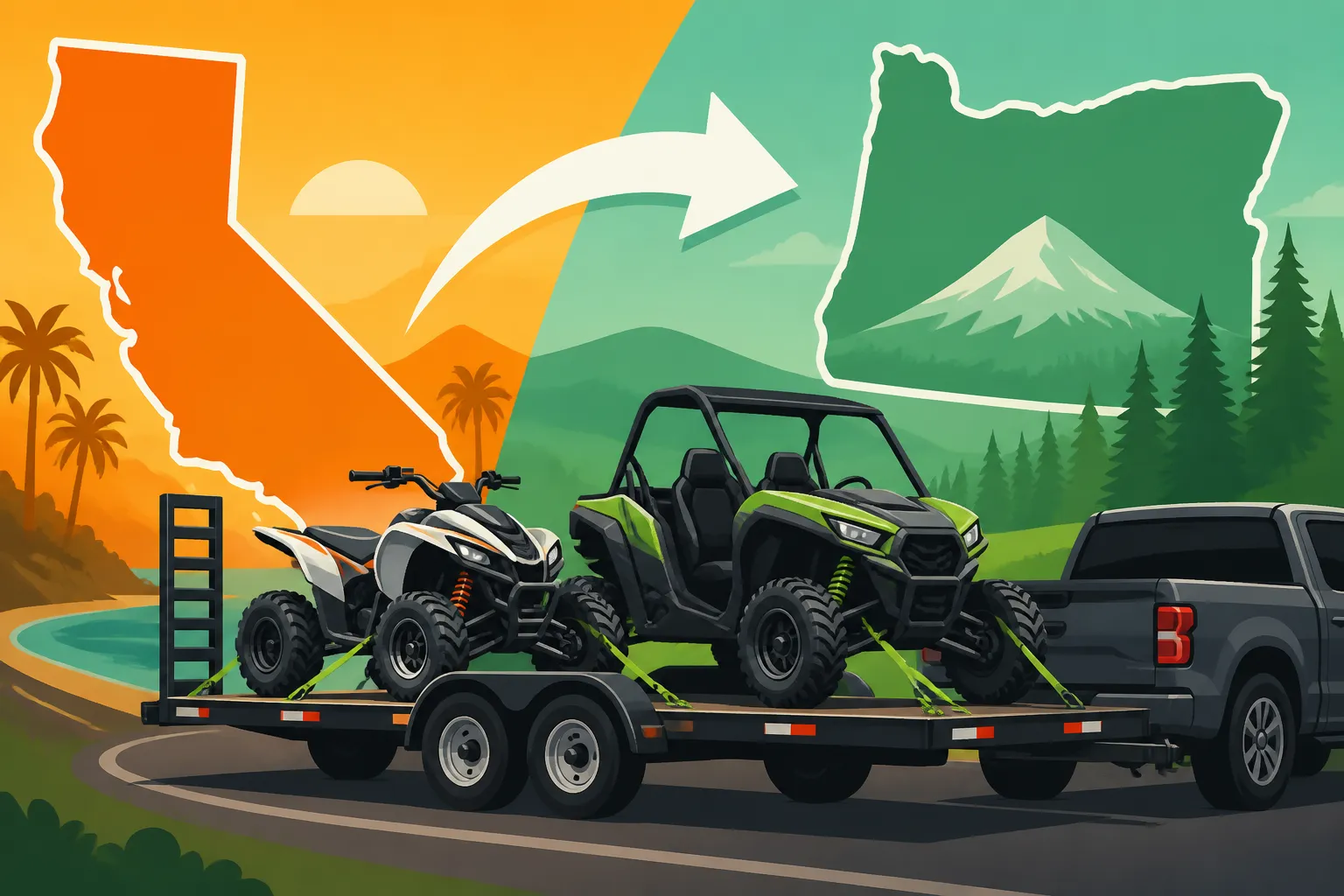
Bringing a Machine From California
Moving your life across state lines is enough of a logistical puzzle, but when you add your beloved ATV or UTV to the mix, especially from a state like California with its own specific rules, it can feel like you've just unlocked a whole new level of paperwork frustration. Many riders assume a California "Green Sticker" will work seamlessly, only to find Oregon has a completely different system. This guide is here to walk you through exactly what you need to do to bring your machine from California and get it legally ready to hit Oregon's incredible trails and dunes, without any unnecessary headaches.
Understanding Oregon's Unique Approach to OHVs
Let's get this out of the way upfront: Oregon doesn't register off-highway vehicles (OHVs) in the same way California does, or how most states handle passenger vehicles. This is often the biggest point of confusion for riders moving from California, where that annual "Green Sticker" is a central part of OHV ownership. In Oregon, the focus shifts entirely from traditional registration to an operating permit system. It's a subtle but critical distinction that influences almost every step you'll take.
Think of it less like registering a car with the DMV and more like buying a special pass for a state park. While your California DMV might have handled your OHV registration, the Oregon Department of Motor Vehicles (DMV) has absolutely nothing to do with ATVs or UTVs, unless they're being made street-legal (a much rarer scenario for specific Class II machines). This can be a real head-scratcher when you're used to everything going through one central agency. If you're wondering why this is, you can dive deeper into [Why Oregon's DMV Does Not Register ATVs]. This unique setup means you won't be dealing with license plates or annual renewals tied to a state registration database for off-road use.
Permit, Not Registration: What This Means for You
For a California rider, your "Green Sticker" or "Red Sticker" is essentially your state-mandated registration for off-highway use. It’s what proves you've paid your dues for the year and are cleared to ride on public lands. When you come to Oregon, that system is largely set aside. Instead of registering your individual machine, you're purchasing an "Operating Permit." This permit doesn't live on a vehicle database in the same way; it's a decal that goes directly onto your machine, indicating you've paid the required fee to operate it on Oregon's designated OHV trails and areas.
This distinction is important because it simplifies some aspects while adding new ones. You won't be submitting mileage, paying property taxes on the machine through a registration, or dealing with renewals that tie directly to your vehicle's identity. Instead, it's a straightforward fee for access. The money collected from these permits is vital for maintaining and developing Oregon's extensive OHV trail system, a fact often appreciated by riders once they understand it.
The "Classes" of Oregon ATVs and UTVs
Oregon categorizes OHVs into four distinct classes: Class I (Quads), Class II (larger off-road vehicles like Jeeps or sand rails), Class III (Off-Road Motorcycles), and Class IV (Side-by-Sides). While your California machine will definitely fall into one of these categories, it's important to understand that the operating permit itself is the same price for all classes. Knowing your machine's class is mostly relevant for understanding specific riding rules, safety requirements (like helmets or passenger rules), and where to place your decal, but it won't change the permit process itself. You can learn more about these categories in [Oregon's Four ATV Classes Explained].
The Oregon ATV Operating Permit: Your First Priority
Once you've made the move to Oregon, getting an Oregon ATV Operating Permit should be at the top of your to-do list for your off-highway vehicle. While Oregon does have some reciprocity with other states, it's typically limited to a period of 60 consecutive days for visiting riders. Since you're now an Oregon resident, you'll need the Oregon permit. Relying on your California Green Sticker for longer than that grace period could land you with a citation, and nobody wants that when they're just trying to enjoy their new home state's riding opportunities.
How to Get Your Oregon Permit
The process for obtaining an Oregon ATV Operating Permit is designed to be relatively simple and accessible. There are a few convenient ways to get one, whether you prefer doing things online or in person.
- Online: This is often the quickest and easiest method for many. You can purchase your permit directly from the Oregon Parks and Recreation Department (OPRD) website. When you buy online, you usually receive a temporary 30-day permit via email immediately, allowing you to ride while you wait for your physical decal and permanent card to arrive in the mail. This means you can hit the trails the very same day you purchase it, which is fantastic for those eager to explore. You can find more details on [Buying an Oregon Permit Online].
- Permit Agents: Oregon has a network of authorized permit agents spread across the state. These are often ATV dealerships, sporting goods stores, or other local businesses that process permits on behalf of OPRD. Buying from an agent means you walk out with your physical decal and permit card right then and there. This is perfect if you need the decal immediately or prefer to handle transactions in person. To find a location near you, check out [Oregon Permit Agents You Can Walk Into].
- State Parks: Some Oregon State Parks also sell ATV Operating Permits, particularly those located near popular riding areas. This can be a convenient option if you're already at a park or staging area and realize you need a permit. For a comprehensive list of places, see [Where Oregon Sells ATV Permits].
The cost of an Oregon ATV Operating Permit is standardized across all machine classes and offers a great value, as it covers your riding for two full years from the month of purchase. This two-year validity period really sets Oregon apart from many other states that require annual renewals. For more specifics on the expense, refer to [Oregon ATV Permit Cost].
Reciprocity with California: A Brief Window
As mentioned, your California Green Sticker will be recognized in Oregon, but only for a short period. This 60-day window is primarily for visitors, not new residents. If you've just moved, you should treat it as a grace period to get your Oregon permit, not a long-term solution. After those 60 consecutive days, your California permit is no longer valid for operation on Oregon's public lands. This is a common pitfall for new residents, so make sure to get your Oregon permit well within that initial two-month timeframe. If you're curious about the specifics of out-of-state permits, check out [Oregon Rules for an Out-of-State Machine].
Decal Placement: Getting It Right
Once you have your physical Oregon operating permit decal, you'll need to affix it correctly to your machine. Proper placement ensures that trail rangers and law enforcement can easily identify that your OHV is permitted, helping you avoid unnecessary stops. The general rule is to place the decal on the right side of the machine, in a highly visible location. For quads (Class I), this usually means the right-front fender or a prominent location on the right side of the main body. For side-by-sides (Class IV), it's often on the right side of the vehicle, perhaps on the frame, a roll bar, or the body panel. The key is visibility and security—make sure it won't be easily obscured by mud, equipment, or your riding position, and that it's on a clean, flat surface to adhere properly. Further guidance on this is available in [Oregon Permit Decals and Where They Go].
Titling Your California Machine in Oregon: Optional, But Often Smart
Beyond the operating permit, the question of titling your ATV or UTV in Oregon is the next major consideration. This is another area where Oregon diverges significantly from California and many other states, where a title is usually mandatory and intrinsically linked to registration. In Oregon, titling your off-highway vehicle for off-road use is actually optional. This can be a relief for some, but also a source of confusion for those accustomed to a title being absolute proof of ownership.
Is a Title Required? The Oregon Angle
No, an Oregon title is not required to obtain an operating permit or to legally ride your ATV or UTV on designated OHV trails and areas in Oregon. You can simply acquire your operating permit with a bill of sale or other proof of ownership, without ever getting an Oregon title. This unique policy is something many riders appreciate, especially if they bought their machine with just a bill of sale and never bothered with a title in California. The reasons for this optionality are deeply rooted in Oregon's approach to recreational vehicles. For more on this, check out [Titling an ATV in Oregon Is Optional].
The Benefits of an Oregon Title: Why You Still Might Want One
Even though it's optional, obtaining an Oregon title for your machine, especially one you've brought from California, is almost always a good idea. Think of it as an extra layer of protection and proof of ownership that can save you significant headaches down the line.
- Proving Ownership: While a bill of sale works, a state-issued title is the strongest and most universally accepted proof of ownership. If your machine is ever stolen, lost, or involved in an accident, a title makes it much easier to prove it's yours and navigate insurance claims or law enforcement recovery efforts. Without one, proving ownership can become a tangled web, especially if you bought the machine from a private seller years ago and your original paperwork is long gone.
- Resale Value and Ease: When it comes time to sell your ATV or UTV in Oregon, having an Oregon title will make the process much smoother. Buyers, even if they know titling is optional, often prefer to see a clear title. It instills confidence and simplifies the transfer of ownership for them, potentially increasing your machine's appeal and value. This is especially true if you plan to sell it to someone who might want to move it out of state eventually.
- Loan Collateral: If you ever need to use your ATV or UTV as collateral for a loan, a lienholder will almost certainly require a title to record their interest.
- Clarity for Out-of-State Sales: If you eventually sell your machine to someone in a state where titles are mandatory for OHVs, having an Oregon title will make the transaction straightforward.
If you decide to get an Oregon title, you will go through the Oregon DMV, even though they don't handle the operating permits. This is one of those quirks that can catch new residents off guard! You'll need your California title (if you had one), a bill of sale, and proof of identity. For robust and clear documentation like a bill of sale, many people find online services helpful. Companies like LawDepot offer customizable bill of sale templates that can simplify this part of the process, ensuring all necessary details are included for a smooth transfer. You can explore [Why an Oregon Title Is Worth Having Anyway] for more reasons to consider this optional step.
Transferring a California Title to Oregon
If your ATV or UTV already has a California title, transferring it to an Oregon title is a fairly standard process through the Oregon DMV. You'll need:
- Your California Title: This is crucial. Make sure it's signed off correctly if you're the current owner.
- Application for Title and Registration: The Oregon DMV form for titling (this is where it gets confusing, as it's not "registration" for off-road use, but the form covers titling).
- Proof of Identity: Your driver's license or other government-issued ID.
- Bill of Sale (Optional but Recommended): Even if you have the California title, a current bill of sale can clarify the purchase date and price, especially if you've recently acquired the machine. This is another excellent place to use a template from a service like LawDepot, ensuring it's comprehensive and legally sound.
- Odometer Disclosure (if applicable): While less common for ATVs/UTVs, some vehicles may require an odometer reading.
- Fees: There will be a fee for the title transfer.
The process involves submitting these documents to the Oregon DMV. They will process the transfer and issue you a new Oregon title. Remember, the DMV handles titling, while the Oregon Parks and Recreation Department (OPRD) handles the operating permit. These are two separate agencies for OHV purposes!
Essential Paperwork and Steps for Your Cross-State Move
Moving your OHV from California to Oregon involves navigating two different bureaucratic landscapes. Having all your ducks in a row with the right documents will save you a lot of time and potential frustration.
Documents You'll Need to Have Ready
Before you even start the permit or titling process in Oregon, gather these crucial documents from your time in California:
- California Title (if you have one): This is your primary proof of ownership. Ensure your name is correctly listed, or that it's properly signed over to you if you recently purchased it. If your machine didn't have a title in California (which can happen with older off-road vehicles or those solely used on private land), then a robust bill of sale becomes even more important.
- Bill of Sale: Regardless of whether you have a title, a comprehensive bill of sale is always a good idea. It documents the sale transaction, including the buyer, seller, date, purchase price, and a detailed description of the machine (make, model, VIN). If you don't have one, or only have a handwritten note, consider creating a more formal version using a reliable template provider. LawDepot, for example, offers various legal document templates, including bills of sale, that can help you create a professional and legally sound record of ownership. This can be critical for both getting your permit and, if you choose, for titling your machine.
- Proof of Identity: Your driver's license or state ID.
- Proof of Residency in Oregon: A utility bill, Oregon driver's license, or other official mail showing your new Oregon address. This isn't strictly required for the permit itself, but it solidifies your status as an Oregon resident for other purposes.
- Vehicle Identification Number (VIN): Always have your VIN readily available. It's the unique identifier for your machine and will be required for both the permit and titling applications.
Having all this paperwork organized will make the process smoother, whether you're dealing with OPRD for your permit or the Oregon DMV for your optional title. For a deeper dive into the documentation required for machines purchased out of state, refer to [Oregon Paperwork for a Machine Bought Out of State].
The Post-Move Checklist for Your OHV
Once you've settled in Oregon, here's a quick checklist to ensure your California machine is fully ready for Oregon's trails:
- Obtain Your Oregon ATV Operating Permit: This is non-negotiable for riding on public lands. Remember, your California Green Sticker has a 60-day limit. You can get this online, from a permit agent, or at select state parks. The permit lasts for [How Long an Oregon ATV Permit Lasts], giving you ample time before renewal.
- Affix Your Decal: Properly place the two-year operating permit decal on the right side of your machine, ensuring it's visible.
- Consider an Oregon Title: Decide if you want to get an Oregon title for your machine. Even though it's optional, it provides strong proof of ownership and can be beneficial for future resale or if the machine is ever stolen. If you proceed, head to the Oregon DMV with your California title and a detailed bill of sale (again, LawDepot can assist with template options here).
- Get Your Oregon ATV Safety Education Card: This is also a critical requirement for all OHV operators in Oregon, regardless of age. While your California safety certificate might be recognized for a temporary period if you're visiting, as a resident, you'll need the Oregon card. It's free and can be obtained online. Even if you're an experienced rider, you'll need this card. Check out [Oregon ATV Safety Card Requirements] for all the details.
- Understand Oregon Riding Laws: Take some time to familiarize yourself with Oregon's specific OHV laws regarding helmets, passengers, speed limits, spark arrestors, and sound restrictions. These can differ from California's rules, and ignorance is no excuse for a ranger.
- Check Day Use Fees: Remember that while your Oregon permit covers the right to operate, many popular riding areas (like the Oregon Dunes National Recreation Area) also require a separate day-use fee or a Northwest Forest Pass.
Bringing your machine from California to Oregon might seem like a lot of hoops to jump through, especially with the unique permit-over-registration system. But by understanding the specific requirements for the Oregon ATV Operating Permit and the optional, yet beneficial, titling process, you can ensure your machine is fully legal and ready for countless adventures in your new home state. Happy riding!
Disclaimer
This article is for general informational purposes only and does not constitute professional advice. Laws, prices and regulations vary by location and change over time. Consult a qualified professional for guidance on your specific situation.