Oregon Passenger Rules in a Side-by-Side
It can be incredibly frustrating trying to figure out the exact rules for bringing passengers along in your side-by-side in Oregon. You've got this awesome machine, perfect for family adventures or a fun day out with friends, but the last thing you want is a hefty fine or, worse, an unsafe situation because you misunderstood the regulations. This guide is here to untangle the complexities of Oregon's passenger rules for side-by-sides, ensuring you can hit the trails confidently and legally.
Understanding Oregon's Classification for Side-by-Sides and What It Means for Passengers
Before we dive into the nitty-gritty of who can ride where, it's really important to understand how Oregon actually defines your side-by-side. This isn't just bureaucratic jargon; it directly influences the rules you need to follow. In Oregon, most modern side-by-sides fall under what's called a Class IV all-terrain vehicle.
The Class IV Definition
So, what exactly makes a machine a Class IV ATV in Oregon? According to state statutes, a Class IV ATV is defined as a motor vehicle that has a dry weight of 3,500 pounds or less, has non-straddle seating, a steering wheel, and is 75 inches or less in width. Think about your typical modern UTV, like a Polaris RZR, Can-Am Maverick, or a Kawasaki Teryx. They almost universally feature bucket seats or bench seating, a steering wheel just like a car, and are designed to be quite nimble, staying within that 75-inch width limit. This definition clearly sets them apart from traditional Class I quads, which have straddle seating and handlebars, or the much heavier Class II machines that might be registered for street use. For a deeper dive, check out [Oregon's Class IV Side-by-Sides Under 75 Inches].
How Classification Impacts Passenger Rules
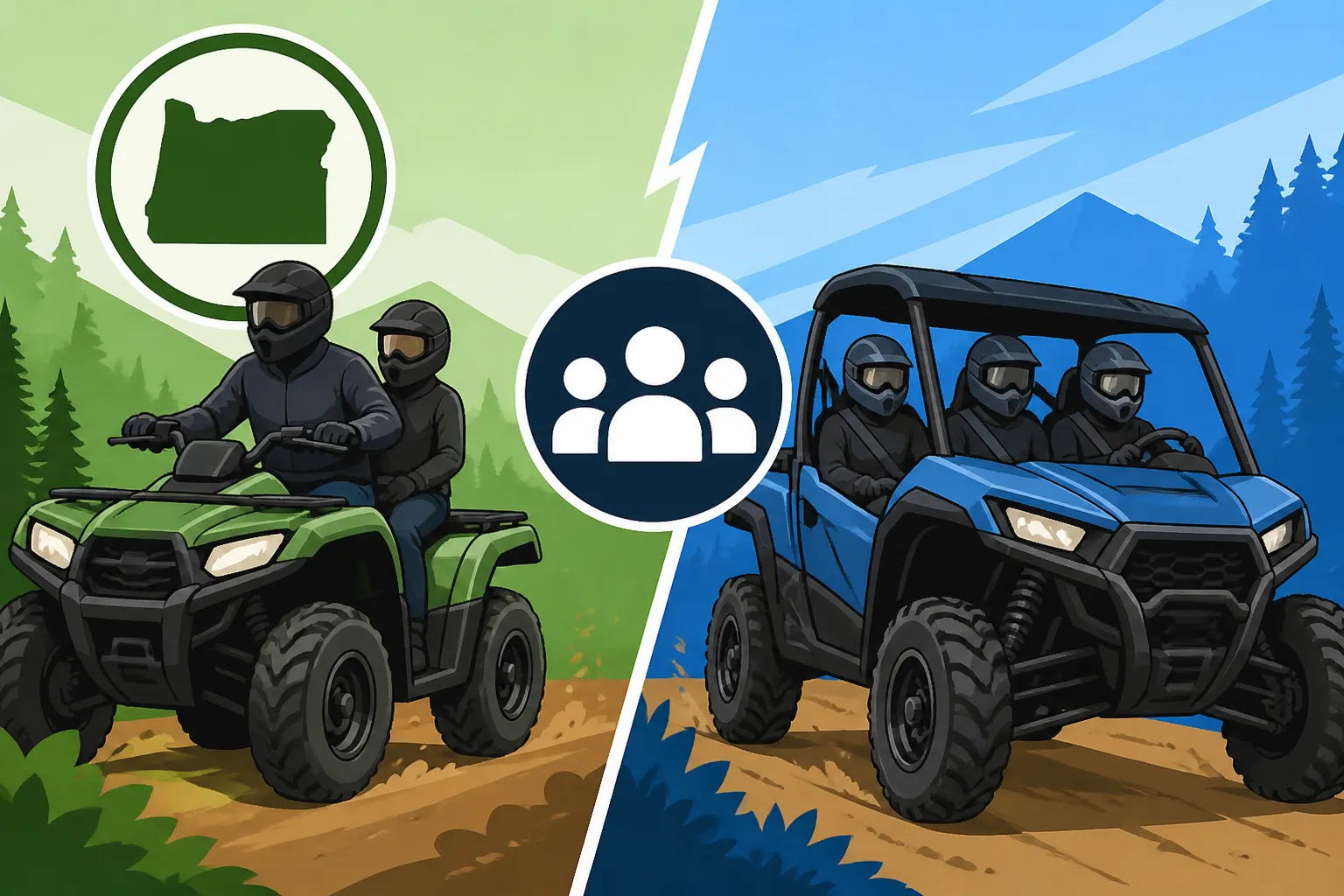
The fact that your side-by-side is a Class IV ATV, not a Class I quad, changes a lot of things, especially regarding passengers. For Class I ATVs, there's a strict rule against carrying passengers unless the machine was specifically designed by the manufacturer for two riders, with distinct seating and foot pegs. With side-by-sides, that's not the case. Their design – non-straddle seating, often multi-person benches or bucket seats – inherently means they are built to carry more than just the operator. This design difference is why the passenger rules for side-by-sides focus more on seating capacity, seatbelt use, and helmet requirements rather than a blanket ban on passengers. It's about ensuring that every rider has a proper, safe place within the vehicle, designed to protect them, rather than simply hanging on.
Mandatory Safety Gear and Seating for Side-by-Side Passengers
This is where things can get a little tricky, and it's often the source of the most common misunderstandings. When you’re out on the trails, safety is paramount, and Oregon's rules reflect that. Ignoring these can not only lead to fines but also put you and your loved ones at serious risk.
Seatbelt Use and Vehicle Capacity
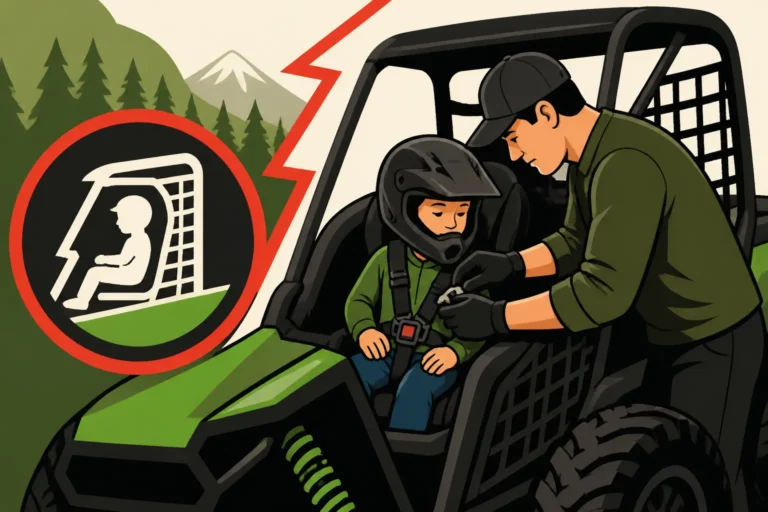
One of the most straightforward, yet sometimes overlooked, rules is about seatbelts and vehicle capacity. Every single passenger in your side-by-side must have a designated seating position, and they must be securely buckled into a seatbelt. Period. This means no squeezing an extra person onto a bench seat if there isn't a corresponding seatbelt for them. No standing up in the bed, no riding on someone's lap, and certainly no piling more people in than your machine was manufactured to carry. If your two-seater SuperATV has only two factory seatbelts, then it's a two-person machine, operator included. Adding aftermarket seating needs to be done with extreme care, ensuring that any new seats are properly secured and come with their own compliant seatbelt systems. The intent here is clear: everyone inside the UTV should be as protected as if they were in a car, contained within the vehicle's safety cage and restrained in their seat. [Buckling a Child Into a Cage] is a crucial consideration if you have young riders.
Helmet Requirements for All Ages
This is probably the biggest head-scratcher for many side-by-side owners, especially those coming from a car-driving background. In Oregon, it is mandatory for all persons, regardless of age, operating or riding as a passenger on a Class I, III, or IV ATV to wear a safety helmet. The only significant exception applies to certain Class II ATVs that are fully enclosed and registered for street use, which your off-road Class IV side-by-side almost certainly is not. This means if you're rocking a sweet SuperATV roll cage and roof, that's fantastic for protection against rollovers and overhead debris, but it does not exempt anyone from wearing a helmet. Every helmet must be approved by the Department of Transportation (DOT) or Snell, fit snugly, and have the chin strap securely fastened. I’ve seen countless riders on the dunes get stopped because an adult passenger didn't have a helmet, assuming the roll cage was enough. Don't be that rider. The rules apply equally to adults and children. For more details, see [Oregon Helmet Law for Adults] and [Oregon Helmet Law for Riders Under 18].
Designated Seating and Foot Rests
Beyond seatbelts and helmets, passengers need to be properly seated. This means they must be able to keep their feet within the confines of the vehicle, usually on designated floorboards or footrests. There should be no legs dangling outside the machine, which can easily lead to injury from passing obstacles or in the event of a roll. [Carrying a Passenger With Nowhere to Rest Their Feet] is a definite no-go. For children, this often means ensuring they are large enough to sit comfortably and reach the floorboards, or using appropriate child restraint systems if they can be safely secured within the UTV's seating and seatbelt configuration. While Oregon doesn't specify a minimum age for passengers, it does require that they can be safely secured and contained. Using common sense, and perhaps a car seat or booster seat designed to work with a vehicle’s seatbelt system, is vital for very young riders. Always prioritize their ability to stay securely seated and belted for the duration of the ride.
Age Limits and Supervision for Side-by-Side Riders
The question of age comes up a lot, not just for the operator, but also for passengers. While side-by-sides are often seen as family vehicles, Oregon has specific rules designed to protect young riders, both behind the wheel and in the passenger seat.
Operator Age and Safety Card Rules
Let's quickly touch on who can actually drive a side-by-side. To operate a Class IV ATV in Oregon, a person must be at least 16 years old and possess a valid driver's license or an Oregon ATV Safety Education Card. If they are under 16, they must have an Oregon ATV Safety Education Card and be supervised by an adult (18+) who also holds a valid driver's license or safety card. This supervision means the adult must be within eyesight and able to provide immediate assistance. The safety card program is extensive, covering everything from basic operation to environmental awareness. You can find more information about these requirements in [Oregon ATV Safety Card Requirements]. It's crucial that the operator is qualified, as their ability directly impacts the safety of all passengers.
Passenger Age and Supervision
Now, what about the passengers? Oregon law doesn't explicitly state a minimum age for a passenger in a Class IV side-by-side, but it's heavily implied through the safety requirements. As discussed, every passenger must be securely belted into a designated seat, and capable of keeping their feet inside the vehicle. For very young children, this means that while technically allowed, parental discretion and responsibility are paramount. Can they wear a helmet safely? Can they stay seated and belted for the duration of the ride, especially over rough terrain? If you're bringing along a tiny tot, you'll need to consider how to safely secure them. This might involve looking into aftermarket child seats designed for UTVs or using appropriate car seats if they can be properly installed and secured with the UTV's seatbelt system. The goal is to ensure they are just as safe and secure as any adult passenger. This also means that even if a young child is a passenger, they still need to wear a DOT or Snell-approved helmet.
Navigating Common Passenger Scenarios and Misconceptions
Riding ATVs and UTVs often involves specific locations and unique situations. Let's tackle some common scenarios and clear up those persistent myths.
Riding on Public Lands and Designated Routes
Whether you're tearing up the sand at the Oregon Dunes, navigating the forest trails of Tillamook State Forest, or exploring the high desert at Millican Valley, the passenger rules for your side-by-side remain the same. Law enforcement, often Oregon State Parks rangers or Forest Service personnel, regularly patrols these areas. They will check for proper permits, safety cards, and, yes, compliance with passenger rules, including helmets and seatbelts for everyone. I've personally seen riders get stopped at popular staging areas like Spinreel or Browns Camp because a passenger wasn't wearing a helmet or because there were too many people crammed into a UTV. Don't let your epic adventure get cut short by a preventable citation. Being prepared is key, and understanding [What a Ranger Checks at an Oregon Staging Area] can save you a lot of hassle.
Aftermarket Accessories and Safety
Many side-by-side owners love to customize their machines, adding light bars, sound systems, and often, enhanced safety features like stronger roll cages or four-point harnesses. While a robust SuperATV roll cage certainly adds a layer of protection in the event of a rollover, it does not negate the need for helmets or proper seatbelt use. In fact, if you upgrade to a four or five-point harness system, ensure it’s installed correctly and all passengers know how to use it. Similarly, if you add additional seating, these seats must be securely mounted and equipped with their own compliant seatbelts. Any modification should enhance safety, not create new risks or give you a false sense of security that allows you to bypass the rules.
The "Enclosed Cab" Misconception
This is a big one. Many folks mistakenly believe that if their side-by-side has a roof, a windshield, and doors, they don't need helmets for adult passengers. This is generally not true for Class IV off-road ATVs in Oregon. The specific helmet exemption for "enclosed cabs" applies almost exclusively to certain Class II ATVs that are truly street-legal and registered for highway use, essentially functioning like a very small car. Your off-road Class IV side-by-side, even if it feels very enclosed, is still legally considered an ATV for which helmets are mandatory for all occupants. Do not rely on your UTV's roof and doors alone to protect you from a citation or, more importantly, from injury. Always wear your helmet. While you might read about [When a Class II Roof Exempts You], remember this applies to a different class of vehicle entirely. Always assume helmets are required for your Class IV side-by-side when riding off-road in Oregon.
| Rule Category | Requirement for Side-by-Side (Class IV) Passengers in Oregon | Important Details |
|---|---|---|
| Seating & Capacity | Every passenger must have a designated, factory-installed seating position. | Do not exceed the manufacturer's stated seating capacity. No riding in laps, beds, or otherwise unsecured positions. Ensure all Oregon Passenger Rules in a Side-by-Side are followed. |
| Seatbelts | Every passenger must use a properly adjusted, factory-installed seatbelt (or equivalent aftermarket harness). | Seatbelts must be worn at all times while the vehicle is in motion. |
| Helmets | All passengers, regardless of age, must wear a DOT or Snell-approved safety helmet with the chin strap fastened. | This is mandatory for all Class IV ATVs when used off-road; an enclosed cab or roll cage does NOT exempt adults or children. See [Oregon Helmet Law for Adults] and [Oregon Helmet Law for Riders Under 18]. |
| Footrests | Passengers must be able to keep their feet within the confines of the vehicle, on designated floorboards or footrests. | No dangling feet outside the vehicle. For younger children, ensure they can comfortably reach the floorboards or are in an appropriate restraint. [Carrying a Passenger With Nowhere to Rest Their Feet] is unsafe and illegal. |
| Age | No explicit minimum age for passengers, but they must meet all safety requirements (helmet, seatbelt, proper seating). | Parental responsibility is key for young children to ensure they can be safely secured and wear a helmet properly. The operator of the [Oregon ATV Permit for a Side-by-Side] must be at least 16 with a license or safety card. |
Disclaimer
This article is for general informational purposes only and does not constitute professional advice. Laws, prices and regulations vary by location and change over time. Consult a qualified professional for guidance on your specific situation.