Oregon Minimum Age to Ride on a Road
Trying to figure out the minimum age for riding an ATV or UTV on a road in Oregon can feel like deciphering a secret code, especially when the rules for a dusty trail are completely different from those for a paved or gravel road. It's not as simple as "if you're X age, you can ride anywhere," and that can be incredibly frustrating for parents and young riders eager to explore. This guide is here to untangle Oregon's specific age requirements for operating ATVs and UTVs on various types of roads, ensuring you understand exactly what's allowed and what's not, and how to stay compliant with state law.
Understanding Oregon's Age Rules for ATV/UTV Operators on Roads
Oregon's approach to off-highway vehicles (OHVs) on public roads is quite nuanced, and it absolutely makes a difference whether you're talking about a designated highway access route, a forest service road, or a county gravel road. The common assumption that all "roads" are the same under the law is a pitfall many riders encounter. For young operators, these distinctions become even more critical, as age restrictions often tighten when a machine leaves the confines of an approved OHV park or private property.
The Nuances Between Trail Riding and Road Riding Regulations
On a designated OHV trail system, like those found in the Tillamook State Forest or at Millican Valley, the age rules for operating an ATV or UTV are primarily governed by the Oregon Parks and Recreation Department's (OPRD) safety education requirements. Generally, anyone under 16 years old needs an Oregon ATV Safety Education Card and must meet specific supervision requirements, depending on their age and the class of machine. Adults, while needing the card, don't face the same strict supervision rules on trails.
However, once you venture onto roads, even those shared-use forest roads, things shift considerably. The Oregon Department of Transportation (ODOT) and local county ordinances start to layer on additional regulations, especially concerning operator age and the vehicle's street-legal status. It's no longer just about knowing how to ride safely; it's about being licensed to operate a vehicle on a public thoroughfare, which carries different legal implications and responsibilities. This is where many families get caught out, thinking that if their child can handle a machine on a trail, they can automatically ride it down the access road to the next section. That simply isn't the case in Oregon.
Who Needs a Driver's License vs. a Safety Card on Roads
For most OHV use on trails, all riders, regardless of age, need an [Oregon's ATV Safety Education Card]. This card certifies that the operator has completed the required safety education. However, when it comes to operating an ATV or UTV on a public road where conventional vehicle traffic might be present, the requirement can escalate to a valid driver's license.
Oregon generally distinguishes between vehicles that are designed solely for off-highway use (like most Class I ATVs, Class III off-road motorcycles, and many Class IV side-by-sides) and a specific subset of vehicles that can be made street-legal (primarily Class II machines). For the vast majority of ATVs and UTVs, which are not street-legal, access to roads is severely restricted. If a machine isn't street-legal, any road access is usually limited to crossing a paved highway at a right angle for the shortest distance or using very specific designated routes or unmaintained forest/county roads under certain conditions. In these limited scenarios, the general OHV safety card rules often still apply, but the opportunities for young riders are scarce and tightly controlled, usually requiring direct adult supervision.
For machines that can be made street-legal, such as certain [Oregon's Class II Under ORS 801.193] vehicles like sand rails, dune buggies, or larger UTVs that meet specific criteria for registration, the rules mimic those for standard automobiles. If you're operating a street-legal Class II machine on a public road, the operator must possess a valid driver's license. This means a young rider, even with an ATV Safety Education Card, generally cannot operate a street-legal Class II machine on a public road if they do not hold a valid state driver's license. This means you need to be at least 16 years old and have passed all requirements for an Oregon driver's license. The age for driving on a public road, even a gravel forest road, is tied to driving privileges, not just OHV competence.
Detailed Age Requirements Based on ATV/UTV Classification and Road Type
Oregon's system classifies OHVs into four categories, and these classifications are fundamental to understanding where and by whom a machine can be operated, especially on roads. The distinctions matter immensely when you're considering taking your machine, or your child's machine, anywhere beyond a dedicated OHV trail. Knowing [Oregon's Four ATV Classes Explained] is the first step to staying legal.
Class II Machines Street Legal Exceptions and Operator Age
Oregon's Class II designation is particularly important for road use. These are vehicles generally characterized as being capable of traversing rough terrain but are often larger and sometimes designed with features that allow for conversion to street-legal status. Think of purpose-built sand rails or certain larger, heavier UTVs. If a Class II machine is legally registered and plated for street use in Oregon (which is a significant undertaking involving specific equipment, insurance, and inspection), then its operation on public roads falls under standard motor vehicle laws.
This means that to drive a street-legal Class II machine on any public road, the operator must hold a valid Oregon driver's license. This effectively sets the minimum age at 16, consistent with the state's licensing age for automobiles. There are no exceptions for younger riders, even if they have an ATV Safety Education Card. The logic is clear: if it's on a road with regular traffic, it's treated like a regular vehicle, and the driver needs a regular license. This is crucial for anyone considering modifying their UTV with a SuperATV street-legal kit, as the driver age will be determined by the licensing rules, not just the OHV rules.
It's also worth noting that Class II machines that aren't street-legal are generally subject to the same severe restrictions on road use as Class I, III, and IV machines. The "Class II" designation by itself doesn't automatically grant road privileges without the full street-legal conversion and registration.
Other Classes and Limited Road Access for Youth
For Class I ATVs (quads), Class III off-road motorcycles (dirt bikes), and Class IV side-by-sides that are not Class II machines and therefore cannot be made street-legal, direct access to public paved roads or highways is extremely limited. These machines are generally prohibited from operating on public paved roads except to cross them at a 90-degree angle to access another trail or riding area, provided the crossing is safe and done at an intersection. Even then, an adult supervisor might be required depending on the rider's age.
However, there are a couple of very specific exceptions that apply to youth riders:
-
Designated OHV Highway Access Routes: Oregon has a few designated routes where OHVs can legally operate on specific public roads for short distances to connect trail systems or access amenities. Currently, these are primarily found in [Lakeside and Sumpter: Oregon's Only Two Routes]. On these very specific and clearly marked routes, the rules for operator age generally follow the OHV safety card requirements, meaning:
- Under 16: Must possess an [Oregon's ATV Safety Education Card] and be supervised by an adult at least 18 years old. The supervising adult must ride a separate OHV or be a passenger on the same OHV if it's designed for multiple riders and the machine class allows.
- Under 12: Generally restricted to Class I (quads) and Class III (dirt bikes) machines. They cannot operate Class IV side-by-sides on these routes. Some machines may also have manufacturer-specific age recommendations that must be followed.
- It is vital to confirm the specific local ordinances for these designated routes, as they can sometimes have additional provisions.
-
Unmaintained Forest Service and County Gravel Roads: Many parts of Oregon allow OHVs on certain unmaintained or minimally maintained Forest Service roads and county gravel roads, especially those not open to the general public or clearly signed for OHV use. On these types of roads, the age requirements typically revert to the general OHV safety card rules, as described for trail riding. This means riders under 16 still need their safety card and adult supervision. Crucially, these are not paved public roads, nor are they typically maintained for high-speed traffic. Always check local Forest Service or BLM district maps and posted signage before riding, as closures and specific rules can change. [Oregon Rules for Riding a Forest Road] are particularly important here.
It’s easy to get confused by the different road types and their respective rules. Here’s a quick overview to help clarify:
| Road Type | Operator License/Card Required | Minimum Age (General) | Notes |
|---|---|---|---|
| Paved State/County Highway | Valid Driver's License | 16+ | Only for Street-Legal Class II machines. Other classes: prohibited except for direct crossings. |
| Designated OHV Highway Access Route | ATV Safety Card (or Driver's License) | As per OHV rules | Specific, signed routes like Lakeside/Sumpter. Under 16 needs card & supervision; under 12 has further restrictions. |
| Unmaintained Forest/County Road | ATV Safety Card | As per OHV rules | Often gravel or dirt. Under 16 needs card & supervision. Always check local rules/signage. |
| Private Land | None (owner's discretion) | Varies | No state age rules apply, but safety is paramount. |
Remember, any street-legal Class II machine will require the operator to meet [Oregon Driver's License Rules for Class IV] (or any other motor vehicle class) for road use, regardless of their OHV experience.
Navigating Safety Education and Supervision Requirements
Even where younger riders are permitted on certain roads, Oregon is very particular about ensuring their safety through education and supervision. These aren't just suggestions; they are legal requirements designed to minimize accidents and ensure riders understand the rules of the road, even if it's a gravel path in the forest. Skipping these steps can lead to citations and serious consequences.
Oregon's ATV Safety Education Card for Young Riders
As mentioned, every rider in Oregon, regardless of age, needs an [Oregon's ATV Safety Education Card] to operate an OHV on public lands, and this extends to the limited road access areas where OHVs are allowed. For young riders, obtaining this card is a mandatory first step. The card is free and can be obtained by completing an online course and passing an exam.
For riders under 16 years old, the safety card is particularly crucial because it's a prerequisite for any legal riding on public land or designated OHV access roads. Without it, they cannot legally operate an OHV in these areas. The curriculum covers essential safety practices, environmental awareness, and basic rules of operation, preparing them for responsible riding. While the card is often obtained online, Oregon also offers hands-on training, which can be invaluable for practical skills.
It's a common misconception that if a child is riding with an adult, they don't need the card. This is incorrect. The card is required for the operator, not just the supervising adult. If your child plans to ride an ATV or UTV on any public road where it's permitted (like a designated highway access route or a Forest Service road), they must have their safety card readily available, either physically or digitally on a device.
The Role of Adult Supervision on Roads
For riders under 16 years old, Oregon law mandates specific adult supervision when operating an OHV on public lands, which includes those limited road access points. [Oregon Rules for Riders Under 16] state that they must be supervised by an adult who is at least 18 years old. This adult supervisor must also possess an Oregon ATV Safety Education Card.
The specifics of supervision vary slightly by machine class:
- Class I (Quads) and Class III (Dirt Bikes): The supervising adult must ride a separate OHV or be a passenger on the same OHV if the machine is designed by the manufacturer for two riders (and the passenger has proper footrests and seating). This is crucial for maintaining direct oversight.
- Class IV (Side-by-Sides): For operators under 16, the supervising adult must either ride as a passenger in the same Class IV machine or ride a separate OHV. This direct supervision ensures that if a situation arises, the adult can intervene immediately.
This supervision requirement extends to all instances where a youth rider is on a public road where OHVs are permitted. It's not enough for the adult to simply be in the general vicinity; they must be actively supervising the young rider's operation of the machine. This rule is in place because roads, even unmaintained ones, present different hazards and require a higher level of vigilance than a controlled trail environment. The responsibility for ensuring proper supervision lies squarely with the adult.
Important Considerations for Youth Riding on Oregon Roads (Beyond Age)
While age and licensing are critical, they are just two pieces of the puzzle when it comes to safely allowing youth to ride ATVs or UTVs on Oregon roads. There are several other factors that parents and guardians need to consider to ensure both legal compliance and the well-being of their young riders.
Machine Equipment and Modifications for Road Safety
For any OHV venturing onto a road, even a gravel Forest Service road, proper equipment is paramount for safety and visibility. Many standard ATVs and UTVs are designed primarily for off-road use and may lack features essential for road environments.
Consider the following:
- Visibility: Roads mean shared space, potentially with other vehicles, cyclists, or pedestrians. Enhancing visibility is non-negotiable. This means ensuring bright headlights, tail lights, and brake lights are fully functional. Reflective tape on the machine can also help. For UTVs, additional lighting can make a huge difference. You might consider aftermarket light kits or even turn signals. Brands like SuperATV offer a wide range of accessories, including mirrors, turn signals, and light bars, that can significantly improve a machine's road-worthiness and visibility.
- Mirrors: Side mirrors and a rearview mirror are crucial for operators to be aware of their surroundings, especially on roads where vehicles might approach from behind. Many OHVs do not come with these as standard.
- Horn: A functional horn is essential for alerting others to the OHV's presence.
- Spark Arrester: All OHVs operating on public land in Oregon must have a U.S. Forest Service approved spark arrester to prevent wildfires. This applies to roads as well.
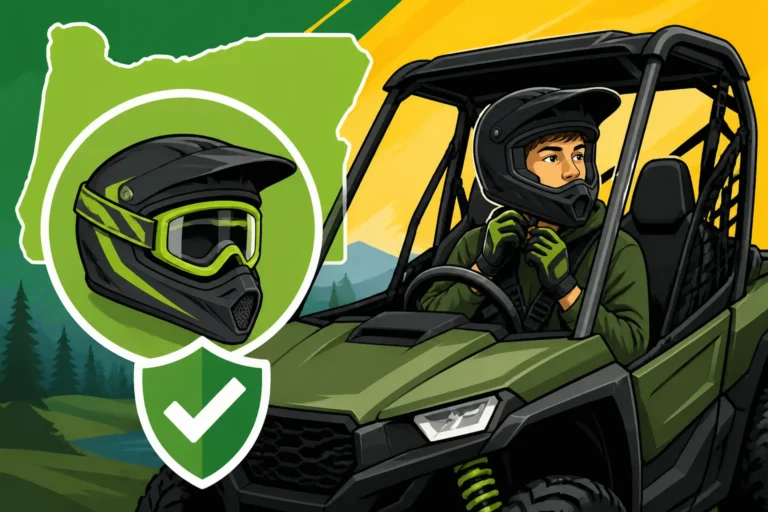
- Helmet Use: For all riders under 18, [Oregon Helmet Law for Riders Under 18] requires the use of an approved motorcycle helmet. Even adults are strongly encouraged to wear them. This is not optional and applies to road riding. The helmet must be properly fitted and securely fastened.
- Machine Suitability: Ensure the machine is appropriate for the young rider's size, experience, and the conditions of the road. An overly powerful or large machine can be difficult for a young rider to control, especially on varied road surfaces.
Failing to equip a machine properly can not only put your rider at risk but also lead to citations for safety violations.
Situational Awareness and Parental Responsibility
Beyond the legal requirements, parents and guardians bear a significant responsibility for ensuring that young riders are not just legally compliant but also mentally and emotionally prepared for the unique challenges of road riding.
- Hazard Recognition: Roads can have different types of hazards than trails. Potholes, loose gravel, oncoming traffic (even if sparse), blind corners, and inconsistent surfaces demand constant vigilance. Young riders need to be trained to anticipate these hazards and react appropriately.
- Traffic Laws (even on gravel roads): Even on unmaintained forest roads, basic rules of the road apply. Riders need to understand concepts like yielding to oncoming traffic, staying to the right, using appropriate speed, and respecting right-of-way. While a young rider may be familiar with trail etiquette, road etiquette is a different beast.
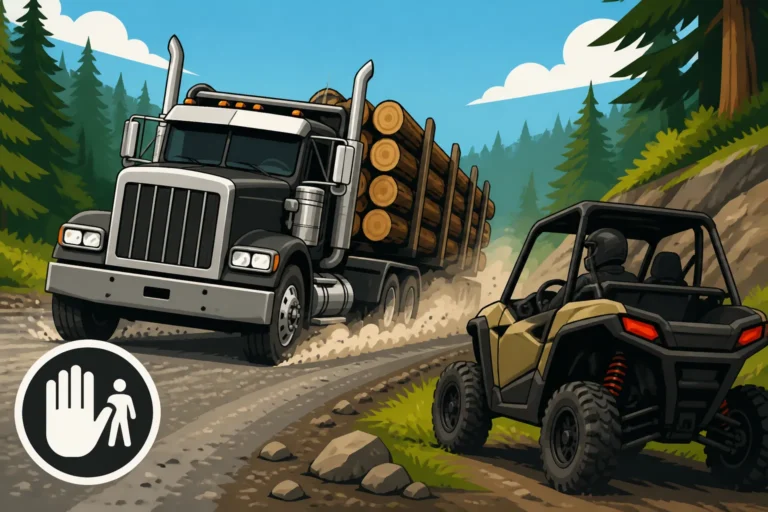
- Changing Conditions: Road conditions can change rapidly due to weather, maintenance activities (like logging trucks), or seasonal closures. Parents need to instill in their young riders the importance of checking for these changes and knowing when to adjust their riding plans. [Oregon Rules for Riding a County Gravel Road] often involve shared use, meaning vigilance is key.
- Emergency Preparedness: Riding on roads, especially remote ones, means being prepared for emergencies. This includes carrying a first-aid kit, knowing how to signal for help, and understanding what to do in case of a breakdown or accident.
- Role Modeling: As a supervising adult, your behavior sets the standard. Always lead by example, adhering to speed limits, wearing your helmet, and practicing safe, courteous riding. This reinforces good habits in younger riders.
The goal is to foster capable and responsible riders who can make good decisions even when supervision isn't direct. Taking the time to teach these nuanced aspects of road riding will ensure a safer and more enjoyable experience for everyone.
Disclaimer
This article is for general informational purposes only and does not constitute professional advice. Laws, prices and regulations vary by location and change over time. Consult a qualified professional for guidance on your specific situation.