Street Legal ATVs in Oregon: The Short Answer
It's a question that plagues almost every ATV and UTV owner in Oregon: "Can I just ride my rig down the road to the store, or from my house to the trailhead?" The appeal is undeniable – the freedom of not having to load up the trailer, the convenience of connecting trails with a short road section. But the reality in Oregon, like many states, is far more complex than a simple yes or no. The laws around street legality for off-highway vehicles (OHVs) are nuanced, often misunderstood, and can lead to costly fines if you get it wrong. This guide aims to demystify Oregon's regulations, giving you the comprehensive "short answer" you've been looking for, along with all the critical details you need to stay on the right side of the law.
Understanding Oregon's Classification System for Off-Highway Vehicles (OHVs)
Before we can even begin to talk about whether your quad or side-by-side can legally touch pavement, we have to understand how Oregon categorizes these machines. It's not just a matter of "if it has four wheels, it's an ATV." Oregon has a very specific and legally binding classification system that dictates everything from permitting to where you can ride – and especially whether you can even think about street use.
Why Classification Matters for Road Use
Oregon's Department of Transportation (ODOT) and the Oregon Parks and Recreation Department (OPRD), which manages the state's ATV permit program, use these classifications to differentiate between various types of off-highway vehicles. The primary reason this matters for road use is that very few of these classifications were ever designed or intended for public highway travel. Most are built purely for off-road performance, lacking the necessary safety equipment or design characteristics required for street certification. If your machine doesn't fit into a specific, narrow category that allows for road use, then all discussions about blinkers and insurance are moot. This foundational understanding is the first, and most crucial, step in determining your machine's legal status on the pavement.
Oregon's Four ATV Classes Explained
Oregon law, specifically under ORS 801.190 and related statutes, defines four distinct classes of ATVs. It's really important to know which class your machine falls into, because only one of them has any real hope of becoming street legal, and even then, it's a conditional "hope."
- Class I ATVs: These are your traditional quads – the four-wheeled machines designed for a single operator with a straddle seat and handlebars. They generally have a dry weight of 1,200 pounds or less and are 50 inches or less in width. Think of most recreational sport quads and utility ATVs. For instance, [The 50-Inch Limit That Defines a Class I] is a key measurement here.
- Class II ATVs: This is where things get interesting, and often confusing. A Class II ATV is defined as any motor vehicle that has a dry weight of 800 pounds or more, has four or more wheels, is designed for off-highway use, and is not a Class I, III, or IV ATV. This class often includes custom-built buggies, sand rails, and sometimes converted military vehicles. Critically, many of these can be modified and registered for street use, much like a kit car. [Oregon's Class II Under ORS 801.193] is the specific statute that outlines this. This is the exception we'll dive into deeper.
- Class III Off-Road Motorcycles: These are your dirt bikes, two-wheeled machines designed for off-highway use. While some dirt bikes can be converted to street legal motorcycles in other states, Oregon has its own distinct path, which is also generally separate from the "ATV" discussion. [Class III Off-Road Motorcycles in Oregon] covers these in more detail.
- Class IV ATVs: These are your modern side-by-sides (SxS or UTVs), defined as having a dry weight of 3,500 pounds or less, 75 inches or less in width, four or more wheels, a non-straddle seat (like a bench or bucket seats), and a steering wheel. Most of the popular recreation UTVs like Polaris RZRs, Can-Am Mavericks, and Honda Pioneers fall into this category. [Oregon's Class IV Side-by-Sides Under 75 Inches] defines the specifics.
It's a common misconception that if a side-by-side has a steering wheel and bucket seats, it's "basically a car" and thus easier to make street legal. In Oregon, that's simply not true for Class IV machines. They are very much off-highway vehicles in the eyes of the law.
The Legal Distinctions: What an ATV Is vs. What It Can Be
The crux of the matter lies in this distinction. What your manufacturer calls your machine, or even what it looks like, isn't what defines its legal status for road use in Oregon. It's the state's classification system. A Class I quad or a Class IV side-by-side is inherently an off-highway vehicle by its very definition in Oregon law. This means it lacks the fundamental legal framework to be registered and licensed for general street travel, much like a dedicated race car isn't street legal without extensive, specific modifications and re-classification.
However, a Class II machine is a different beast. Because its definition is broader – encompassing any multi-wheeled OHV that isn't a Class I, III, or IV – it leaves room for vehicles that might originally be off-road focused but can be built or modified to meet highway safety standards. This is where sand rails and certain custom-built buggies find their niche, because they can be put through a process to be recognized as street-legal vehicles, similar to a specially constructed vehicle. This requires more than just adding turn signals; it often involves a comprehensive inspection process by the Department of Motor Vehicles (DMV) to ensure compliance with all applicable motor vehicle codes.
The "Short Answer" to Street Legal ATVs in Oregon: It's Complicated
Alright, let's get right to the heart of the matter, because I know you're eager for the definitive answer. Can you make your ATV or side-by-side truly "street legal" in Oregon, meaning you can register it, get a license plate, and drive it on any public road just like a car?
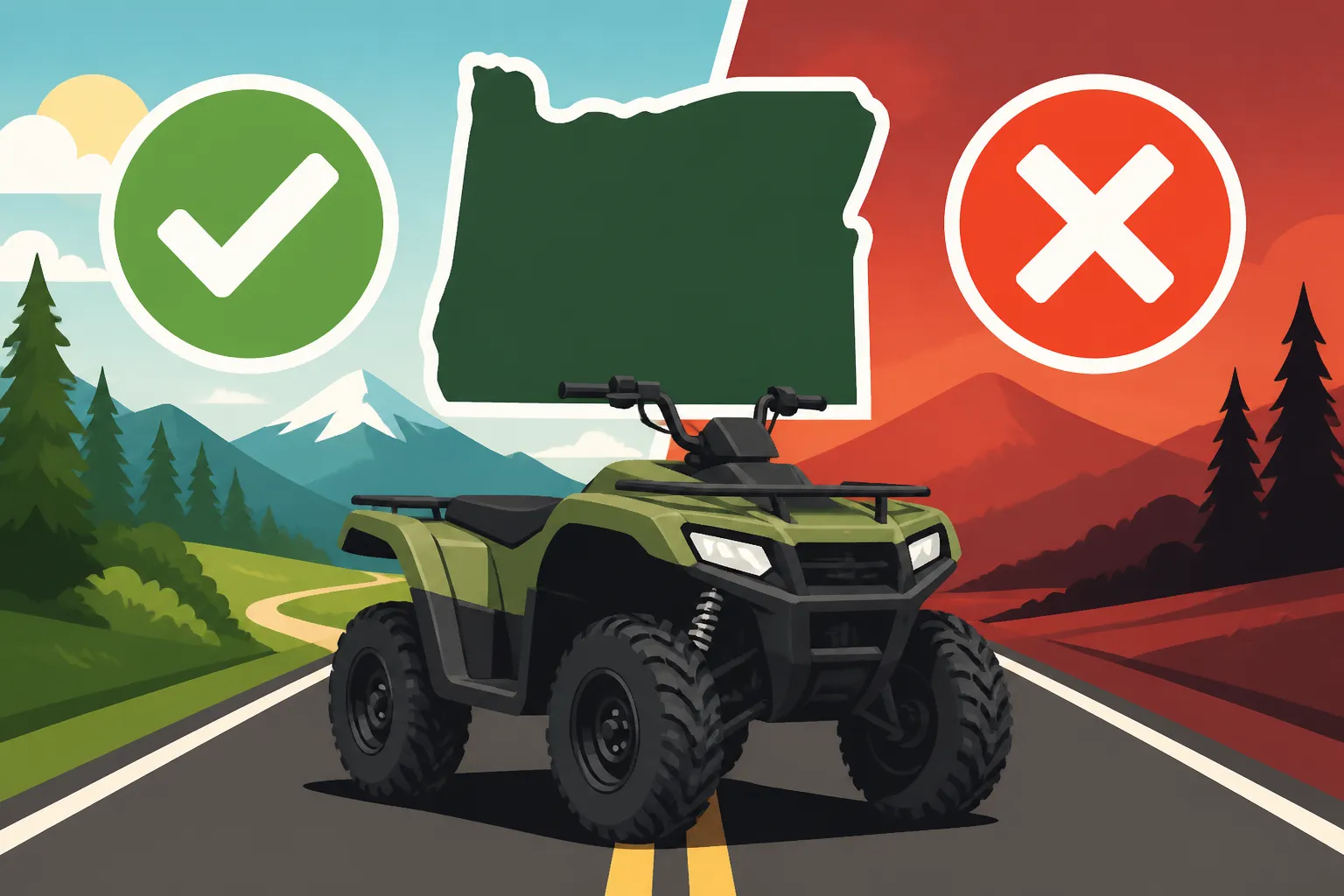
The short answer, for most people and most common machines like quads and side-by-sides, is no, not in the way you probably imagine.
The General Rule: No Street Legal ATVs (Quads, Side-by-Sides)
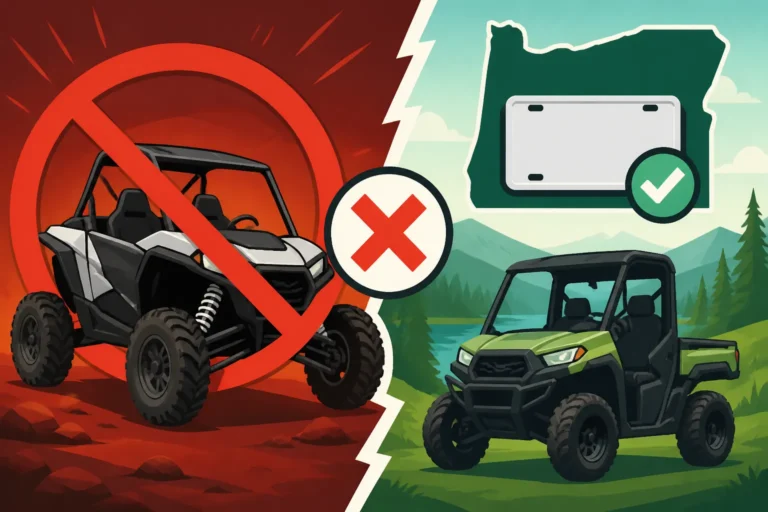
For your typical Class I ATV (quad) or Class IV ATV (side-by-side), Oregon law generally does not allow them to be registered or licensed for street-legal use on public highways. This means you cannot simply add turn signals, a horn, and mirrors to your Polaris RZR or Honda Foreman, get a license plate, and drive it down I-5 or even your local city street. [Why Oregon Will Not Plate a Quad] and [Why a Class IV Cannot Get Oregon Plates] explain the specifics of this legislative stance.
The Oregon Department of Motor Vehicles (DMV) does not register or title Class I or Class IV ATVs as street-legal vehicles. They are considered off-highway vehicles, and their operation is largely restricted to designated off-road areas, private property (with permission), or specifically designated "ATV Highway Access Routes" which we'll discuss in a moment. This distinction is crucial and is where many riders get into trouble, assuming that if they add certain accessories, they've somehow bypassed the fundamental legal hurdle.
The Exception: Class II Machines and Conditional Road Use
This is where the complication, and the occasional glimmer of hope for some, comes in. As mentioned earlier, Class II ATVs are the exception. These vehicles, often custom-built, such as sand rails or dune buggies, can potentially be registered for street use if they meet all the stringent requirements for highway vehicles. This isn't just about bolt-on accessories; it's about the fundamental design and safety features.
Think of it this way: a sand rail that is built from the ground up to include proper headlights, taillights, brake lights, turn signals, seatbelts, windshield, wipers, horn, and meets all federal motor vehicle safety standards (FMVSS) can go through a process with the Oregon DMV. This might involve a special inspection and registration as a "specially constructed vehicle" or a "motorcycle," depending on its specific characteristics. If it successfully clears this hurdle, it can receive a license plate and be operated on public roads. [Titling and Registering a Street-Legal Rail] delves into this intricate process. This is why you might occasionally see a highly modified sand rail legally driving on a paved road, but you'll almost never see a stock-looking side-by-side doing the same.
Beyond this Class II exception, there's also the concept of "conditional road use" for all classes of ATVs, which is often confused with being "street legal." This refers to specific, limited situations where an off-highway vehicle, with a valid [Oregon's ATV Operating Permit], is allowed to operate on certain public roads. This is not the same as being "street legal" for general highway use. These instances are strictly controlled and geographically defined.
Why Most ATVs Will Never Get Plates
The reason most Class I and Class IV ATVs will never get Oregon plates boils down to their design and the legal definitions. They are designed as off-road machines. Oregon's vehicle code is primarily concerned with safety and the appropriate use of public infrastructure. Standard ATVs and UTVs simply don't meet the safety and design standards for highway vehicles – things like crashworthiness, emissions, lighting, and overall structural integrity for high-speed road use. While aftermarket companies like SuperATV offer incredible modifications for performance and utility, these upgrades are almost always geared towards improving off-road capability, not converting the machine into a road-legal vehicle that satisfies DMV requirements. Adding a windshield or turn signals won't change its fundamental classification or make it compliant with all the highway vehicle regulations that a car or motorcycle must meet.
Here's a quick overview of how Oregon's classes relate to street legality:
| ATV Class | Definition | Designed for Street Use? | Potential for Street Legal Registration? | Common Examples |
|---|---|---|---|---|
| Class I (Quad) | 4 wheels, straddle seat, handlebars, <=1200 lbs, <=50 inches wide | No | No | Sport quads, utility ATVs |
| Class II (Misc.) | 4+ wheels, >=800 lbs, not Class I, III, or IV, designed for off-highway use | No (typically) | Yes (conditional) | Sand rails, custom buggies, certain modified Jeeps |
| Class III (Dirt Bike) | 2 wheels, designed for off-highway use | No | No (as an ATV, separate motorcycle process) | Dirt bikes, off-road motorcycles |
| Class IV (SxS/UTV) | 4+ wheels, non-straddle seat, steering wheel, <=3500 lbs, <=75 inches wide | No | No | Polaris RZR, Can-Am Maverick, Honda Pioneer |
Oregon's Class II Exception: Motorcycles and Custom-Built Machines
So, we've established that the Class II designation is the golden ticket for anything resembling a street-legal OHV in Oregon. But what exactly is a Class II, and what does it take to get one legally on the road? This isn't a loophole for your new side-by-side; it's a specific pathway for a distinct type of vehicle.
What Defines a Class II Machine in Oregon
As we touched on, a Class II ATV in Oregon is defined broadly: it's a motor vehicle with a dry weight of 800 pounds or more, has four or more wheels, is designed for off-highway use, but is not a Class I, III, or IV ATV. This is the "catch-all" category for specialized off-road vehicles that don't fit neatly into the typical quad, dirt bike, or side-by-side definitions.
Common examples of vehicles that often fall into this category and can be made street legal include:
- Sand Rails: These lightweight, often custom-built vehicles with exposed frames, roll cages, and powerful engines are primarily designed for dune riding but can, if properly equipped and inspected, become street legal.
- Dune Buggies: Similar to sand rails, these are often built on modified car chassis (like old VW Beetles) and are designed for off-road fun but can sometimes meet road requirements.
- Certain Heavily Modified Jeeps or Custom Off-Road Vehicles: If a Jeep has been so extensively modified for off-road use that it no longer fits standard highway vehicle classifications, but still has four wheels and is over 800 pounds dry weight, it might fall into Class II. This is less common as most Jeeps retain their original classification. [Where a Jeep Fits in the Class System] can be quite complex.
The key here is that these aren't your typical factory-produced off-road vehicles. They are either purpose-built or extensively modified, giving them the flexibility in design to potentially incorporate all the necessary street-legal components from the outset.
Titling and Registering a Street-Legal Rail
If you have a Class II machine, like a sand rail or custom buggy, that you want to make street legal, the process involves working directly with the Oregon DMV. It's not as simple as showing up with a bill of sale. You'll generally need to:
- Gather Documentation: If it's a new build, you'll need receipts for major components, manufacturer's certificates of origin for the engine, chassis, etc. For a used machine, you'll need a clear title or, if none exists, proof of ownership. [Titling a Class I Without Registering It] highlights that while titling is optional for some ATVs, for a Class II seeking street legality, it's absolutely mandatory to establish ownership and begin the process.
- Ensure Compliance: This is the big one. Your Class II machine must meet all applicable Oregon and federal highway safety standards. This means:
- Lighting: Headlights (high/low beam), taillights, brake lights, turn signals (front and rear), license plate light.
- Mirrors: At least one rearview mirror, often two side mirrors.
- Horn: An audible warning device.
- Windshield and Wipers: If the vehicle has an open cabin, a windshield (often safety glass) and functional wipers are typically required.
- Seatbelts/Restraints: Proper seatbelts for all occupants.
- Tires: DOT-approved tires for highway use.
- Brakes: Fully functional braking system.
- Emissions: While often exempt for older builds or certain custom vehicles, new builds may need to meet current emission standards depending on engine type and age.
- VIN Verification: The DMV will need to verify the Vehicle Identification Number (VIN) to ensure it's legitimate and not stolen. For custom builds, you might need to apply for a "Special Vehicle Identification Number." [Checking a VIN Before Buying Used] is good advice for any machine.
- DMV Inspection: You'll likely need to schedule an inspection with the DMV to verify that your vehicle meets all these safety and equipment requirements. This isn't a quick once-over; it's a thorough check.
- Application for Title and Registration: Once approved, you can apply for a vehicle title and registration, just like you would for a regular car or motorcycle. This is when you'll finally receive your Oregon license plate.
This process can be time-consuming and expensive, as retrofitting a purely off-road machine to highway standards is a significant undertaking. But for those dedicated to having a street-legal sand rail, it's the only pathway. [Oregon Plates for a Dune Buggy] is exactly what this process enables.
Mandatory Insurance on Every Oregon Class II
A critical, and often overlooked, requirement for any street-legal vehicle in Oregon, including a Class II ATV, is mandatory liability insurance. This isn't optional; it's the law. Just like your car, your street-legal Class II machine must be covered by an active insurance policy that meets Oregon's minimum liability requirements.
If your Class II machine is legally registered for street use and has a license plate, then it falls under the same insurance rules as any other motor vehicle. Operating an uninsured, registered vehicle on public roads in Oregon can result in significant fines, license suspension, and vehicle impoundment. This is an added layer of cost and responsibility, but it's non-negotiable for road legality. [Mandatory Insurance on Every Oregon Class II] is a reminder of this strict requirement. Companies that specialize in powersports insurance can often provide coverage for these unique vehicles, so it's worth shopping around to find a policy that fits your specific Class II machine.
Navigating Oregon's ATV Highway Access Routes
Since most ATVs (Class I and IV) cannot be fully street legal, Oregon has created a specific, limited framework for them to access public roads: ATV Highway Access Routes. This is not general street legality, but rather a conditional use of public roads for specific purposes.
Oregon's Only Two Designated ATV Routes: Lakeside and Sumpter
As of now, Oregon has only two officially designated ATV Highway Access Routes:
- Lakeside, Oregon (Coos County): This route allows OHVs to connect from staging areas to the Oregon Dunes National Recreation Area, and also allows access to services within the town of Lakeside itself. This is a huge benefit for riders who want to stay, eat, and fuel up in town without having to load their machines onto a trailer. [Riding an ATV Through Lakeside] gives you a sense of the experience.
- Sumpter, Oregon (Baker County): Located in Eastern Oregon, this route allows OHVs to access trails in the surrounding Wallowa-Whitman National Forest and provides a way to ride through the historic mining town of Sumpter, connecting to businesses and services there. [Riding an ATV Through Sumpter] highlights the unique aspects of this eastern Oregon route.
These routes are specifically delineated and signed. You cannot assume that any town near an OHV area is an "access route." It must be officially designated by the Oregon Transportation Commission after a rigorous application and review process, which includes local government support, safety analyses, and public hearings. [Applying to Designate a New Oregon Route] outlines the steps involved. Riders venturing onto these routes must possess a valid [Oregon's ATV Operating Permit] for their machine and adhere to all road rules, including speed limits, signs, and traffic laws.
How to Identify Legal Road Access (Forest Service, County, etc.)
Beyond the two designated highway access routes, there are other types of roads where ATVs and UTVs (with a valid permit) may be allowed, but these are generally not considered "street legal" operation. This often applies to roads managed by federal or state agencies, or certain county roads.
- Forest Service Roads (National Forests): Many Forest Service roads are open to ATVs and UTVs. These are typically gravel or dirt roads within national forests. It's crucial to check local Forest Service motor vehicle use maps (MVUMs) for specific closures, restrictions, and designated routes. Not all Forest Service roads are open, and closures can be seasonal or permanent. [Forest Service Roads Open to Oregon ATVs] provides more context.
- Bureau of Land Management (BLM) Roads: Similar to Forest Service roads, BLM lands often have designated routes and roads open to OHVs. Again, consult local BLM maps and regulations.
- State Forest Roads: Oregon's state forests, like the Tillamook State Forest, have their own sets of rules for OHV access on forest roads. These are generally well-signed. [Tillamook Forest Road Access] is a good resource for that specific area.
- County Roads (Gravel/Unmaintained): Some Oregon counties, through local ordinances, have opened certain unmaintained or gravel county roads to OHV use. This is highly variable by county, and you cannot assume a county road is open unless there's an explicit ordinance or signage. [Oregon Rules for Riding a County Gravel Road] emphasizes the need to check local regulations carefully. The six counties that have opened their roads are the exception, not the rule.
- Agricultural Roads: In some limited circumstances, ATVs may be used on public roads for agricultural purposes, such as moving between fields. These are very specific exemptions and typically do not permit recreational riding. [Oregon Agricultural Road Use for ATVs] goes into more detail.
The golden rule for all these types of roads is: know before you go. Don't assume. Check maps, consult agency websites, and look for clear signage. If a road isn't explicitly marked as open to OHVs, assume it's closed to them. Riding a closed road can result in significant penalties.
Understanding the Limits of Road Use: Crossing vs. Riding
Another common area of confusion is the distinction between "crossing" a highway and "riding" on it.
- Crossing a Highway: In many areas, Oregon law allows an OHV (with a valid permit) to cross a paved public highway at a right angle, but only after coming to a complete stop, yielding to all traffic, and crossing at the safest possible point. This is strictly for getting from one trail segment to another or from private property to a trail. You cannot travel down the highway. [Oregon Rules for Crossing a State Highway] details these requirements.
- Riding on Designated Routes: As discussed with Lakeside and Sumpter, on designated ATV Highway Access Routes, you can ride your permitted OHV on the road within the defined boundaries of the route. This means you follow all traffic laws, including signaling, stopping at stop signs, and observing speed limits.
- Riding on Other Open Roads: On Forest Service roads, BLM roads, or specific county roads opened to OHVs, you can ride your permitted machine as you would an off-road vehicle, still adhering to road rules like yielding and speed. However, these are typically not paved, high-traffic roads.
The takeaway is simple: unless you are on one of the two designated ATV Highway Access Routes or a clearly marked and permitted Forest Service/BLM/county road, your Class I or IV ATV should not be operating on public paved roads. And even on these routes, you are not "street legal" in the sense of being able to operate universally on all public roads like a car.
Essential Gear and Rules for Road Use (Even if Not "Street Legal")
Even when you're riding on the very limited "legal" road access points, such as the ATV Highway Access Routes or designated Forest Service roads, there are specific equipment and operational rules you absolutely must follow. These aren't just suggestions; they're legal requirements designed for safety, and failing to comply can lead to fines or worse.
Oregon Helmet Law for ATV Riders (and when it applies on roads)
Oregon has one of the more comprehensive helmet laws for OHV riders, and it's particularly strict when any road use is involved.
- All Riders Under 18: Every person under the age of 18, regardless of their machine's class or where they are riding (off-road or on a legal road access point), must wear an approved safety helmet. This is non-negotiable. [Oregon Helmet Law for Riders Under 18] is very clear on this.
- All Riders on Roads: If you are operating any ATV or UTV (Class I, II, III, or IV) on an ATV Highway Access Route, a Forest Service road, a county road opened to OHVs, or even just crossing a paved highway, all occupants of the vehicle (drivers and passengers, regardless of age) must wear an approved safety helmet. This means if you're an adult riding your side-by-side on the Lakeside route, you and your adult passenger both need helmets. [Oregon Helmet Law for Adults] clarifies this.
The helmet must be approved by the Department of Transportation (DOT) or meet Snell Memorial Foundation standards. It must be securely fastened with a chin strap. While some side-by-sides have roofs and roll cages, these do not exempt adult riders from helmet requirements when operating on roads or designated routes. Don't risk a head injury or a citation; wear your helmet.
Oregon Lighting Requirements for Road Use
When operating an OHV on any road open to the public, even just a gravel Forest Service road, proper lighting is paramount, especially during periods of low visibility or at night.
- Headlights and Taillights: Your machine must be equipped with at least one headlight and one taillight. These must be on and visible whenever you're operating on a road, particularly from dusk to dawn or in adverse weather conditions.
- Brake Lights: A functional brake light that illuminates when the brakes are applied is also required.
- Turn Signals (Recommended, Often Required on Access Routes): While not explicitly required for all off-road machines by off-road regulations, if you are on an ATV Highway Access Route (Lakeside or Sumpter), turn signals become crucial for safe integration with other traffic. If your Class II machine is street legal, turn signals are definitely required. Many riders add aftermarket turn signal kits to their Class I and IV machines for safety and compliance when on mixed-use roads, even if not strictly mandated for all off-road circumstances. [Oregon Lighting Requirements for Road Use] outlines the specifics.
- Reflectors: Adequate reflectors, especially to the rear and sides, are also a good idea for increased visibility.
Driving an OHV on any public road without appropriate and functional lighting is extremely dangerous and illegal. Always ensure your lights are in working order before heading out.
Oregon Rules for Passengers on a Quad (and side-by-sides)
Passenger rules vary slightly depending on the class of machine, but for road use, safety is always the priority.
- Class I ATVs (Quads): Generally, Class I ATVs are designed for a single operator. Oregon law states that an ATV may not carry more passengers than it was designed to carry. If your quad is explicitly designed by the manufacturer for two riders (meaning it has a factory-installed passenger seat and footpegs), then carrying a passenger is permissible. Otherwise, it's a single-rider machine, and carrying a passenger, especially on a road, is illegal and unsafe. [Oregon Passenger Rules on a Quad] details these distinctions.
- Class IV ATVs (Side-by-Sides): Side-by-sides are designed to carry multiple passengers, with bucket or bench seats and seatbelts. You must not exceed the manufacturer's seating capacity. All passengers must be seated with seatbelts fastened, and children must be in appropriate restraints if required by law for their age/size (similar to car seat laws, though specific OHV rules may apply). [Oregon Passenger Rules in a Side-by-Side] further clarifies.
- Foot Pegs: For any passenger on any OHV, they must have secure footrests or footpegs. No riding on laps or standing in a machine when in motion, especially on a road.
Operating an OHV with too many passengers, or passengers not properly seated and secured, significantly increases the risk of injury and is a violation of Oregon law. Always prioritize safety over convenience.
Beyond the "Street Legal" Myth: Practical Considerations for Road Access
Since true street legality is so rare for most Oregon ATV and UTV owners, it's essential to understand the practical realities of how people typically access riding areas and what other exceptions might exist. Don't get caught up in the "street legal" myth when there are proven, legal ways to enjoy your machine.
Trailer to the Trailhead: The Most Common Solution
For the vast majority of Class I and Class IV ATV and UTV owners in Oregon, the most common, safest, and unequivocally legal way to get your machine to a riding area is to trailer it. This means:
- Loading your quad or side-by-side onto an appropriate trailer.
- Hauling it with your street-legal truck or SUV.
- Driving to a designated staging area or trailhead.
- Unloading your machine and then riding in the designated off-road area.
This approach completely bypasses all the complexities and limitations of road access for OHVs. It's how thousands of riders access the Oregon Dunes, Tillamook State Forest, Millican Valley, and other fantastic riding spots. While it requires an investment in a trailer and a tow vehicle, it offers the ultimate flexibility and peace of mind. You don't have to worry about local ordinances, specific road closures, or whether a particular stretch of pavement is a "designated access route." It's just simple, straightforward, and legal. [Oregon Rules for Trailering to a Staging Area] covers some practical advice here.
Agricultural and Private Road Use Exceptions
There are a few narrow exceptions for OHV use on roads that often get confused with general "street legality." These typically relate to private land and specific work purposes:
- Private Property: You can absolutely ride your ATV or UTV on your own private property, or on private property where you have explicit permission from the landowner, regardless of whether it's "street legal" or even permitted. This includes private roads, fields, and trails. The state permit and safety card are generally not required on private land, though safety practices are always wise. [Oregon ATV Permit for a Machine on Private Land] explains this further.
- Agricultural Use: Oregon law provides some exemptions for operating ATVs and UTVs on public roads solely for agricultural purposes. This might include moving equipment or crops between fields that are separated by a public road. These exemptions are very specific, often require clear signage on the vehicle (e.g., "slow-moving vehicle" signs), and are not intended for recreational riding. If you're a farmer, check with the Oregon Department of Agriculture and DMV for precise guidelines on these exemptions. [Oregon Agricultural Road Use for ATVs] provides a starting point.
- Industrial Forest Lands: Many timber companies own vast tracts of land with extensive road networks. While these are private roads, some companies may offer permits or allow public access during non-logging hours or seasons. Always check with the specific timber company or landowner for their rules regarding OHV access on their private roads. Never assume access. [Riding a Timber Company Road] reminds us to be diligent here.
These exceptions highlight that when you do see an ATV on a road, it might be for a very specific, non-recreational, and legally exempt purpose, rather than being "street legal" in the broader sense.
Local Ordinances and Their Impact
Oregon's approach to OHV road use is primarily governed by state law, but local municipalities and counties can also have a say, especially regarding county roads or within city limits.
- County Roads: As mentioned, some counties have adopted ordinances to open specific, usually low-traffic, gravel county roads to OHV use. This is a local decision. [Riding a County Road in Grant County, Oregon] is an example of such a localized rule.
- City Limits: Most Oregon cities strictly prohibit ATVs and UTVs on city streets, even if the machine has a state permit. This is due to safety concerns, noise, and traffic flow. You generally cannot ride your quad down Main Street, even for a short distance, unless it's on a designated ATV Highway Access Route like Lakeside or Sumpter, or if your Class II machine is fully street-legal with a license plate.
- Golf Carts vs. ATVs: It's important not to confuse rules for golf carts with rules for ATVs. Some coastal towns, like Manzanita, have specific ordinances allowing golf carts on certain streets. This does not extend to ATVs or UTVs, which are different vehicle classifications under Oregon law. [Golf Carts Versus ATVs in Oregon Towns] explains the distinction.
Always research the specific local regulations for any area you plan to ride, especially if you anticipate using any public roads, even briefly. A local sheriff's deputy or city police officer will enforce local ordinances, which can lead to citations even if you're otherwise compliant with state ATV permit laws.
Potential Pitfalls and Enforcement: What a Trooper Looks For
Even with the best intentions, it's easy to make a mistake when it comes to road use and ATVs in Oregon. Understanding what law enforcement looks for can help you avoid costly tickets and keep you riding safely and legally. Getting stopped by an Oregon State Trooper or a county sheriff can quickly ruin your day if you're not compliant.
Oregon Fines for Riding an Unopened Road
This is arguably the most common and costly mistake riders make regarding road use. Believing a road should be open to ATVs, or simply not knowing it's closed, is no excuse in the eyes of the law.
- Designated vs. Undesignated: As established, very few roads in Oregon are open to general OHV travel. If you're not on a designated ATV Highway Access Route, a clearly signed Forest Service or BLM route, or a specific county road opened by local ordinance, assume it's closed.
- Penalties: Riding an ATV or UTV on a closed road is typically considered a Class C traffic violation, which can carry a substantial fine. [Oregon Fines for Riding an Unopened Road] can be hundreds of dollars, plus court fees, and potentially other penalties. This doesn't include the risk of damage to your machine or personal injury if you're riding on a road not suited for OHV travel.
- "No Trespassing" is Real: Beyond specific road closures, riding on private timberland or other private property without permission is trespassing, which carries its own set of legal consequences. Even if a private road looks open, it might not be.
Law enforcement officers, especially those patrolling near popular OHV areas, are very familiar with these rules and will not hesitate to issue citations. They are often looking for riders using paved roads to connect trails or access amenities where it's not permitted.
Carrying Your Oregon ATV Permit and Safety Card
When you're stopped by law enforcement, whether on a trail or on a permitted road segment, they will check for your documentation.
- Oregon ATV Operating Permit: Every ATV and UTV (Class I, II, III, IV) operating on public lands or designated routes in Oregon must have a valid [Oregon's ATV Operating Permit]. This includes the physical decal properly affixed to your machine. [Getting Stopped Without a Decal] is an immediate red flag for any officer. You should also carry proof of permit purchase (the actual permit card) with you, preferably in a waterproof bag.
- Oregon ATV Safety Education Card: With very few exceptions (like an adult with a valid driver's license operating a Class IV, or during a 180-day instructional permit period), all ATV and UTV operators in Oregon must possess an Oregon ATV Safety Education Card. This card signifies you've passed the safety course. It is free and can be taken online. Carry your physical card or a digital copy on your phone. [Oregon ATV Safety Card Requirements] are clear on this.
- Driver's License (for road use): If you are operating any OHV on a public road, even on a designated access route, you must possess a valid driver's license. This applies whether your machine is a Class I, Class IV, or a street-legal Class II.
- Insurance (for Class II): As discussed, if your Class II machine is street legal and registered with plates, you must carry proof of insurance.
Officers will typically ask for all of these documents. Make it easy for them to verify your compliance.
What a Trooper Checks Roadside
When an Oregon State Trooper or county sheriff pulls you over while you're on a road with your ATV or UTV, they're typically looking for a few key things:
- Valid ATV Operating Permit: Is the decal current and properly displayed? Do you have the permit card? [What a Ranger Checks at an Oregon Staging Area] is similar to what an officer looks for on a road.
- ATV Safety Education Card: Do you (and any young riders) have a valid safety card?
- Driver's License: Do you have a current, valid driver's license?
- Road Legality: Are you actually on a road where OHV travel is permitted? If it's a designated access route, are you within its boundaries? If it's a Class II, does it have a license plate and insurance?
- Required Equipment: If on a road, do you and your passengers have DOT-approved helmets on? Are your lights functioning? Do you have turn signals (if on an access route or street legal)? Is your machine exceeding passenger capacity?
- Safety and Operation: Are you riding safely? Are you obeying speed limits and traffic laws? Is your machine excessively loud (violating [Oregon Sound Limits for ATVs])? Does it have a spark arrester (required on public land)?
An officer is trained to recognize the differences in machines and the specific regulations that apply. They won't assume your heavily accessorized side-by-side with SuperATV light bars and winches is street legal unless it's a true Class II with a license plate. They are looking for compliance with the spirit and letter of Oregon's OHV laws, especially when those machines interact with public roadways and other vehicular traffic. Stay informed, ride responsibly, and always have your documentation ready.
Disclaimer
This article is for general informational purposes only and does not constitute professional advice. Laws, prices and regulations vary by location and change over time. Consult a qualified professional for guidance on your specific situation.