Oregon Rules for Riding a Campground Loop
It's a beautiful sunny day, you've just pulled your rig into your favorite Oregon campground, and the kids are practically vibrating with excitement to get out on the trails. You start to unload your side-by-side or quad, ready to roll it straight to your campsite and then maybe make a quick run to the restrooms. But then a thought crosses your mind: "Wait, what are the rules for riding in the campground itself?" It's a common dilemma that can feel confusing, because while you know the trail rules, those paved or gravel loops around the campsites often feel like a different beast entirely. This guide will walk you through Oregon's specific regulations for operating your ATV or UTV within a campground loop, helping you stay compliant, avoid fines, and keep the peace with your fellow campers.
The Misconception of "Private Land" in Campgrounds
One of the biggest misunderstandings riders have when it comes to operating their OHV within a campground is the idea that "since I'm paying to be here, it's basically private land, right?" This couldn't be further from the truth for the vast majority of popular campgrounds across Oregon. Understanding this distinction is the first crucial step to navigating the rules.
Why Campgrounds Aren't Always Private
When you're pulling into a spot at an Oregon State Park campground, a National Forest campground, or a site managed by the Bureau of Land Management (BLM), you're still very much on public land. Even though you pay a nightly fee, that fee grants you temporary occupancy of a designated spot, not ownership or conversion of public land to private. These areas are managed by specific agencies, each with their own set of rules and regulations that govern all vehicles, including your ATV or UTV. Think of it like a public park: you might pay for a picnic shelter, but you don't suddenly own the park or get to ignore the rules of the road within it.
There are, of course, genuinely private campgrounds or RV resorts sprinkled across the state. These might have different, often more lenient, rules regarding OHV use within their specific property. However, even these private facilities are usually subject to local ordinances regarding noise and traffic, and you still can't just drive your unpermitted machine onto a public road directly from their property. Always check with the specific campground management about their policies if you're staying at a private establishment. But for the purposes of this guide, we're primarily focusing on the more common scenario of public campgrounds, where state and federal rules absolutely apply.
General Rules for All Vehicles in Campgrounds
Whether you're driving your pickup truck, an RV, or your side-by-side, there are fundamental rules that apply to all motor vehicles within almost any campground. These are designed for safety, courtesy, and preserving the tranquility that most people seek when camping. Speed limits are universally low, typically ranging from 5 to 15 miles per hour, and they are rigorously enforced for good reason. Kids play, people walk dogs, and the unexpected can happen quickly. Exceeding these limits is not only dangerous but a surefire way to annoy your neighbors and attract unwanted attention from park staff.
Quiet hours are another bedrock of campground etiquette. Most campgrounds have designated times, often from 10 PM to 7 AM, when excessive noise is prohibited. While this primarily targets loud music and generators, it absolutely extends to the noise produced by vehicles. Starting up your machine at 6 AM for an early trail ride might be necessary, but doing so with a loud exhaust or revving the engine can quickly turn a peaceful morning into a frustrated one for your fellow campers. Respecting these basic rules helps ensure everyone has an enjoyable experience.
Specific Rules for OHVs on Campground Loops in Oregon
Now, let's drill down into what makes your ATV or UTV different from a standard car when you're operating it within those campground loops in Oregon. The short answer is: they're still off-highway vehicles, and Oregon has very clear rules about where and how they can be operated, even on what looks like a simple paved or gravel road inside a park.
The Permit and Safety Card Basics
This is where many riders get tripped up. Just because you're driving slowly from your truck to your campsite doesn't mean you're exempt from the basic requirements for OHV operation in Oregon. If you're on public land, which most campgrounds are, your machine absolutely needs a valid [Oregon ATV Operating Permit]. This decal proves you've paid your part into the system that maintains the very trails you came to ride. It's not optional, even for that 100-yard drive. Think of it like this: if you were pulling your fishing boat through the campground, it would need current tags, right? Same principle applies here.
Beyond the machine itself, the operator needs to be properly credentialed. [Oregon ATV Safety Card Requirements] apply to all riders on public land in Oregon, regardless of age. Yes, that includes adults. While riders under 16 have specific training and supervision rules, everyone, from the most seasoned rider to the casual weekend warrior, needs to have that safety card if they're operating an OHV on public land. If you're driving your UTV from your campsite to the bathroom on a public campground loop, you need that card. Many an unsuspecting adult has received a citation for not having their card, even for short trips within a park. It’s quick, easy, and free to get online, so there's really no excuse.
Road Access and Restrictions within Campground Loops
This is arguably the most critical aspect: are campground loops considered "public roads" for OHV purposes in Oregon? For the most part, yes, they are treated as roads open to public travel, even if they are only internal to the campground. However, this designation doesn't automatically mean "free for all" for your OHV. Oregon's rules for riding an ATV or UTV on roads are very specific and highly restrictive.
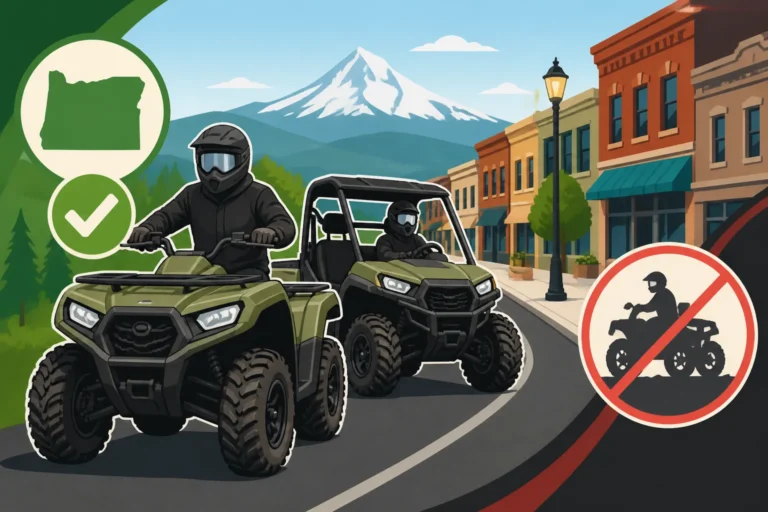
Generally, within a campground, your OHV operation on these loops is limited to direct access only. This means you can drive from your trailer to your campsite, from your campsite to a designated trailhead, to the dump station, or to the exit. What you cannot do is "recreational riding" or "joyriding" around the loops. Doing laps, cruising for extended periods, or using the campground loops as a miniature ride park is strictly prohibited. The intent is clear: use your OHV as a means of transport to access specific points, not as a recreational activity within the camping area itself. Speed limits, as mentioned before, are almost always extremely low, emphasizing that these are shared spaces with pedestrians, bikes, and other campers.
Noise and Courtesy Considerations
Let's be honest: ATVs and UTVs, even with stock exhausts, are generally louder than a typical passenger car or truck. This is perfectly fine out on the open trails, but in the close confines of a campground, that noise can become a major source of conflict and complaints. That's why [Oregon Sound Limits for ATVs] are particularly relevant in these environments. While enforcement often happens on trails, loud operation within a campground is an immediate flag for rangers.
If your machine has an aftermarket exhaust that’s particularly aggressive, consider that when you’re inside a campground. Even if it meets the letter of the law for trail use, the spirit of courtesy in a campground often calls for something much quieter. Nobody wants to be woken up by a rumbling exhaust or have their quiet evening interrupted by a machine buzzing past their tent every few minutes. If you're planning modifications, perhaps consider options for quieter running. SuperATV offers various exhaust options and sound-dampening accessories that might help you keep your machine a little more subdued when you're in shared camping spaces. It's about being a good neighbor, and that often means minimizing your machine's auditory footprint when you're not actually out on the open trails.
Helmet, Passenger, and Lighting Rules in Oregon Campgrounds
Even for those short hops around the campground loop, the safety regulations don't magically disappear. Oregon takes rider safety seriously, and these rules are designed to protect everyone, especially in areas where you might encounter unexpected pedestrians or other vehicles.
Oregon Helmet Law for Campground Riding
This is non-negotiable on public land. [Oregon Helmet Law for ATV Riders] applies whenever you are operating an ATV or UTV on public land, regardless of how short the distance or how low the speed. For anyone under 18, wearing a DOT-compliant helmet with the chin strap fastened is mandatory, full stop. Even if you're just moving your quad 50 feet from your truck to your campsite, if a ranger sees a minor operating it without a helmet, you're looking at a citation.
While adults are not legally required to wear a helmet if they are 18 or older and operating a Class IV machine (like many side-by-sides with a roll cage and seatbelts), it is still strongly recommended for all riders. For Class I (quads) and Class III (off-road motorcycles), helmets are required for all riders, regardless of age. Given the mix of vehicles, children, and potential hazards in a campground, it's always the safest bet to buckle up and helmet up, even for quick trips. Don't risk a head injury or a costly fine for the sake of convenience.
Passenger and Youth Rider Regulations
Oregon also has strict rules about who can ride on an OHV and where they can sit. [Oregon Passenger Rules on a Quad] and [Oregon Passenger Rules in a Side-by-Side] are crucial here. If your quad is designed by the manufacturer for one rider, then only one rider is permitted, period. No "just for a second" double-riding with a child on your lap or standing on the foot pegs. This applies equally in the campground as it does on the trail. Side-by-sides, designed for multiple passengers, must still adhere to seatbelt and seating capacity limits. Everyone needs to be properly seated and buckled up.
Furthermore, [Oregon Rules for Riders Under 16] remain in effect. Children operating an OHV must meet specific age and size requirements for the machine they are on, and often require direct adult supervision. You cannot let your 10-year-old joyride their youth quad unsupervised around the campground loop, even if it feels safe. All these rules are in place because campgrounds, despite their slower speeds, can be unpredictable environments with blind spots and unexpected movements from pedestrians or other vehicles.
Lighting and Other Equipment
While you might not think about full lighting requirements for a daytime run to the dump station, if you're operating your OHV after dark within a campground loop, proper lighting is absolutely essential. This means headlights and taillights must be operational and on. This isn't just a suggestion; it's a safety and legal requirement for any vehicle operating at night, even at low speeds. Visibility is key in a busy campground environment where pedestrians might not expect an OHV after dusk.
And, of course, the ever-important spark arrester. [Oregon Spark Arrester Requirement] is mandatory for all OHVs operating on public land in Oregon. This includes campground loops. A spark arrester helps prevent wildfires by containing hot carbon particles from your exhaust. While a ranger might not be able to visually check for one as you drive past, if they stop you for any reason, this is one of the items [What a Ranger Checks at an Oregon Staging Area] that will be on their list. Ensuring your machine is equipped with a functioning spark arrester is not only legally required but a critical responsibility for every rider. Many parts and accessories from a reputable vendor like SuperATV can help ensure your machine meets these essential safety and environmental standards.
Common Campground Scenarios and What to Avoid
Navigating a campground with your OHV requires a mix of legal compliance and common sense courtesy. Understanding the difference between acceptable use and prohibited activities is key to a stress-free camping trip.
Riding to the Trailhead vs. Joyriding
The distinction here is paramount. Riding your ATV or UTV directly to a designated trailhead from your campsite, or from your campsite to the campground's main office, is generally considered acceptable transport. This is your machine, and you're using it to access specific services or entry points. It's functional, not recreational. You're using the campground loop as a necessary conduit. This falls under the spirit of [Oregon Rules for Riding to a Trailhead], where the road is merely a means to an end.
However, "joyriding" or "recreational riding" means using the campground loop itself as a riding area. This includes doing multiple laps, cruising aimlessly, riding at speeds beyond the limit, or performing any maneuvers that are clearly not just direct transport. This type of activity is almost universally prohibited in public campgrounds. The campground is a shared space for rest and recreation for all campers, many of whom are not OHV enthusiasts. Using it as a personal track disrupts the peace, poses safety risks to pedestrians, and will quickly draw the attention of park staff or law enforcement, often leading to a citation.
Getting Your OHV from Trailer to Campsite
This is perhaps the most common scenario, and it's where discretion often plays a role from enforcement. When you arrive, you need to get your machine off the trailer and into your campsite. The process should be simple: unload your OHV, then drive it slowly and directly to your assigned site. Once it's there, it should generally stay parked until you're ready to head out to the designated riding trails. Minimize any unnecessary movement. Don't drive it around the loop to find a friend's site, or take it for a "warm-up lap" before heading to the trails.
While park rangers often understand the practical necessity of moving your OHV from your tow vehicle to your site, they expect you to do so with utmost caution, at crawl speeds, and with respect for the rules. They are primarily looking for egregious violations like excessive speed, unnecessary riding, or unpermitted/uncredentialed operators. Stick to the letter and spirit of the law, and you'll likely have no issues.
Potential Fines and Enforcement
Don't be fooled by the relaxed atmosphere of a campground; law enforcement and park rangers are absolutely present and actively enforcing regulations. Violating OHV rules within a campground can lead to significant consequences. For example, [Oregon Fines for Riding Without a Permit] can be substantial, often falling under [Oregon's Class C Traffic Violation for No Permit]. This isn't just a slap on the wrist; it's a serious ticket. Beyond permit issues, you can be cited for excessive noise, unsafe operation, speeding, or allowing an uncredentialed rider (especially a minor) to operate a machine.
Rangers are there to ensure everyone's safety and enjoyment. If your actions are disruptive or unsafe, they will intervene. It's far better to ensure your machine is properly permitted, you and your passengers have the necessary safety cards, and you operate your OHV with extreme caution and courtesy within the campground. A little foresight and adherence to the rules can save you from a ruined trip, a hefty fine, and the frustration of dealing with a citation. Remember, ensuring your machine and all accessories meet legal standards, perhaps with reliable parts from SuperATV, can help you avoid these issues.
| Rule Category | Applicability in Oregon Campgrounds | Key Requirements | What to Avoid |
|---|---|---|---|
| OHV Permit | Required on all public campgrounds. | Valid Oregon ATV Operating Permit decal. | Riding any unpermitted machine. |
| Safety Card | Required for all operators on public campgrounds. | Oregon ATV Safety Card (for all ages). | Operating without your card, even for short distances. |
| Road Access | Direct access to/from campsite, trailheads, facilities only. | Slow speeds (5-15 mph), designated roads. | Joyriding, multiple laps, off-road driving within campground. |
| Noise | Strict quiet hours apply; general courtesy. | Stock exhausts or quiet aftermarket options. | Loud exhausts, excessive revving, operation during quiet hours. |
| Helmets | Mandatory for riders under 18; for all on Class I/III. | DOT-compliant helmet, chin strap fastened. | Riding without a helmet where required. |
| Passengers | Adhere to manufacturer seating capacity and safety. | Proper seating, seatbelts where applicable. | Overloading, children on laps, standing passengers. |
| Lighting | Required if operating after dark or in low visibility. | Functional headlights and taillights. | Operating in low light without proper illumination. |
| Spark Arrester | Mandatory on all public lands. | Functional, Forest Service approved spark arrester. | Operating with a damaged or missing spark arrester. |
Navigating the rules for riding your ATV or UTV in an Oregon campground loop can seem like a minefield, but it doesn't have to be. The core message is always about safety, compliance, and respect for your fellow campers. These areas are designed for relaxation and community, not for recreational OHV use. By ensuring your machine is properly permitted and equipped, that you and your passengers are credentialed and helmeted where required, and that you operate with utmost caution and courtesy for direct access only, you can enjoy your camping trip without unwelcome interruptions. Ride smart, stay safe, and enjoy everything Oregon's incredible outdoors has to offer!
Disclaimer
This article is for general informational purposes only and does not constitute professional advice. Laws, prices and regulations vary by location and change over time. Consult a qualified professional for guidance on your specific situation.